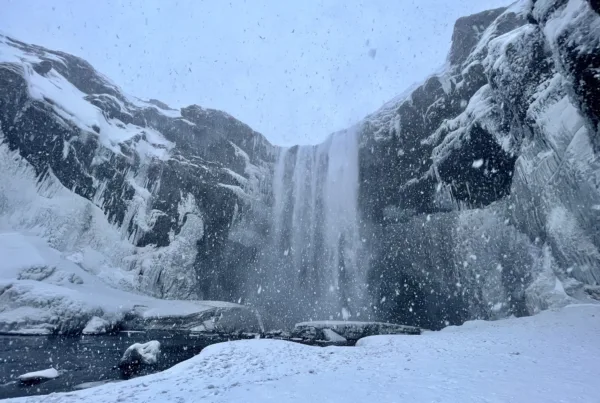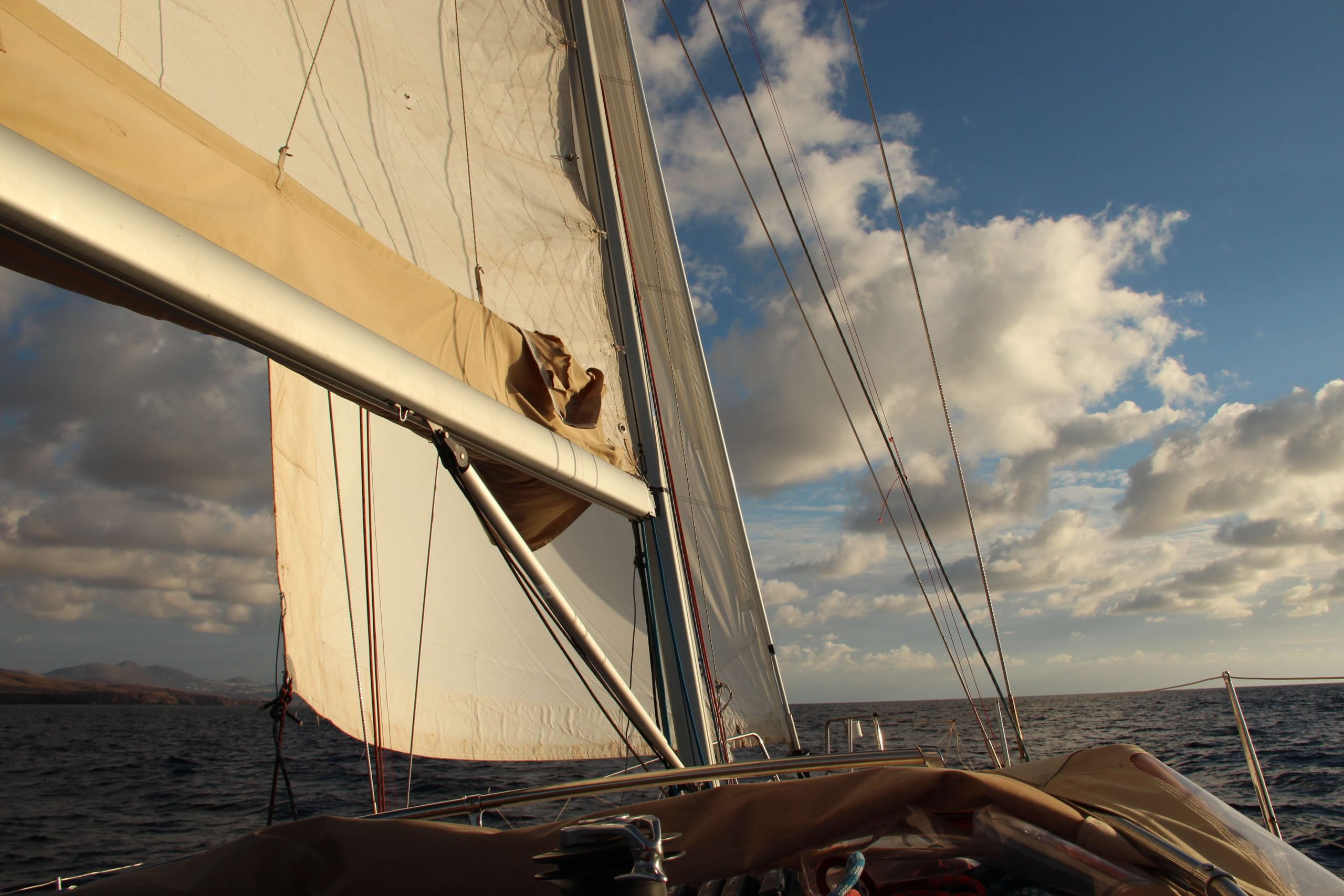



I’ve spent the last few weeks deep in Quark Expeditions’ itineraries, first for a piece on their Iceland circumnavigation, which sits close to a road trip I did myself in 2021, then for their Essential Patagonia route, which I’m circling for entirely personal reasons. Along the way I ended up reading the wider company, not just the two trips, and I think that’s worth a post of its own, because Quark Expeditions is an unusually specialised operator, and specialisation is something I have opinions about, running a boutique hotel myself.

The whole business is one bet
Quark’s own line is that they only go to the polar regions, Arctic and Antarctic, and no other operator can say that. That’s a genuine differentiator, not just marketing copy. Their destination list runs from the Antarctic Peninsula, South Georgia, the Falklands and Snow Hill Island in the south, to the Canadian High Arctic, Greenland, Svalbard and Iceland in the north, plus Patagonia as a kind of southern gateway route. A fleet of three ships, Ultramarine, Ocean Explorer and World Voyager, covers all of it. Compare that with a generalist cruise line adding a polar season onto a Mediterranean and Caribbean rotation, and you get a genuinely different level of institutional knowledge about ice, weather routing, and wildlife behaviour, the sort of thing that only comes from doing one difficult thing for a long time rather than many easy things reasonably well.
I recognise this instinct because it’s the same one behind running a small hotel well: you can’t be excellent at everything, so you decide what you’re actually for, and you let that decision shape every operational choice underneath it.
What “off the ship more” actually means in practice
Quark talks about getting guests off the ship faster and more frequently than other operators, thanks to a larger expedition team relative to guest numbers. On Ultramarine specifically, that translates into two twin-engine helicopters and twenty Zodiacs serving a relatively small passenger count, which in real terms means shorter queues for landings and more flexibility when weather closes one option and opens another. Having read through several of their day-by-day itineraries now, the language is consistently honest about this: routes are explicitly described as weather- and ice-dependent, landings are conditional, and the exact order of a day’s activities is something the expedition team decides in the field, not something fixed months in advance. That’s a level of operational transparency I’d want from any operator selling remote, weather-exposed adventure, and it’s rarer than it should be.

Where it sits for a slow, independent traveller
I write a lot on this blog about travelling slowly and independently, and a fixed, guided ship itinerary might look like the opposite of that instinct at first glance. I don’t think it is, not entirely. What a specialist polar operator buys you is access to places that independent travel genuinely cannot reach on your own terms: the Westfjords by sea, the Beagle Channel, the Chilean fjords north of Puerto Natales. The independence, in this context, isn’t about day-to-day freedom of movement. It’s about choosing, deliberately, to hand a small and well-defined slice of a much bigger trip to people who understand the terrain better than any amount of solo planning could replicate, and then building your own slow, independent travel around that fixed point, the way I’m already thinking about doing with the Patagonia family visit either side of the expedition.
It’s also worth noting, for anyone travelling on their own, that Quark runs dedicated solo travel offers and cabin categories built for solo guests sharing with other travellers of the same gender, rather than pricing solo travel as an afterthought with a punishing single supplement. That’s a detail I’d want any solo traveller reading this to know before assuming an expedition cruise isn’t for them.
The honest caveats
None of this is inexpensive, and none of it pretends to be as flexible as a self-driven trip. Departures are limited, often to a single window per season on the more remote routes; prices sit well into five figures per person on the longer itineraries, and the physical requirements are real: guests need solid mobility for Zodiac boarding and landings on uneven terrain, and medical support in the more remote stretches is limited to a basic ship’s infirmary, sometimes many hours from proper facilities. It’s a trip you commit to and plan around, not one you fit into a loosely structured month of independent travel.
Where I’ve landed on it
I came to Quark Expeditions through two very specific, very personal itineraries, and I’d recommend anyone else do the same rather than starting from the brand outright: figure out which corner of the polar world actually pulls at you, then see whether their route to it matches the kind of traveller you are. For me, that’s turned out to be yes, twice over, for reasons that have very little to do with the operator and everything to do with an island I’ve already fallen for once, and a family scattered across the other end of the earth.
Prices, departures, fleet details and included activities change frequently and should always be verified directly with Quark Expeditions before booking. Figures in this article reflect the company’s published information at the time of writing.
FAQ
Exclusively the polar regions: the Antarctic Peninsula, South Georgia, the Falkland Islands, Snow Hill Island and Patagonia in the south, and the Canadian High Arctic, Greenland, Svalbard and Iceland in the north.
Three expedition ships: Ultramarine, Ocean Explorer, and World Voyager, each purpose-built for polar travel.
Yes. The company offers dedicated solo travel deals and cabin categories designed for solo guests, rather than treating solo travel as an add-on.
The overall route is planned, but daily activities are explicitly weather- and ice-dependent, and the expedition team adjusts the order and content of shore landings in the field.
It suits independent travellers who are comfortable handing a defined, remote portion of their trip to a specialist operator, then building their own slower, self-directed travel around it.