

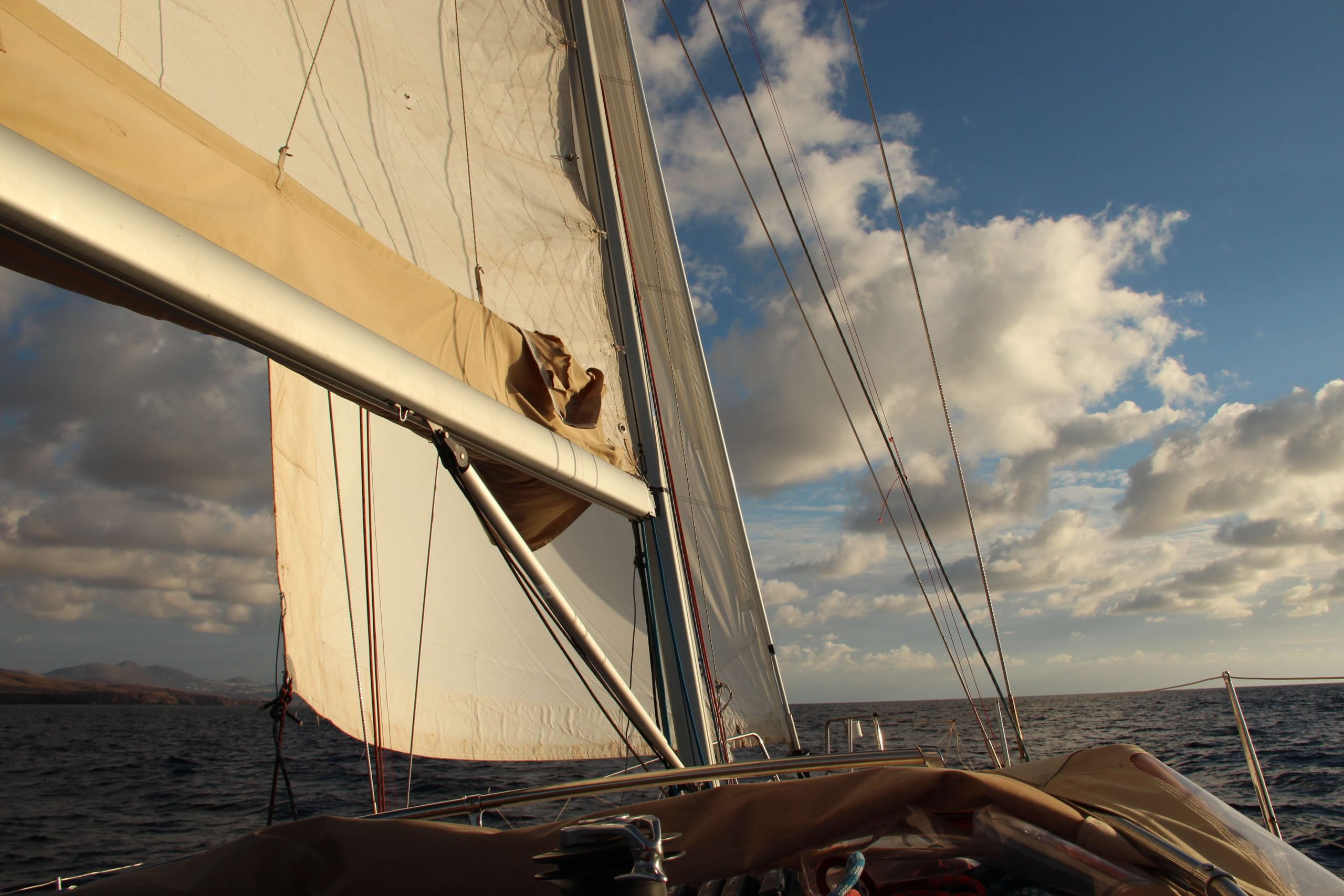

Last weekend I went sailing with friends and, as usual, my chats filled up with horizon shots, salty hair and that smug little “look at me, living my best sea life” energy.
Then the questions arrived.
What do you pack? How do you survive in a cabin the size of a wardrobe? Do you need special shoes? Is it romantic, or is it basically a floating group project?
Here is my honest answer: a sailing holiday can feel like absolute freedom and a tiny prison, sometimes within the same afternoon. You go from the immensity of the ocean outside to the very limited space inside. You discover surprising affinities with strangers and unbridgeable differences with old friends. You feel enormous emotions, and you also feel personally offended by a wet towel left in the wrong place.
I am on my tenth long sailing holiday, plus a great many shorter ones, and I hold a skipper’s licence, which means I have seen this from both ends: as crew, and as the person responsible for the boat and everyone on it. Both perspectives are in this guide, because the second one is what actually changed how I pack and how I behave.
So here is my practical guide to life on a sailing boat: what to pack, how to behave, and how not to become the person everyone silently wants to throw overboard.
First, the unglamorous truth about sailing with friends
A boat is not a hotel. It is not even a well-organised holiday flat.
It is a moving space with limited fresh water, limited electricity, limited privacy, and unlimited opportunities for small irritations to become A Conversation.
Go in with the right expectations and it is magic. Go in expecting comfort and autonomy and you will spend a week negotiating your relationship with humidity and storage.
Before you book: the questions nobody asks
This section did not exist in the first version of this piece, and it should have, because most of the misery I have witnessed on boats was decided before anyone stepped aboard.
Who is the skipper, and what kind of charter is it? A bareboat charter means someone in your group holds the licence and takes legal responsibility for the boat and the crew. A skippered charter means a professional comes with it. A cabin charter means you are booking a bunk on a boat with strangers, which is either the best part or the worst. A flotilla means you sail your own boat in company with others and a lead crew, which is the gentlest way to start.
How is the money handled? This causes more arguments than the weather. Most trips run a shared kitty for fuel, mooring fees, food and the skipper’s expenses, paid in cash at the start and reconciled at the end. Agree the amount, what it covers, and who holds it, in writing, before you go. Mooring fees in high season are the number that surprises people.
Who cooks, and who cleans? Set a rota on day one rather than discovering on day four that the same two people have done everything.
And ask what safety equipment is on board. Which is the next section, because it deserves one.
Safety, from the person who has had to be responsible for it
I left this out of the first version of this article, and having a licence, I should not have.
You do not need to know anything about sailing to be a good crew member. But there are a few things you should insist on, and they take ten minutes.
Ask for a safety briefing before you leave the dock, and if nobody offers one, ask for it anyway. A good skipper will be delighted. It should cover where the lifejackets are and how to put yours on, where the harnesses and tethers are and when they are worn, how to call for help on the VHF, where the fire extinguishers and the first aid kit live, how the engine is started and stopped, and what happens if someone goes overboard.
Wear a lifejacket when you are told to, without negotiating. At night, in heavy weather, on a foredeck, alone in the cockpit. This is not caution, it is arithmetic.
Know that “man overboard” is the thing everyone fears and almost nobody practises. If your skipper suggests a drill, do it, and pay attention to your one job in it, which is usually the simplest and most important: keep pointing at the person in the water and never take your eyes off them.
Move on the boat with one hand for yourself and one for the ship. Always be holding something.
And watch the boom. It is not a metaphor. It is a heavy metal bar at head height that swings across the boat without warning, and it is the single most common cause of serious injury on a yacht. Watch it, watch the ropes and the winches, watch where you put your feet, and when the boat heels, move to the higher side unless you are told otherwise.
Sailing is beautiful. Gravity remains permanently employed.
If your route involves an overnight passage or late-evening legs, deck safety rules get even stricter. Check out Boataround’s guide to night sailing for details on safety harnesses, watch shifts, and night navigation lights.
The golden rules of life aboard
Order is not optional
Space is shared and tight. “I’ll just leave it here for a second” is the fastest route to chaos.
Keep the common areas clear. Put your things away immediately, not later. Do not leave shoes, bags, chargers, books, wet swimwear or an entire skincare routine in the walkways. Think of the boat as a minimalist studio flat that moves and tilts.
This is not about being strict. It is about not making everyone else’s life harder.
Respect is a survival skill, not a slogan
Keep your voice down when others are sleeping, and remember that a hull carries sound extraordinarily well. Be careful with fresh water, especially at anchor, where the tank is all you have. Ask before using shared storage. Do not turn the cabin into a hair salon, and if you have long hair, brush it in private and never, ever upwind.
And choose your battles. A sailing holiday is not the moment for dramatic debates about politics, money, or who was right in 2019.
Flexibility is the price of the horizon
Weather changes. Plans change. The skipper will make decisions you do not entirely love.
Here is the part I understand differently now that I have been the one making them. A skipper changing the plan is almost never being difficult. They are looking at a forecast, a tide, a fuel gauge, an anchorage that will be untenable if the wind backs, and a crew who are more tired than they realise, and they are choosing the option with the fewest ways to go wrong. If you want to know why, ask, at a calm moment. You will get a fascinating answer and you will learn something. What you should not do is relitigate it while the boat is being moved.
You may also be asked to do jobs you do not enjoy. I have a famously complicated relationship with galley duty on a moving boat, and I have learned that resistance is futile.
Seasickness, and its ridiculous sibling
Seasickness. I have been lucky and rarely suffer, but I have sailed with people who adore the sea and struggle anyway. The most important thing is the one people get wrong: medication works best taken before you feel ill, ideally before you leave port. Once you are green, most tablets are far less use.
If it starts: stay on deck, look at the horizon, keep busy, and ask for a simple task, because having something to do genuinely helps. Eat small, bland things regularly rather than nothing. Stay hydrated. Avoid going below, especially into a stuffy cabin, and avoid reading or looking at your phone.
Old sailor remedies include lemon, dry bread, cola and salted anchovies. Ginger has more evidence behind it than most, and I have written about what ginger is actually good for elsewhere. But the real answer is simpler: fresh air, the horizon, and a job.
Ground sickness, my personal speciality. I get dizzy the moment I step ashore, as though the world is still moving under my feet. It usually fades within hours, occasionally a day. It is not dramatic, and it is slightly ridiculous, and walking in a straight line becomes an ambitious concept.
Sailing is still worth it.
What to pack for a sailing holiday
Start with the bag, and this one is non-negotiable
Take a duffel bag or a rucksack. Never a hard suitcase or a wheeled case.
Cabin storage is limited and shaped like a puzzle designed by someone who dislikes you. A soft bag squashes flat, fits into odd corners and disappears under a bunk. A hard case cannot be stowed anywhere, so it lives in the middle of the cabin for a week and becomes everybody’s enemy, including yours. My full thoughts on this are in my guide to packing light.
Warm season: Mediterranean, Canaries, summer trips
Clothing
- swimwear, two sets so one is always dry
- underwear and socks for each day, plus spares
- t-shirts for each day
- one or two pairs of shorts
- a light layer for evenings, a sweatshirt or thin jumper
- one going-out outfit and shoes if you plan dinners ashore
- flip-flops or sandals for on board
- deck shoes or trainers with white or pale soles. Converse and Superga work perfectly well. The reason is simple and nobody explains it: dark rubber soles leave black scuff marks all over a white deck, and somebody, quite possibly you, will spend an afternoon scrubbing them off
- a lightweight waterproof or windproof jacket
- a microfibre towel
- a sarong, which is a towel, a cover-up, an emergency blanket, a pillow and a sunshade
Sleeping
- a silk liner or light sleeping bag liner. Cabins are humid, bedding standards vary, and you will sleep better with your own layer between you and whatever is there
Sun
- sunglasses, ideally with a cord, because sunglasses go overboard constantly
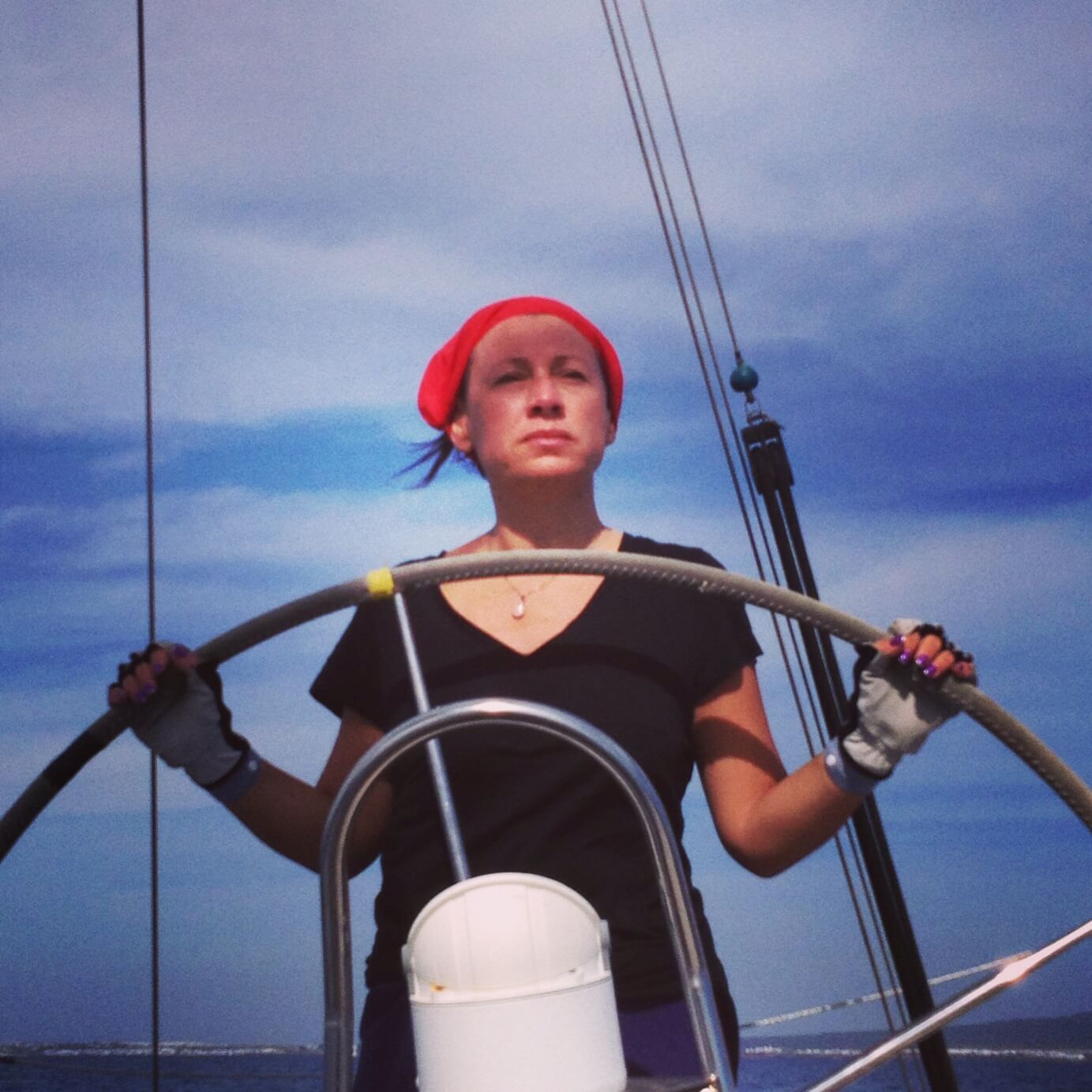
- a cap or headband, also with some way of not losing it
- high-factor sunscreen, and reef-safe if you will be swimming
- after-sun
The sun at sea is far stronger than the same sun on land, because it comes at you twice, once from the sky and once off the water. People who never burn, burn.
Toiletries
- a compact wash kit
- marine-friendly, biodegradable soap and shampoo if you will be rinsing off with seawater or showering in the cockpit
- hand sanitiser, tissues, wet wipes
A word about the heads, which is what the toilet is called and which you will hear about within an hour of boarding. Marine systems are delicate and block easily. Nothing goes in that has not first been through you, with the possible exception of a small amount of paper if the skipper says so. Wipes are useful on board and must never go down the toilet. Take this seriously. Unblocking a marine toilet is the single worst job at sea, and the person doing it will remember who caused it.
Tech
- phone with a waterproof case or dry bag
- e-reader with a waterproof case
- charging cables and a car-type adaptor
- a power bank, because electricity depends on whether you are sailing, motoring or plugged in at a marina

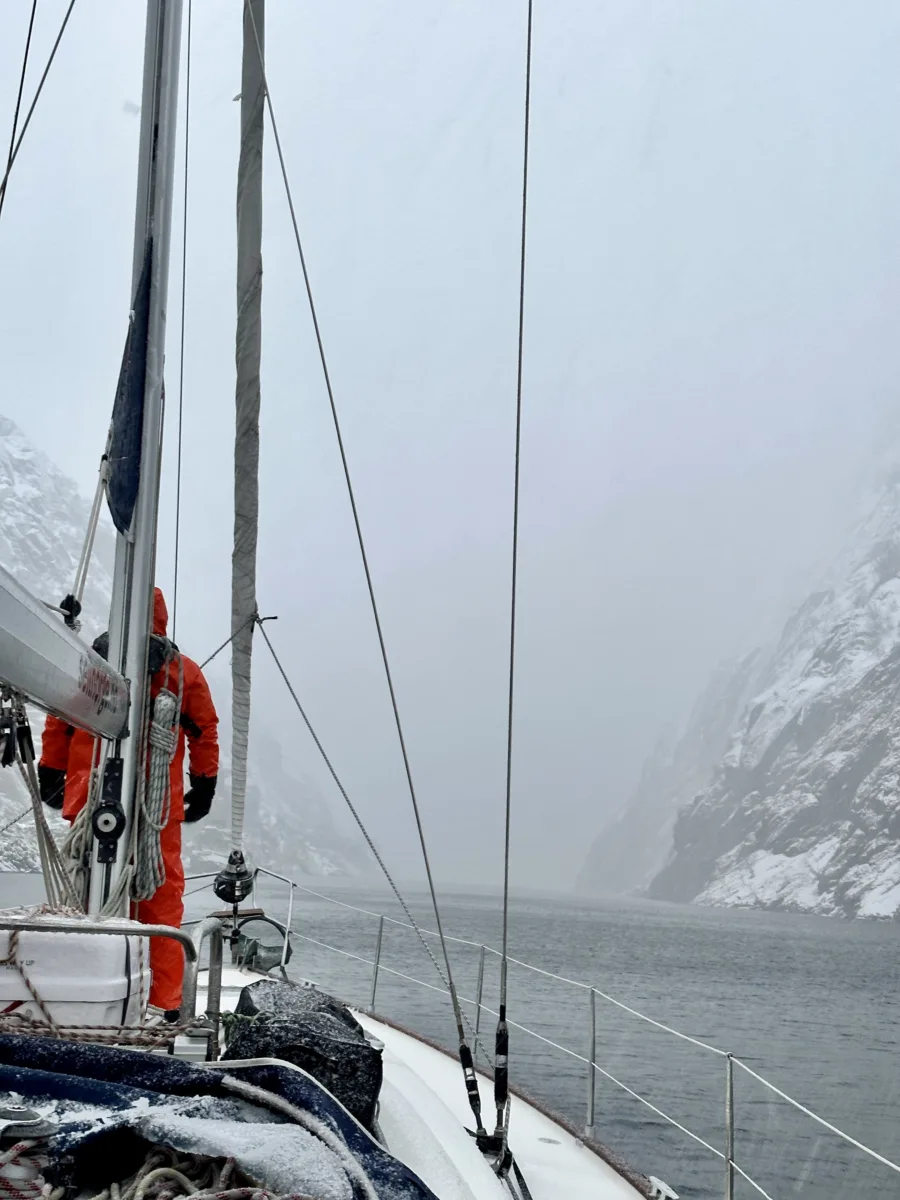
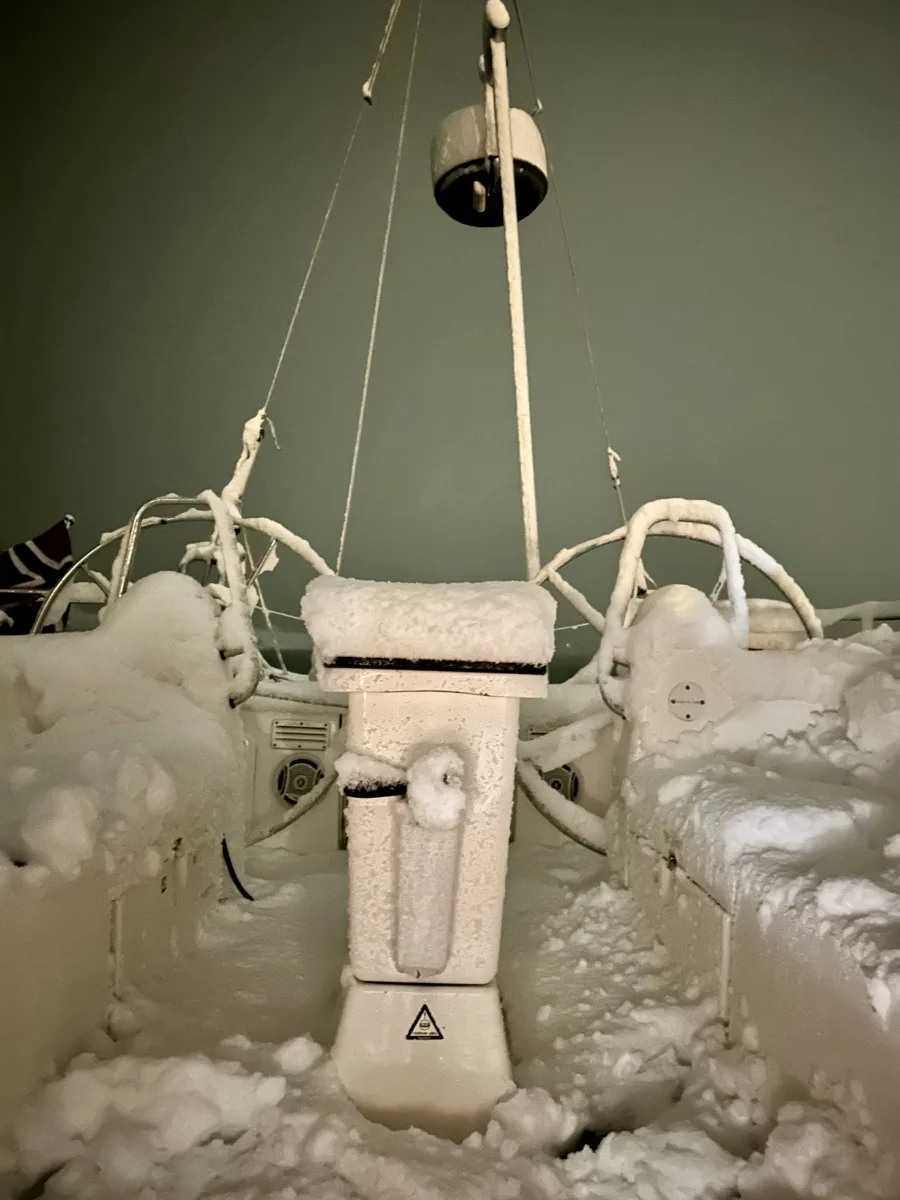
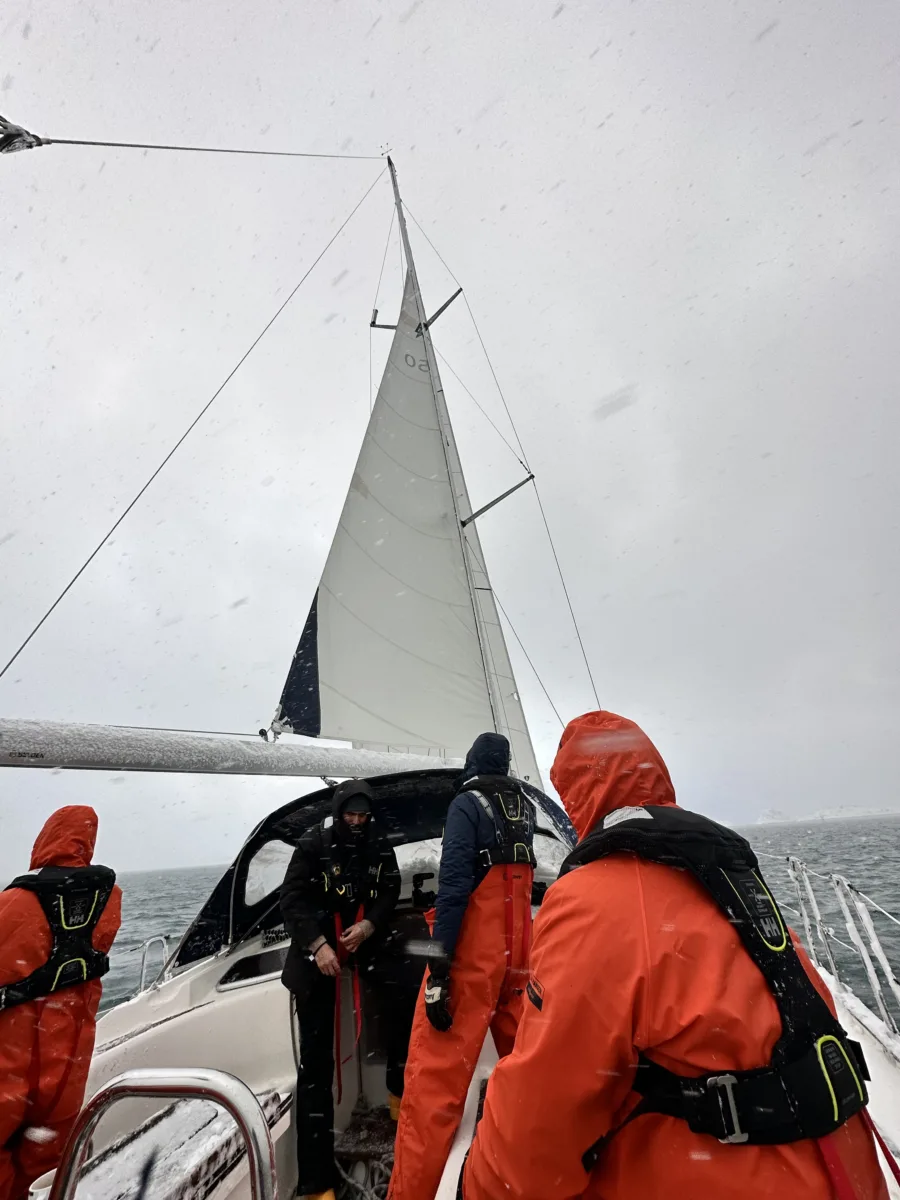
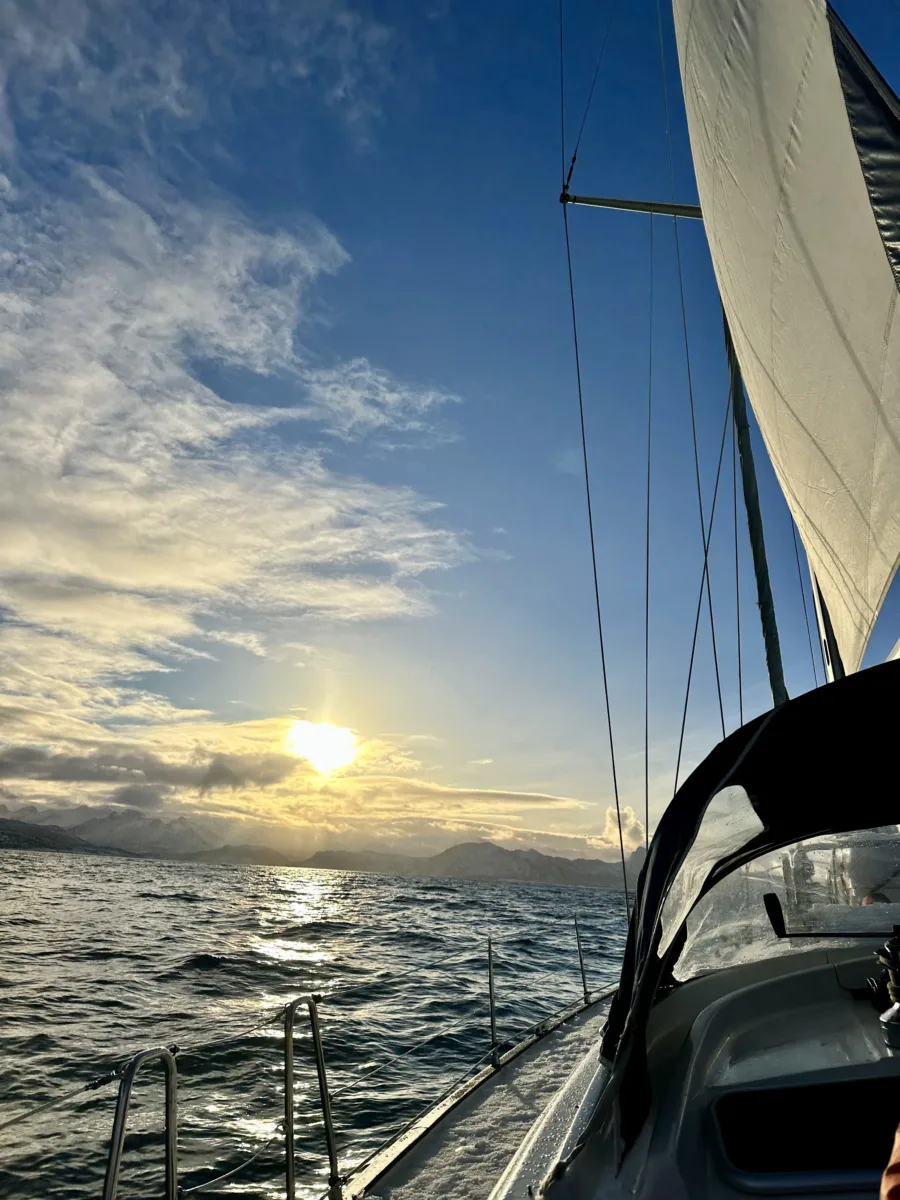
Cold season, or windy destinations
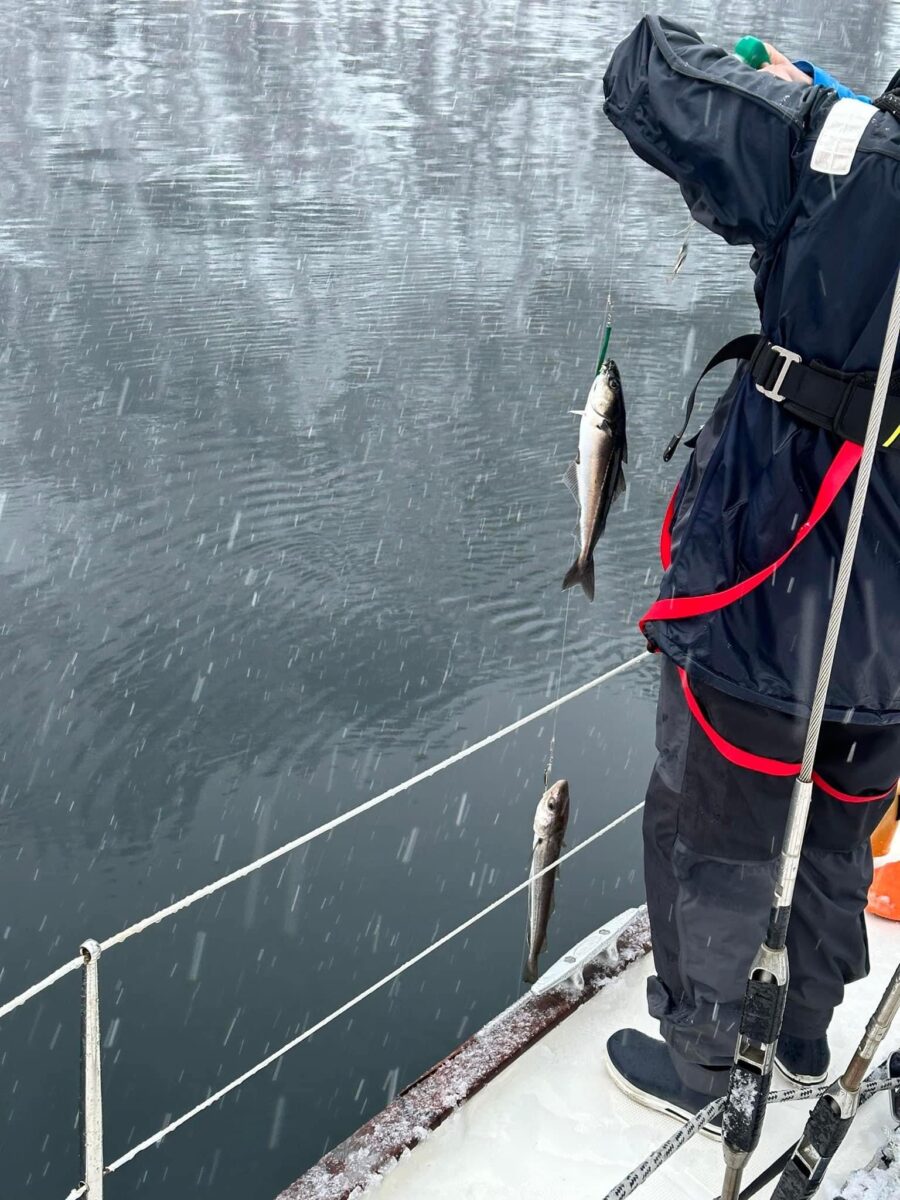
Swap and add long-sleeved tops, a warm fleece, proper trousers, a genuinely waterproof jacket, warm socks, a hat and gloves.
Even in mild climates, mornings and evenings at sea can catch you out, especially with wind. And if your particular madness resembles mine, you may find yourself planning a Lofoten sailing trip in February, in which case see my packing tips for extreme cold.
My travel pharmacy for the boat
Not medical advice, just what I carry: pain relief, antihistamines, something for an upset stomach, anti-nausea tablets, antiseptic cream, an anti-inflammatory gel, plasters, insect repellent and something soothing for bites.
If you take prescription medication, bring more than you need, keep it accessible rather than buried, and tell the skipper it exists and where it is. That last part matters more than people think.
Small things that make a week easier
Pack in pouches. One for underwear and socks, one for swimwear, one for toiletries, one for cables. You will feel organised even when the boat is not.
Assume everything is slightly damp. Even in perfect weather, salt and humidity are constant. Choose fabrics that dry fast.
Eat and drink properly. Skipping meals and mild dehydration make everything harder, including your mood, and on a boat a mood is contagious.
Be useful even when you are tired. You do not need to know how to sail to be good crew. Tidy shared spaces, wash up efficiently, take on the easy jobs, and keep an eye on anyone who looks unwell. A sailing holiday is a shared life. That is the entire point.
Is a sailing holiday for you?
If you love nature, big skies and the feeling of being very small in front of a horizon, yes.
If you need privacy, predictable schedules, long showers and full control of your environment, start with something short. A weekend is the perfect test: long enough to understand the rhythm, short enough not to become a crisis.
Either way: do not be afraid to try. Sailing is one of those experiences that teaches you something about yourself, sometimes with more honesty than you asked for.
And if you have sailed, or are about to, tell me in the comments where and when. I love hearing about other people’s routes almost as much as planning my own.
Fair winds, and calm seas.
Further reading
- My complete guide to a sailing holiday in Lanzarote, including chartering, marinas and the Atlantic tides
- Packing light, and why the bag matters more than what is in it
- The benefits of ginger, including for nausea
FAQ
Pack in a soft duffel bag or rucksack, never a hard suitcase, because cabin storage is tight and irregular. Bring quick-drying clothes, two sets of swimwear, deck shoes or trainers with pale soles, a windproof jacket, a microfibre towel, a silk sleeping liner, high-factor sunscreen, sunglasses on a cord, a waterproof phone case and a power bank. Assume everything will be slightly damp all week.
Storage on a yacht is limited and oddly shaped, usually consisting of lockers and space under bunks. A soft bag squashes flat and stows away, while a hard case cannot be folded or hidden and ends up occupying the cabin floor for the whole trip, which makes it a problem for everyone sharing the space.
Deck shoes or trainers with white or pale rubber soles, because dark soles leave black scuff marks across a white deck that somebody then has to scrub off. Non-slip soles matter for safety, and most skippers ask crew to wear shoes on deck. Flip-flops are fine at anchor and in port but not while sailing.
Take any anti-nausea medication before you leave port rather than after symptoms start, as it is far less effective once you feel unwell. If it begins, stay on deck, look at the horizon, ask for a simple task to do, eat small bland things regularly, stay hydrated, and avoid going below or looking at screens. Ginger helps some people.
Establish what kind of charter it is: bareboat, where someone in your group must hold a licence, skippered, cabin charter with strangers, or flotilla. Agree how the shared kitty for fuel, moorings and food will work and what it covers, before departure. Agree a cooking and cleaning rota, and ask what safety equipment is on board and whether there will be a briefing.