


I wanted to reach Ratnapura for a long time. I know the gem country of Brazilian Minas Gerais quite well, and I wanted to see how the Sri Lankan mines compared, but more than that I wanted to understand something that shapes an entire corner of the island. What I found stayed with me, in the same unsettling way as the tea plantations further north had, visiting the hill country and its Ceylon tea.
Ratnapura is a Sanskrit word meaning “city of gems”. Rubies, sapphires and other precious stones are dug here, and the whole life of the town turns on their extraction and trade. If you are planning the wider journey, Ratnapura sits inside my full guide to independent travel in Sri Lanka.
The city of gems
The mines are scattered across a broad plain on the edge of town. From a distance, you notice only a swarm of men moving among the pits; up close, those same men greet you with an easy smile, seemingly happy to show their work, work that is more than exhausting, judging by the effort and the sweat. Many chew betel constantly to dull the fatigue and endure the suffocating heat.
The stones themselves are extraordinary, and Sri Lanka has been famous for them for over two thousand years. But it is worth being honest about what lies behind them. The men who do the digging work from sunrise to sunset for a daily wage of around 2,000 rupees, roughly six or seven dollars, while the trade above ground, and the profit, sits largely with the mine and land owners. The mines are essentially hand-dug pits, and their safety is a real, documented problem: unregulated shafts, the risk of falls and collapses, and standing water that breeds disease. This is not the mine of the seven dwarves, nor a romantic Klondike. It is holes in the ground, dug by hand.
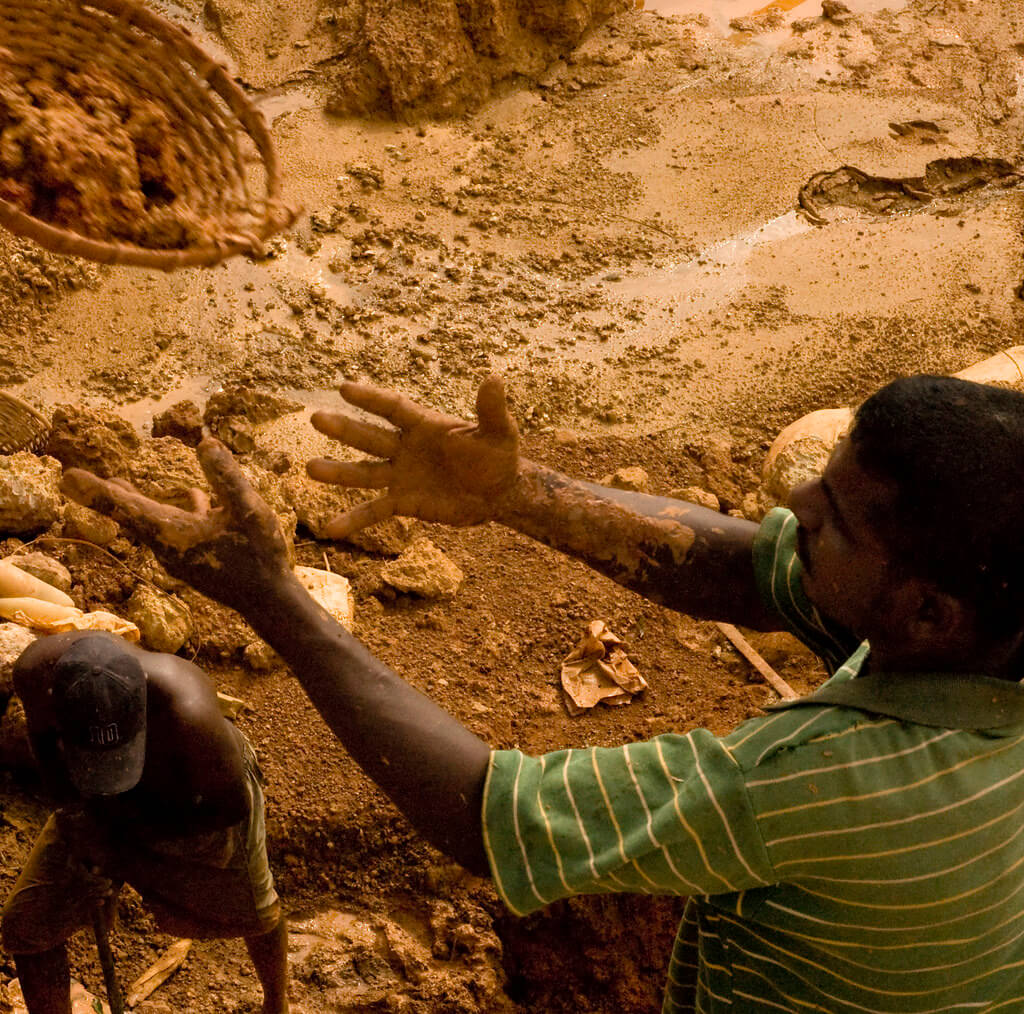
Standing there, dressed like a tourist with a camera around my neck, in front of people who pour their whole lives into that work, I felt like exactly what I was: a visitor looking in on something I would never have to endure.
Down into the pit
The miners invited me to climb down, and, with my usual weakness for improbable experiences, I said yes before I could think better of it. I took off my shoes and socks, ignored every sensible instinct telling me to stay put, and said I was ready.
The first surprise was that no one is lowered gently on a rope. You climb down, and back up, with your own bare hands and feet, gripping slippery wooden beams braced across the shaft, with no protection of any kind. Somewhere on the way down I began to regret refusing the leaves the men chew, and to understand why they chew them.
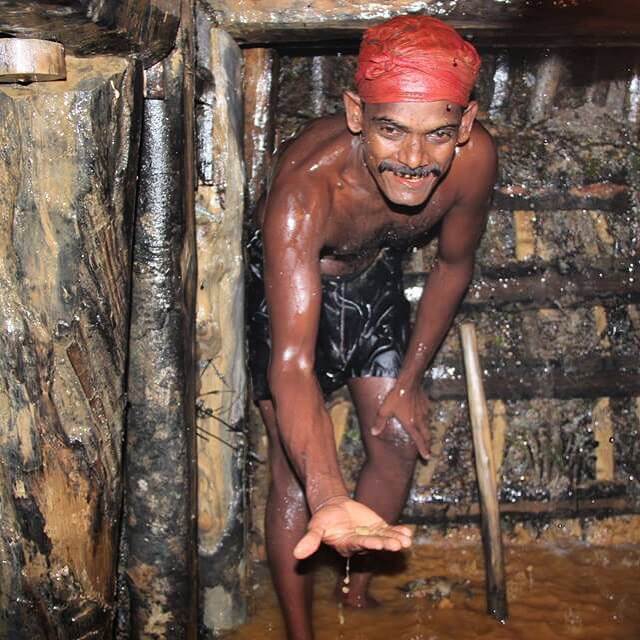
I tried not to show the miners the panic in my head, even as I had a very clear sense that this was one of the hardest, most punishing forms of work human beings had ever devised. The heat and the humidity climbed the deeper I went. When my foot finally reached the bottom, about fifteen metres down, I found mud and warm water, and, looking up, a ring of tiny faces watching from the light above. A miner stood beside me in a low, airless corridor, grinning as though I were a cold drink delivered to him down there.
He asked where I was from. “Italy,” I said. His answer stopped me: “I used to live in Italy, in Milan and Naples, then I came back here.” We were metres underground, in the heat and the dark, in a cramped space with no air, mud oozing warm water, looking for small stones for a few rupees a day, and he had chosen this over a Western city. Everyone, it turns out, feels most themselves at home, and everything is relative.
I did not last long. Halfway back up I had to stop, unable to breathe, my strength gone and the beams damp under my hands, and it was the arm of that same miner, the one who had lived in Naples, that helped me back into the daylight. The mine is clearly not my habitat. But down there, I understood why “going to work in a mine” is never said as a blessing.
Seeing it honestly
Here is the part I have thought about most since.
When you visit, the miners will often offer you a few small stones, the scraps the owner leaves them. It is easy to frame buying them as charity, and easy to reach for your wallet. But I have come to feel uneasy with the whole shape of it: turning someone’s brutally hard, underpaid, dangerous labour into a picturesque half-hour for a passing tourist, and softening my own discomfort with a small purchase on the way out. That is not respect; it is a transaction that lets everyone feel better except the person still in the pit.
I am not going to tell you to come here to shop for gems. If you do go to Ratnapura, go to understand, not to collect. Ask questions, listen, tip the people who show you their work fairly and directly for their time, and carry away the awareness rather than a souvenir. The most honest thing a visitor can do with a place like this is refuse to look away from what it actually is, and let that change how they think about the beautiful, expensive stones in a shop window back home. That is the same thread that runs through everything I have come to believe about travelling responsibly.
Practical notes
Ratnapura is about 100 km from Colombo, in Sabaragamuwa Province. Many guesthouses in town can arrange a visit to a working mine, and some include it in the stay; I stayed at the Ratna Gems Guesthouse. For how to reach Ratnapura and fit it into a wider route, see my guide to independent travel in Sri Lanka.
A word of advice from experience: the descent is genuinely dangerous and physically brutal, with no safety equipment whatsoever. You do not need to climb down a shaft to understand this place, and there is no shame in staying at the surface. Watching, listening and talking to the miners tells you almost everything. I climbed down once. I am not sure I would tell anyone else to.
FAQ
Ratnapura, whose name means “city of gems” in Sanskrit, is the heart of Sri Lanka’s gemstone industry, in Sabaragamuwa Province about 100 km from Colombo. For over two thousand years it has produced sapphires, rubies and many other precious stones, and the life and economy of the town revolve around mining and trading them.
Yes. Many guesthouses and gem shops in Ratnapura can arrange a visit to a working mine, and some include it in the stay. You can watch the miners at work and, if you choose, descend into a pit, though the shafts are hand-dug, unregulated and genuinely dangerous, with no safety equipment, so staying at the surface is a perfectly good and much safer way to understand the place.
The mines are essentially vertical hand-dug pits, often around fifteen metres deep, braced with wooden beams. Miners climb down and up by hand, extract gem-bearing gravel, and wash it to find the stones. There is little machinery and little artificial light, so work follows daylight hours and is physically punishing in the heat and humidity.
Recent reporting puts a Sri Lankan gem miner’s daily wage at around 2,000 rupees, roughly six to seven US dollars, sometimes with a small share of any find. The profits of the trade largely sit with the mine and land owners rather than the men doing the digging, which is worth keeping in mind when you see the finished stones sold at a premium.
It is a genuinely difficult question. The work is hard, dangerous and underpaid, and treating a mine visit as a shopping trip can feel exploitative. If you go, go to understand rather than to collect: ask questions, listen, pay fairly and directly for people’s time, and let the experience change how you think about the beautiful, expensive stones sold back home.