

Travelling is one of the best things in life. The long-haul flight to get there is, for most of us, one of the least good. Unless you have the budget for a flat-bed cabin up front, a long stretch in a narrow economy seat can be a genuine ordeal. So here is my honest, hard-won guide to surviving one.
A quick, important note first: some of what follows touches on health, and I can only tell you what I do, on my own doctor’s advice, for my own body. It is not medical advice. If you have any circulation, heart, ear or other health concerns, or you are pregnant, please talk to your doctor or pharmacist before a long flight, especially about compression stockings and any medication. What suits me may not suit you.
I never used to think about long flights at all. I was, to my great joy, “shipped” off to Argentina from an early age to see my grandmother and aunt, proud to be travelling “like a grown-up” and thoroughly spoiled by the cabin crew, and I never gave the hours a thought. Then two things changed that. In 2005 I burst an eardrum on the descent into Zanzibar, and a few years later I had a bad episode with my legs on the way back from Tokyo. Since then I have taken long flights rather more seriously. I tend to learn only by making mistakes, but you do not have to, so here is what I have learned.
Your cabin bag
Start by packing a cabin bag with everything you might need in the air. Mine is always more or less the same:
- hand wipes, useful for freshening up and cleaning your hands
- my camera and its charger
- phone, charger and earphones (the ones airlines hand out are usually dreadful)
- my e-reader, for when the films disappoint and to read over my travel notes (I have long travelled with a Kindle; models change, so pick the current one that suits you)
- a USB power bank
- pen and notebook
- energy bars and snacks, in case the food is not to my taste
- a small wash bag: toothbrush and paste, comb, lip balm, moisturiser, hand sanitiser, and any medicines I need
- a spare pair of socks, for padding around the cabin
- a pillow, an eye mask, and a lumbar support I bought years ago in the States that has saved my back many times
You will find my full list of what goes in my under-the-seat backpack in my guide to packing light. Then choose comfortable clothes, and whatever the season, bring a jumper, because the air conditioning on board is always merciless.
The product links above are affiliate links; if you buy through them I may earn a small commission at no extra cost to you. They are things I actually travel with.
Looking after yourself in the air
Cabin pressure at cruising altitude is roughly equivalent to standing at around 2,000 to 2,500 metres, which is why circulation and ear issues can flare up in flight. Here, again as my own routine and not a prescription, is how I manage it.
For circulation. After my scare coming back from Tokyo, my legs and feet swell on even short flights, partly because my blood pressure runs low. So, on my doctor’s advice, I now wear proper graduated compression stockings (the unglamorous kind from the pharmacy) from the morning of the flight until some hours after landing. On board I swap my shoes for my spare socks, and every hour or so I do the simple movements the airlines themselves now recommend: heel-and-toe raises, ankle circles, lifting the legs. And I drink plenty of plain water, which means getting up often, which is exactly the point. If you have any risk factors for blood clots (a history of them, recent surgery, pregnancy, certain medications), do speak to your doctor before flying, as this is genuinely worth personalised advice.
For ears. Ear trouble usually strikes on descent, and is far worse with a cold or an ear infection. I chew gum on the way down, and, on my doctor’s guidance, I take a decongestant beforehand if I am congested. If you fly with a heavy cold and your ears are blocked, tell the crew; on the flight home after my burst eardrum they improvised a contraption of hot-oil-soaked cotton wedged between two plastic cups for me to hold over my ears, and, tragicomic as I looked, it genuinely helped. And if you are prone to motion sickness, bring your tablets, or buy some at the airport pharmacy.
For the air conditioning, which freezes and dehydrates you, especially if you board with a post-holiday tan: drink plenty, moisturise your skin and lips, and if you wear contact lenses, consider glasses and eye drops instead.
Choosing your seat
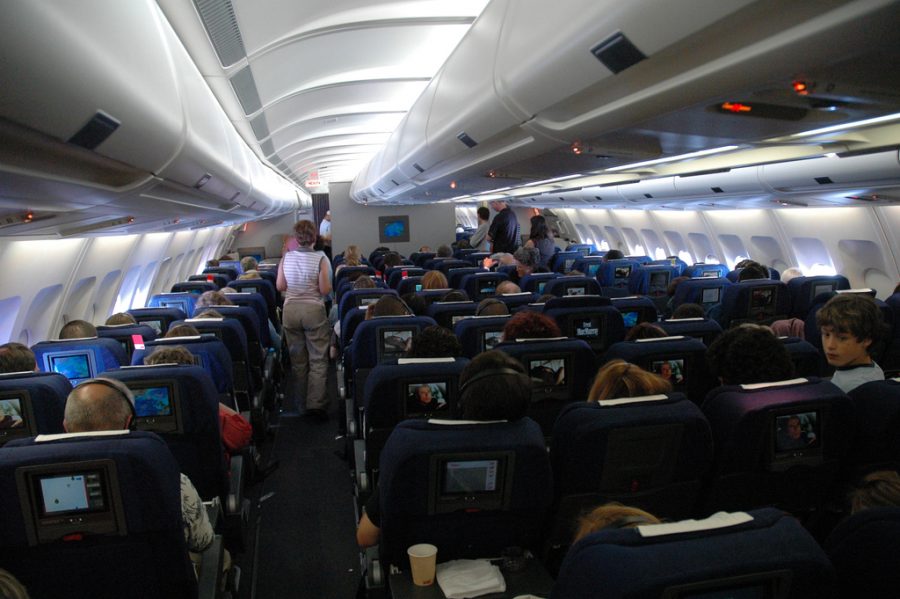
I used to always pick the window, so no one could disturb me. Now that I need to move, I choose the aisle, and I always ask whether they can seat me with free space nearby so I can stretch out; travelling off-season, I often get it. Beyond that:
- the bulkhead (first row) has legroom but no under-seat bag, and is good for a quick exit
- emergency-exit rows have much more space, again with no bag at your feet
- towards the front, engine noise is less
- over the wings you feel turbulence least, good if you are a nervous flyer, though the view suffers
- avoid the seats by the toilets (a permanent queue at your elbow) and the very back row, which is the most cramped and sometimes does not recline
Have a wonderful flight, and an even better trip.
Frequently asked questions
The general advice is to move regularly (ankle circles, heel raises, and walking the cabin when you can), stay well hydrated with water, avoid excess alcohol, and wear comfortable clothing. Graduated compression stockings help many people, but if you have any risk factors for deep vein thrombosis, such as a history of clots, recent surgery or pregnancy, talk to your doctor before flying, as you may need specific advice or precautions.
Ear discomfort usually happens on descent. Swallowing, yawning and chewing gum help equalise the pressure, and staying awake for the descent lets you manage it actively. If you have a cold or blocked sinuses it is much worse, so if that applies to you, ask a pharmacist about a suitable decongestant beforehand, and tell the cabin crew if your ears are badly blocked in flight.
The essentials are a refillable water bottle, a jumper for the cold cabin, spare socks, an eye mask and neck or lumbar support, your own earphones, a power bank, lip balm and moisturiser, snacks, any medication you need, and something to read or watch. Keep the things you will actually use during the flight in a small bag under the seat in front of you.
It depends on your priority. An aisle seat is best if you want to get up and move often; a window is better if you want to sleep undisturbed and lean against something. Bulkhead and emergency-exit rows have extra legroom but no under-seat storage. Over the wings you feel turbulence least. Avoid seats beside the toilets and the very back row.
Flying with a mild cold is usually fine, but a heavy cold or sinus or ear infection can make the pressure changes on descent painful and, rarely, damage the eardrum. If you are very congested, consider a decongestant on a pharmacist’s advice, stay hydrated, and if you have an ear infection, check with a doctor before flying.
This post touches on health topics for general interest only and is not medical advice; please consult a doctor or pharmacist about your own circumstances.
Further reading
- My guide to packing light, with the full cabin-bag list
- The travel insurance I actually use
- How I plan trips: independent travel