


In short: responsible travel is more than recycling and reusable bottles. At its core it is respect, treating a destination as someone’s home rather than a backdrop, following local rules, supporting local livelihoods, and leaving a place at least as alive as you found it.
I write about travel sustainability on this blog, and I stand by every word of it. But lately, living and working in a destination that is both adored and overused, I want to say something louder and simpler.
Responsible travel is not only about carbon footprints, refillable bottles, or picking the “eco” option on a booking engine. It is about how you behave in a place that is somebody else’s home, on a trail that somebody has to maintain, and in a community that keeps functioning long after you have posted your photographs and gone.
I learned this in an almost banal way, on a snowy afternoon in Japan in 2017. And I watch the same thing play out on the trails of the Cinque Terre far too often.
The day a small mistake became everyone’s problem
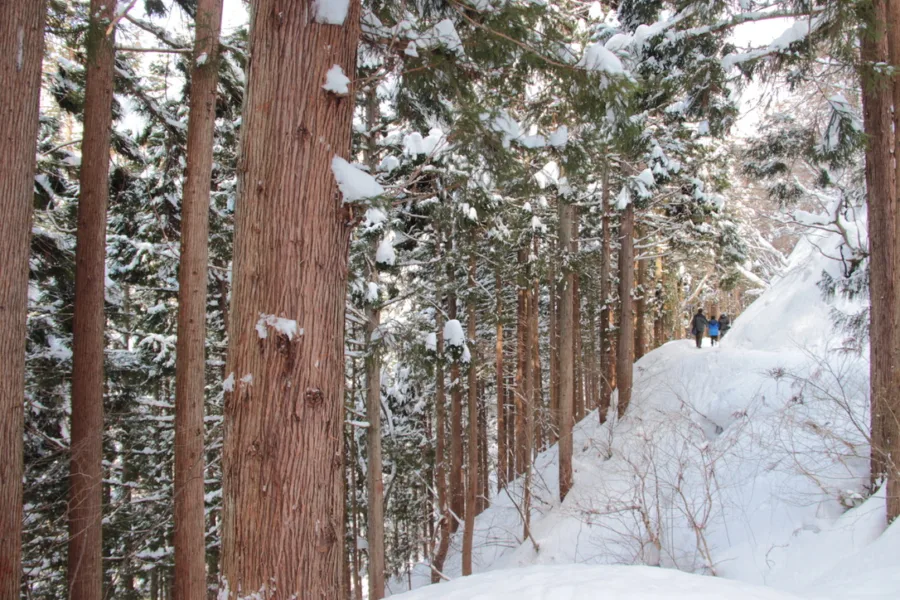
In 2017, on the path up to the Jigokudani Monkey Park, a girl slipped on the snow. She was lucky. She came to rest against a tree a few metres below and got away with scratches.
What happened next is the point.
Several of us formed a human chain to haul her back up. A Japanese man hurt his back doing it. I injured my shoulder, which I had dislocated a few months earlier. We all did it on instinct, because that is what decent people do, but it left me thinking.
This was not a freak accident, nor was it bad luck.
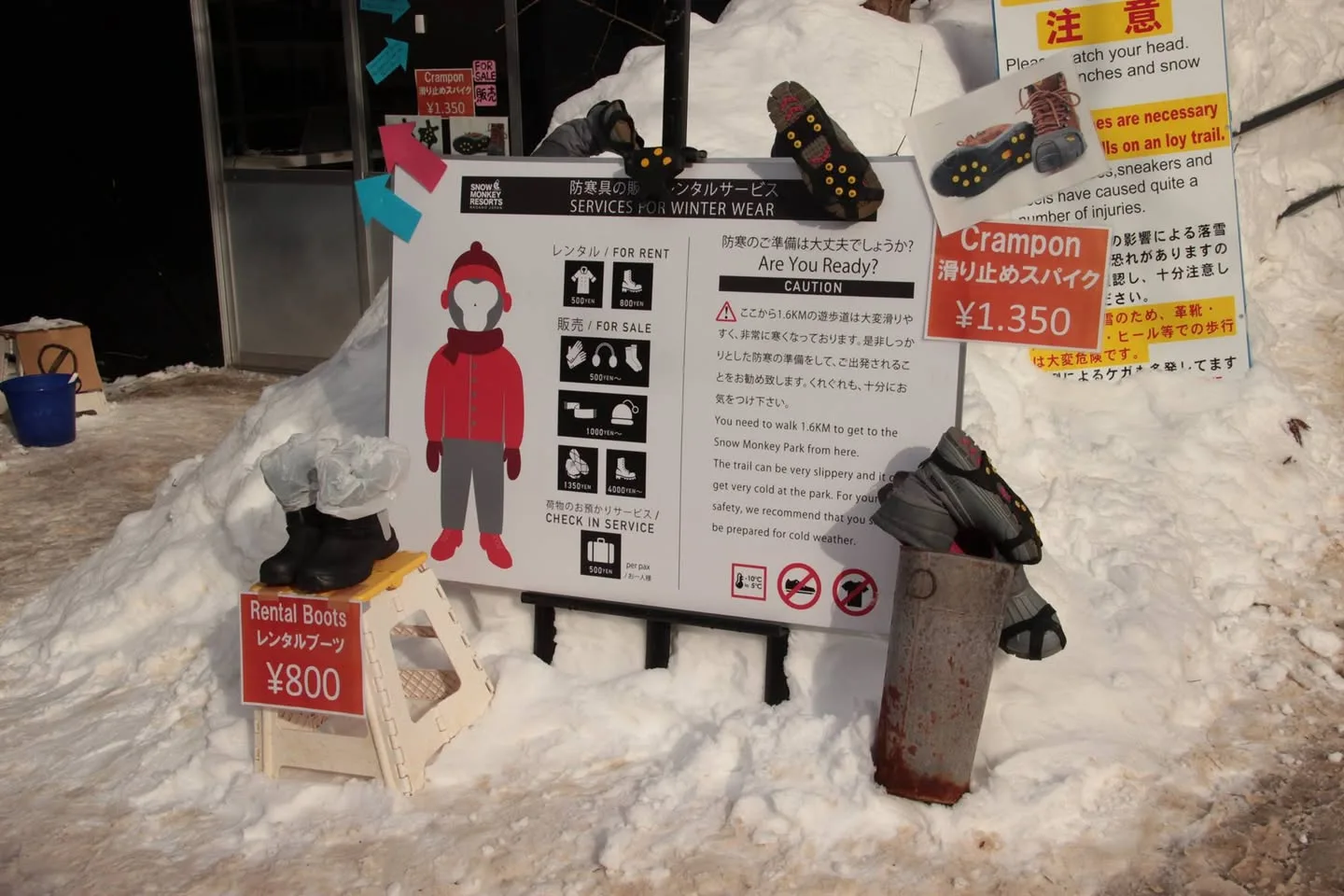
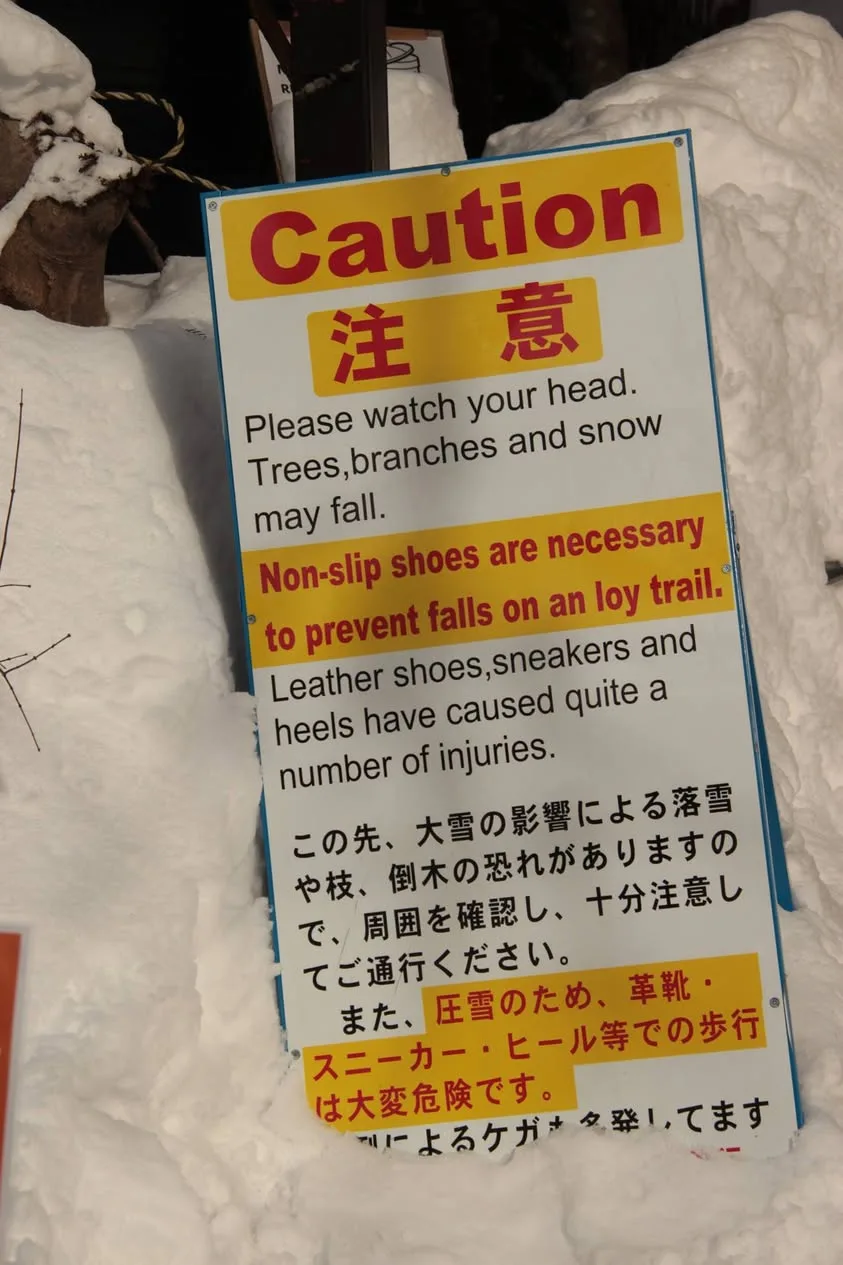
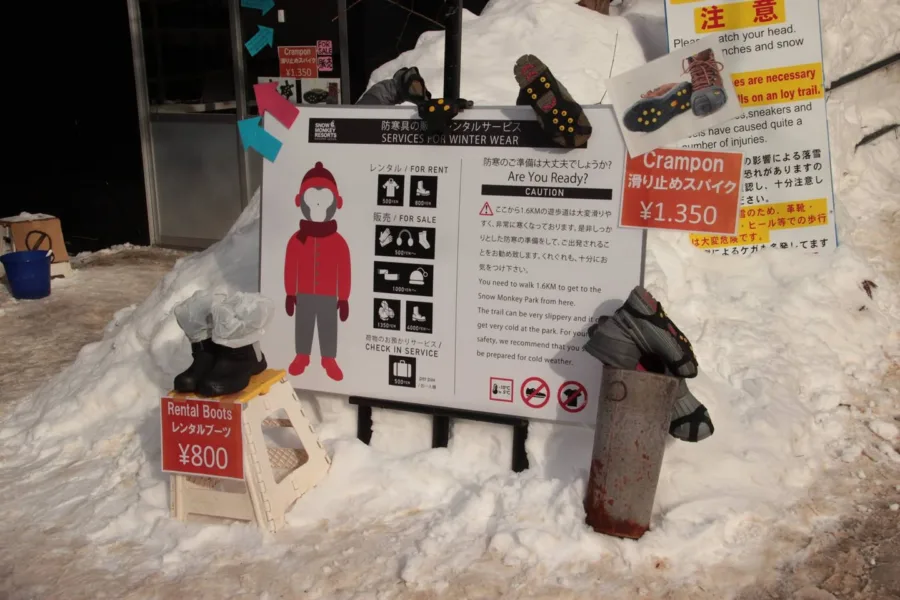
At the entrance, there were signs, with clear drawings, explaining that this was not a trail for loafers, ankle boots or Converse. They even sell and rent proper boots and crampons for people who turn up unprepared. And yet, exactly as I so often see in the Cinque Terre, plenty of visitors shrugged, laughed and carried on regardless.
If the risk stayed with the person taking it, I would still disagree, but I would accept it as their choice. The trouble is that it does not stay personal.
When one person slips, everybody stops. The flow freezes. People behind are left waiting on exposed, slippery ground. Someone always tries to help. Sometimes it is a local, sometimes a volunteer, sometimes a stranger who gets injured doing the right thing. That afternoon in Japan it was not the only fall, and not the only moment when an entire path slowed to the speed of fear because of somebody’s footwear.
A friend of mine, Claudio, reminded me of a version closer to home: a girl who joined a night hike in flip-flops and left him to stay behind and shepherd her down.
Different countries. Same pattern.
In the Cinque Terre, carelessness has a price. Literally.
The Cinque Terre trails are not a theme park. They are real paths, with real erosion, real cliffs, real summer heat, real shoulder-season storms, and real people trying to keep them safe.
And here is something a surprising number of visitors do not know. Since 2019, wearing flip-flops, sandals or smooth-soled shoes on the trails of the Cinque Terre National Park has been banned, and it carries a fine. Penalties start at around 50 euros and can, in theory, run as high as 2,500. Rangers do check at trailheads, and hikers who turn up unequipped can be turned back.
I mention this not because I think fear of a fine is the right reason to behave well. I mention it because it tells you something. A national park does not impose a 2,500-euro fine for a pair of sandals unless the problem has become serious, expensive, and dangerous. The rule exists because rescues kept happening.
The park director put it plainly: these are, in places, mountain paths. The scenery photographs like a gentle seaside stroll, and it is not.
When people walk these trails in the wrong shoes, without water, without checking closures, treating the route as a hop between gelato stops, the cost spreads outwards fast:
- rescue services are called out for entirely preventable incidents
- civil protection volunteers and local teams lose hours and energy they do not have
- other walkers are delayed, stuck, or pushed into risky overtakes
- the trails themselves are damaged, especially when people step off-path to get around crowds or mud
And there is an emotional cost too, the quiet exhaustion of those of us who live here and watch the same avoidable scene repeat itself every single day.
Your ticket pays for the people who come and get you
There is a detail I think everyone walking here should sit with for a moment.
The Cinque Terre Card, which you need for the coastal sections of the Sentiero Azzurro, is not a tourist tax invented to annoy you. The revenue from those cards is what funds the maintenance of the paths: the dry-stone walls, the steps, the drainage, the repairs after every landslide. Without it, the sheer heroic effort required to keep this landscape walkable would simply not be sustainable.
So the money you hand over at the trailhead pays for the trail beneath your feet, and, indirectly, for the network of people who will come and find you if it goes wrong.
That, to me, reframes the whole thing. You are not buying a ticket. You are joining a system of mutual care, and the least you can do is not become the reason it gets tested.
What responsible travel actually means
Sustainability matters. But responsible travel is broader and more immediate. It is a mindset made of small decisions.
Respect the place as a living territory. Not a backdrop. Not content. Not a checklist. In a fragile destination, your behaviour either protects it or hastens its decline. Staying on marked paths, honouring closures, not cutting corners: that is not obedience. It is declining to create damage that somebody else will have to repair.
Respect the people who live there. A destination is not a service. It is a community with rhythms, work, school runs, elderly neighbours and deliveries. So keep the noise down in residential streets, do not block doorways, alleys and staircases for a photograph, and understand that local life is not a performance laid on for tourism.
Respect the people who keep you safe. Civil protection volunteers, rescuers, park staff, guides, and maintenance crews. In most places, they are under-resourced and permanently stretched. Every avoidable emergency pulls them away from something else and puts them at risk, too.
Respect the other visitors. This is the one people forget. If you hike in the wrong shoes, you are not free-spirited. You are a bottleneck, a hazard, and possibly an emergency that somebody else will have to manage.
You do not need to be an expert hiker to travel responsibly. You need to be prepared.
The practical part: how to hike well here, and anywhere
Before you set out
Check the official trail status, and check it twice: the day before, and again on the morning you walk. Closures in the Cinque Terre vary with weather, maintenance, and landslides, and the Manarola-to-Corniglia stretch, in particular, has closed repeatedly in recent years. The Cinque Terre National Park is the source that matters.
Plan your timing. Early morning or late afternoon means less heat, fewer people and better light. Note too that in peak season, some stretches, such as Monterosso to Vernazza, may run one-way during the middle of the day.
Be honest about your fitness. Choose the route that suits you, not the one that suits your Instagram feed. Do not chain together all five villages, a long hike and a sunset aperitivo if you have not walked in months. Pick one proper walk and let the day breathe around it.
Footwear is safety
If I could put one thing on a billboard, it would be this.
Trainers with a real grip are the minimum. Hiking shoes if the ground is uneven, wet, steep or rocky. No sandals, no fashion boots, no smooth soles. On snow or ice, rent or buy microspikes if they are recommended, as they were in Japan, where the shop was right there at the entrance.
Good shoes are not only about you. Feet that slip dig out soil and dislodge stones, eroding the path and adding to the repair bill.
What to carry
Water, always, and in summer, treat it as safety equipment rather than a comfort. Light layers, because exposed sections catch the wind. Sun protection, hat and all. A small snack, not because this is an expedition, but because low blood sugar makes people clumsy, and clumsy is how falls happen.
On the trail
Do not step off the path to overtake or to let others by if it means trampling vegetation or crumbling the edge. Wait for a safe, wide point. If you are slowing the flow, pull aside to a safe spot and let people through; this is normal and keeps everyone calm. Do not overtake in a risky spot out of impatience. Carry your rubbish out every time. And keep your voice down, near homes, near vineyards where people are working, and in nature generally, which is not improved by shouting.
If it goes wrong
Ask for help, and do not let pride stop you. Turning back is very often the most responsible thing you can do, and it is not a failure. If you come across someone in trouble, help if you can do so safely, but do not create a second casualty. And know that in terrain like this, calling for rescue can be slow and complicated. Do not treat your phone signal as a safety plan. Prevention is the whole game.
In Italy, the emergency number is 112.
What I keep coming back to
That afternoon in Japan could have ended far worse. What stayed with me is not the fall but the chain reaction: strangers hurt while helping, the path blocked, everyone else edging nervously around one person’s avoidable mistake.
And it is exactly what I feel when I watch people underestimate the Cinque Terre, dismiss the warnings, laugh at the signs, and then look genuinely surprised when it gets difficult.
Being prepared is not being less adventurous. It is what lets you enjoy a place deeply and safely, with a lightness that does not become somebody else’s burden.
Responsible travel is, in the end, a form of respect. For a place. For the people who live in it. For the people who keep it running. For the other travellers on the same narrow path. And yes, for yourself.
If all of this raises the obvious question, what does respect actually look like when you travel, I have set out the practical answer in how not to love a place to death.
Respect also shapes how we represent the people we travel among, and especially their children. I wrote about where that line falls, and why it is 2 different questions, in photographing childhood in travel reportage.
Further reading
- The traveller’s companion to this piece: what travellers can actually do about overtourism
- Cinque Terre National Park, for trail status, closures and the Cinque Terre Card
- My guide to travel sustainability
FAQ
Responsible travel goes beyond sustainability and carbon footprints. It is about how you behave in a place that is someone else’s home: respecting the territory, the residents, the volunteers and rescuers who keep it safe, and the other visitors sharing the same narrow path. In practice, it means preparation, awareness and consideration.
No. Since 2019, the Cinque Terre National Park has banned flip-flops, sandals and smooth-soled shoes on its hiking trails, with fines starting at around 50 euros. Rangers check footwear at trailheads and can turn walkers back. The paths are steep, rocky and, in places, closer to mountain trails than seaside strolls.
At a minimum, trainers should have a proper grip. Hiking shoes are better for wet, uneven, steep, or rocky terrain. Sandals, fashion boots and smooth soles are banned and unsafe. Good footwear also reduces erosion because slipping feet dislodge stones and dig out the path’s soil.
The revenue from the Cinque Terre Card directly funds the maintenance of the trails: the dry-stone walls, steps, drainage and repairs after landslides. It is required for the coastal sections of the Sentiero Azzurro, and without it, keeping this fragile terraced landscape walkable would not be financially sustainable.
Check the official Cinque Terre National Park website both the day before your hike and on the morning of your hike. Closures change frequently due to weather, maintenance, and landslides, and the Manarola to Corniglia section in particular has closed repeatedly in recent years.







2 Comments