


Sri Lanka is one of the best countries in the world to travel independently. It is compact, endlessly varied, cheap once you are there, and laced together by a bus and train network that will take you almost anywhere for the price of a coffee at home. In a single month you can go from ancient cities to hill-country tea plantations to leopard safaris to empty southern beaches, all under your own steam, without a tour and without a fixed plan.
I know, because I did exactly that: a month across the island, every leg arranged by me, no package and no guide. This is the guide I wish I had before I went, updated with what has changed since, and written for the traveller who wants to do it the way I did, independently, and very possibly alone.
First, the good news: the visa is now free
This is the single biggest change since I first travelled there, and it is worth leading with.
Since 25 May 2026, the tourist visa is free for nationals of 40 countries, including the UK, Ireland, most of the EU, the US, Canada, Australia and many others. You still apply online for an Electronic Travel Authorisation before you fly, through the official government site at eta.gov.lk, and you should still do it in advance rather than on arrival, but the fee that used to be around fifty US dollars has gone to zero for eligible passports. The free ETA covers 30 days with double entry, and you can extend it in Colombo for a fee if you want to stay longer.
Two things have not changed: your passport must be valid for at least six months beyond your return date, and you should apply only through the official eta.gov.lk site, not the many lookalike agency sites that add a “service charge” for a form you can complete yourself in ten minutes.
Is Sri Lanka good for solo and solo female travellers?
Yes, with the ordinary awareness any solo traveller carries. I travelled the island at length and found it welcoming, navigable and genuinely easy to do alone. The transport is simple once you understand it, guesthouse owners are used to independent travellers and will help you plan your next leg, and the well-worn route through the cultural triangle, the hill country and the south coast means you are rarely far from other travellers when you want company.
A few honest notes for women specifically, from experience:
- Dress modestly away from the beach and the capital. On the coast and in Colombo, shorts and summer dresses are fine. Inland, in towns, in the hill country and above all at any temple, cover shoulders and knees. This is partly respect and partly the simplest way to attract less attention. Carry a sarong or a light scarf at all times, which doubles as temple cover.
- Buses and trains are generally fine alone, but they get very crowded, and crowding is where unwanted contact happens. If a carriage or a bus is packed to the doors, wait for the next one. There is always a next one, and a little patience beats four hours of discomfort.
- Book the first night of each new place in advance, so you arrive somewhere known rather than negotiating in a strange bus station after dark. After that you can be as spontaneous as you like.
- The reserved-seat train classes are worth it when travelling alone, particularly first and second class on the hill-country lines, where you get a guaranteed seat and a calmer carriage.
None of this is unique to Sri Lanka. It is the same awareness I use anywhere, and I write about it more fully in my guides to travelling solo and to avoiding theft and scams.

A month-long independent route
I spent thirty days and moved roughly clockwise from the airport, through the ancient cities, up into the tea hills, down to the safari parks and along the south coast. It is the classic loop for a reason: it works, it flows in one direction, and every leg connects by public transport.
Here is the route, with what each stop is for. I have kept my own accommodation picks where they still stand, but treat all prices as indicative: this was a decade ago, costs have risen, and you should check current rates when you book. What has not changed is the shape of the trip and the logic of it.
Negombo, the soft landing
Fifteen minutes from the airport, a strip of beach, seafood and crows. Nobody’s favourite town, but the right place to sleep off the flight before you start, rather than tackling Colombo jet-lagged. One night is plenty. A short taxi from the airport, agreed in advance.
Anuradhapura, the ancient capital
The first of the great ancient cities, best seen by bicycle, which most guesthouses rent or include. Give it a full day to cycle the sacred sites and the vast reservoirs. Reach it from Negombo by public bus, which passes frequently, so if the first is jammed, wait for the next.

Sigiriya and the cultural triangle
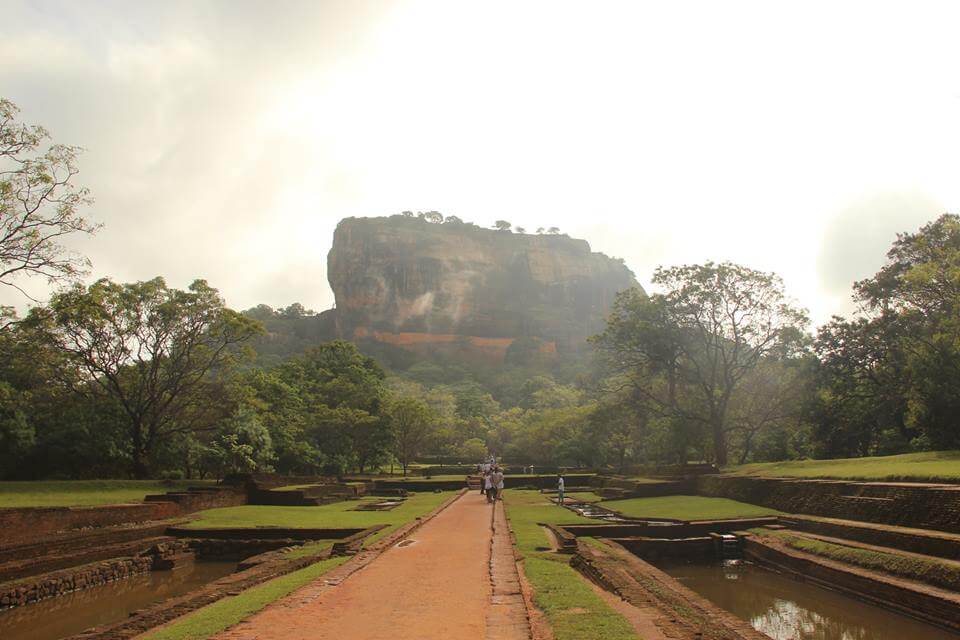
My favourite base, in the jungle beneath the famous rock. From here you can reach an extraordinary concentration of sites: the Lion Rock of Sigiriya itself, the ruins of Polonnaruwa, the cave temples of Dambulla, the quieter Pidurangala rock with the better view back at Sigiriya, and forest monasteries. Two days sees the essentials, more if you like to linger, which I did. A local tuk-tuk driver hired by the day is the efficient way to string the sites together, and your guesthouse can introduce you to a reliable one.
Kandy, the hill capital
The cultural heart of the island: the Temple of the Sacred Tooth, the lake, the dancers, and the start of the tea country. The town itself is busy and can be wearing, so I based myself in the hills just outside, which I would recommend. A day and a half is enough. Do not miss the tea, in every sense.

Nuwara Eliya and the tea country
Up into the “Little England” of the hills, all colonial cottages, cool air, and tea plantations running right to the edge of town. The journey here, by train to Nanu Oya, is the beginning of the most beautiful rail route in the country. A tip that still holds: hill-country trains are often reported as fully booked days ahead because agents hold the seats, but reserved tickets are released on the morning of travel, so turn up early at the station, and you can usually get one. Hortons Plains and its World’s End viewpoint is the great hike from here.
Haputale and Ella, the reason to take the train
If you do one thing in Sri Lanka, take the hill-country train through here. It is one of the great train journeys on earth, and even standing jammed in a third-class doorway with the tea slopes falling away below you, it is pure joy. Haputale is the quieter base, with Lipton’s Seat and the Adisham monastery. Ella is the traveller’s darling: laid-back, walkable, full of cafés, with the hike up Ella Rock and Little Adam’s Peak on the doorstep. Between them they are where independent travellers slow down and lose a few days on purpose.
Yala, for the leopards
The south-east’s great national park, and one of the best places in the world to see a wild leopard, along with elephants, crocodiles and endless birdlife. I rated the safari here above one I had done years earlier in Kenya. Stay near the park in Tissamaharama, arrange a jeep and an early start through your accommodation, and go at dawn.
The south coast beaches
The reward at the end. Tangalle was my favourite: wide, wild, dune-backed, with a handful of low-key resorts. Unawatuna is busier and more developed, but a good base for the fort city of Galle, for whale watching off Mirissa, and for the coastal railway back towards Colombo, which runs so close to the sea it seems to float.

Colombo, briefly
Most independent trips end here, near the airport. Give it an afternoon: the old Dutch hospital quarter, now full of restaurants, the colonial-era streets, and the seafront. It is not the point of Sri Lanka, but it is a civilised place to land back into a city before flying home.
Getting around, the heart of independent travel here
This is what makes Sri Lanka such a joy to do alone and unpackaged.
Trains are the best way to travel the hill country, cheap and unforgettable, and for the scenic legs the discomfort is part of the story. Reserve where you can, turn up early where you cannot.
Buses go everywhere, constantly, and cost almost nothing. They are crowded and lively and the single best way to travel like a local. The rule that saves you: if one is packed, wait for the next, because there always is one.
Tuk-tuks cover the short hops and the site-hopping. Agree the price before you get in, every time, and your guesthouse will tell you the fair rate. Reckon on a per-kilometre norm and negotiate to it.
Guesthouse owners are your travel agents. This is the thing I most want independent travellers to understand about Sri Lanka. The family running your guesthouse will book your next bus, find you a trustworthy driver, arrange your safari and tell you which train seat to aim for. Lean on them. It is how the whole independent-travel ecosystem there works, and it is one of the warmest things about the country.

What to pack for independent travel in Sri Lanka
- A backpack, not a wheeled case. You will be on and off trains, buses and tuk-tuks constantly, and dragging wheels through a bus station is misery. This is the same principle from my packing light guide.
- A silk sleeping-bag liner. Standards vary a lot, and a clean layer of your own means you sleep well anywhere.
- A sarong, endlessly useful: temple cover, beach towel, bus blanket, sun shade.
- Modest layers for temples and the hill country, which is genuinely cool, plus your beach things.
- Soap and loo roll, not guaranteed everywhere.
- Insect repellent, and cover up at dusk.
- A first-aid kit and any medication you need, kept accessible.
- Layers for the flight and the hills. You can land from near-freezing into thirty-plus degrees, and the hill nights are cold.
One practical warning that has not dated: do not eat or drink near the monkeys. They will take food straight from your hands and can bite. I watched it happen more than once.

The honest bit
Sri Lanka is not a polished destination, and that is part of why I love it. Standards of cleanliness and organisation are not what a Western traveller is used to, across every price bracket, and if that is going to distress you, go in knowing it. But this is the texture of a real place travelled honestly, not a resort, and the rewards, the landscapes, the trains, the wildlife, the genuine and constant kindness of the people, are out of all proportion to the small discomforts.
It surprised me more than almost anywhere I have been. Go independently, take the trains, lean on the people who host you, and give it the full month if you possibly can.
If you have questions about planning your own trip, ask me in the comments. I answer them all.

Further reading
- The best countries for solo travel
- Avoiding theft and scams when travelling
- Packing light, and why the backpack matters
- My safari at Yala National Park and the gemstone mines of Ratnapura

FAQ
Yes, it is one of the best countries in the world for it. Sri Lanka is compact, inexpensive once you arrive, and connected by an extensive and very cheap network of buses and trains that reach almost everywhere. Guesthouse owners routinely help independent travellers arrange transport, drivers and tours, so you can cover ancient cities, hill country, safari parks and beaches in a month without any package or guide.
Generally yes, with the usual awareness. It is welcoming and easy to navigate alone, and the well-travelled route means you are rarely far from other travellers. Dress modestly away from the beach and Colombo, carry a sarong or scarf for temples, wait for the next bus or train if one is uncomfortably crowded, and book the first night in each new place in advance so you never arrive somewhere unknown after dark.
You still need an Electronic Travel Authorisation (ETA), applied for online before you fly, but since 25 May 2026 it is free of charge for nationals of 40 countries, including the UK, most of the EU, the US, Canada and Australia, valid for 30 days with double entry. Apply only through the official government site, eta.gov.lk, and make sure your passport is valid for at least six months beyond your return date.
Around a month lets you travel the classic clockwise loop at a comfortable independent pace: the ancient cities of the cultural triangle, Kandy and the hill country, a hill-country train journey, a safari at Yala, and the south coast beaches, ending near Colombo. Two to three weeks is enough for a focused version if you move a little faster and skip a stop or two.
Trains for the hill country, which are cheap and among the most scenic in the world, buses for almost everywhere else at very low cost, and tuk-tuks for short hops and site-hopping, always agreeing the fare before you set off. Reserve train seats where possible, and turn up early at the station for the hill lines, since seats are released on the morning of travel.