


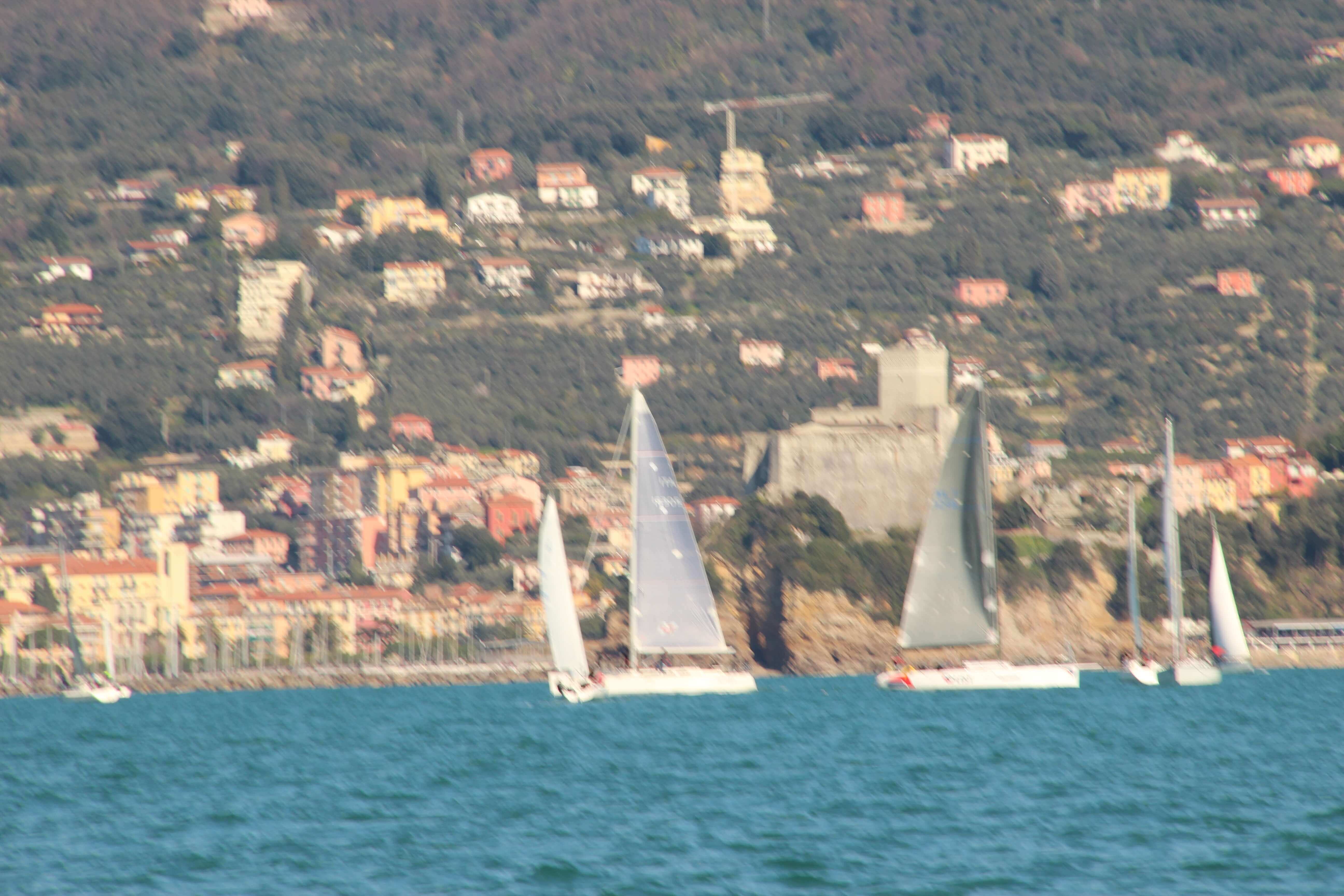
I have just come home from a too-short sailing weekend in the Gulf of Poets, and I am simply happy, even if my desk, my Mac and the whole room still seem to sway gently around me. Land sickness, the sailor’s little curse.
This stretch of sea is right on my doorstep, and I know its villages well, yet its beauty still catches me out every time. And seen from the deck of a sailing boat, it is better still. I hold a skipper’s licence and I have sailed a good deal, but the Gulf of Poets is where I learned much of it, out with my friends from Vento in Poppa, so let me take you round it the way I know it, from the water.

Setting off from Le Grazie
We usually board at Le Grazie, a fishing village folded into a sheltered cove, where boatbuilding and fishing still set the rhythm. It is a handy harbour: parking a few metres from the pontoons, a supermarket, bars and restaurants, fishermen selling their catch straight off the boats at dawn, and rows of beautiful old wooden sailing ships. A small pearl.
It is also home to the Italian Navy’s commando divers, and a few metres from “our” pontoon a gate separates the everyday world from the bastion of Varignano, once a penal colony of the Kingdom of Sardinia, and, beyond it, the remains of a grand Roman villa. History is never far away here.


From Le Grazie you are under sail within minutes, out into the heart of the Gulf, with the evocative Torre Scola, a Genoese sea-fort, rising from the water. Ahead lie the islands of the La Spezia archipelago, Palmaria, Tino and Tinetto, divided from Porto Venere by the strait of Le Bocche, and across the bay San Terenzo, Lerici, Fiascherino and, my favourite of all, Tellaro. There is almost always a breath of wind inside the bay, even on flat-calm days, especially near the Porto Venere channel, so you can nearly always steal some real sailing, and get up a more-or-less serious race. The less serious one, my mid-September regatta, is the one I never miss.
The coves
- Between Lerici and Fiascherino: a little corner of paradise, emerald water and an almost Asian-looking cliff, hard to reach from the road above and therefore never crowded. Do not confuse it with the military bay just behind Lerici castle, nor with the smart Eco del Mare beach club.
- Tellaro cove, just behind the pier and the picture-book church: about ten metres of clear water, a stunning setting, quiet in the afternoon, though poorly sheltered in a heavy sea.
- Cala Grande, which my Vento in Poppa friends renamed “Fork Cove”, on the east side of Palmaria, sheltered by Tino and shaded in the afternoon. To understand the nickname, just count the boats anchored there at lunchtime.


The anchorages
Two are worth knowing:
- Le Grazie roadstead, between Fezzano and Porto Venere: excellent shelter from every wind except the Grecale, muddy bottom from about 12 down to 5 metres.
- Terrizzo roadstead, between Porto Venere and Palmaria: a good spot, troubled only by the Grecale and Tramontana, and by the channel traffic. There are handy free buoys; the bottom runs from about 8 to 2 metres, and the shore is dotted with the Gulf’s characteristic fish farms and a fair amount of weed.
The villages
They are all worth a stop, for their beauty and for the seafood.
Lerici, at the eastern end of the gulf, was an important medieval port on the pilgrim road north. Do not miss its old Jewish quarter, the castle, the geo-palaeontological museum, Villa Marigola and its park, the squares of Poggio and San Giorgio, and the seafront walk round to San Terenzo.
San Terenzo, a hamlet of Lerici, is an ancient village where time seems to stand still, with its bright beaches and a clifftop castle above the cave known as the Tana dei Turchi. It was here, at Villa Magni, that Shelley spent his last months.
Tellaro is my favourite: a fishing village perched on the rock, still showing its old fortifications, the two Pisan-era towers now the church bell tower and the village gate. I love everything about it, the sea breaking right against the houses, the salt-smelling alleys, the pink church that looks like a ship at sunset, the balconies, the agaves, the view to the islands. A place to fall in love.
For my own parents, the village where they fell in love was Porto Venere, and they were not wrong: Porto Venere is special, and from a sailing boat, especially during the Madonna Bianca festival, it is pure magic.

The islands
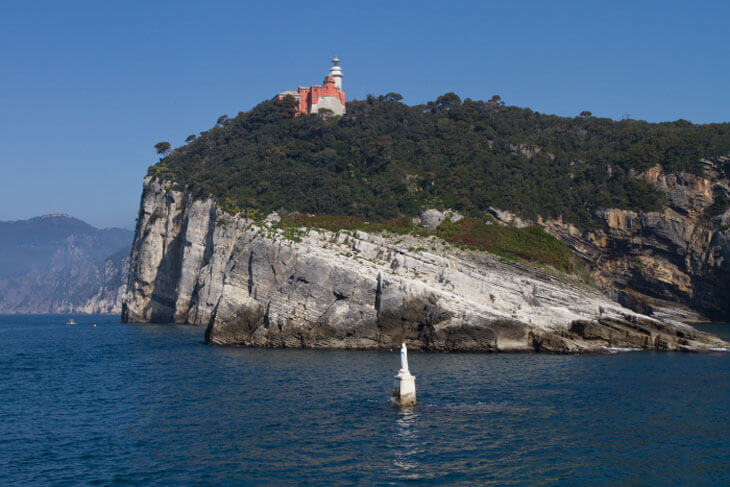
Facing Porto Venere lie Palmaria, the largest island in Liguria, with a good walking path, a fine panorama and the well-known restaurant Da Giuseppe; Tino, a military zone open only around 13 September, the feast of San Venerio, patron of lighthouse keepers; and Tinetto, a little rock crowned by the remains of an ancient oratory, with a white Madonna, the Stella Maris, at its southern tip that seems to float, but in fact marks a treacherous reef that, my mother swears, has caught out more than one boat over the years.


Why the “Gulf of Poets”?
The name is younger than you might think. On 30 August 1910, at San Terenzo, the playwright Sem Benelli gave the funeral oration for the scientist and writer Paolo Mantegazza, and said: “Blessed are you, poet of science, who rest in peace in the Gulf of Poets.” The phrase stuck. Benelli, who was writing his La cena delle beffe nearby at the time, was thinking above all of Shelley and Byron, guests at San Terenzo in 1822, and Shelley drowned in these very waters, sailing his schooner. Over the years the gulf drew a great roll-call of writers and artists, from D.H. Lawrence and George Sand to Montale and Marinetti.
And a lovely local legend has it that Botticelli painted his Venus here, giving her the face of Simonetta Cattaneo, a great beauty said to have come from Fezzano, where the remains of her villa are still shown. History or romance, it suits the place perfectly.
Fair winds, and calm seas.
Frequently asked questions
The Gulf of Poets (Golfo dei Poeti, officially the Gulf of La Spezia) is at the eastern end of Liguria, on the Italian Riviera, just south of the Cinque Terre. Its two headland villages are Porto Venere to the west and Lerici to the east, with the city of La Spezia at its head and the islands of Palmaria, Tino and Tinetto guarding its mouth.
The name was coined by the playwright Sem Benelli in a funeral oration at San Terenzo in 1910, in memory of the writer and scientist Paolo Mantegazza. It celebrates the many poets and artists drawn to these shores, above all Shelley and Byron, who stayed here in 1822, and Shelley, who drowned in the gulf.
The essentials are Porto Venere, with its castle, church on the point and colourful seafront; Lerici, with its castle and elegant bay; San Terenzo, with Shelley’s Villa Magni; and the smaller, quieter Tellaro and Fiascherino. All are lovely from land, and even more so from the water.
Palmaria is easily visited from Porto Venere and has walking trails and a couple of restaurants. Tino is a military zone open to the public only around 13 September for the feast of San Venerio. Tinetto is a tiny uninhabited rock with the ruins of an ancient oratory, admired from the water rather than landed on.
Not at all: the villages are wonderful on foot and linked by road, ferry and footpaths. But the gulf was made to be seen from the sea, and a sailing trip, a boat tour or the local ferries between Porto Venere, Lerici and the islands show it at its best.
Further reading
- My home region from every angle: the Cinque Terre and Liguria
- Inland to the west: Dolceacqua, the village Monet painted
- For sailors: life on a sailing boat, what to pack and how to behave