

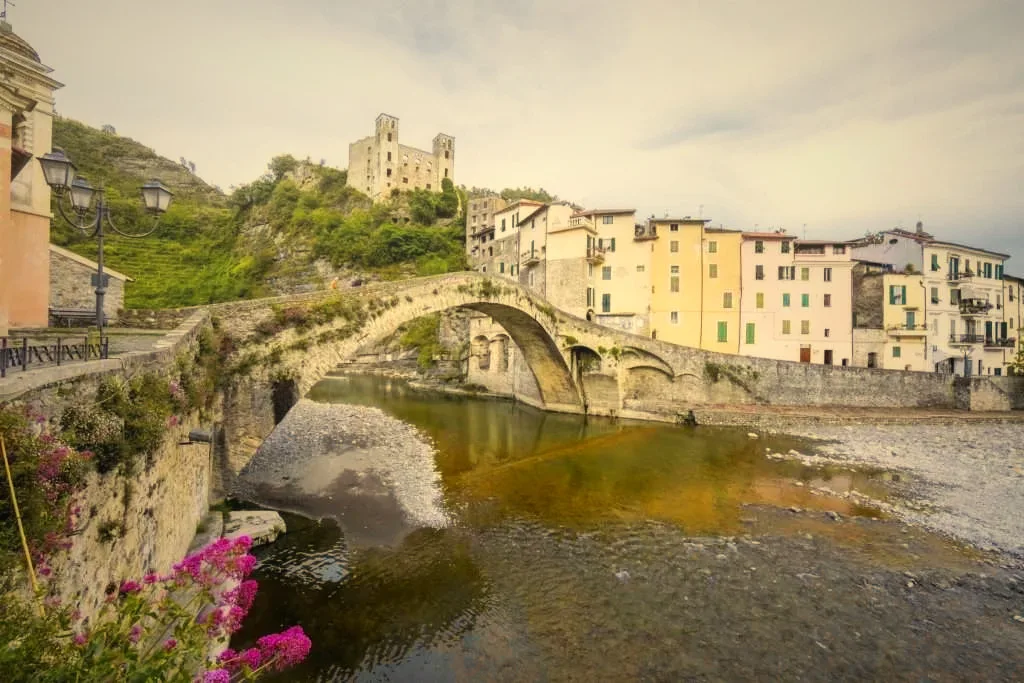

There is a corner of my own Liguria that I send people to when they think they have seen it all, and it lies not on the famous coast, but a little inland, in the west, in a valley most foreign guidebooks forget entirely. It is Dolceacqua, and it is a fairytale.
I write about faraway places for a living, but this one is close to home, in every sense. Dolceacqua sits in the Val Nervia, in the far west of Liguria, in the province of Imperia, a few minutes inland from Bordighera and Ventimiglia and almost within sight of the French border. This is the Riviera di Ponente, the western Riviera, and it is the part of my region least known to English-speaking travellers, which is exactly why I want to open the door to it, starting here.
A village a great painter could not resist
In February 1884, Claude Monet was staying on the coast at Bordighera, painting the Riviera’s extravagant light. Drawn by talk of the valleys behind it, he ventured inland into the Val Nervia, and there he found Dolceacqua. He was captivated, above all, by its bridge. He called it “a jewel of lightness”, and he painted it more than once, letting the grey stone and the water and the surrounding green dissolve into one another in the way only he could. One of those canvases, Bridge at Dolceacqua (1884), now hangs at the Clark Art Institute in Massachusetts.
What still astonishes me is that the view has barely changed. Stand where he stood, and you see very nearly what he saw. Two panels by the river mark the spots where he set his easel, so you can hold the painting up against the living scene. For someone like me, who has spent a career among opera houses and works of art, that small act of standing inside a painting is pure magic.
The bridge, and the two halves of a village
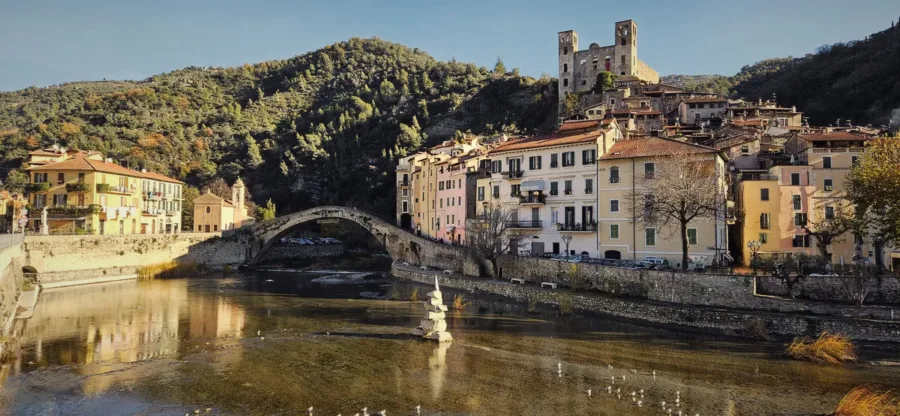
The River Nervia splits Dolceacqua in two, and the halves have distinct characters. On one bank rises Terra, the oldest part, an eleventh- and twelfth-century tangle of caruggi, the narrow Ligurian alleys, climbing under stone arches and past carved Genoese doorways to the castle at the top. On the other lies Borgo, the newer quarter, which grew from the fifteenth century onwards and where you will find most of the cafés and restaurants today.
Linking the two is the Ponte Vecchio, the old bridge, a single graceful medieval arch of about thirty-three metres spanning the river. It is the “jewel of lightness”, and it deserves the name: humped, slender, improbable, more like something drawn than built.
The Castle of the Doria
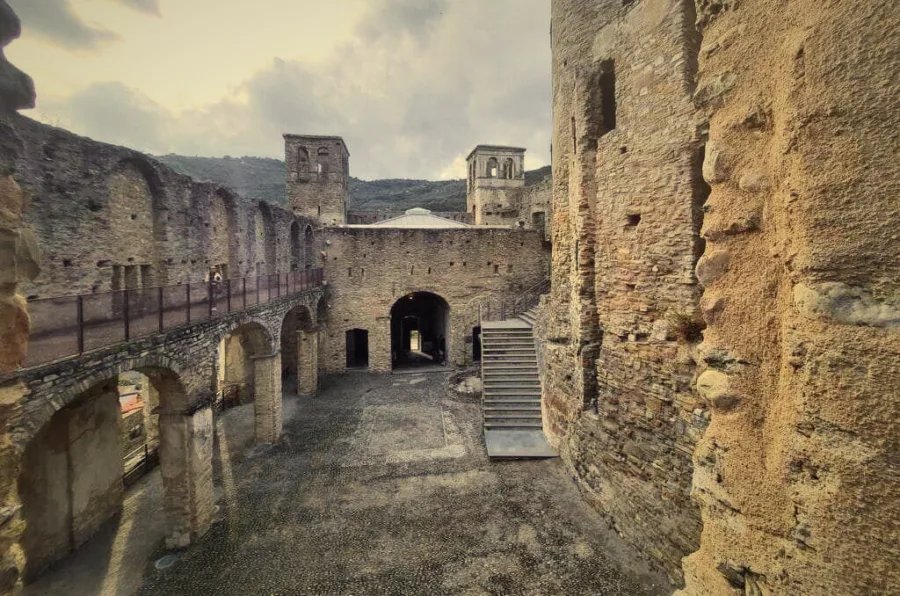
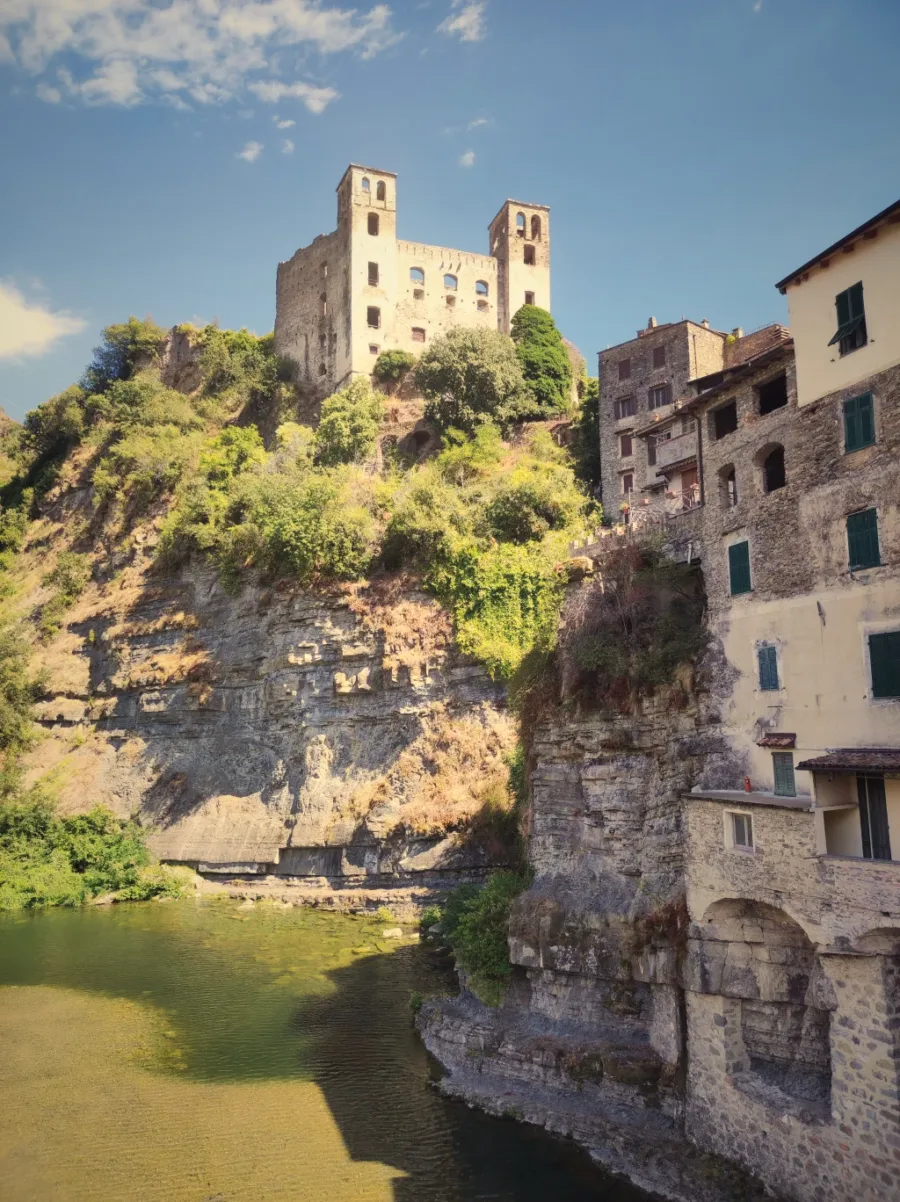
Crowning Terra are the remains of the Castello dei Doria, first raised in the eleventh century and enlarged over the centuries by the powerful Doria family, whose name echoes all through Ligurian history. The castle once guarded a frontier, and its ruins, now restored and used for summer events, give the whole village its storybook silhouette, the one Monet could not leave alone. Climb up to it through the old town, and you are rewarded with the view down over the rooftops, the bridge and the valley.
If you have the legs for it, the walk up to the little Chiesa di San Bernardo gives the finest panorama of all, the village gathered below you under its castle.
Red gold and a fairy-tale wine
You cannot speak of Dolceacqua without its wine. Rossese di Dolceacqua was the very first wine in Liguria to earn DOC status, back in 1972, and it remains the pride of the valley: a pale ruby red, soft and fragrant, with notes of red fruit and the aromatic herbs of the Mediterranean scrub, dry and savoury on the tongue. It is a red light enough to drink on a summer evening, and it is made in small quantities on the steep terraced vineyards that climb the hills around the village, the kind of near-vertical, hand-worked cultivation Ligurians call viticoltura eroica, heroic viticulture. Drink it, as the locals do, with a Ligurian-style rabbit.
And this is olive country too. The whole Riviera di Ponente is threaded with dry-stone terraces of olive trees, and the oil they produce is, to me, one of the great treasures of my region. It deserves more than a paragraph, so I am giving it its own piece, coming next: how the DOP Riviera Ligure oil is made, the little Taggiasca olive it comes from, and what I learned helping farmer friends bring in the harvest by hand. For now, just know that when you dip your bread in Dolceacqua, you are tasting centuries.
A sweet legend, and a valley of flowers
Dolceacqua has its own festival sweet, the Michetta, tied to a medieval legend of a local girl and a tyrannical lord, celebrated every August. And the Val Nervia, like much of this corner of Liguria, is flower country: the greenhouses of the hills grow roses and mimosa that supply the famous flower market at nearby Sanremo. It is a valley that has always made beautiful things and sold them just over the hill.
The village is a certified Bandiera Arancione of the Italian Touring Club and one of I Borghi più Belli d’Italia, the most beautiful villages in Italy, and for once the labels undersell it.
How to visit
- Where it is: the Val Nervia, province of Imperia, western Liguria, roughly nine kilometres inland from the coast near Ventimiglia and Bordighera, very close to the French border.
- Getting there: easiest by car up the valley from the coast. By public transport, take the train to Ventimiglia or Bordighera, then catch a local bus up the Nervia valley; check current timetables, as they change with the season.
- When to go: spring and autumn are loveliest and quietest. Summer is busy but beautiful; go early or late in the day for the light and the calm. The Michetta festival is in August.
- How long: half a day sees the village comfortably, but it pairs beautifully with the neighbouring hill villages of Apricale and Perinaldo for a full, unforgettable day inland.
- Don’t leave without: standing on the bridge, tasting a glass of Rossese, and climbing to the castle or San Bernardo for the view.
Dolceacqua is where I go when I want to remember that my own region still has secrets, even from me. Come for Monet’s bridge, stay for the wine, the oil and the silence of the caruggi, and you will understand why a painter chasing the perfect light stopped here, and never quite got the place out of his head.
Frequently asked questions
Dolceacqua is a medieval village in western Liguria famous above all for its graceful old bridge, which Claude Monet painted in 1884 and called “a jewel of lightness”. It is also known for its hilltop Doria castle, its atmospheric old quarter of stone alleys, and Rossese di Dolceacqua, the first DOC wine in Liguria. It is a certified Bandiera Arancione and one of the “most beautiful villages in Italy”.
Dolceacqua is in the Val Nervia in the province of Imperia, in the far west of Liguria (the Riviera di Ponente), about nine kilometres inland from the coast near Ventimiglia and Bordighera, close to the French border. The easiest way is by car up the valley; by public transport, take the train to Ventimiglia or Bordighera and then a local bus up the Nervia valley.
Yes. While staying at Bordighera on the Ligurian coast in early 1884, Monet travelled inland to the Val Nervia, was captivated by Dolceacqua’s bridge and castle, and painted the scene in more than one canvas. His Bridge at Dolceacqua (1884) is held at the Clark Art Institute in Williamstown, Massachusetts, and panels by the river in the village mark where he painted.
Dolceacqua is the home of Rossese di Dolceacqua, which in 1972 became the first wine in Liguria to receive DOC status. It is a pale, soft, fragrant red with notes of red fruit and Mediterranean herbs, dry and savoury, grown on steep terraced vineyards around the village and traditionally paired with Ligurian-style rabbit.
Half a day is enough to enjoy the village itself, the bridge, the caruggi and the castle, plus a wine tasting. To make a full day of it, combine Dolceacqua with the nearby hill villages of Apricale and Perinaldo, or with the coastal towns of Bordighera and Ventimiglia and the French border just beyond.
Further reading
- Dolceacqua on the official Italian tourism site: https://www.italia.it/en/liguria/things-to-do/explore-dolceacqua-apricale-perinaldo-liguria
- Monet’s Bridge at Dolceacqua (1884) at the Clark Art Institute: https://www.clarkart.edu/artpiece/detail/Bridge-at-Dolceacqua
- More of my home region, from the other coast: the Cinque Terre and Liguria





3 Comments