


“What shall we do today?” “How about Portofino?”
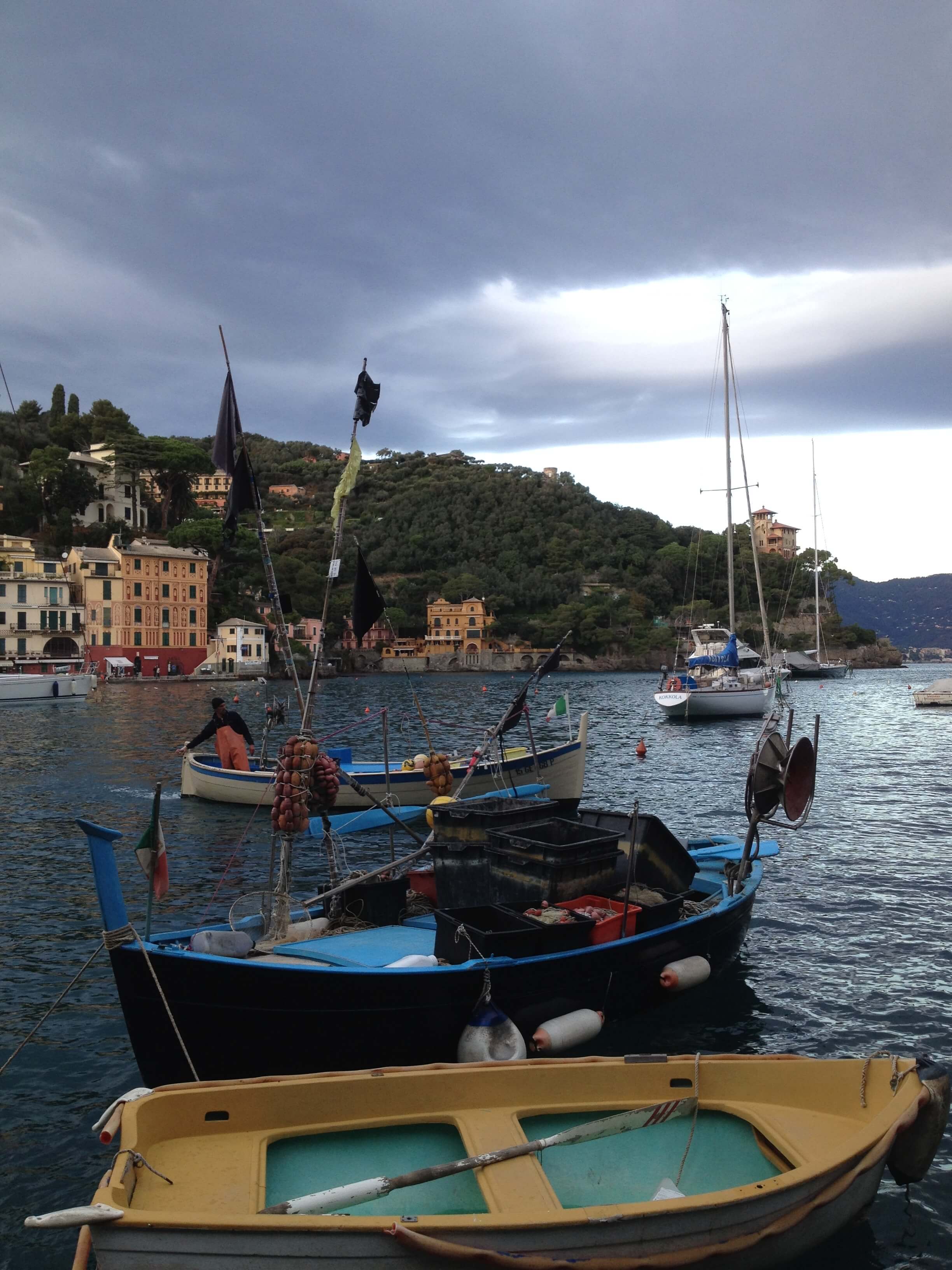
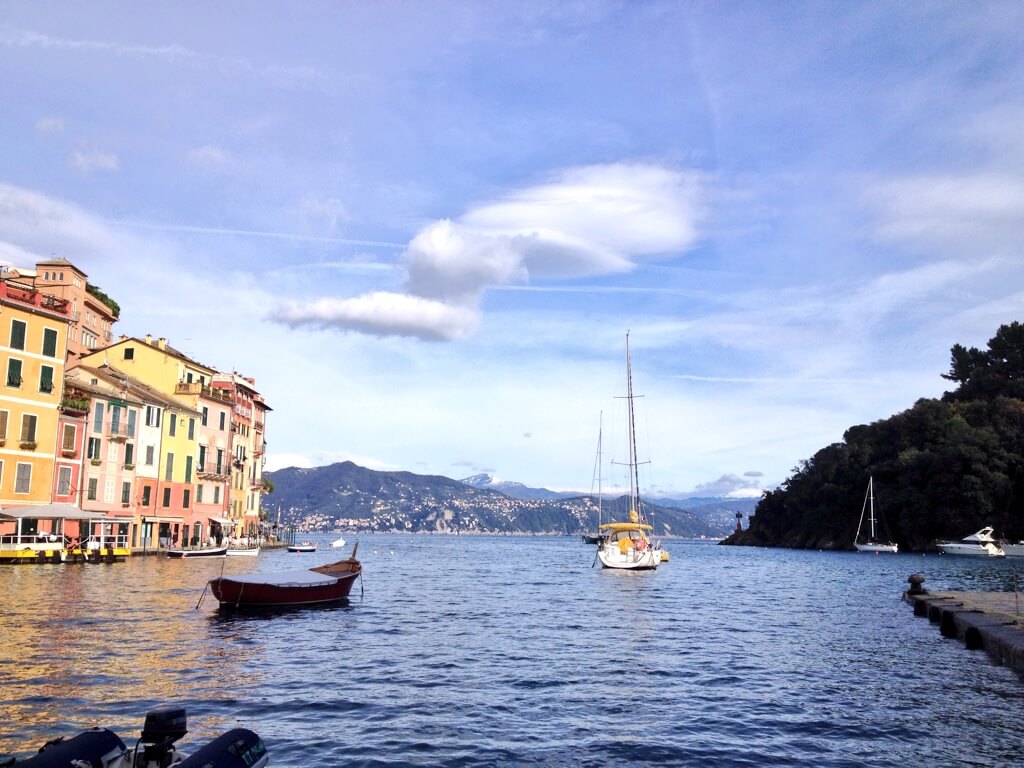
“And here, suddenly, the discovery of a hidden cove, olive and chestnut trees. A small village, Portofino, spreads like a crescent moon around this calm basin. We cross the narrow passage that joins this magnificent natural harbour to the sea, and reach the amphitheatre of houses, wrapped in a powerful, fresh green, everything mirrored in the still water where a few fishing boats seem to sleep.” Guy de Maupassant
Portofino is truly itself in autumn and winter, this beautiful natural harbour that has always fascinated and made people dream. From late September to May you can walk it slowly, listening to your footsteps on the Ligurian risseu pavement, the lapping of the water, the hum of the gozzi (the local fishing boats) and the tolling of bells. Out of season, Portofino is pure magic.
In high summer it is another story: glamorous, glittering and famously expensive, packed with day trippers and superyachts. There is nothing wrong with that if it is what you are after, but the Portofino I love, and the one I would send you to, is the quiet, low-season one, when the village breathes again, and a coffee in the piazzetta does not cost the earth.
Portofino is beautiful and busy in equal measure, which is why I would pair a visit here with a read of how not to love a place to death.
Getting there
Portofino sits at the tip of its own promontory, reached by the coast road from Santa Margherita Ligure, itself an easy train ride from Genoa. (The coast road was badly damaged by a great storm some years ago and has long since been repaired and reopened.) The loveliest approach, though, is by sea: regular ferries run from Santa Margherita and Rapallo, and arriving into the little harbour by boat is the way to first see it. Check current timetables before you go. And for the more energetic, there is the wonderful coastal hike from Camogli via San Fruttuoso, one of the finest walks in Liguria.
What to see in a day
Half the pleasure of Portofino is simply wandering, admiring the harmony of the painted facades and the endless picture-perfect glimpses, which enchant even someone who has lived in Liguria all her life. But a few things you should not miss.
The church of San Martino (Divo Martino). In the oldest part of the village, this Romanesque-Lombard parish church was given to the monks of San Fruttuoso by Queen Adelaide, widow of Otto I. Its bronze door, by Costanzo Mongini, depicts the eighteenth-century miracle in which Saint George is said to have saved Portofino from a pirate raid by conjuring a storm.
The church of San Giorgio. A tiny oval church on the headland, looking down over the village, its forecourt commanding the sea as if from the bridge of a ship. You reach it by a red-brick path, which is already a little piece of magic.
The lighthouse walk. Below the church, a charming old mule track, now cobbled and worn smooth by countless visitors, leads out to the lighthouse on the point, through cinematic views framed by majestic maritime pines. A lighthouse always sets me dreaming of voyages, and from this one you breathe not just salt but moss, pine, rock and eucalyptus.


Castello Brown. A short climb leads to the old castle of San Giorgio, now Castello Brown, a fortress in a commanding position over the harbour mouth. Excavations revealed the remains of a Roman watchtower; the present structure is sixteenth-century Genoese, later strengthened under Napoleon, then disarmed after the Congress of Vienna. In 1867 it was sold to Sir Montague Yeats-Brown, a British consul, and since 1961 it has belonged to the municipality and hosts cultural events. Its rooms open onto the sea, and the terrace looks over the village on one side and the gulf on the other. It is impossible not to feel rather grand up there.
To come back down, take the path that also passes the Second World War bunkers and drops right into the Mediterranean greenery, a play of scent, light and shade so perfect it feels staged. Little wonder Portofino has always been a favourite film and advertising set. Everything here seems composed, as if you were standing inside a great painter’s canvas.
Liguria in autumn and winter is, quite simply, magic.


Frequently asked questions
Yes, Portofino is one of the most beautiful villages on the Italian Riviera. It is at its best out of season, from late September to May, when it is quiet, atmospheric and far more affordable; in high summer it is glamorous but crowded and very expensive. For the magic of the place, go in autumn, winter or early spring.
Portofino is reached by the coast road from Santa Margherita Ligure (an easy train ride from Genoa), or, more beautifully, by ferry from Santa Margherita or Rapallo. There is also a superb coastal hike from Camogli via the abbey of San Fruttuoso. Cars are restricted and parking is very limited and costly, so ferry, bus or on foot is usually best.
Beyond wandering the harbour and the piazzetta, see the church of San Martino, the little church of San Giorgio on the headland, the walk out to the lighthouse through the pines, and Castello Brown with its sea views. The path back past the WWII bunkers is lovely, and the whole village can be enjoyed comfortably in a day.
In high season, yes, Portofino is one of Italy’s most exclusive and pricey spots, especially around the harbour. Out of season it is far gentler on the wallet and on the nerves, which is exactly why I recommend visiting in the quieter months, when a coffee in the square and the beauty around it feel like a gift rather than a splurge.
Further reading
- My home region: the Cinque Terre and Liguria
- More of the coast, from the water: sailing the Gulf of Poets
- Inland to the west: Dolceacqua, the village Monet painted