


An editorial note before you read (updated 2026): this is an interview I ran with my friend Jenni after her trek in Nepal, and her account describes a trip taken in December 2015, a few months after the devastating April 2015 earthquake. I have kept her words as they were, because they are a valuable first-hand record of a country in recovery. Two important updates for anyone planning a trip now, though. First, the 2015 earthquake reconstruction is long complete: the temples and Durbar Squares of the Kathmandu Valley, Bhaktapur among them, have been rebuilt, and tourism recovered years ago. Second, more recently Nepal went through a period of political upheaval, the youth-led “Gen Z” protests of September 2025, which led to an interim government and then general elections in March 2026. That unrest was directed at the government, never at visitors, and by 2026 the country has stabilised: major cities, heritage sites and the classic trekking routes are open, safe and welcoming again. As always, check your own government’s current travel advice before you go. Now, over to Jenni.
While I was busy planning my trip to Argentina, my friend Jenni was setting off for Nepal, a journey I have dreamt of for years and will surely make before long. Her post-earthquake experience intrigued me so much that I had to interview her, and I think it will interest anyone still hesitating. Enjoy.
Where does your love of travel come from?
I think it was handed down to me, like an old family tradition. I always travelled with my parents in a motorhome, on the road, a little like gypsies, immersing ourselves in the local cultures of Italy, Eastern Europe, Morocco, Turkey and Russia, a different destination each year. Once grown up, it was natural to carry the tradition on in my own way, as a backpacker. If I think of something wonderful to do, it is almost always a trip, and as soon as I can, I organise it and go.
Why did you choose Nepal?
In 2012 I visited India, on a tour that did not include the mountains. Arriving in Delhi, someone recommended I see Manali, in Himachal Pradesh, so I made a quick detour there. I loved that area, and it woke a real interest in the mountains, perhaps Delhi’s smog and chaos made me fall for Manali’s clean air. So when the chance to visit Nepal came up, I pictured those Himalayan landscapes again and decided on the spot.
Didn’t the earthquake earlier that spring make you hesitate?
I got in touch with an old friend who used to spend his winters in Nepal. I left in early December; the earthquake had struck in April. Of course I had doubts, mostly about getting around, I knew many roads in the Kathmandu Valley were rough or closed. But he reassured me that our route ran the other way, towards Pokhara, the gateway to the beautiful trekking country around the Annapurna range.
What was your route?
Kathmandu
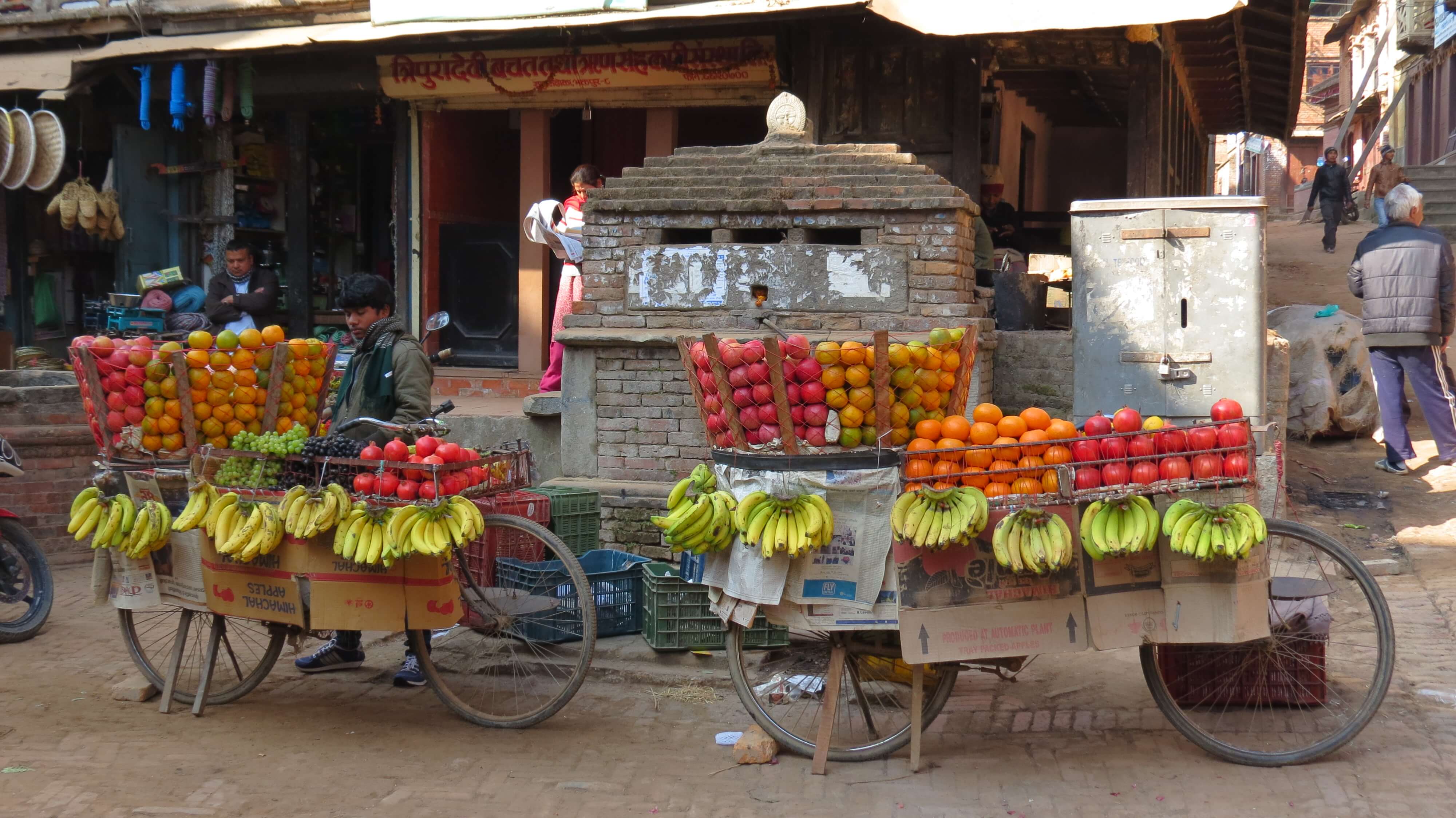
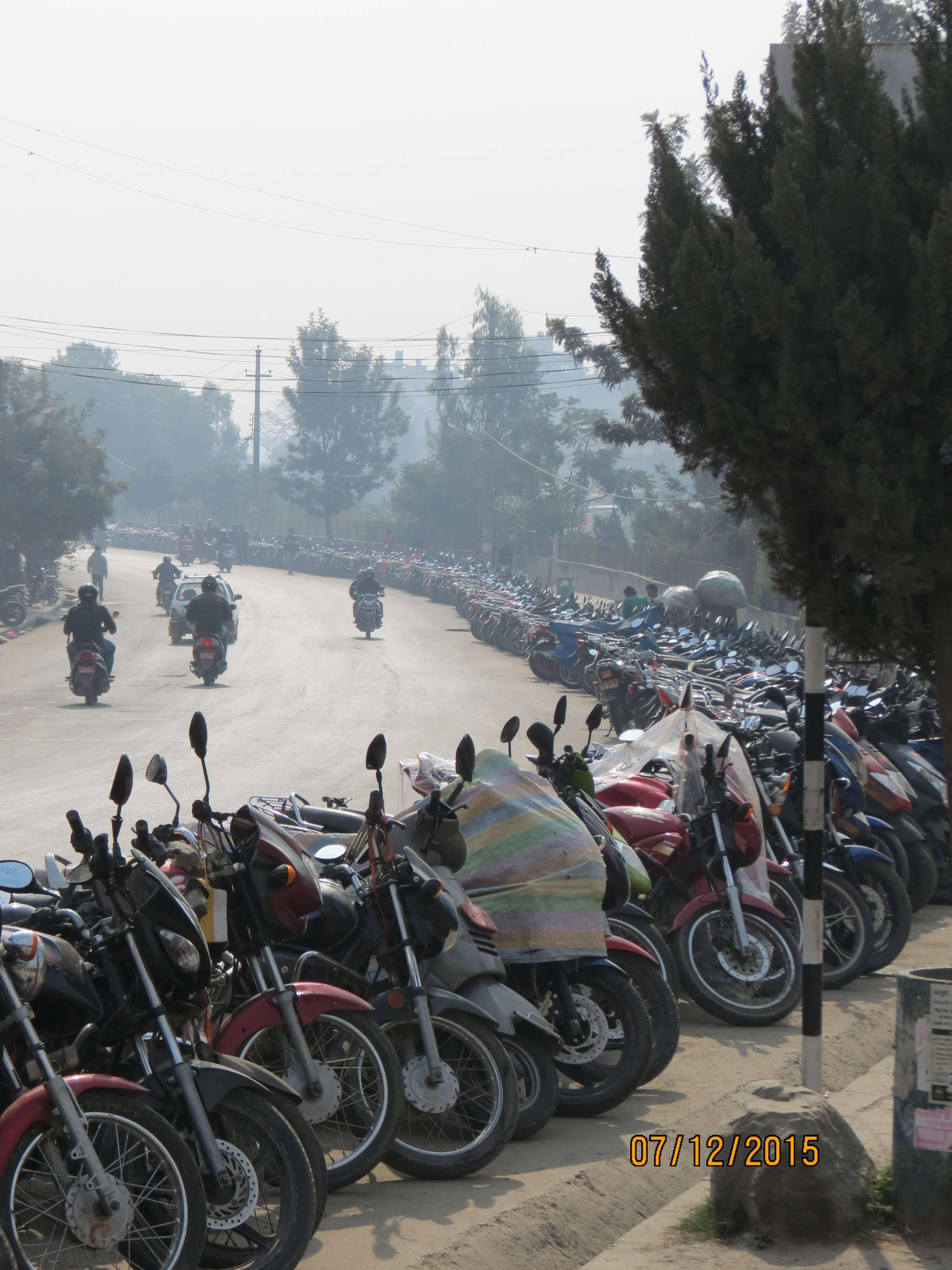
In Kathmandu I spent the first two days exploring, and the city was less chaotic than usual, because of a total lack of fuel. I was struck by the endless queues of scooters and gas cylinders waiting to be filled, but this was not the earthquake, it was politics: India normally supplies Nepal’s fuel, and a political dispute had cut exports. Everyone would cheer together when supplies arrived. (I gather that situation normalised afterwards.)
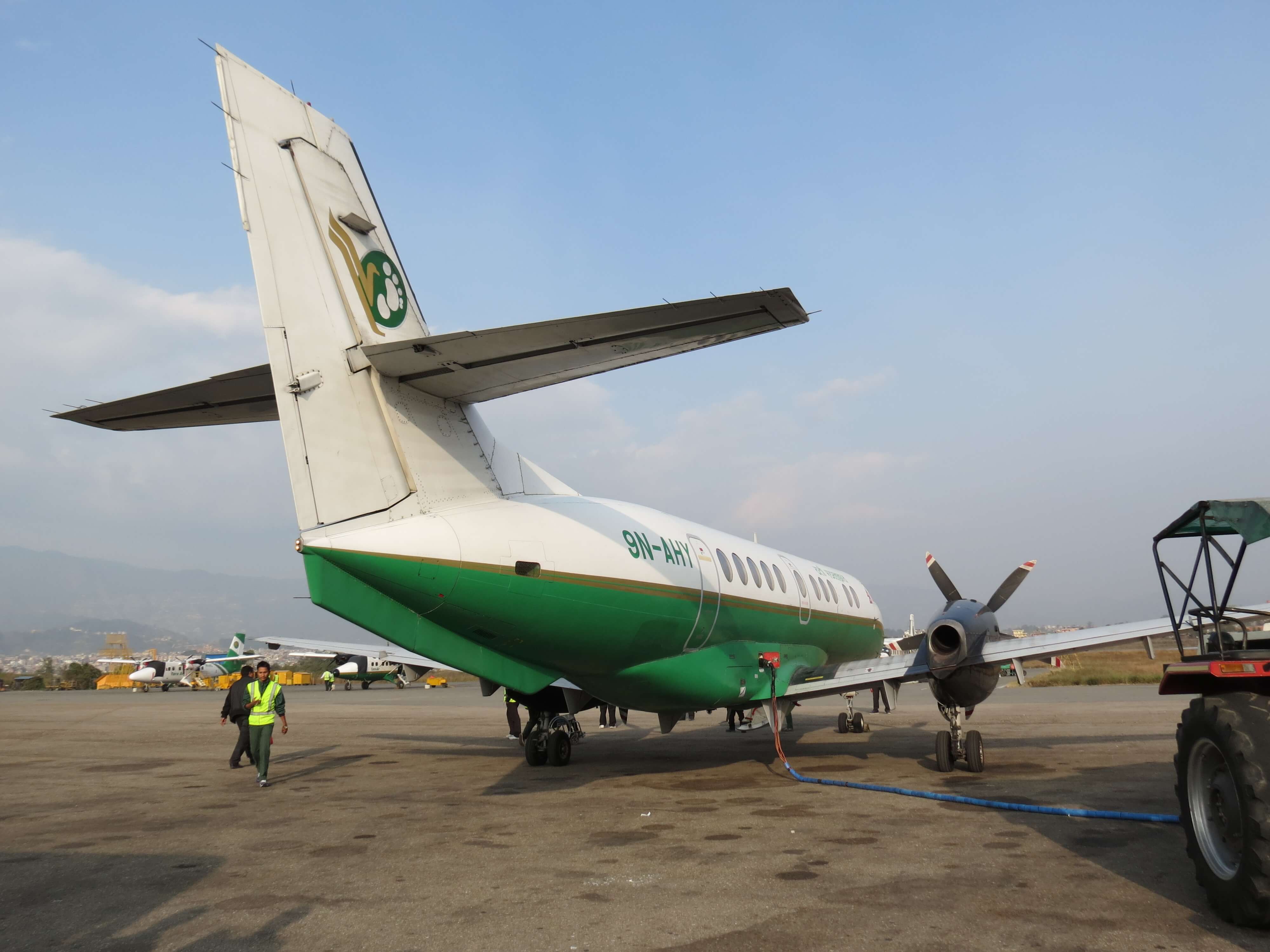
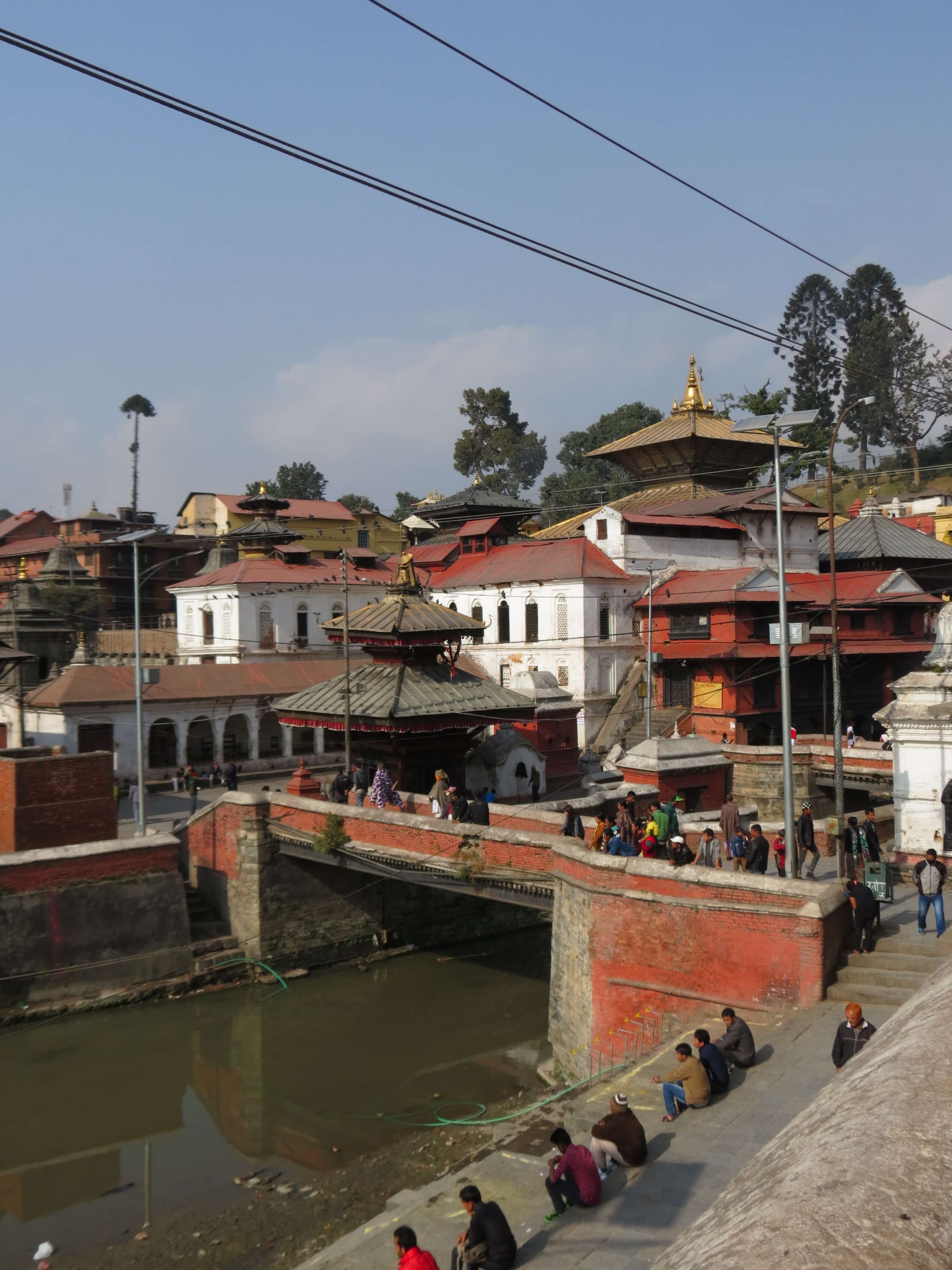
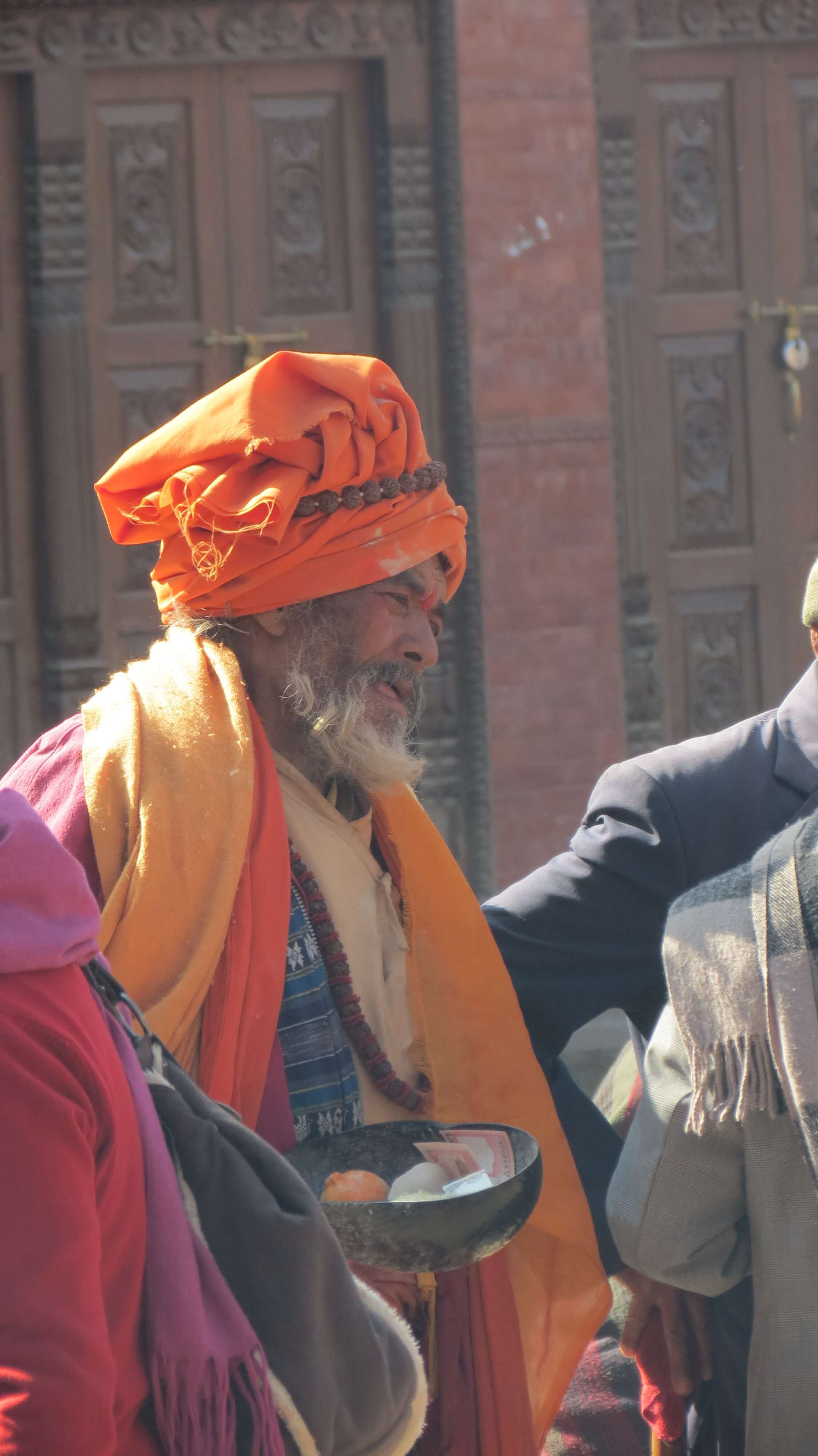
On the day of my flight to Pokhara, my friend Lillo took me to the Pashupatinath temple, famous for its cremation ceremonies. A mystical moment. Under its arcades live the babas, the holy men, each with a small space beneath the colonnade. Lillo has “his” baba, and we spent hours sitting cross-legged and barefoot in his quarters, three rows of columns and a fire always lit with a pot boiling on it. The ritual preparation of a baba’s tea is long and ceremonious, and above all must never be interrupted, so, with our flight at three o’clock, we were still there ten minutes before, trying to gulp down a scalding cup as fast as we politely could. At the airport the plane was an hour late, and I confess I thought the baba’s blessing had done its work.
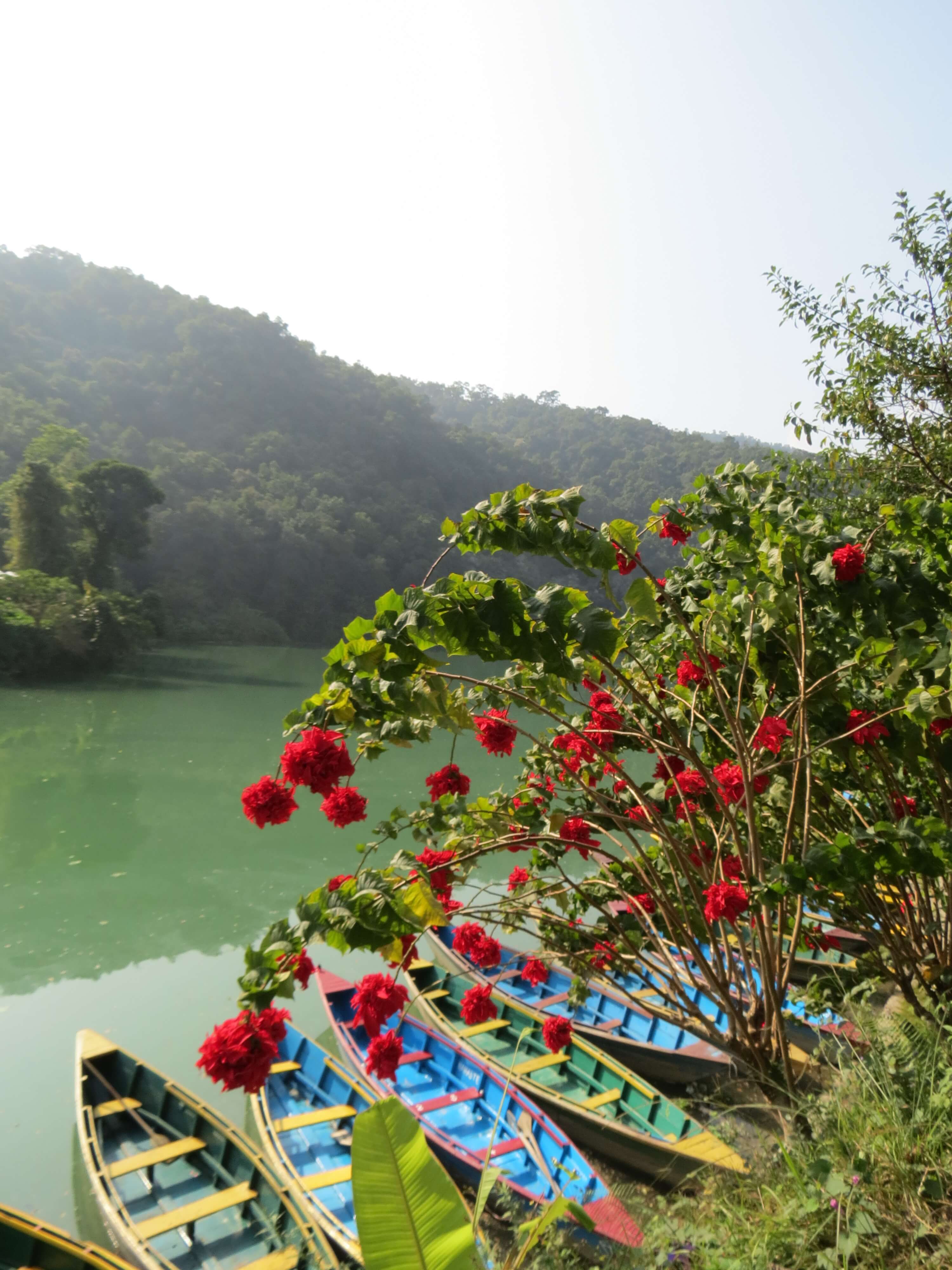
To Ghorepani, via Pokhara
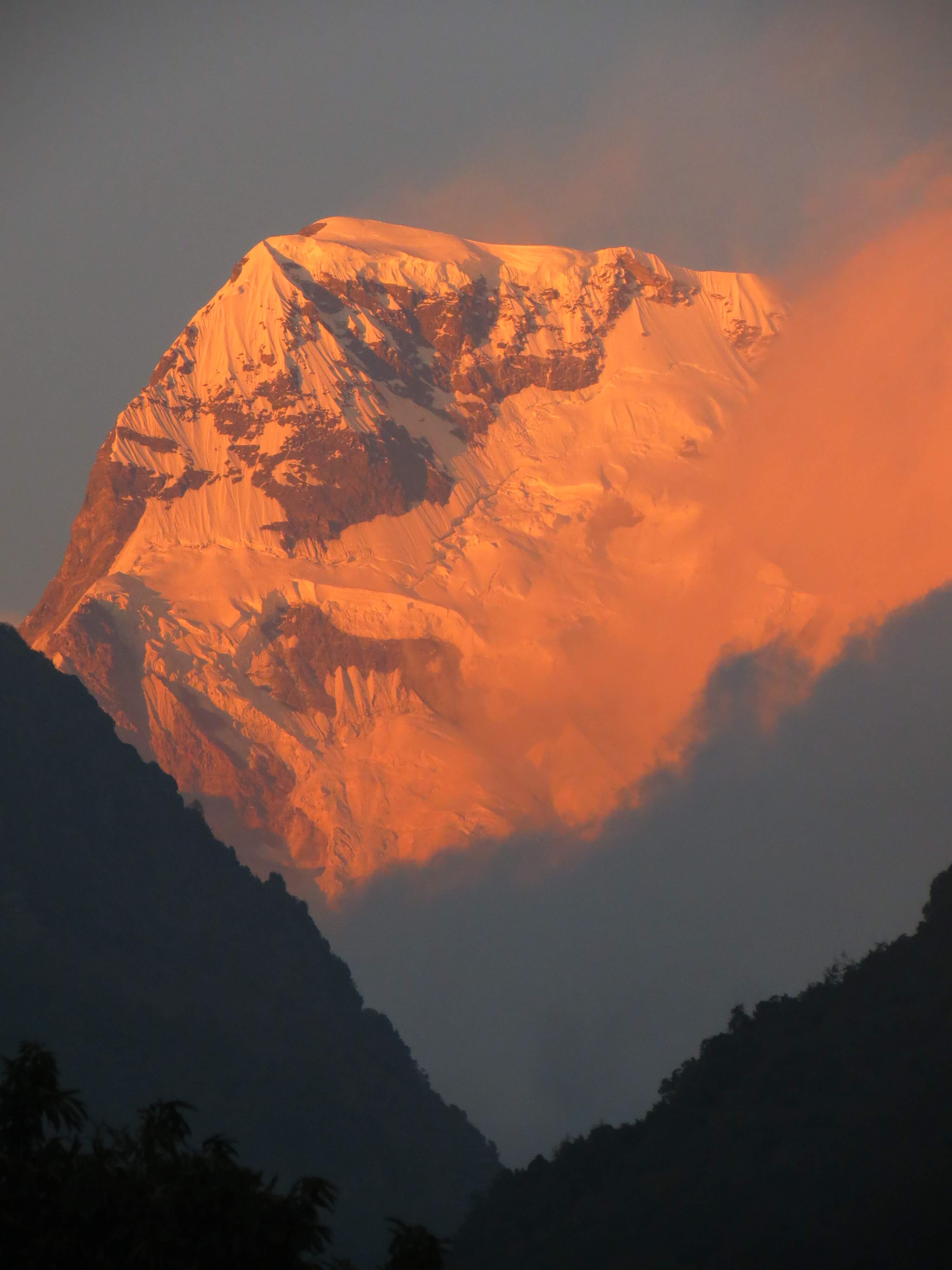
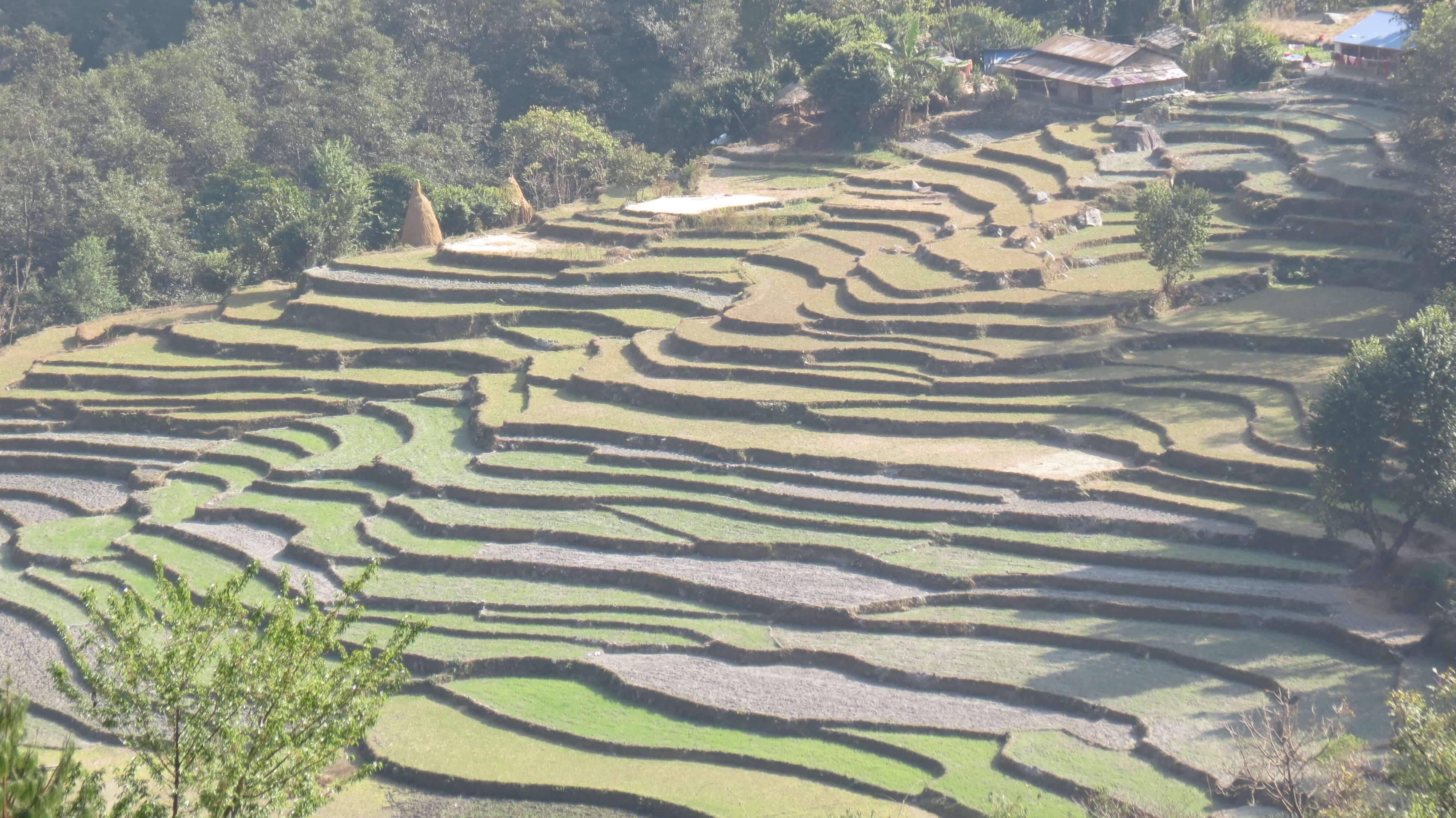
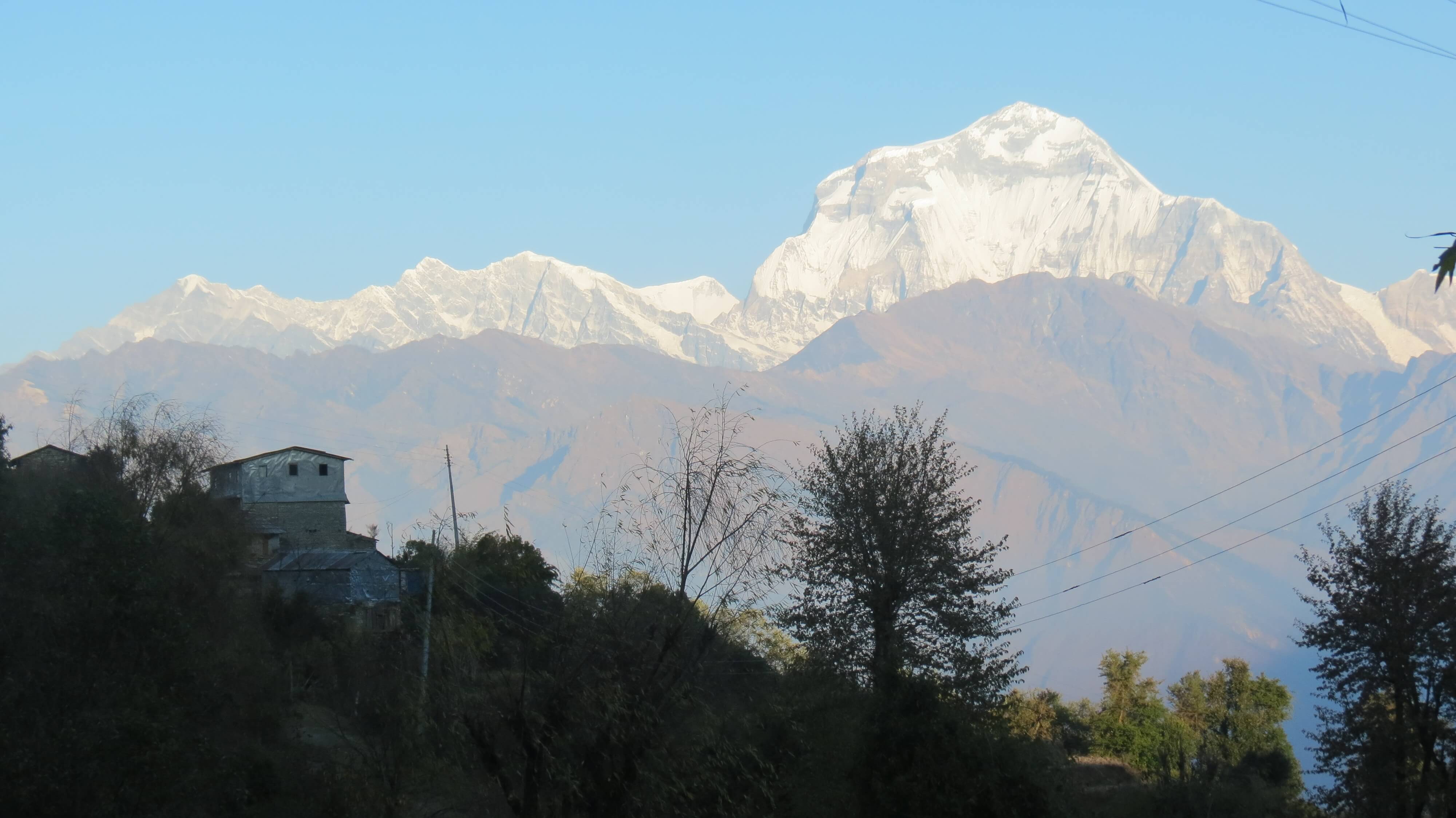
Once in Pokhara, and once we had our trekking permits, we set off on foot. I am not an experienced hiker, so we chose a gentle climb: the 3,210-metre Ghorepani Poon Hill, over about a week. It is nothing beside the giants around it, but approaching them step by step is a wonderful feeling. The days were warm enough for a t-shirt; the evenings had me putting on every layer in my backpack. We would warm ourselves by the fire, then dive into our sleeping bags, the room barely warmer than the air outside, sometimes laughing hysterically with the cold. And every night we fell asleep replaying the astonishing landscapes of the day.
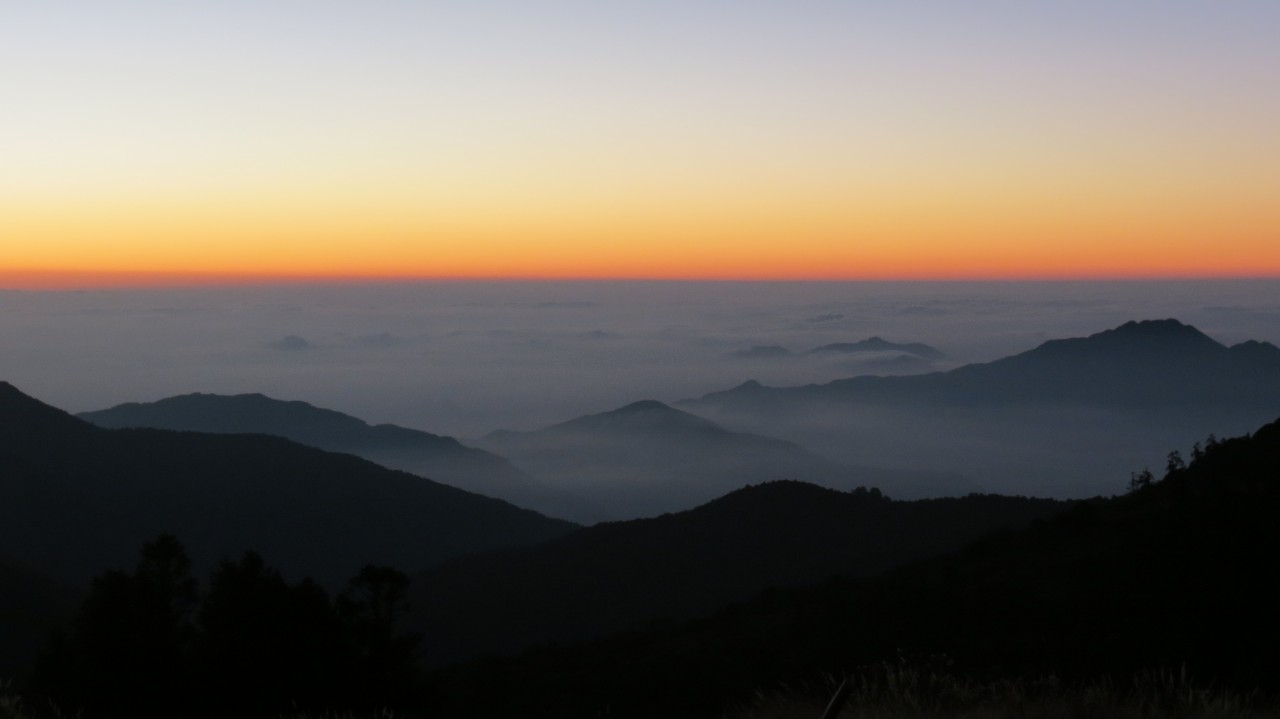
We climbed thousands of steps to the top, and after the first rush of joy realised the obvious: we still had to climb back down. An endless descent of uneven, steep stone steps, the famous “knee-breakers”. But at Ghorepani I reached my own private goal: I woke around 5am and climbed another endless staircase, a borrowed torch in hand, to a famous viewpoint to watch the waking of the gods, the immense range revealed to very few eyes at sunrise. I felt held up by the clouds, everything around me sprouting these white, wind-whipped peaks that command such respect.
Tatopani
Our trek ended in Tatopani, a small village in the valley, from where we bussed back to Pokhara. Tatopani means “hot water” in Nepali, and to my joy it has thermal springs, I could have wept at the thought of a hot bath after all those cold showers. In Pokhara we stayed at the Holy Lodge, the guesthouse Lillo treats as home.
What impressed you most?
The mountains, obviously. Climbing day after day, you feel them challenging you, inviting you, urging you on, and when you reach the goal you set yourself, you understand why they insisted, and you cannot help but thank them.
What did you like least?
Honestly, nothing. Some visitors grumble at paying entry to open city spaces like Durbar Square in Kathmandu, as if you had to pay to enter Piazza del Campo in Siena, but once you understand the money goes to rebuilding the pagodas and monuments, you contribute gladly.
How did you find the country after the earthquake?
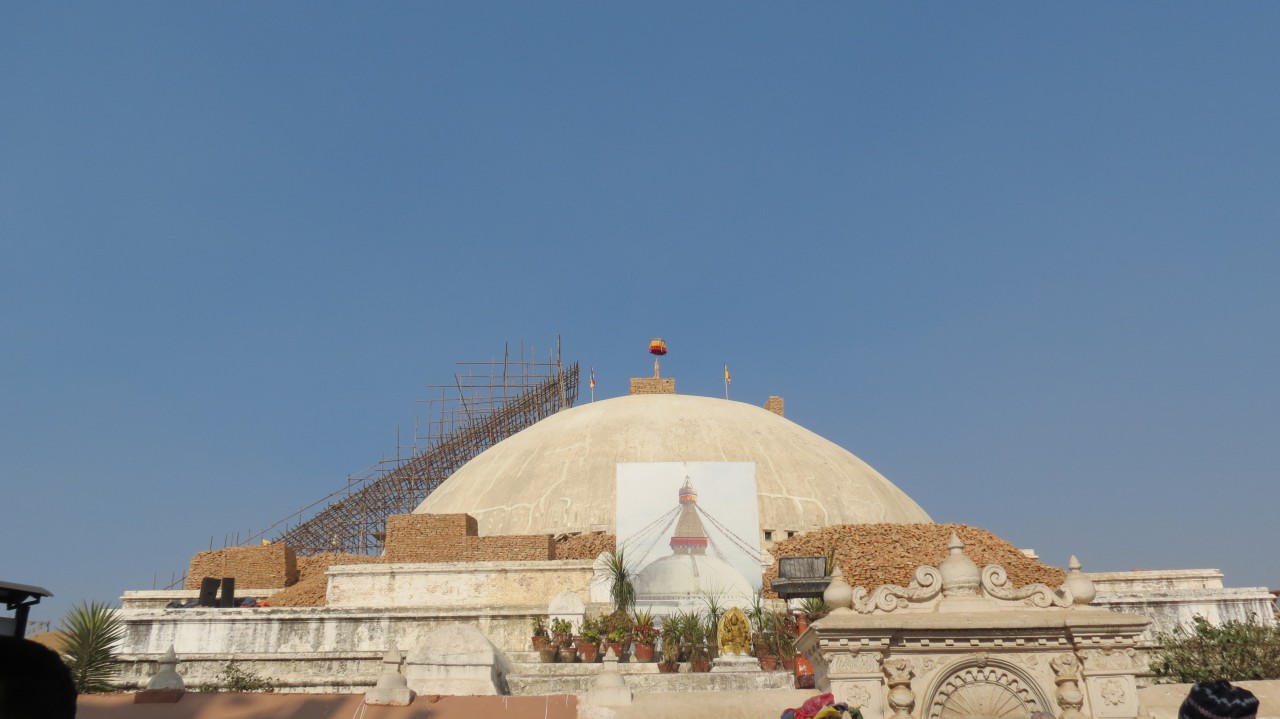
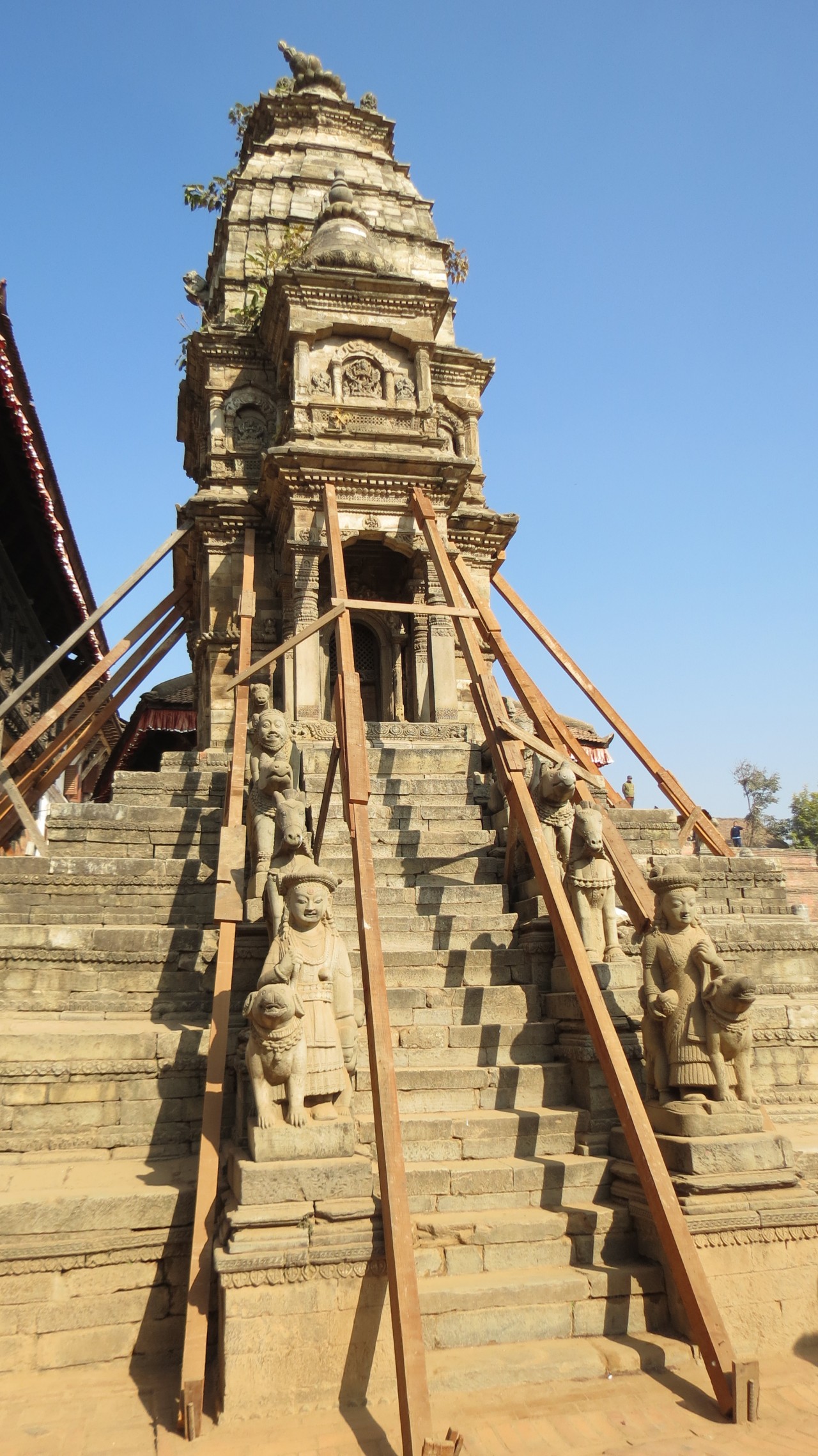
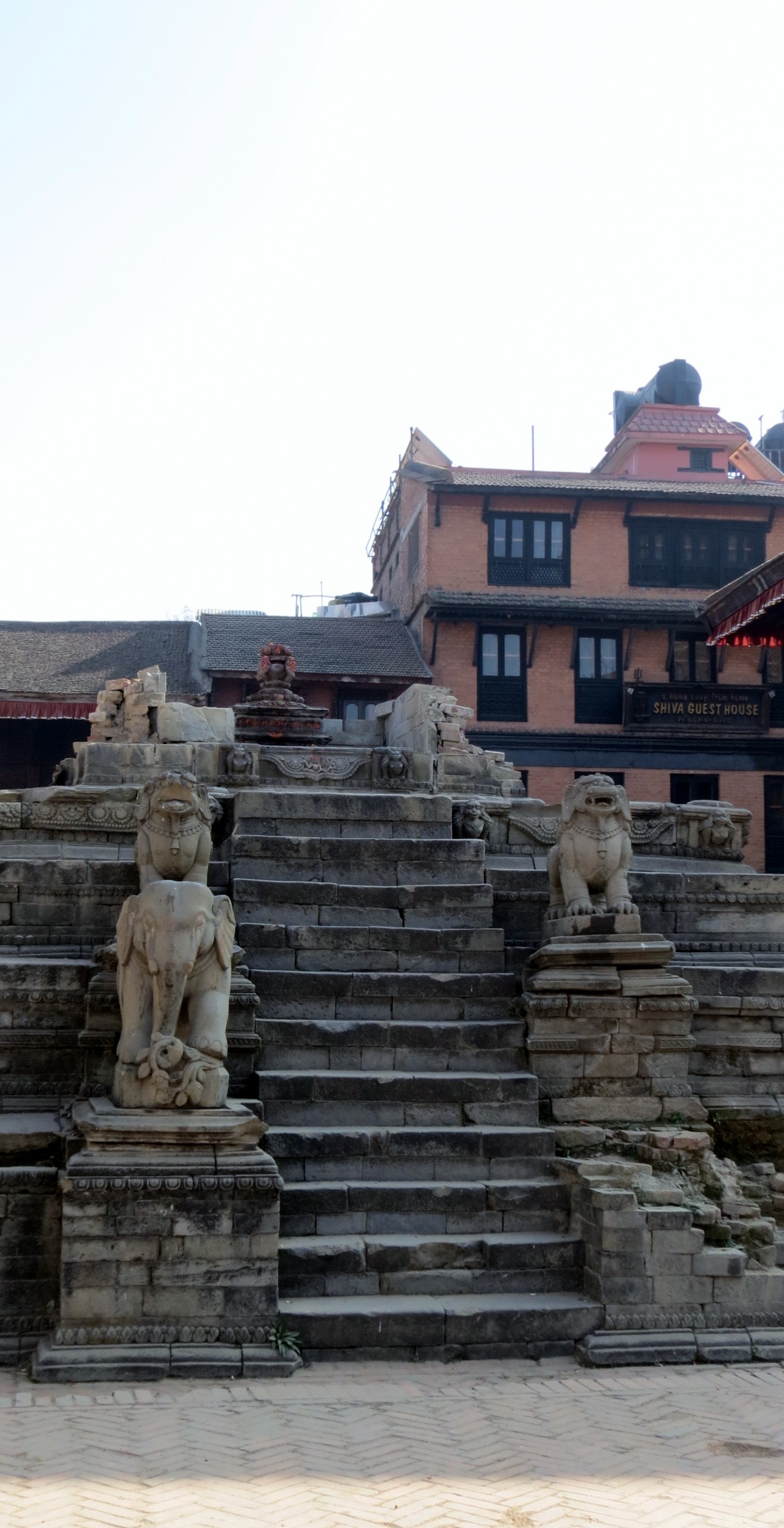
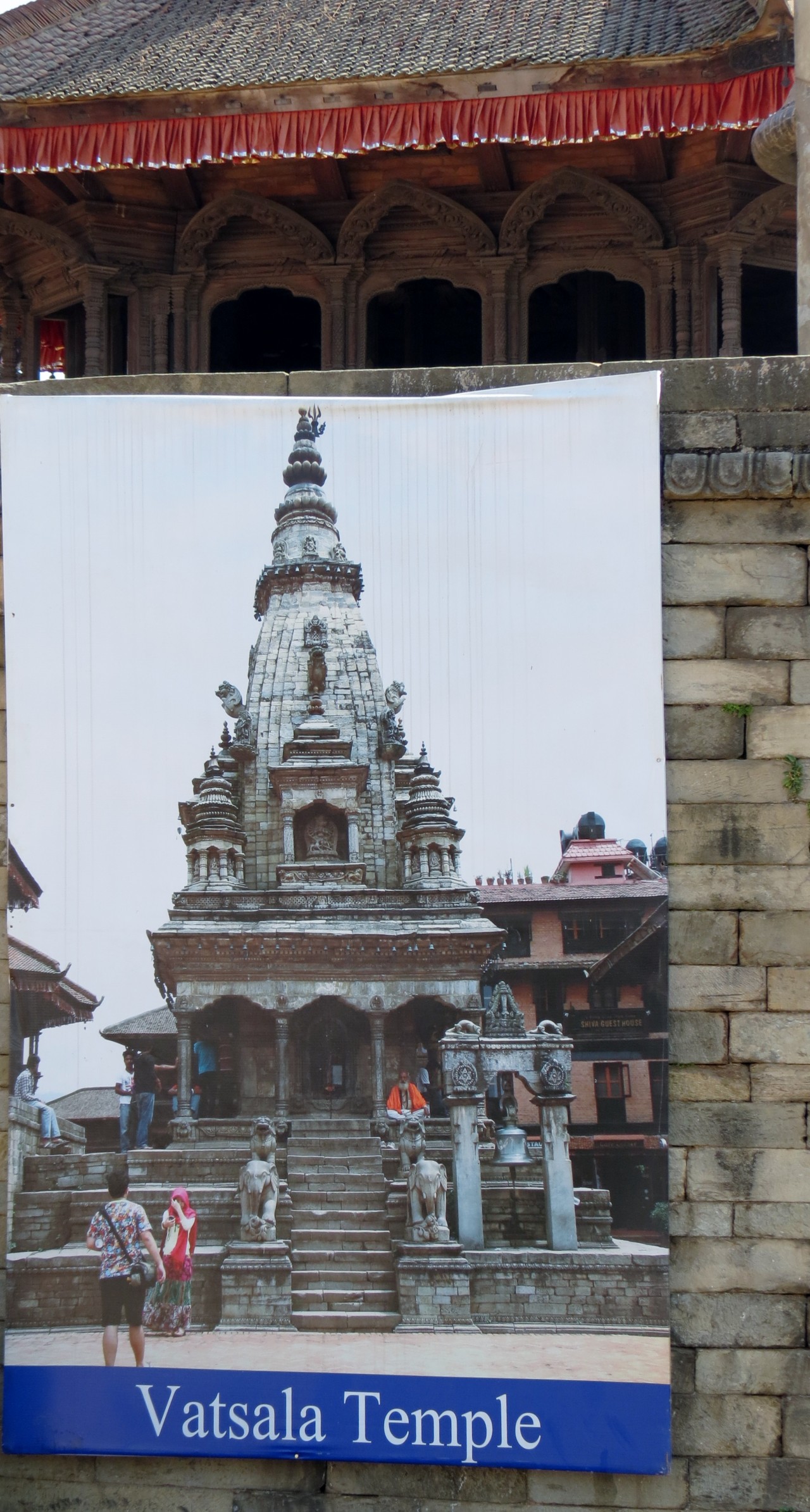
Back in Kathmandu, Lillo and Barbara took me to Bhaktapur, one of Nepal’s oldest cities. I could see Lillo hesitating, and then I understood: for someone who had known Bhaktapur before the earthquake, seeing it then was heartbreaking. It was a field of rubble, wooden poles propping up what remained, posters showing buildings that no longer existed. Bhaktapur was among the worst-hit places, and it showed. (Silvia’s note: Bhaktapur has since been extensively rebuilt, and is once again one of the valley’s great sights.)
Any tips for someone planning a trip to Nepal?
Nepal is a paradise for nature and adventure lovers. I would recommend even a short trek of five days, there are trails for every taste and ability, plus rafting, or a paragliding flight over the lake at Pokhara. There is no shortage of gentle adrenaline. For those with more time, the longer routes towards the high Himalaya reward you with even greater scenery and cultural depth.
Would you go back?
Yes, maybe in a few years. Lillo told me about trekking in the highlands on the Tibetan border, and I would love to go, the only catch being a mountain flight that does not always take off in high winds, and then a thirty-day walk. Maybe next time, with more time, more training and more courage.

Next trip?
Before Nepal I was leaning towards Myanmar, everyone says it is beautiful, and my parents have already been, so I can hardly fall behind.
You can follow Jenni on Instagram.
Frequently asked questions
Yes. As of 2026, Nepal is stable and open to travellers. The 2015 earthquake reconstruction is long complete, and the more recent political upheaval, the Gen Z protests of September 2025, led to an interim government and general elections in March 2026, after which daily life and tourism returned to normal. The unrest was aimed at the government, not visitors. As with any destination, check your government’s current travel advice and avoid political demonstrations.
No. Nepal has trekking routes for every level, from gentle multi-day walks like the Ghorepani Poon Hill trek (around 3,200 m, achievable by a reasonably fit beginner) to serious high-altitude expeditions. Choose a route matched to your fitness, go with a reputable guide or agency, and allow time to acclimatise as you gain altitude.
Most treks require permits, typically a TIMS card and a conservation-area or national-park entry permit (for example for the Annapurna region), arranged in Kathmandu or Pokhara before you set off. Requirements change, so check the current rules with the Nepal Tourism Board or a local agency when you plan your trek.
The two main trekking seasons are autumn (roughly October to November), with clear skies and stable weather, and spring (March to May), known for rhododendron blooms. Winter treks are possible at lower altitudes but cold, and the summer monsoon (June to September) brings rain and leeches to many routes.
Yes. Although Bhaktapur was among the places worst hit by the 2015 earthquake, its temples and heritage buildings have since been extensively rebuilt through a celebrated locally led recovery, and it is once again one of the Kathmandu Valley’s most beautiful and rewarding destinations.
Further reading
- Always check your government’s current travel advice, for example the UK FCDO’s Nepal travel advice
- The Nepal Tourism Board for trekking and permit information
- More traveller interviews on the blog, like Izabal, the hidden paradise of Guatemala