


When I picture Thailand’s beaches, two islands come to mind, Koh Samui and Koh Lanta, the two that truly won me over, for different reasons. Today it’s Koh Samui’s turn.
At a glance
- Where: in the Gulf of Thailand, off the south-eastern coast, reached by air or by ferry from Surat Thani
- The vibe: white-sand beaches, a backpacker heritage going back to the 1970s, and a very international, Western-run seafront
- Best time: roughly December to April, dry and calm. Note that Samui’s monsoon is the reverse of Phuket’s, with the wettest weather from October to December
- How long: four or five nights to enjoy the island and fit in a boat trip to the Ang Thong marine park
- Where I’d base myself: the old fishing village of Bo Phut, over the busier Chaweng or Lamai, is Koh Samui.
First impressions, and why I moved to Bo Phut
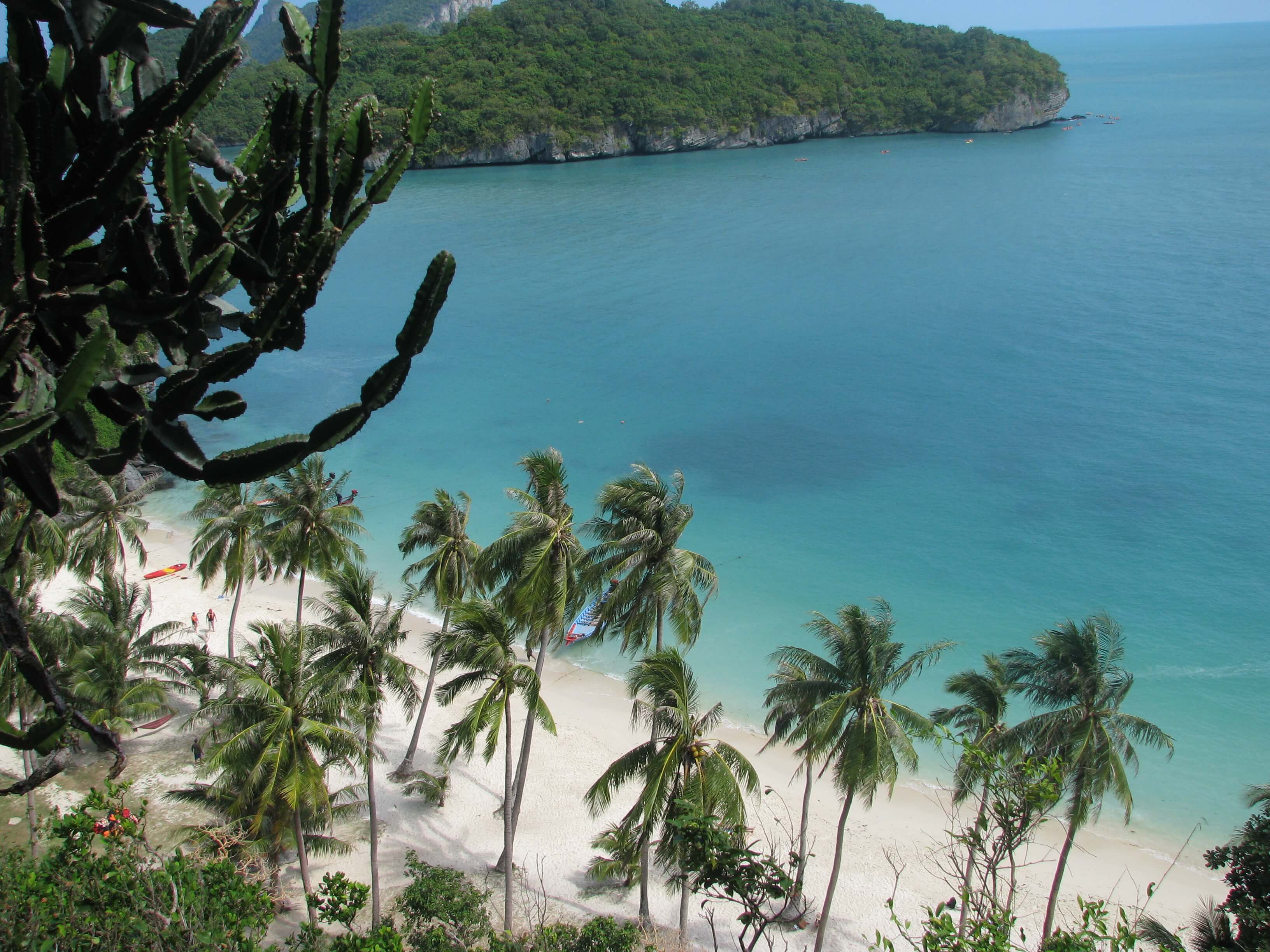
Koh Samui has drawn international backpackers since the 1970s, and you can still feel it strolling the Western-run waterfront. The island offers a never-ending string of white-sand beaches and bays, some more fashionable than others.
Chaweng and Lamai, along the east coast, are the two most in-demand, and the sea there is more beautiful than almost anywhere else on the island. The trade-off is the crowd that comes with it: the beach vendors, the restaurant chains and supermarkets, the nightclubs, the McDonald’s. This was not the Thailand that had left me speechless.
So after a quick look around, I moved north to Bo Phut, the old fishing village. Here, there are still traditional teak-and-bamboo buildings, small restaurants by the water, and resorts built on a human scale. Almost everything is run by Westerners, mind you, so both the style and the prices reflect that, but it kept a gentleness the busier beaches had lost.
The archipelago offshore, though, is simply breathtaking, even if you can reach it only on big, noisy motorboats or the 200-seat ferries. A shame. I’d have loved to hire a little fishing boat instead.
What to do in Koh Samui
There is no shortage of things to do, and you can happily fill several days:
A catamaran trip, to dive and snorkel, or just to feel the breeze and the lap of the water. A big-game fishing trip, which I skipped because it leaves at dawn, and rising at that hour for it is not my idea of a holiday. And the many waterfalls scattered throughout the jungle, perfect for an hour in the shade and a swim.
To get around to all of this, hire a scooter. It’s the freedom the island is made for.
A word on the animal attractions, because they are still sold everywhere. Elephant trekking is the one thing I’d steer you firmly away from. I could never stand the sight of the chains around their feet, or the scars on their foreheads left by the hook the handlers use. If you want to spend time with elephants, choose an accredited ethical sanctuary, where you watch and help care for them and no one rides. It is a far better morning for you and for them. I gave the butterfly garden and the little zoo a miss too, for the same reason: caged animals have never sat well with me.
The temples
And then, of course, the Buddhist temples.
My favourite is the Laem Sor Pagoda, a small golden temple set on a rock above the sea. Quite something. Wat Phra Phutthabat is known for its four carved Buddha footprints and sweeping views over the whole island. The hugely popular Big Buddha temple sits on Ko Fan, a little island linked to Samui by a causeway. And then there is Wat Khunaram, a minor pilgrimage site thanks to the mummified monk, Luang Pho Daeng, who died while meditating in 1973. He is still there, seated in his meditative pose under glass, wearing a pair of sunglasses. I wasn’t especially taken with it, though it seems I’m in the minority.
The islands nearby
Koh Phangan is famous for its heavenly beaches and, above all, for the Full Moon Party that draws thousands of young revellers and fills the local agencies’ pockets. I was on Samui a fortnight before one, and the “ticket” was pressed on me endlessly, on the beach and in town. So don’t worry, the party will find you whether you want it to or not.
Koh Tao, ringed by its long reef, is the place for anyone who loves to dive, and equally for anyone who loves doing absolutely nothing by the sea. The bay that suits me best is, predictably, the wildest and quietest: Hin Wong, on the east coast. The road there is far from easy and dustier than you can imagine, which is exactly why there are only ever a handful of visitors, and why the few there tend to be my kind of people, slung in a hammock in the shade with a good book and a fruit cocktail within reach.
Mu Ko Ang Thong Marine Park
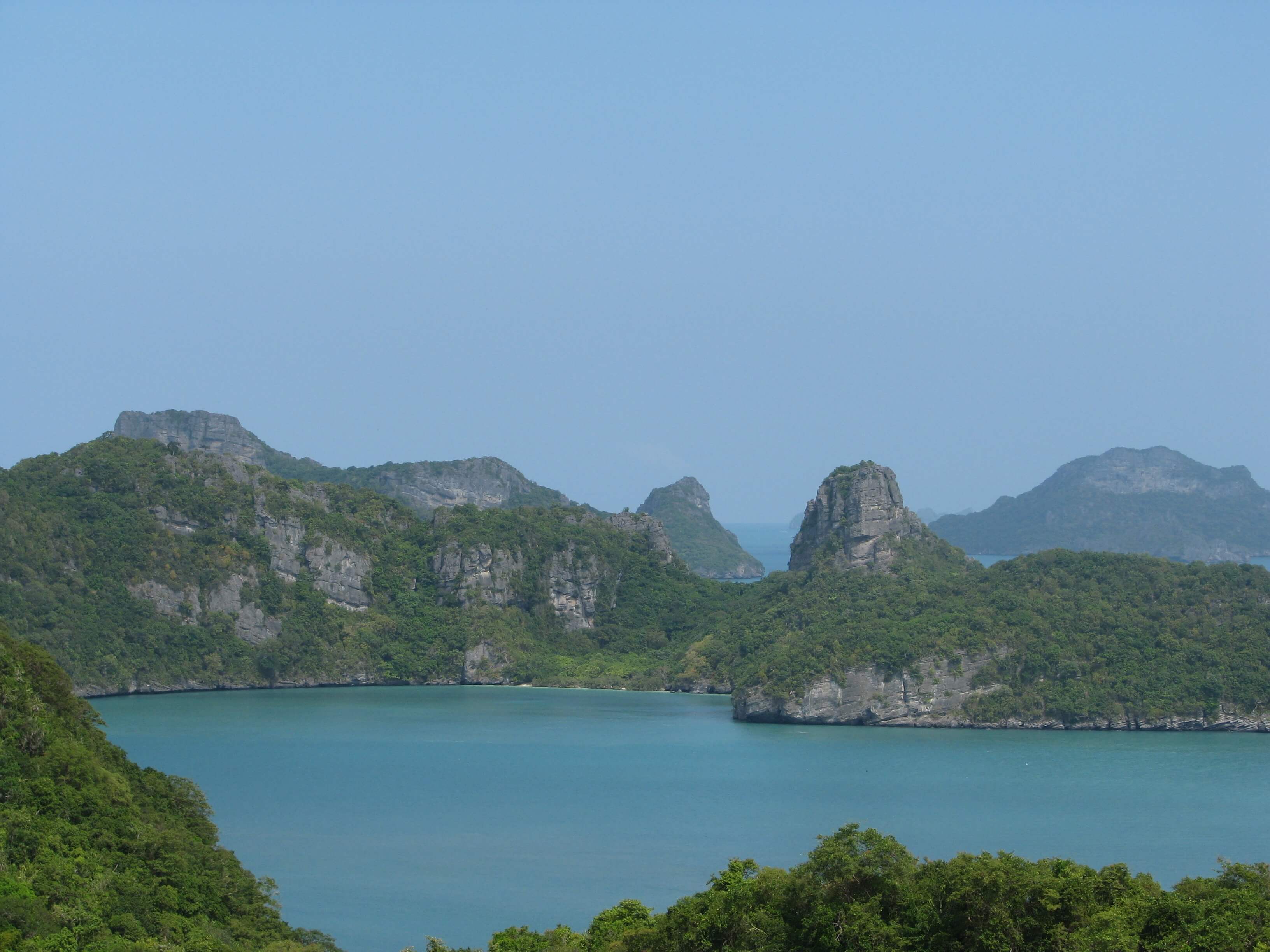
The marine park north-west of the island is a scatter of small karst islands that I completely fell for: true limestone mountains, some rising steeply hundreds of metres straight out of the sea.
Ko Wua Ta Lap has the park headquarters, a lovely beach with crystal-clear water, and a very, very tiring climb to a viewpoint with a staggering panorama over the archipelago. I honestly wouldn’t recommend it to anyone with joint trouble or a head for heights, because it is steep. Most people haul themselves up by the ropes fixed to the rock and come back down on all fours. I certainly did. If you’re going up, wear trainers. And don’t miss the Bua Bok caves nearby, studded with stalactites and stalagmites.
There’s also Ko Mae Ko, with its astonishing salt lake, the Emerald Lake, joined to the sea through hidden channels, the one you may recognise from the film The Beach. And the tiny islands of Sam Sao, Thai Phlao and Wua Kantang, with white beaches and lovely reefs, are little camping paradises. If you camp, pack your silk sleeping bag liner and a head torch, because the ones on site are not what you’d hope for. My full list of essential travel gear explains why I never travel without that liner.
A few practicalities that have firmed up since my visit: the park is reachable only with a licensed tour operator, there is a national park entrance fee of around 300 baht for foreign adults, and it closes each year during the monsoon, roughly from the start of November to the middle of December, when the seas turn dangerous. Plan around that.
Where to stay
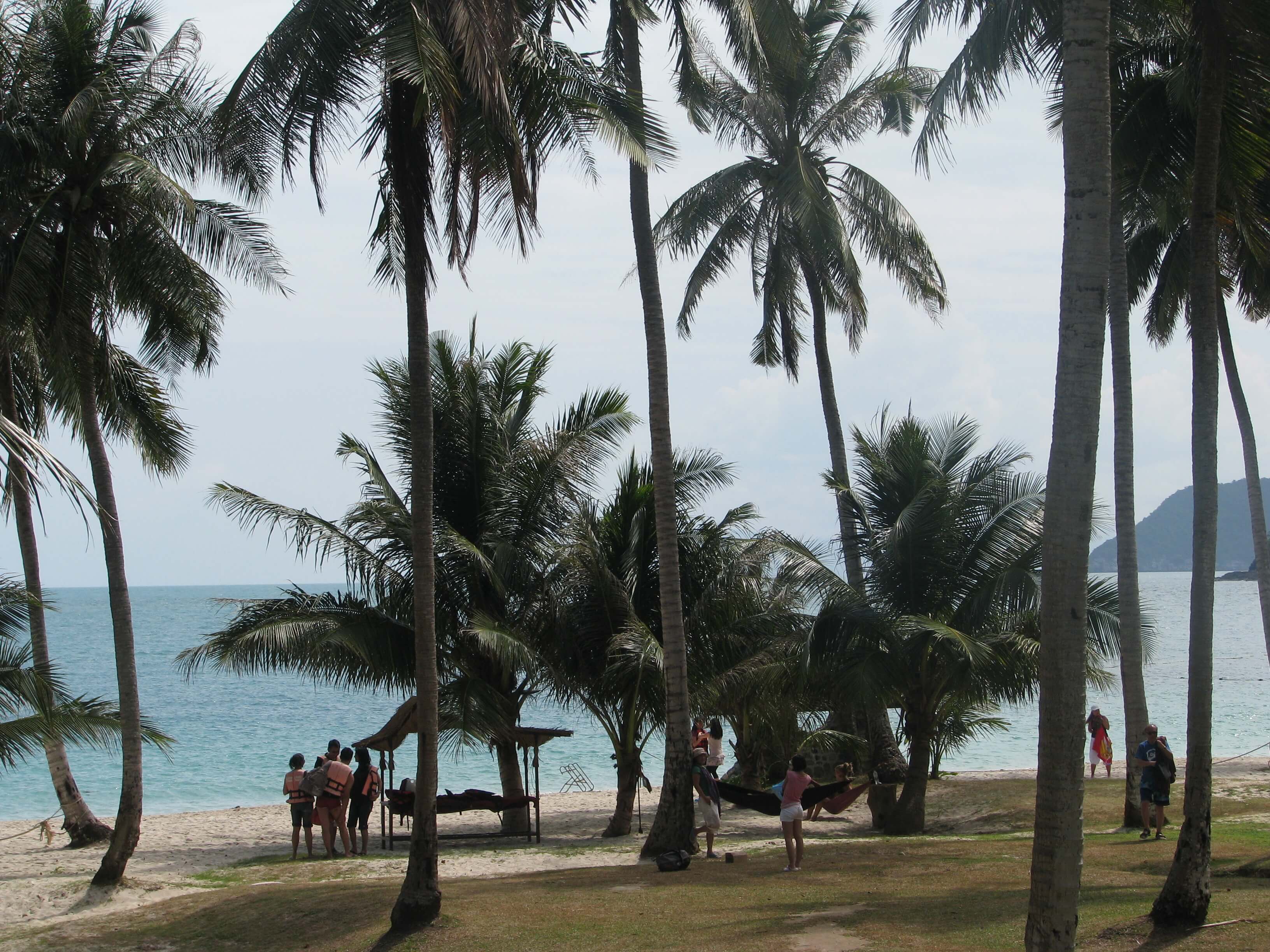
I stayed at The Waterfront in Bo Phut, in a lovely, elegant, spotless beach bungalow right on the sand. My one reservation was that it felt “too British”: the couple who own and run it do everything, perhaps a little too much, to make British guests feel at home. Which I’d applaud in England, but not in Thailand, where I’d rather have things feel Thai. That aside, the breakfast was excellent, and the little touches, frozen towels on the beach, cheap laundry, were spot on. Prices have moved on since I was there, so treat mine as a memory rather than a quote.
How to get to Koh Samui
By air, you land at what is still the prettiest, greenest, most charming little airport I’ve ever seen. Even the shuttles from the open-sided waiting area to the aircraft are lovely, and put you in a holiday mood from the first step.
I always flew in from Bangkok with Bangkok Airways, which built this jewel of an airport and still runs most of the flights, though Thai Airways serves it too. Flying straight in is the easy way, but not the cheapest: for less, you can fly to Surat Thani on the mainland and continue by the combined bus-and-ferry transfer, or take the ferry across from Donsak.
One last thing. Do not miss the airport bathroom. One of the small pearls of Koh Samui.
When to go
Here is the thing most people get wrong: Koh Samui’s weather is the mirror image of Phuket and the Andaman coast. The dry, calm, sunny stretch runs roughly from December to April, the peak season. May to September is a decent shoulder, with the odd afternoon shower. October to December is the wet season, with November the heaviest, and it’s also when the Ang Thong park shuts. If a boat trip to the marine park is the whole point of your visit, keep well clear of November.
Further reading
- Tourism Authority of Thailand, official visitor site
- Mu Ko Ang Thong National Park, park information and fees
- My guide to Chiang Mai, if you’re pairing beaches with the north
FAQ
The best time to visit Koh Samui is roughly December to April, when the island is dry, sunny and calm. Unusually, Samui’s weather is the reverse of Phuket and the Andaman coast: its wet season runs from October to December, with November the wettest month, so avoid then if a boat trip matters to you.
The best things to do in Koh Samui include relaxing on Chaweng and Lamai beaches, exploring the quieter old village of Bo Phut, visiting temples such as the Big Buddha and the golden Laem Sor Pagoda, chasing jungle waterfalls, and taking a boat trip to the Ang Thong marine park. Hiring a scooter is the easiest way to get around.
Koh Samui has its own airport, served mainly by Bangkok Airways and also by Thai Airways, with direct flights from Bangkok. A cheaper alternative is to fly to Surat Thani on the mainland and continue by a combined bus-and-ferry transfer, or take the ferry across from Donsak. You always need to cross the water to reach the island.
Yes, the Ang Thong Marine Park is one of the highlights of a Koh Samui trip: 42 dramatic limestone islands, hidden lagoons, and a famous viewpoint hike. You can only visit with a licensed tour operator; there is a national park entrance fee of around 300 baht, and the park closes each year during the monsoon, roughly from November to mid-December.
Where you stay depends on the pace you want. Chaweng and Lamai are lively, with the best swimming and the most nightlife and crowds. For something quieter and more characterful, the old fishing village of Bo Phut, with its teak shophouses and small seafront restaurants, is a lovely base while still close to everything.