


Some anniversaries in life bind us to a particular person. Mine is with Emilie.
Our careers have put hundreds of kilometres and many months a year between us, but we try never to miss our own anniversary, in late October. For years we have met wherever business, curiosity or the mood of the moment sent us, and one year the pull of a certain atmosphere took us to Marrakech, the Red City. This is the story of that first long weekend there, told between confidences, mint tea, colourful babouches and a great deal of laughter. It belongs with everything else I have written about Morocco.
Marrakech is the greatest of the imperial cities. Founded in the eleventh century, it carries a strong Andalusian influence, visible in the sandstone walls that ring it and in palaces straight out of the Arabian Nights. It is the perfect place to meet a dear friend on the rooftop terrace of a riad, among cushions and mint tea and traditional sweets, with rivers of words in between. Our plan was simple: set out in a different direction each morning and follow whatever caught our eye.

Wandering the medina
They say all roads lead to Rome. In Marrakech they all lead à la Place, unless you lose yourself entirely in the labyrinth of the medina, which is half the fun. For us “the Place” was, and always will be, Jemaa el-Fna.
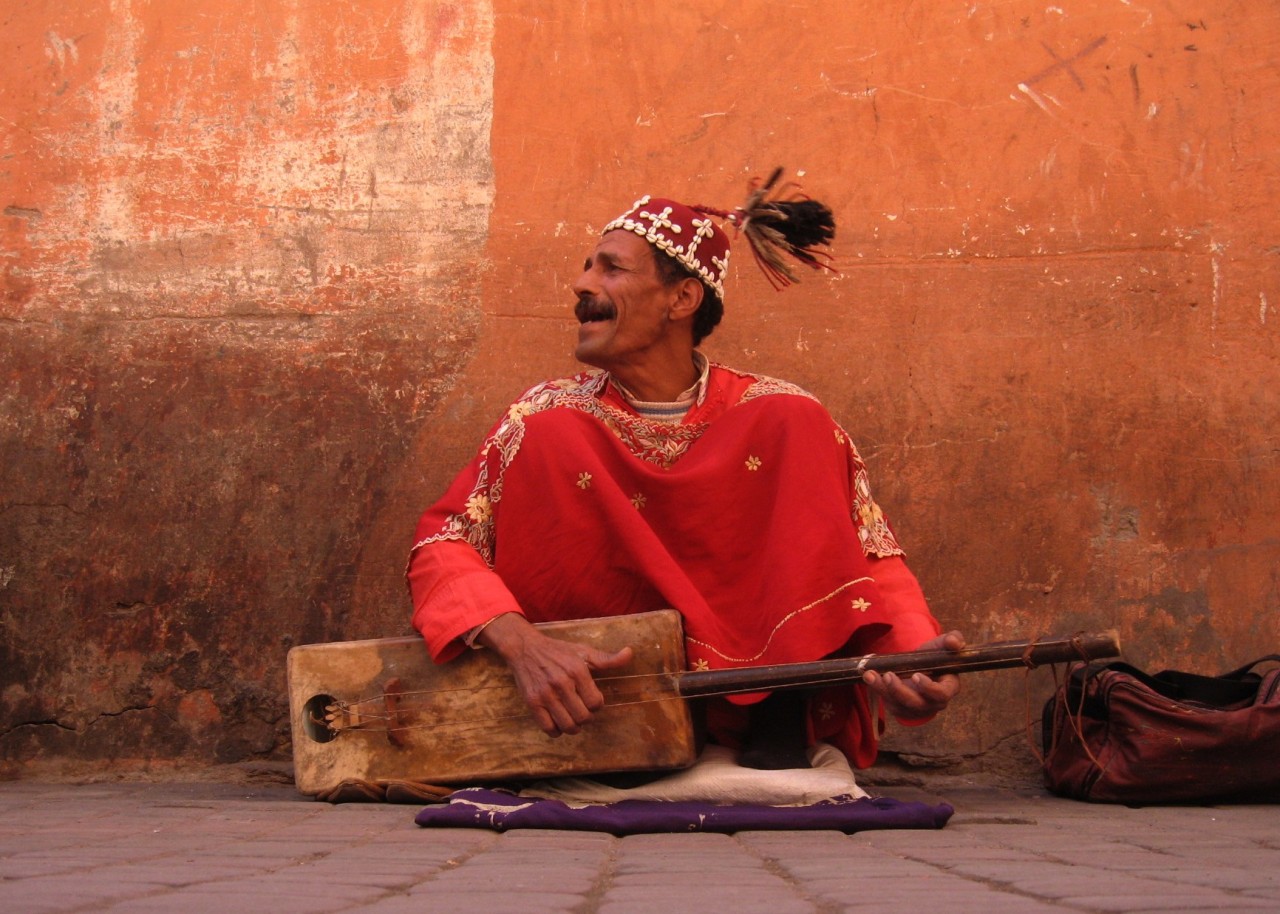
The vital heart of the city, and once the site of public executions, this vast square puts on a continuous performance, part staged, part accidental, by residents and tourists alike. Until early afternoon it is mostly a great open-air market: stalls of spices, exotic fruit, mountains of oranges pressed on the spot, fabrics, henna, handicrafts, and among them snake charmers, water-sellers in their extraordinary costumes, street performers and the alarming “dentists”, though tooth-pullers might be the truer word. Towards sunset the stalls give way to endless tables and kiosks cooking traditional dishes on the spot, and smoke, aromas, music and light rise into a joyful Babel that carries you off.
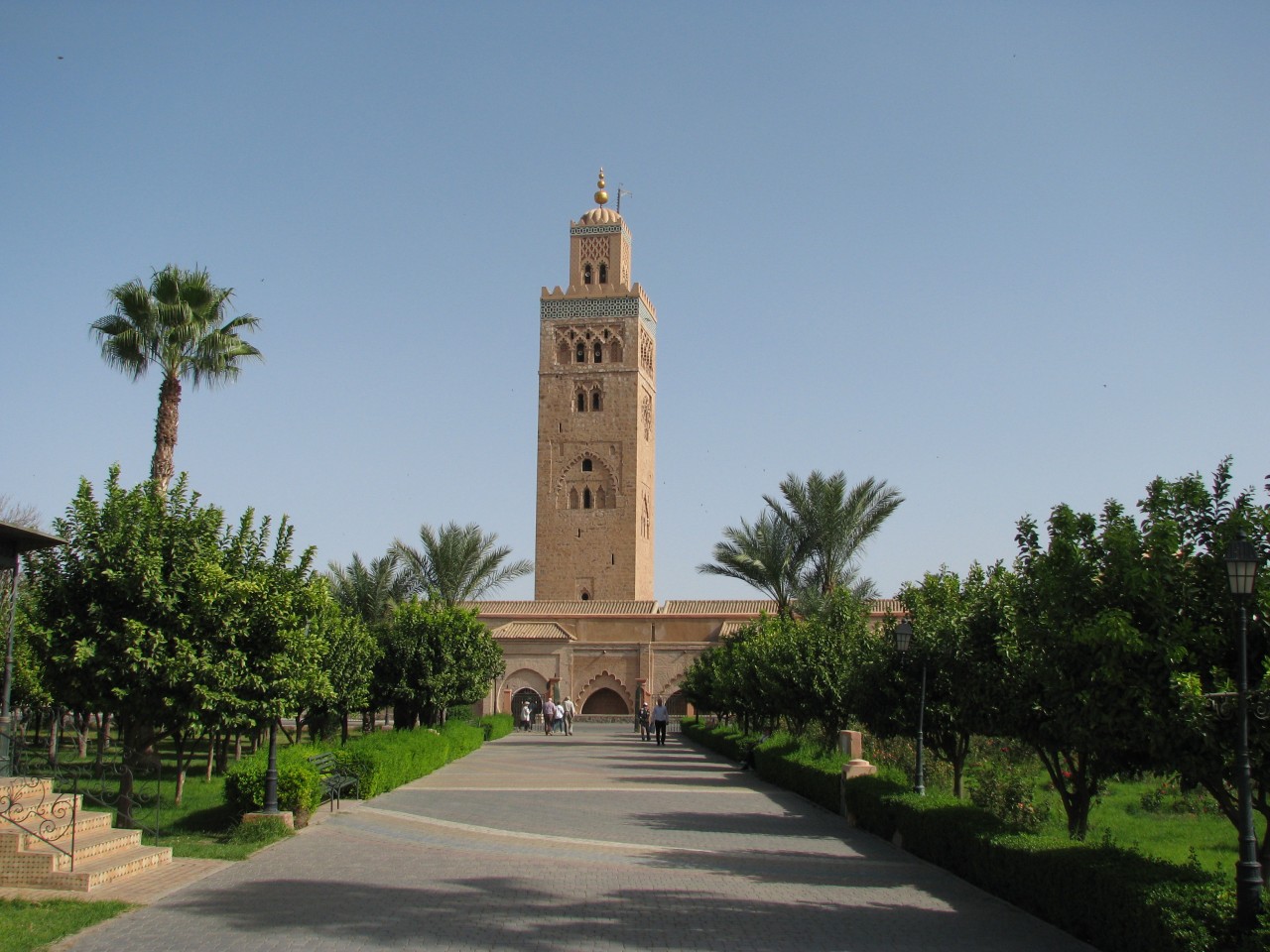
Crossing the square can take a very long time. On the far side, past the avenue where horse-drawn calèches wait, rises the Koutoubia, the “mosque of the booksellers”, crowned by a beautiful Almohad minaret from around 1120. Only a few of its white, cobalt and turquoise ceramic tiles remain, but close your eyes and picture it wholly clad in them, and the vision is dazzling.

Palaces, tombs and a Koranic school
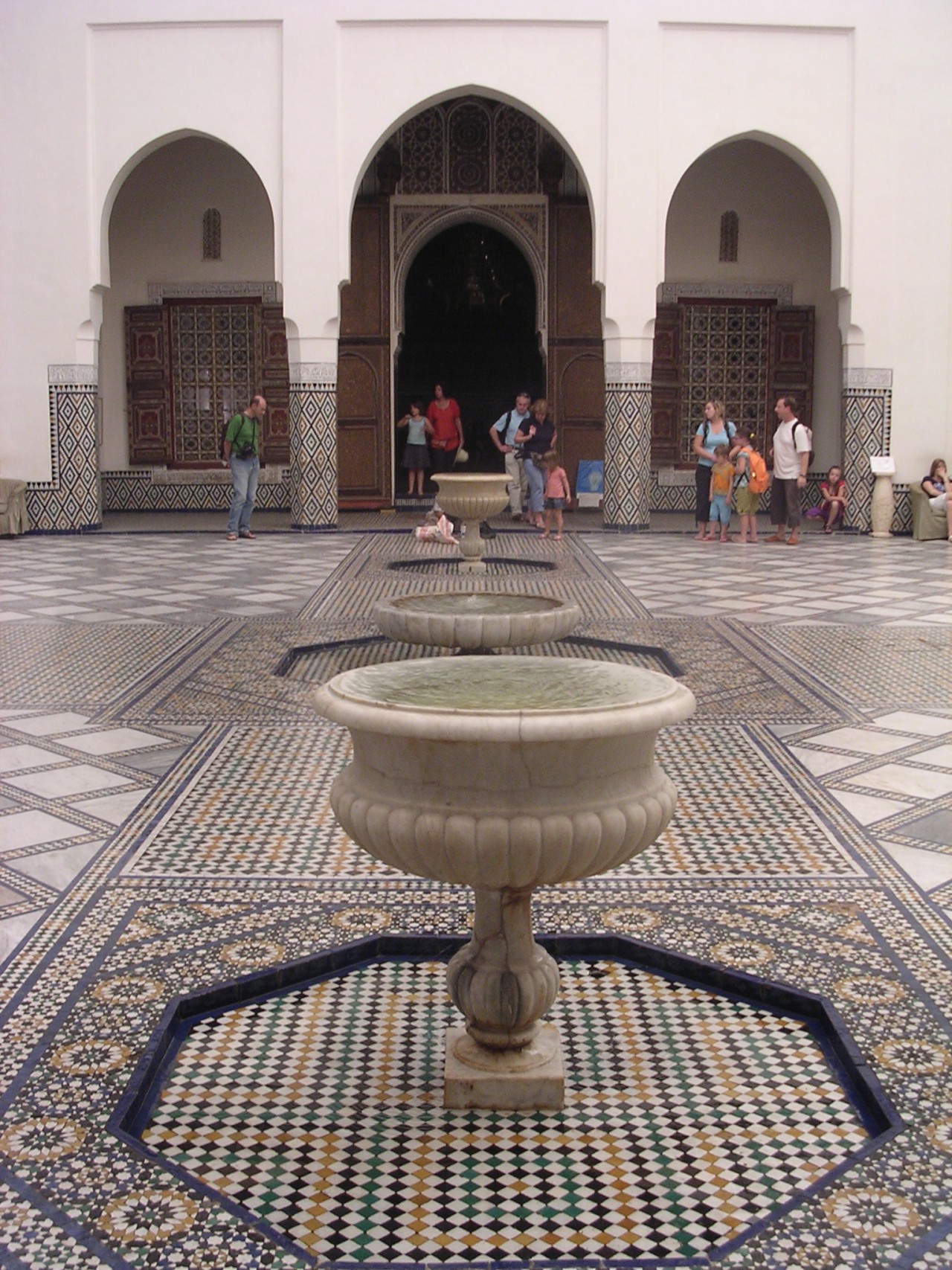
Another jewel is the Dar Si Said museum, a setting made for the Arabian Nights, where it is impossible not to let the imagination wander from room to room and patio to patio.
A few hundred metres on, through drifts of spices and slippers and hanging carpets, stands the Bahia Palace, the “palace of the beautiful”, an occasional royal residence and a miracle of Moroccan craft: thousands of mosaics, carved and painted ceilings, fountains, stained glass and moucharabieh screens, in an almost unreal silence.
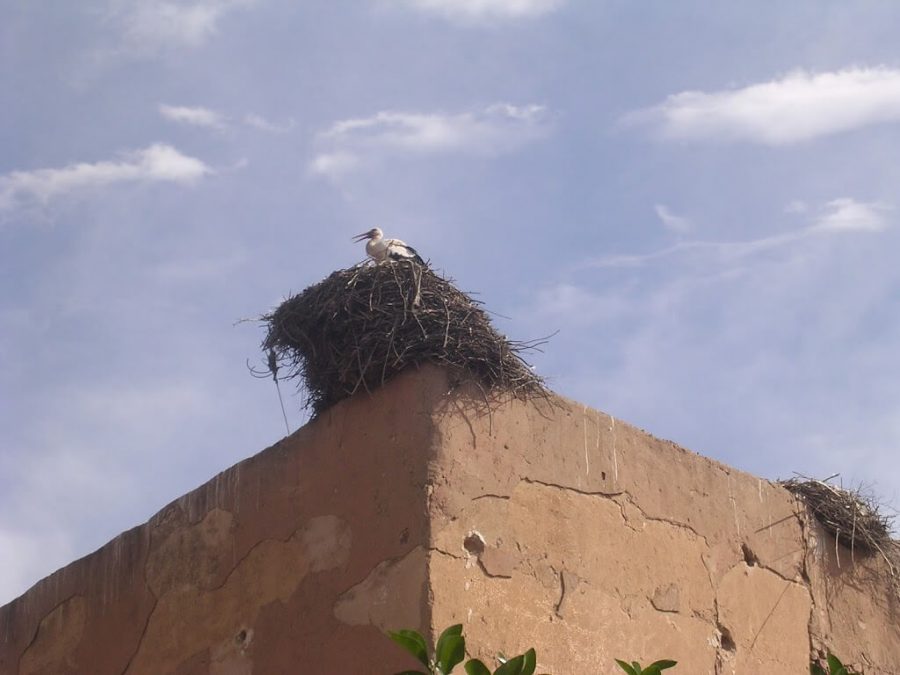
Beside it lies the Mellah, the old Jewish quarter, established in 1558, once a city within the city with its synagogues, gardens and souks, and its still-active cemetery, an affecting expanse of whitewashed tombs, many unmarked. Storks nest along its walls, and their slow flight kept us company through a long lunch.
From there we walked to the Kasbah, the old royal citadel, pausing first at the Saadian Tombs (which close in the early afternoon), a funerary complex begun by Sultan Ahmad al-Mansur around 1557 and rediscovered only in 1917. It is small, and rewards patience, since the finest mausoleums are glimpsed through narrow openings, a few visitors at a time. Nearby stand the vast, quiet ruins of the El Badi Palace, where it was a pleasure simply to sit before the great central basin and let our thoughts drift, disturbed only by another passing stork.
My own favourite, though, was the Medersa Ben Youssef, an old Koranic school built around a courtyard of a thousand mosaics and a reflecting fountain, ringed by the small cells where students once lodged, and crowned with breathtaking carved cedar. I did not want to leave.
The new city and the gardens
Eventually we crossed into the ville nouvelle, through the leather-workers’ Dar el Bacha district and on to Guéliz, the modern, Western-style quarter of boutiques, banks and international hotels, where, I admit, I found little charm, though every café’s cooling water-misters were a mercy in the heat.
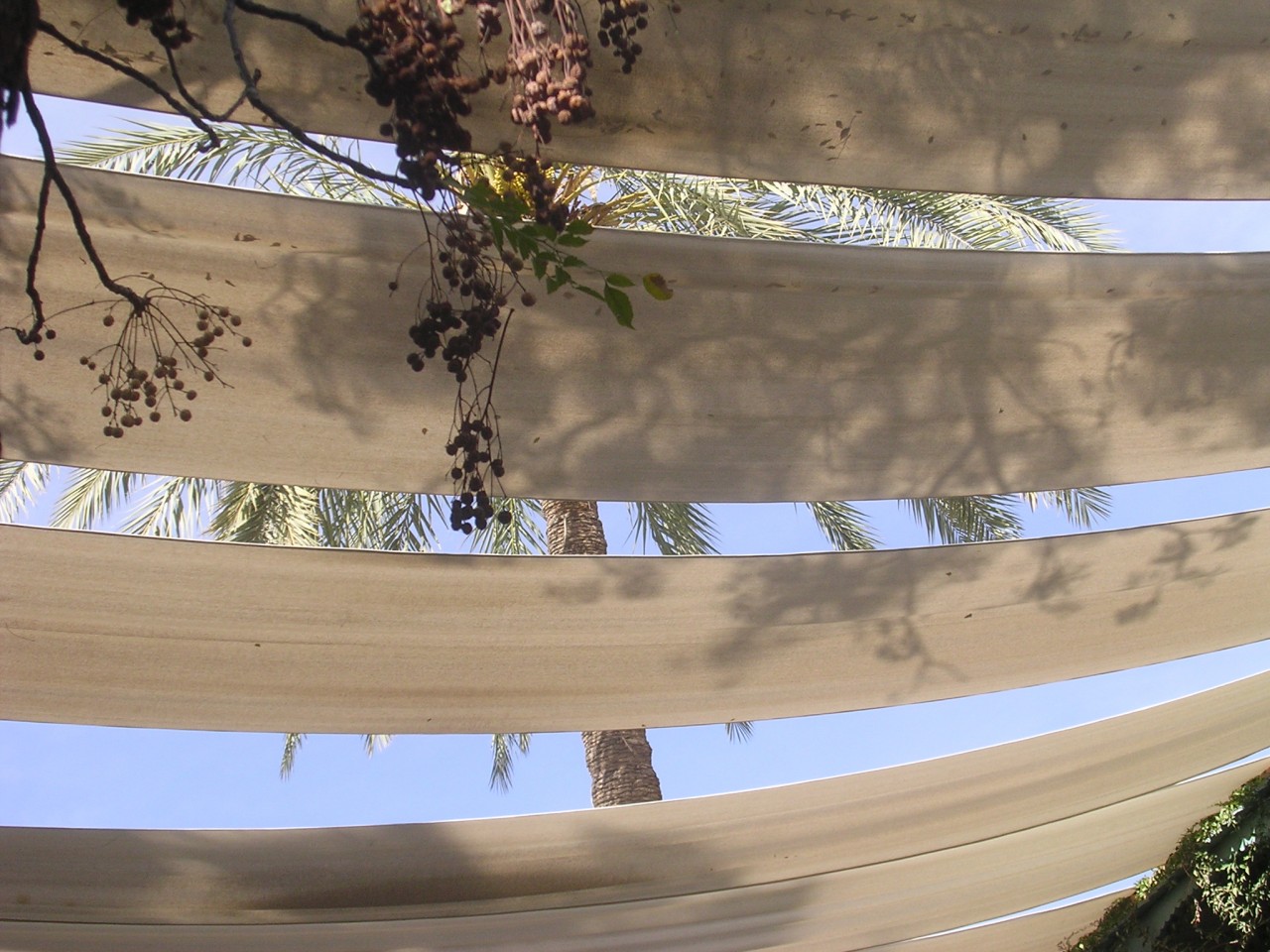
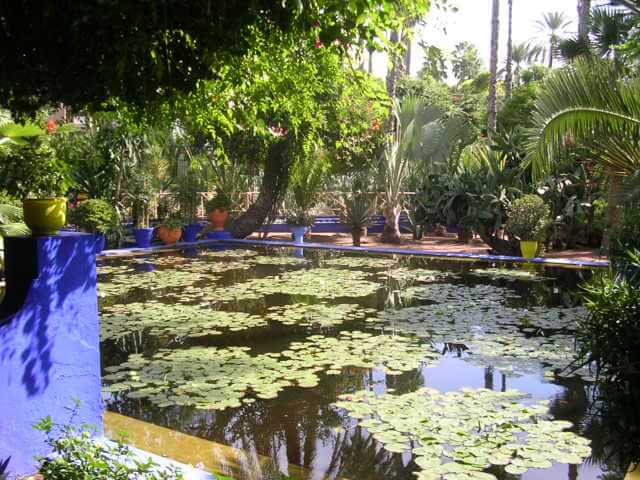
Shade to shade, we reached the Jardin Majorelle, where the ashes of Yves Saint Laurent rest. It is named for Jacques Majorelle, who in 1919 built the electric-blue Art Deco villa in the shade we now call Majorelle blue, and, a passionate botanist, filled the garden with plants from all over the world. After his death, the villa and garden fell into neglect until Saint Laurent and Pierre Bergé restored them. It is a place to lose all track of time, among the fountains and the great canvas sails stretched over the patio, and of course we did exactly that, over a cool lemonade.
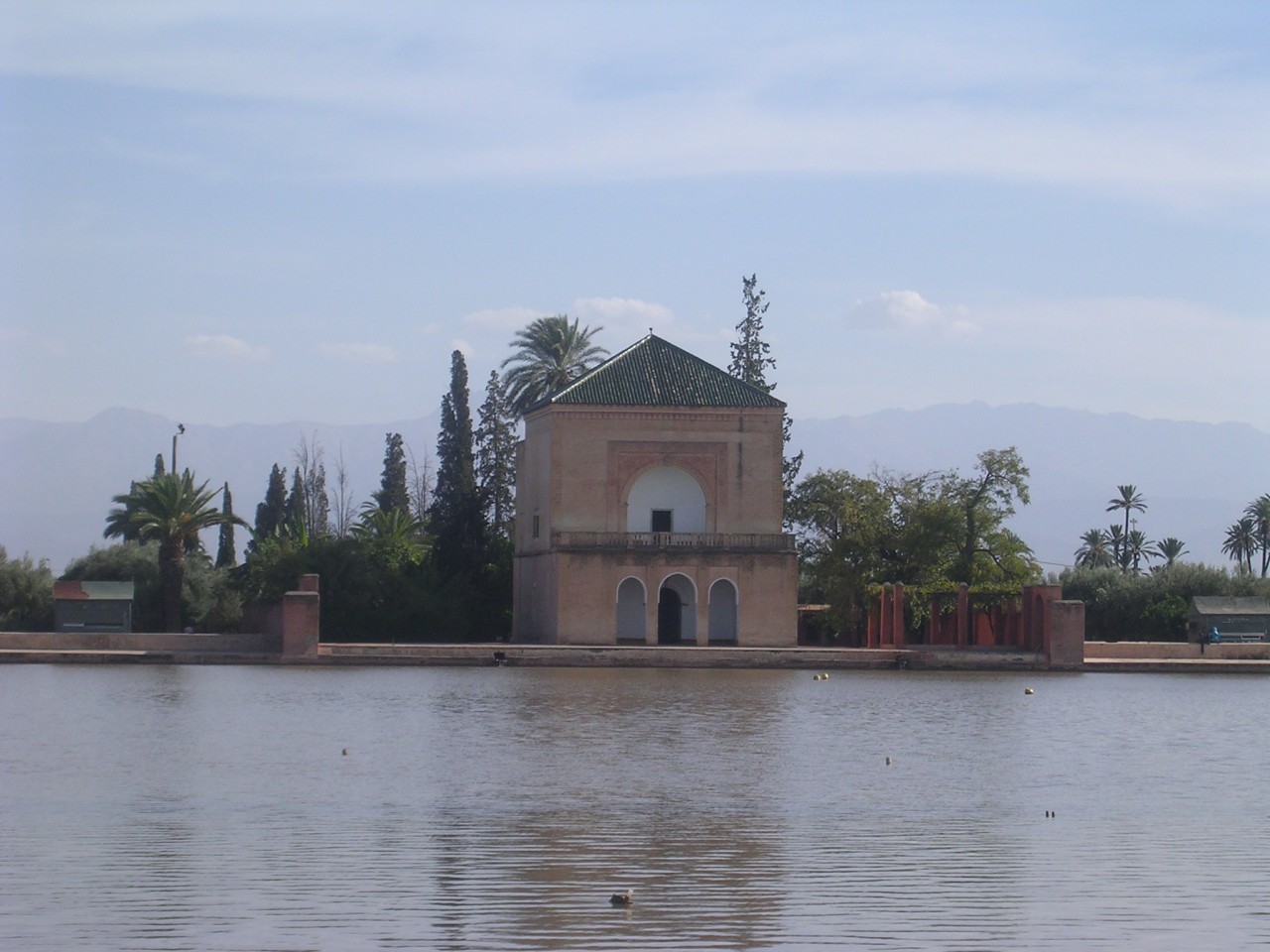
Our last stop was the Menara garden, reached by calèche: a vast olive grove around a great rectangular basin whose water mirrors, depending on the hour, the Atlas Mountains, the clouds, or the green-tiled pavilion. It was a little neglected when we visited; I hope it is cared for now.


The souks
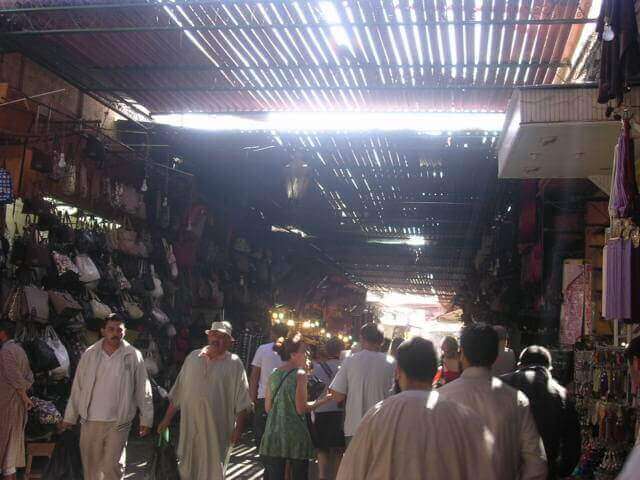
The souk is a paradise of endless bargaining, of scent and colour and soft light filtered through reed roofs, a city within the city, ready to swallow any traveller willing to stop and talk. And we were more than willing.
The main souk runs through the centre of the medina, north from Jemaa el-Fna to the Ben Youssef Madrasa, a web of stalls selling what the workshops in the surrounding lanes produce. Each trade has historically had its own quarter and its own quite rigid hierarchy, a whole world in itself. We drank mint tea with many of the sellers, especially those with their rainbow rows of babouches, bags and little boiled-wool and tadelakt treasures, and lost ourselves happily in impossible negotiations and long talk about their traditions, and about Emilie, whom every local took for a Berber girl, though she has not a drop of Berber blood.
Where we ate and stayed
For food, Marrakech has something for every taste and budget. My favourites were the Café des Épices on its namesake square, for juices and sandwiches over the colourful market; the very touristy Kasbah Café, redeemed by a wonderful terrace view; and the Terrasse des Épices in the Charifla souk, a lovely spot with tables set in alcoves and excellent food, ideal for dinner.
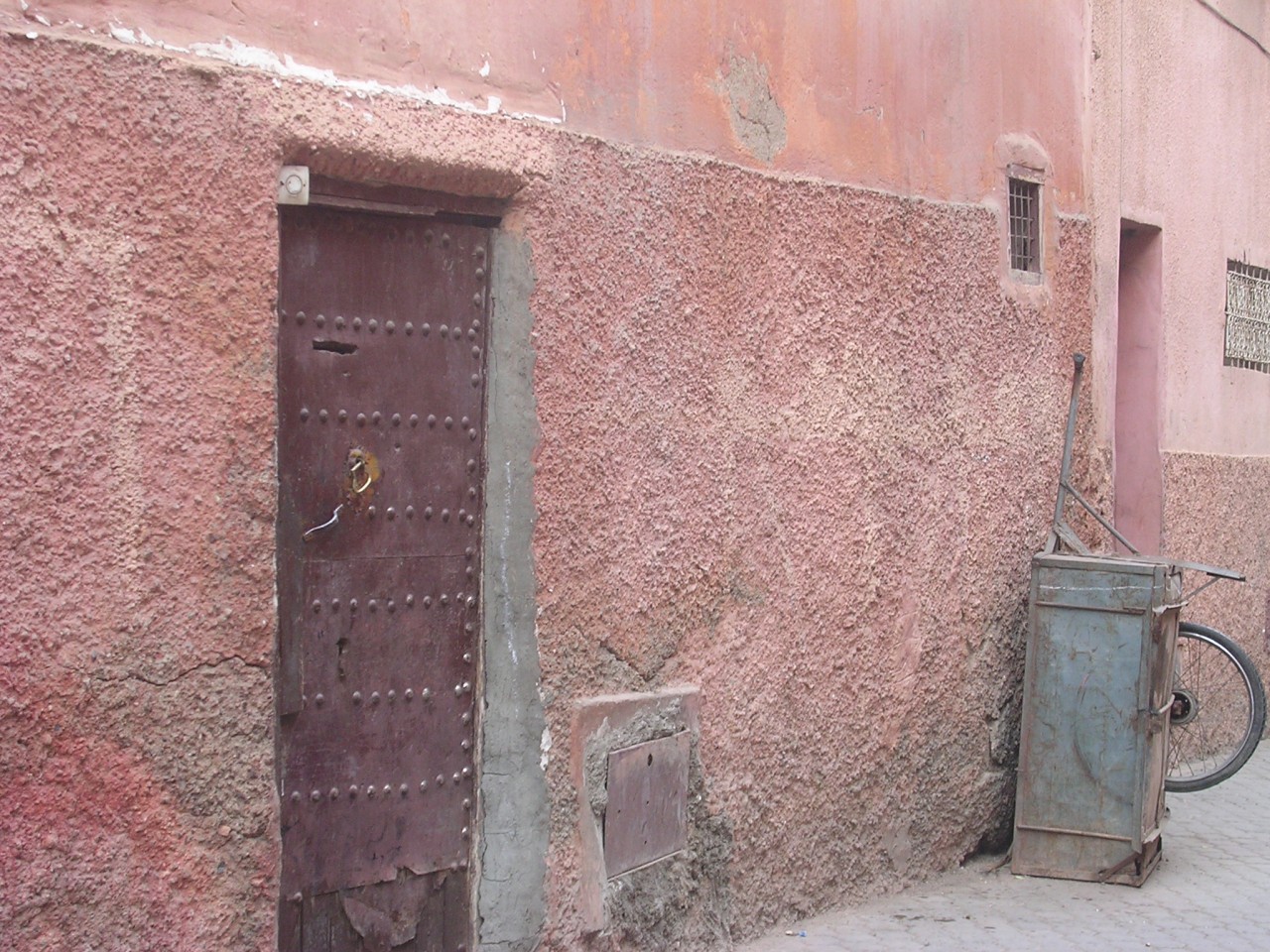
We stayed at a small riad tucked into a pedestrian lane, perfectly placed for exploring. Like all riads you enter through an anonymous door that opens onto a hidden, softly lit patio, very theatrical, and the roof terrace and the tadelakt bathroom were a dream. I will be honest, though, since I always am: the stay disappointed us a little. The first day was delightful, but when the owner left partway through our stay the atmosphere changed, the warmth and the calm went with him. A reminder, if any were needed, that hospitality is a fragile, human thing. As almost everywhere in Marrakech, our wake-up call came before dawn, in the baritone of the neighbourhood muezzin.
Leaving was hard, for more than one reason. I did not know when I would next see Emilie, and the weekend had been far too short for everything around the city I still wanted to see. The first problem had no quick fix; the second I solved at once, by booking a return trip to Morocco a few weeks later.

Further reading
- The ritual of Moroccan mint tea, which runs through this whole trip
- Essaouira, the white city on the coast
- Beyond the city: Ouarzazate and the High Atlas kasbahs
- This article is also available as a mobile app, via GPSmyCity, for GPS-guided directions
Frequently asked questions
A long weekend, three or four days, is enough to experience the heart of Marrakech: Jemaa el-Fna, the souks, the Koutoubia, the Bahia and Dar Si Said palaces, the Saadian Tombs, the Medersa Ben Youssef and the Majorelle garden. It is not enough to add the surrounding sights, such as the High Atlas and Ouarzazate, which deserve a trip of their own.
The essentials are Jemaa el-Fna square and the labyrinthine souks, the Koutoubia minaret, the Bahia Palace, the Medersa Ben Youssef (an old Koranic school with exquisite cedar and mosaic work), the Saadian Tombs, the ruins of El Badi Palace, and the Jardin Majorelle with its Yves Saint Laurent connection. The Menara garden and the Mellah are lovely additions.
Jemaa el-Fna is the beating heart of Marrakech. By day it is an open-air market of spices, fruit, crafts, snake charmers and performers; by evening it transforms into a vast open-air kitchen of food stalls, smoke, music and light. It is intense, theatrical and unforgettable, and it is a UNESCO-recognised space of intangible cultural heritage.
The souks are famous for babouches (leather slippers), bags, lanterns, carpets, spices, argan oil, ceramics and boiled-wool and tadelakt goods. Haggling is expected and part of the experience; do it with good humour, over the ritual glass of mint tea, and settle on a price that feels fair to both sides.
Spring (March to May) and autumn (late September to November) are ideal, with warm but manageable temperatures. Summer can be extremely hot, and while the medina’s shade and cafés’ water-misters help, sightseeing at midday is punishing. Winter is mild by day and cool at night.