


In everything I have written about Morocco, there is a glass of mint tea somewhere in the picture.
It is there through every long negotiation in the souks, always in the small decorated glasses, always poured from a height. And it took me a while to understand that the tea was never really about the tea. It is an offer, and what is being offered is time.
What the tea actually means
Moroccan mint tea, atay, is the country’s fundamental gesture of hospitality. It signals welcome, friendliness and respect for the person in front of you, and it is offered constantly: to guests, to neighbours, to customers, to strangers who have stopped to ask directions.
It is prepared with a certain ceremony, traditionally by the head of the household, and often by a man, which is the version I most frequently saw. It is served with a flourish, the pot raised high above the glass so that the tea falls in a long thin stream and forms a layer of foam on top. That height is not showing off, or not only. It aerates the tea, cools it enough to drink, and makes a small piece of theatre out of an ordinary act. Tellement chic.
Moroccans sometimes call it whisky berbère, Berber whisky, which tells you something about the seriousness with which it is taken in a country where alcohol is not the social lubricant.

Three glasses, and what they mean
You are meant to drink three, and there is a well-known Maghrebi saying about why:
Le premier verre est aussi doux que la vie. Le deuxième est aussi fort que l’amour. Le troisième est aussi amer que la mort.
The first glass is as gentle as life, the second as strong as love, the third as bitter as death. And it is literally true as well as poetically so: the same leaves are steeped three times, so each glass is stronger and more astringent than the last.
In a souk, the escalation of the flavour tends to run in parallel with the escalation of the negotiation, which is one of the pleasures of buying anything in Morocco slowly.
The question every visitor actually wants answered
Here is the thing nobody told me, and which I would have been glad to know on my first trip.
Accepting the tea does not oblige you to buy anything.
Travellers worry about this constantly, and it makes them refuse a genuine kindness out of anxiety, which is a shame on both sides. In a home, the offer is pure hospitality and refusing it outright is a small unkindness. In a shop, it is hospitality and it is good business, and both of those things are true at once without either being a trick. You can drink three glasses, laugh, look at everything, thank the shopkeeper warmly and leave without buying. That is a completely normal outcome and nobody will think badly of you.
What is not fine is drinking the tea and then haggling aggressively, or drinking it and leaving without a word. The courtesy is the point.
A few small things that make you a better guest:
- Accept if you can. If you genuinely cannot, decline warmly rather than flatly, and give a reason.
- Take the glass with your right hand, and hold it by the rim and the base, because the middle is scalding.
- Do not rush. The tea is an invitation to stop for twenty minutes. Treating it as a transaction to get through defeats the whole purpose.
- Say yes to the second and third glass if you have the time, since three is the courtesy.
- On sugar, the traditional version is very sweet indeed. It is entirely acceptable to ask for less, and increasingly common among Moroccans themselves.
How to make it at home
For two people, which is about six small glasses.
You need
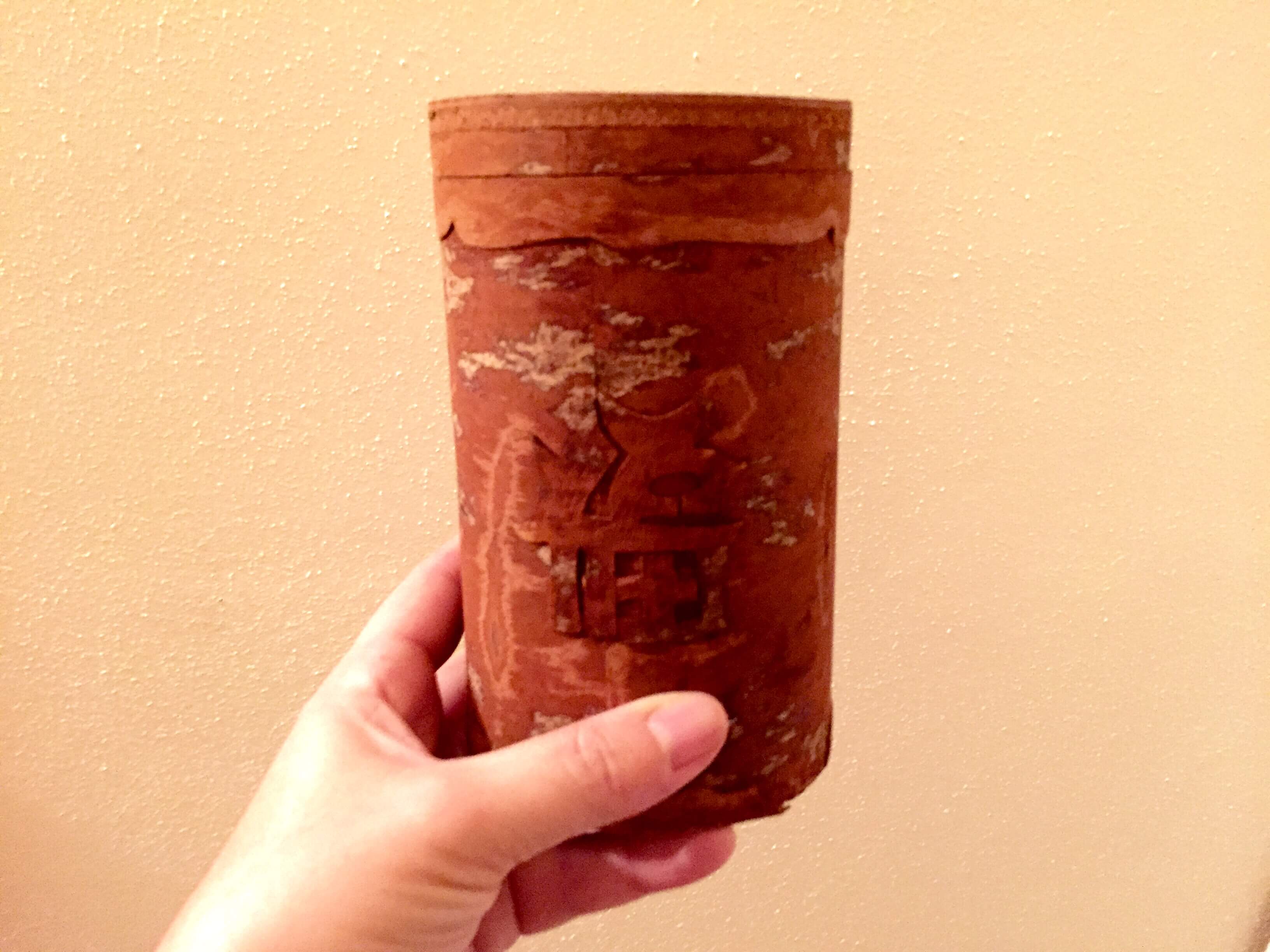
- 1 teaspoon of Chinese green gunpowder tea. I keep mine in a cinnamon-wood box, which perfumes it beautifully
- 1 generous bunch of fresh mint, spearmint if you can find it, which is the naana used in Morocco
- 4 teaspoons of sugar, or to taste
- half a litre of water
- a teapot, traditionally silver, or an enamelled one like mine
How to make it
Warm the pot first with a little hot water and pour it away.
Put the tea leaves in the pot and bring the water to the boil separately. Pour on just enough water to cover the leaves, leave it for about a minute so it gives up its bitterness, then discard that first water. This step is the difference between a good glass and a harsh one.
Cover the rinsed leaves with the mint, leaves only and no stems, and pour on the boiling water. Add the sugar.
And now the part people get wrong: you do not stir it with a spoon. You pour a glassful out of the pot and back into it, three times. That mixes the sugar, wakes the mint and aerates the tea all at once.
Then serve, pouring from as high as your nerve allows, until there is a small collar of foam on top of each glass.
What to eat with it
In Marrakech and Essaouira I drank it with Moroccan pastries, gloriously and ruinously caloric things of almond paste, honey and dried fruit. In Ouarzazate it arrived with Berber bread, a flat unleavened bread with mint leaves worked into the dough, which I liked even more.
When I make it at home, to make up for the pastries I am not eating, I add a handful of pine nuts to the glass. That is a Tunisian habit rather than a Moroccan one, and purists will tell me so, but I like it. Try both and tell me which you prefer.
Why this small post matters to me
I have written about a cup of ginger and lemon pressed into my hands by a guesthouse owner in Myanmar when I arrived ill in the middle of the night. I have written about five villagers in northern Thailand who passed us along a chain until one of them drove ahead of us in the dark to make sure we got home.
And I have written this, about three glasses of tea in a souk.
Three cultures, three completely different drinks, and the same gesture underneath: somebody handing something warm to a stranger and asking for nothing. I did not notice the pattern for years, and now I see it everywhere, including in my own work, since I ended up running a small hotel and spending my days on the other side of that gesture.
The tea, it turns out, was never about the tea.
Further reading
- The benefits of ginger, and the cure a stranger taught me in Myanmar
- Thailand, the Land of Smiles, and five strangers on a dark road
- My long weekend in Marrakech and Essaouira, the white city
FAQ
Mint tea, known as atay, is Morocco’s central gesture of hospitality. Offering it signals welcome, friendliness and respect, and it is extended to guests, neighbours, customers and strangers alike. It is traditionally prepared with some ceremony by the head of the household and poured from a height to aerate it and create a layer of foam.
Three glasses is the customary courtesy, and there is a well-known Maghrebi saying that the first is as gentle as life, the second as strong as love and the third as bitter as death. It is also literally true, since the same leaves are infused three times and each glass is stronger and more astringent than the one before.
No. Accepting tea in a shop places you under no obligation to purchase. In a home the offer is pure hospitality, and in a shop it is both hospitality and good business, but you can drink the tea, look at everything, thank the shopkeeper and leave without buying. What matters is not rushing and not being rude.
Warm the pot, add Chinese gunpowder green tea, and pour on just enough boiling water to cover the leaves. Leave it a minute, then discard that water to remove the bitterness. Add plenty of fresh spearmint leaves and the sugar, pour on boiling water, and mix by pouring a glassful out of the pot and back in three times rather than stirring. Serve poured from a height.
Pouring from a height aerates the tea, cools it enough to drink comfortably, and produces the small collar of foam on top of each glass that is considered the mark of a well-served tea. It is also a piece of everyday theatre, and part of the ritual’s pleasure.