


Everyone goes to Chianti. Fewer people go to the Maremma, and that is exactly the point.
This is the wild, southern corner of Tuscany, down towards the coast and the Lazio border, where the tourist coaches thin out, the hills turn to macchia and pasture, and the wine is, to my mind, some of the most interesting and best-value in the region. I first came years ago to visit one winery I had a personal reason to love, and I have been quietly recommending the area ever since.
Let me give you both: the estate that first drew me, and the wider Maremma I wish I had known to explore on that first trip.
The winery that brought me here
I came, originally, for ColleMassari, and I will admit the reason was sentimental before it was oenological. The estate belongs to the Tipa Bertarelli family, and yes, the Bertarelli of Alinghi, the sailing syndicate that won and defended the America’s Cup out of Valencia during my years working at the Palau de les Arts there. I spent a good part of that period with the Cup in the city, so a Tuscan wine estate in the same family was always going to have my attention. But that is another story, and it would take me off the road.
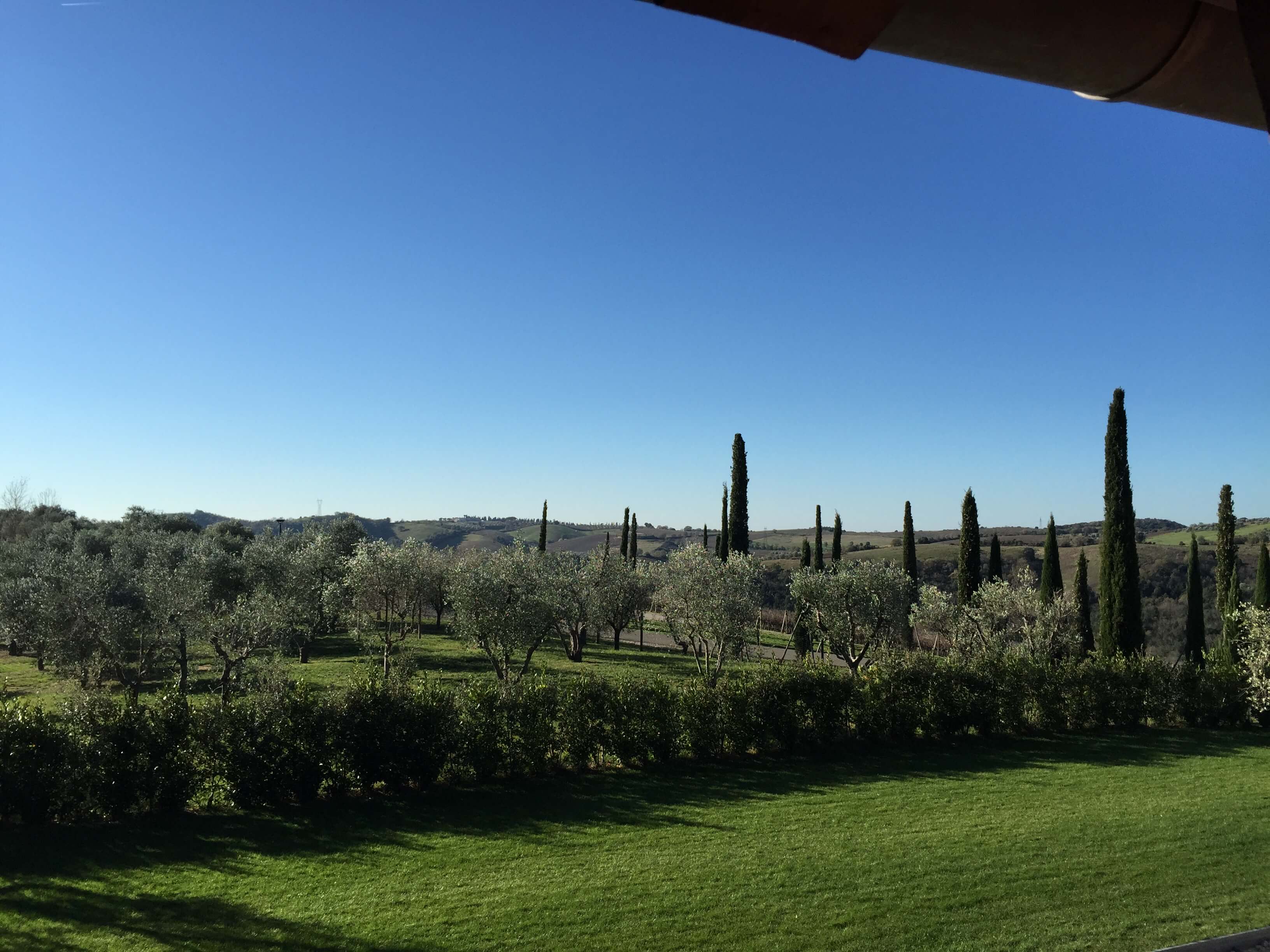
The estate sits in a perfect postcard of the Tuscan countryside, exactly as you imagine it: rolling green hills scattered with woods and silvery olive trees, vineyards changing with the seasons, long rows of slender cypresses, and old stone hamlets that look as though they walked out of a novel.
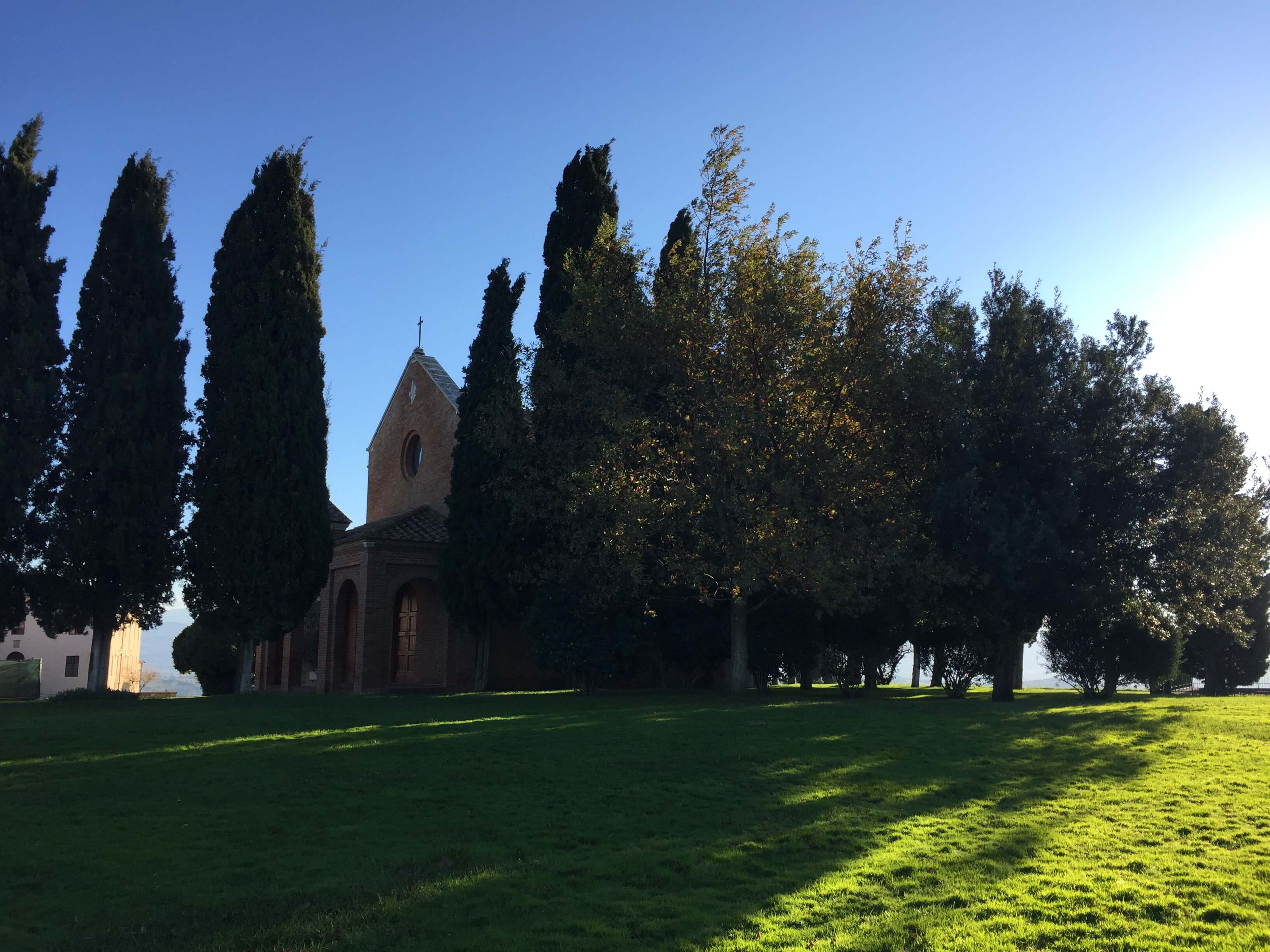
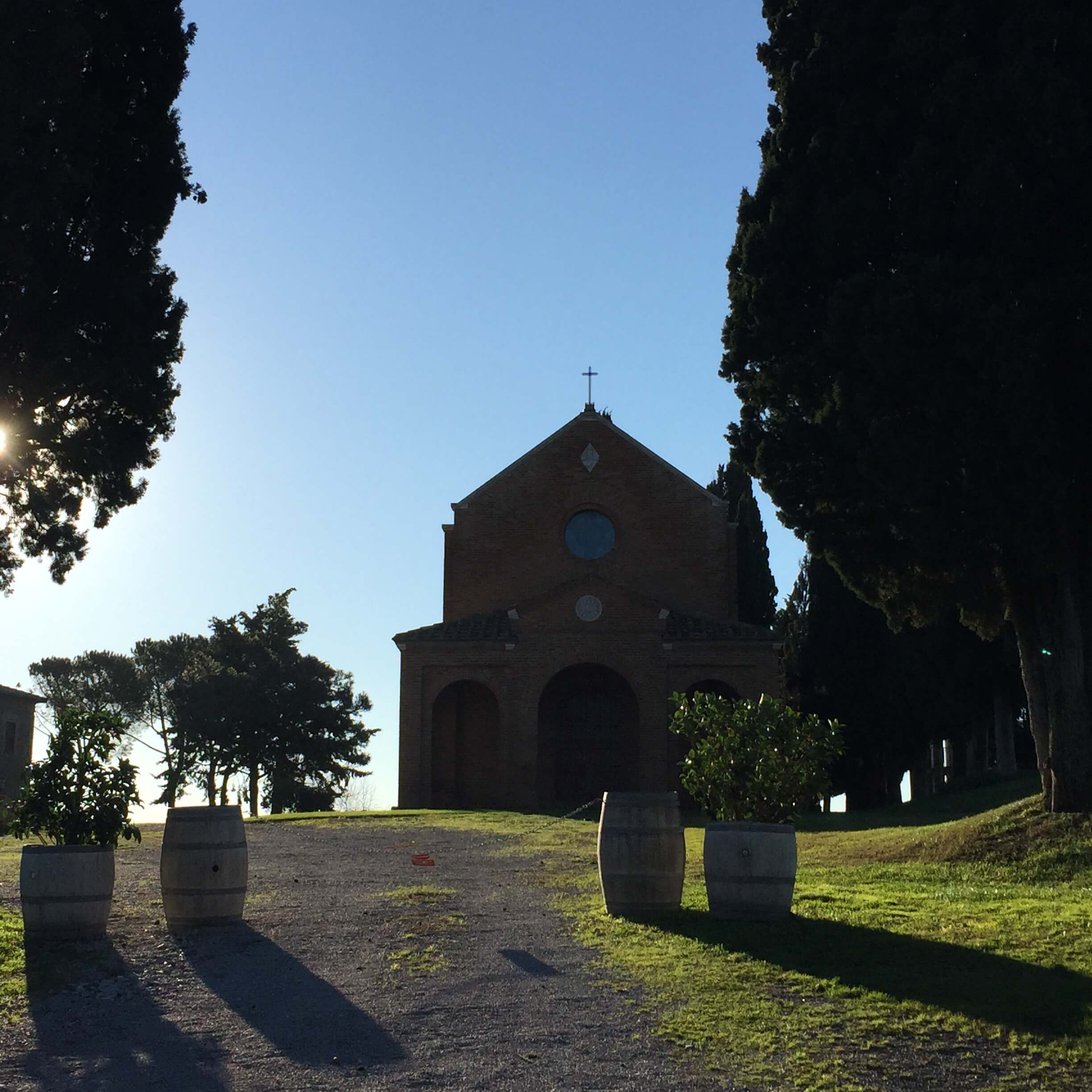
At its heart is the castle of ColleMassari, a fortified rural building on the flanks of Monte Amiata, the extinct volcano that shapes the whole area’s soils. The winery beneath it is genuinely worth the visit in its own right: a gravity-flow cellar dug into the hill on four levels, so the grapes move down through the winemaking without pumps, built on biodynamic and green-architecture principles that were well ahead of their time in 2014 and are still impressive now.
ColleMassari is really the anchor of a small constellation of estates the family owns, and tasting across them is a lesson in how different Tuscan terroirs behave:
Grattamacco, over on the coast at Bolgheri, is the glamorous sibling, producing the Cabernet-led Bolgheri reds that made this stretch of Tuscan coast world-famous. If you have ever heard the word Sassicaia, this is that neighbourhood.
Poggio di Sotto, on the south-eastern slopes of Montalcino, makes Brunello, which is to say some of the most revered Sangiovese in the world. Even its Rosso di Montalcino, the supposedly humbler wine, is a thing of beauty.
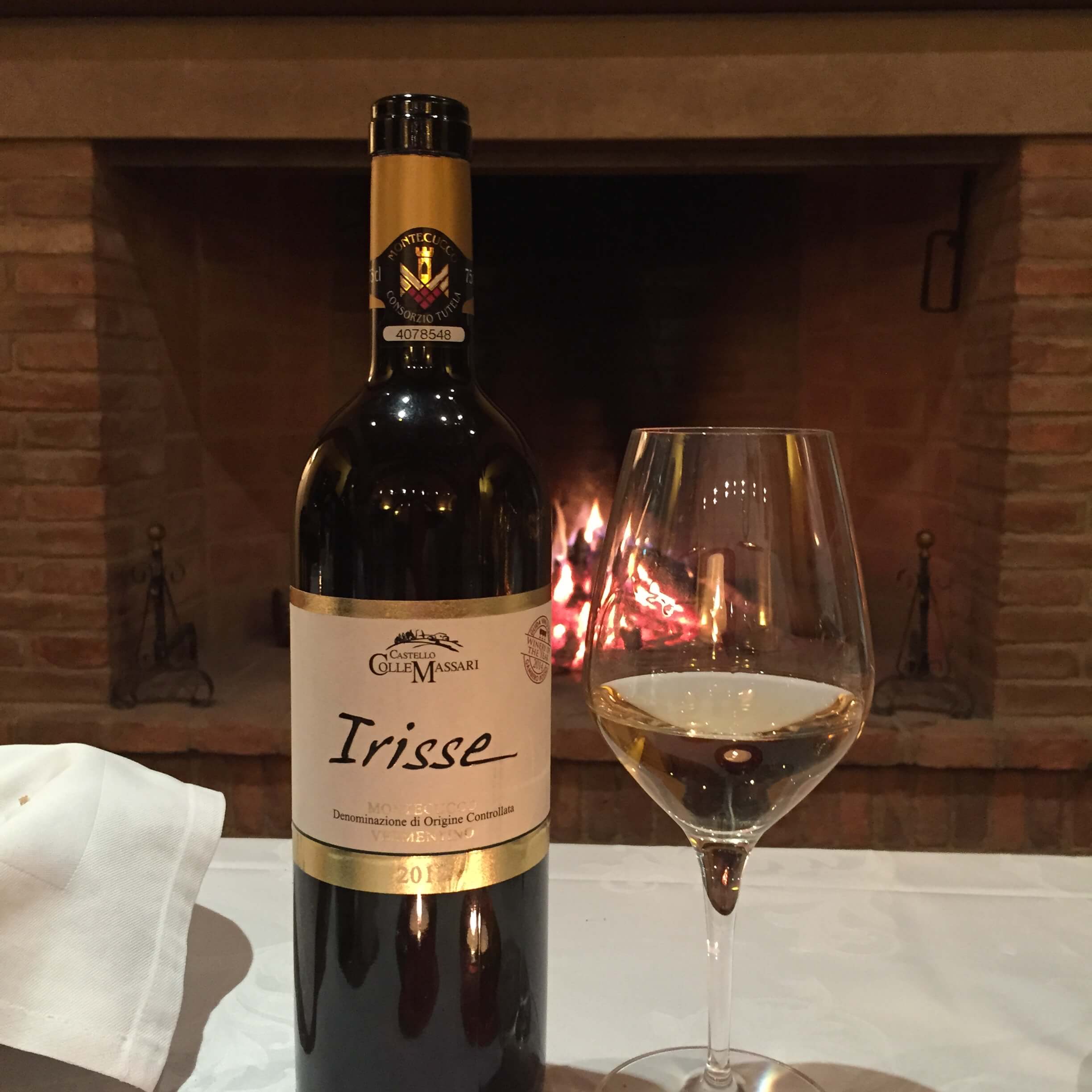
And ColleMassari itself, in the Montecucco denomination, is the one I find most quietly exciting, for reasons that are worth a short detour.
A quick, useful map of Maremma wine
Here is the thing the original version of this piece did not tell you, and the thing that actually helps you plan a trip: the Maremma is not one wine area but several, each with its own road, and knowing them turns a single winery visit into a proper itinerary.
There is one DOCG that is the region’s calling card, and it is not the one above. Morellino di Scansano is the Maremma’s signature red, Sangiovese grown in the hills around the village of Scansano, warmer and rounder and more immediately generous than a Chianti, and often astonishing value. The name comes, depending on who you ask, either from morello, “the little dark one”, or from the bay morelli horses that once pulled the carriages of the officials who summered in Scansano. It earned its DOCG in 2007, and it is the easiest Maremma wine to fall for.
Then there is Montecucco, ColleMassari’s own area, on the slopes of Monte Amiata. It is a younger denomination, built in the late nineties by a group of young growers, with a Sangiovese-based DOCG since 2011. The wine has a “volcanic” character, a bright acidity and a mineral edge that comes straight from the Amiata soils. It sits right next to Montalcino and offers, frankly, a great deal of the pleasure at a fraction of the price and the crowds.
And out towards the coast and the far south you find the rest: the Cabernet and Merlot of Bolgheri, the crisp white Vermentino that is the region’s best-kept secret for summer, the whites of Bianco di Pitigliano, the coastal Ansonica, and the reds of Sovana and Capalbio.
The region organises all this into three wine roads, which are the honest backbone of any trip:
- the Strada del Vino Montecucco e dei Sapori d’Amiata, inland on the Amiata slopes, which is where ColleMassari sits
- the Strada del Vino e dei Sapori Colli di Maremma, running south through Scansano and the Morellino country down towards the coast and the tuff towns
- the Strada del Vino Monteregio di Massa Marittima, in the northern Alta Maremma
Pick one road, not all three, and you have a weekend.
Alternative itineraries, depending on what you are after
If you want the wine to be the whole point: base yourself around Cinigiano and Poggi del Sasso for Montecucco, visit ColleMassari, then spend a day driving over to Montalcino for Brunello. This is the serious drinker’s route, and the two areas side by side are a masterclass in what Sangiovese can do.
If you want wine plus the prettiest villages: take the Colli di Maremma road. Combine tastings around Scansano with the extraordinary tuff towns of Pitigliano, Sovana and Sorano, carved into volcanic rock and threaded with Etruscan vie cave, the sunken roads cut deep into the stone. Pitigliano is also historically the “Little Jerusalem” of Tuscany, with a beautiful Jewish quarter. This is the richest route for a first visit, because the scenery and the history carry the days the wine does not.
If you want wine plus the sea: point at the coast. The Vermentino and the beaches of the Costa d’Argento, the lagoon and seafood of Orbetello, the peninsula of Monte Argentario, and the wild beach and pine forest below Bolgheri. Wine in the morning, Tyrrhenian swim in the afternoon.
If you want wine plus the cowboys: yes, really. The Maremma is Italy’s cattle country, worked by the butteri, the mounted herdsmen who once famously out-rode Buffalo Bill’s cowboys when the show came to Italy. You can ride out with them in the Parco della Maremma, and given that I never miss a chance to get on a horse, this is the version of the trip I keep going back for.

Where to stay
On my first visit I stayed at Le Scuole in Poggi del Sasso, part of the ColleMassari hospitality side, and it was a lovely surprise: a small B&B with generous rooms, four-star bathroom touches, a very good breakfast, and reliable wifi that reached into the cellar and across the estate. For the budget, it punched well above its weight.
Beyond it, the Maremma is full of agriturismi on working wine and olive estates, which are the right way to stay here: you want to wake up in the vineyards, not commute to them. Many estates now have rooms, and staying on one means you can taste without watching the clock or the driving.
A practical word on the driving. This is deep countryside and the wineries are scattered, so a car is essential, and someone has to stay sober. If you are a couple or a group, take turns being the designated driver, or book a private wine-tour driver for the serious tasting days, which several local operators run. From Grosseto, ColleMassari is about half an hour on the SS223 towards Siena as far as Paganico, and then up into the hills.
Maremma is not “bitter” anymore
There is an old Tuscan folk song about the Maremma, sung from the point of view of someone who lost a loved one to this land back when it meant malaria, brigands and hardship. A me mi pare una Maremma amara, it goes: to me it seems a bitter Maremma.
It is a beautiful, sad song, and it belongs to a Maremma that no longer exists. The malaria is long gone, the marshes were drained generations ago, and what remains is one of the most quietly rewarding corners of Italy: bright colours, stone hamlets on their hilltops, the beautiful Tuscan horses and the butteri who ride them, Etruscan tombs, hot springs, empty beaches, and food and wine that can stand beside anywhere in the region without the prices or the crowds of the famous names to the north.
Bitter, it is not. Not anymore.
I still have most of these roads left to drive properly. Which, when the reward is this, is not a complaint. In the meantime, I think I have earned a glass of Morellino.
Further reading
- ColleMassari, and its hospitality at Le Scuole
- The official Tuscany wine and oil trails, for maps of all three Maremma roads
- My guide to Vernazza, if you want to pair the Maremma with the Ligurian coast to the north
FAQ
The Maremma’s signature wine is Morellino di Scansano, a Sangiovese-based red from the hills around Scansano, granted DOCG status in 2007. The region also produces Montecucco, including a Sangiovese DOCG, the Cabernet-led reds of Bolgheri, crisp Vermentino whites, and several other denominations. Maremma wines are generally rounder and warmer than those of northern Tuscany, and often much better value.
The Maremma is the southern, coastal part of Tuscany, largely in the province of Grosseto, stretching from the Tyrrhenian coast inland to Monte Amiata and down towards the border with Lazio. It is wilder and less visited than Chianti or the area around Siena, with a landscape of hills, pasture, macchia scrubland, Etruscan sites and beaches.
Many Maremma estates welcome visitors for tastings, including ColleMassari in the Montecucco area, whose family also owns Grattamacco in Bolgheri and Poggio di Sotto in Montalcino. The region is organised into three wine roads, the Strade del Vino, covering Montecucco, the Colli di Maremma around Scansano, and Monteregio di Massa Marittima, each linking estates you can book to visit.
Choose one of the three wine roads rather than trying to cover all of them. Base yourself on a working wine estate or agriturismo, since the wineries are scattered across deep countryside and a car is essential. Combine tastings with the tuff towns of Pitigliano and Sovana, the Argentario coast, or horse riding with the butteri, and always arrange a designated driver for tasting days.
Yes, and it is one of Tuscany’s best-value reds. Made from at least 85% Sangiovese around the village of Scansano, it is warmer and more immediately approachable than Chianti, with ripe red fruit and a soft finish, and it does not require long ageing. It has grown considerably in reputation since gaining DOCG status in 2007.