

Some places are tangled up with childhood, and for me that place is Punta del Este. My grandmother had a house here, and my earliest memories of Christmas are not of snow and decorations but of warm afternoons by the sea, cakes instead of a tree, and the particular happiness of a summer festive season upside down from the one back in Italy. I have been coming back my whole life, and it still feels like freedom.
Punta del Este is a peninsula pointing out into the Atlantic on Uruguay’s eastern coast, where the calm waters of the Río de la Plata meet the open ocean. People like to call it the Monaco of South America, or the Hamptons of the south, and in high summer, around the new year, it does fill with glamour and money. But out of season, and in its quieter corners, it is something gentler, and that is the version I love.

A little history
Punta del Este began as a modest settlement and grew into a resort over the late nineteenth and early twentieth centuries, as wealthy families from Buenos Aires and Montevideo discovered its beaches. By the 1900s holidaymakers were arriving by boat, the yacht club followed in the 1920s, and the town settled into its long life as South America’s most fashionable seaside escape. Today only around eighteen thousand people live here year-round, a number that multiplies many times over each summer.

Two beaches, two moods
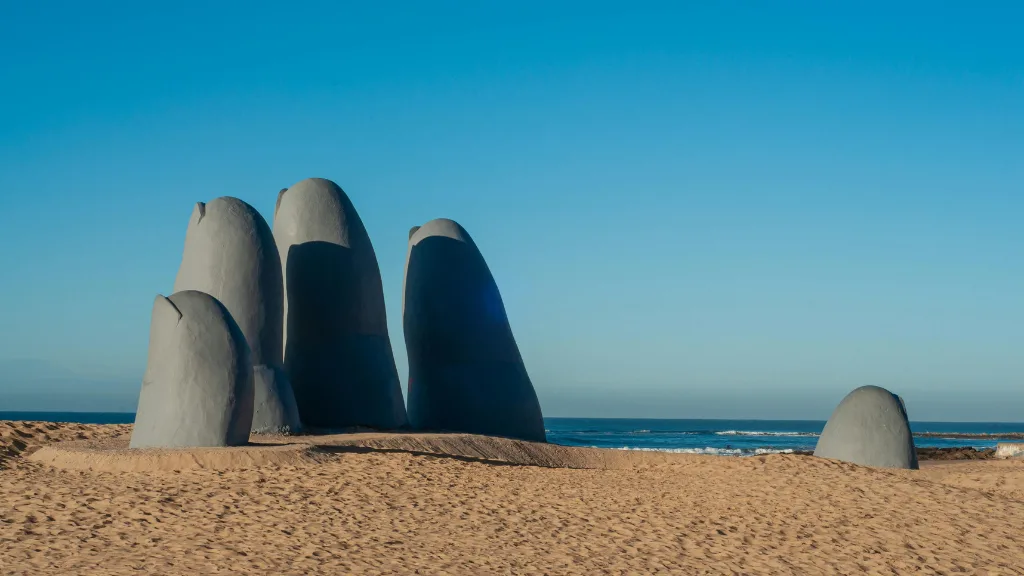
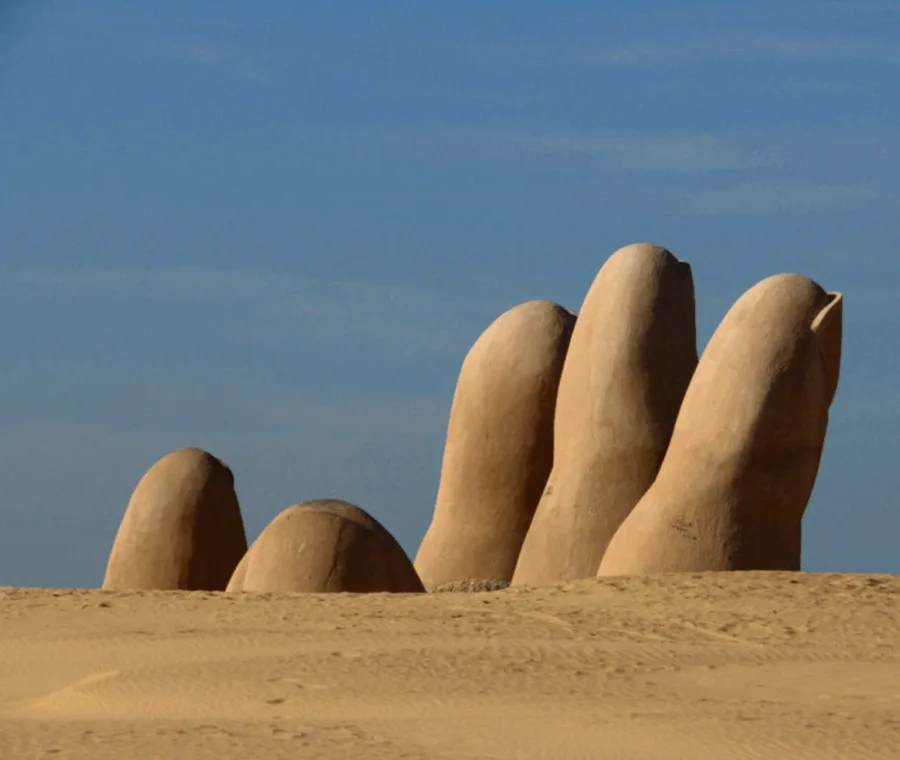
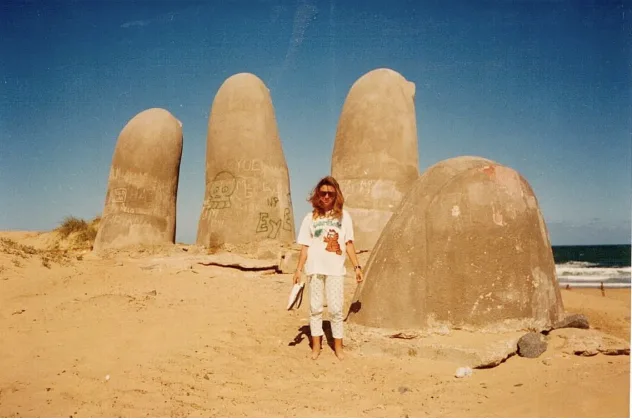
The peninsula’s two sides could not be more different, and locals sort themselves by temperament. Playa Mansa, on the bay side, is calm and gentle, perfect for a lazy swim and the sunset. Playa Brava, on the ocean side, is wilder, with proper waves and the town’s most famous sight rising out of the sand: La Mano, the giant sculpted hand, fingers reaching up as if someone were surfacing from beneath the beach. It has been Punta’s emblem since the early 1980s, and yes, everyone photographs it, myself included.
Casapueblo
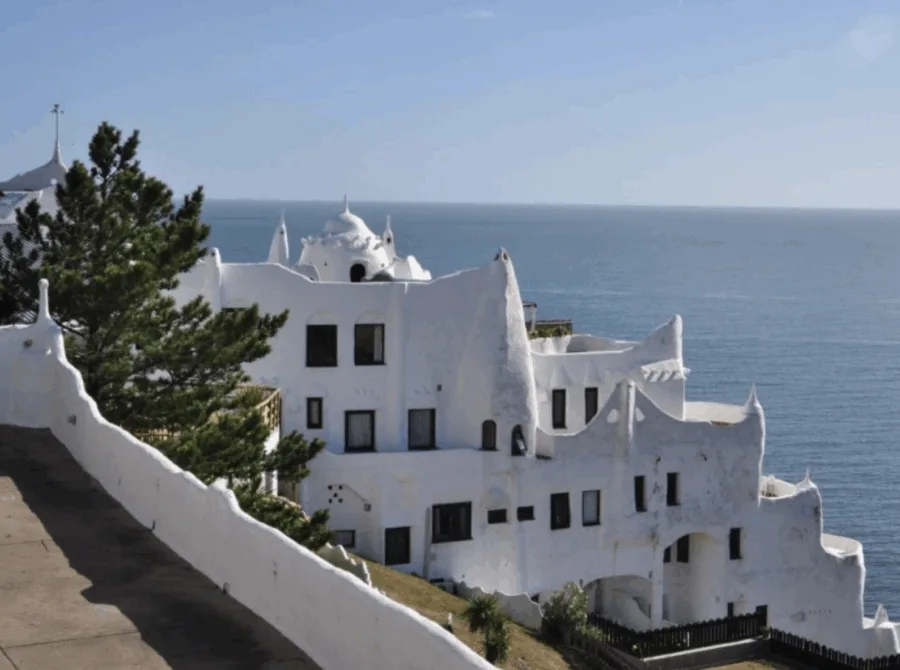
The other unmissable sight is a short way out of town at Punta Ballena. Casapueblo is the extraordinary white, sculptural building created by the Uruguayan artist Carlos Páez Vilaró, part home, part studio, part gallery, all of it poured and shaped by hand over decades like something between a Greek village and a sandcastle. Go towards the end of the day. There is a sunset ceremony here that is touristy and completely worth it, the whole terrace turning gold as the sun drops into the sea.
My own rhythm
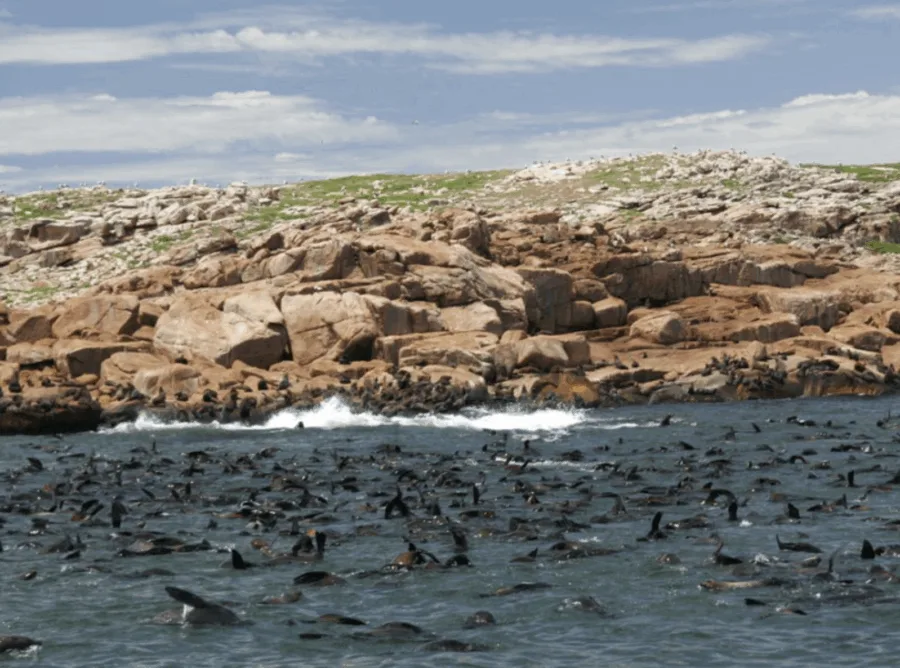
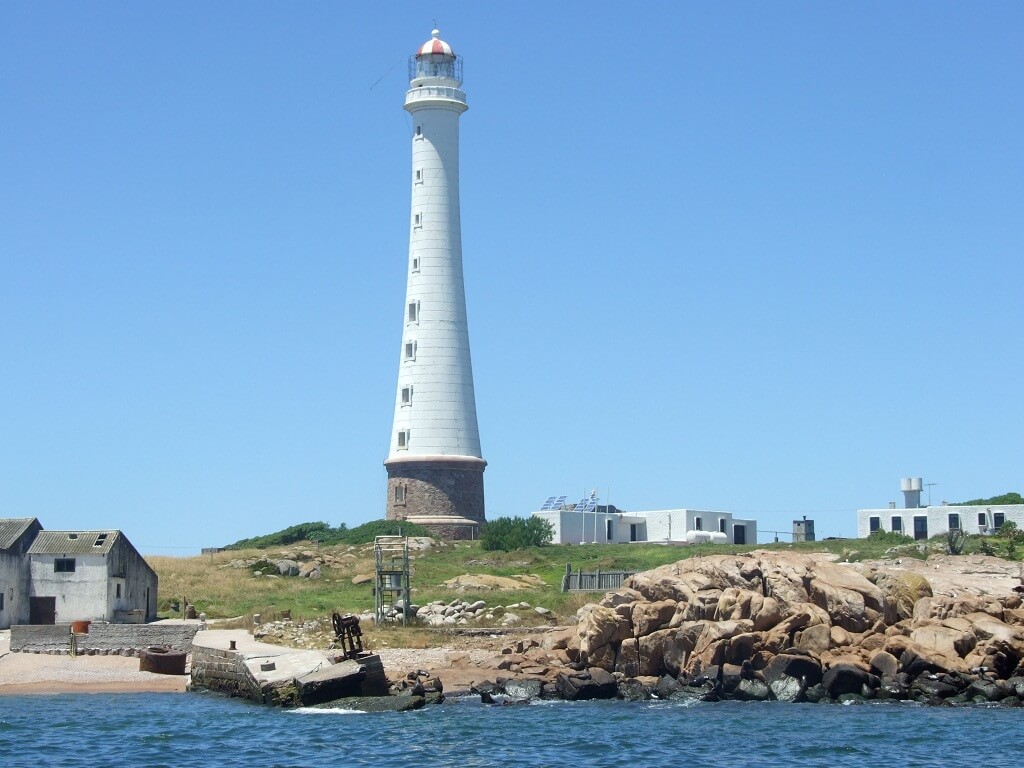
When I am here I keep to a happily unglamorous routine. A pink bicycle, the same colour I have loved since I was small, carries me between Playa Mansa and Playa Brava. Breakfast arrives late and is eaten slowly. I wander the Avenida Gorlero for no particular reason. I take the little ferry across to Isla Gorriti to swim off its quiet beaches, or, further out, look for the sea lion colony of Isla de Lobos. And I eat late, because the kitchens here barely open before half past nine in the evening.
Where to eat
Punta takes its food seriously. Over the years my reliable favourites have included El Almacén and Lo de Charlie, and for Italian there is Incanto. The wine country inland, near José Ignacio, has also grown into a serious scene, well worth a day if you have a car.
Booking things to do
Punta del Este is, honestly, more a place to be than a place to tick off sights, and beyond the beaches, Casapueblo and the islands there is not a long list of organised attractions. For the day trips that are worth booking, the sea lion island, a wine tour near José Ignacio, a boat outing, I have linked a few reliable options through GetYourGuide below, since on the ground it can be hard to arrange these independently.
Getting there and staying safe
Most people arrive from Buenos Aires on the Buquebus across the Río de la Plata, then continue by road, or come up by bus from Montevideo, a journey of a couple of hours. Uruguay is widely considered one of the safest countries in South America, and Punta feels relaxed and easy, but ordinary care against petty theft still applies, as it does anywhere. My guide to avoiding theft and scams when travelling covers the sensible habits.
Frequently asked questions
The South American summer, from December to February, is peak season, when the town is at its liveliest and its most glamorous, and also its busiest and priciest, especially around the new year. For warm weather with fewer crowds and better value, the shoulder months of November and March are lovely.
The heart of it is the beaches: calm Playa Mansa and wild Playa Brava, with its famous La Mano sculpture. Beyond that, visit Casapueblo at Punta Ballena for the sunset, take the ferry to Isla Gorriti or out to the sea lions of Isla de Lobos, stroll the Avenida Gorlero, and explore the wine country near José Ignacio. It is more a place to relax than to sightsee.
From Buenos Aires, take the Buquebus ferry across the Río de la Plata and continue by road. From Montevideo it is about two hours by bus or car. There is also a regional airport nearby with seasonal connections.
Uruguay is regarded as one of the safest countries in South America, and Punta del Este feels calm and easy. As anywhere, keep an eye on your belongings against petty theft, particularly on busy beaches and in nightlife areas.
Further reading
If you are arriving via Argentina, do not rush through the capital: my piece on tango and Buenos Aires is a love letter to the city and its milongas. And wherever your trip takes you, my guide to avoiding theft and scams while travelling is worth a read before you go.