



A quick note before we start: this is a guide written in partnership with Holafly, so it is sponsored content. I only recommend things I actually use, and everything below is my honest view. Full details and the discount are at the end.
Japan is one of the most rewarding countries I have ever travelled to, and, for such a famously high-tech place, one of the most frustrating to stay connected in. Public wifi is patchier than you would expect, often locked behind Japanese-only sign-ups, and the moment you step off the Shinkansen in a small castle town, you will want a working phone: to read a Japanese-only menu through your camera, to find the ryokan down an unmarked lane, to check whether the last bus to the trailhead has already gone.
I learned this the hard way on a winter road trip through the north, and I am heading back to Japan this winter. So here is how to stay connected in Japan, and why an eSIM is, for most travellers, the easiest answer.
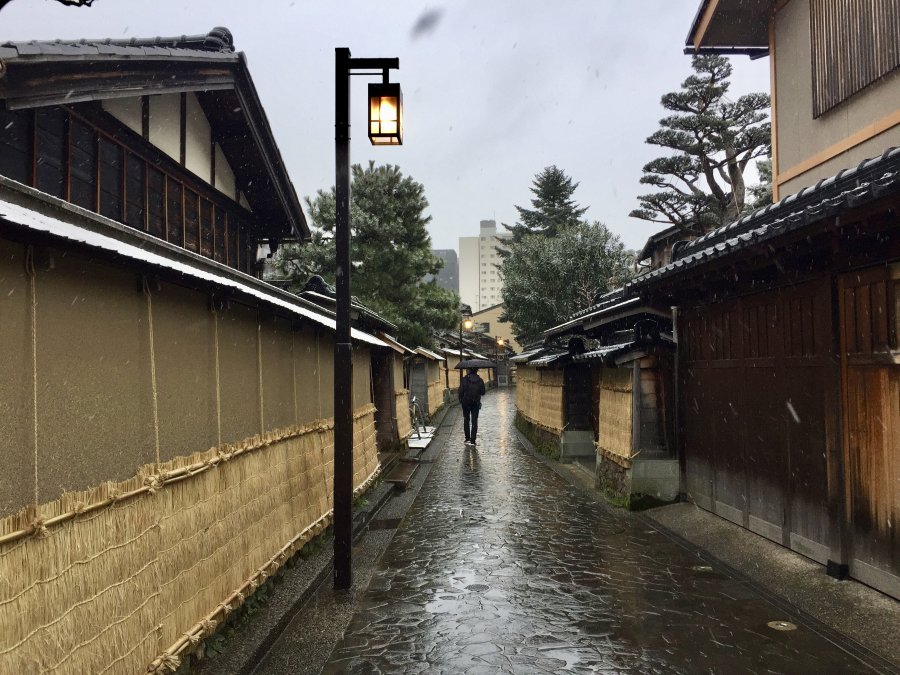
Your options in Japan
- Pocket wifi rental. The traditional choice: a little hotspot device you collect at the airport and post back at the end. It works, but it is one more thing to carry and charge; it must be returned, and if you and your travel companion wander off in different directions, only one of you has the internet.
- A physical local SIM. Cheap on paper, but you have to find a shop, show documents, swap out (and not lose) your home SIM, and many tourist SIMs are data-only and time-limited anyway.
- An eSIM. A digital SIM you install on your phone before you even leave home. Nothing to collect, nothing to swap, nothing to post back. The moment your plane lands in Japan, and you switch your phone off flight mode, you are online.
For most travellers, and certainly for me, the eSIM wins on sheer simplicity.
Why I use Holafly in Japan
I travel with a Holafly eSIM, and Japan is one of its covered destinations. What I like is exactly what matters on a Japan trip:
- It just works on arrival. You install it before you fly, and it activates when you land, no airport kiosk, no queue while jet-lagged, no swapping SIMs on the platform.
- Unlimited data. For a trip, I use the Holafly Unlimited Data eSIM, which covers 200 destinations, so I never sit rationing megabytes before opening a map or a translation app, and those are exactly the apps you lean on hardest in Japan.
- Options to suit how you travel. If you are a lighter or more frequent traveller, the Holafly Always On built in feature keeps you connected with 1 GB every month across 150+ destinations, and other Holafly Plans match different trips.
Prices and plan details change, so check Holafly’s site when you book. Two honest, practical notes: your phone needs to be eSIM-compatible (most recent iPhones and many Android models are), and, as with any data-only eSIM, you keep your own number for calls and texts on your home line while the eSIM handles data.
My tips for a connected Japan trip
- Install the eSIM before you fly, while you still have your home wifi, and follow the activation steps so it switches on automatically when you land.
- Download offline maps and a translation app anyway, as a backup; Google Translate’s camera mode is a lifesaver on menus and signs.
- Keep a power bank handy: navigation and translation drain a battery fast, especially in the winter cold.
- Turn on your eSIM’s data roaming for the eSIM line only (this is normal for eSIMs and does not incur your home operator’s charges).
Japan rewards the curious and the spontaneous, the side street, the tiny bar, the temple you find by accident. Effortless connectivity lets you follow your nose without ever feeling lost. For me, that is worth sorting before I even pack.
Frequently asked questions
You need reliable data, because Japan’s public wifi is surprisingly patchy and often awkward for foreign visitors. An eSIM is the simplest option for most travellers: you install it on your phone before you travel, and it works the moment you land, with nothing to collect or return, unlike a pocket wifi device or a physical local SIM.
Yes, Japan is one of Holafly’s covered destinations. You install the eSIM before you fly, and it activates on arrival. For a trip, the Unlimited Data eSIM (covering 200+ destinations) means you do not have to ration data; check the current plans and prices on Holafly’s site before you book.
Most recent iPhones and many newer Android phones support eSIMs, but not all, and some phones bought in certain regions have it disabled. Check your phone’s settings (look for an “Add eSIM” or “Add data plan” option) or the manufacturer’s list before you buy, and install the eSIM while you still have wifi at home.
A data eSIM handles your internet, and you keep your usual phone number active on your home line for calls and texts, or use internet-based calls and messaging (WhatsApp, FaceTime and so on) over the eSIM’s data. For most travellers, data plus internet calling covers everything you need in Japan.
Further reading
- My Japan, on the ground: a samurai itinerary through Japan and Kakunodate
- Planning wider Asia travel: tips for travelling in Southeast Asia
- More on getting online: my honest Holafly review
Get 5% off eSIMs (and 10% off Holafly Plans for the first 12 months) with code SILVIAMOGGIA on Holafly.
Written in partnership with Holafly; contains an affiliate link and discount code at no extra cost to you. #HolaflyTraveller #adv