



Some trips leave you comfortable. This one left me changed, a little humbled, and covered in river water. Three days trekking through the Khmu villages of northern Laos, sleeping in bamboo huts and rafting back down to Luang Prabang, remains one of the most vivid things I have ever done.
From bungalows to bamboo huts
I set off from the Thongbay Guesthouse in Luang Prabang, where I had been very comfortably installed, and climbed into a van with two local guides, Tchit and Tsak, whose names I promptly and affectionately mangled all trip. We drove about forty kilometres out of town, the tarmac giving way to red dirt, towards our first Khmu village. The Khmu are one of the largest of the many ethnic groups that make up Laos, and much of this corner of the country is theirs.
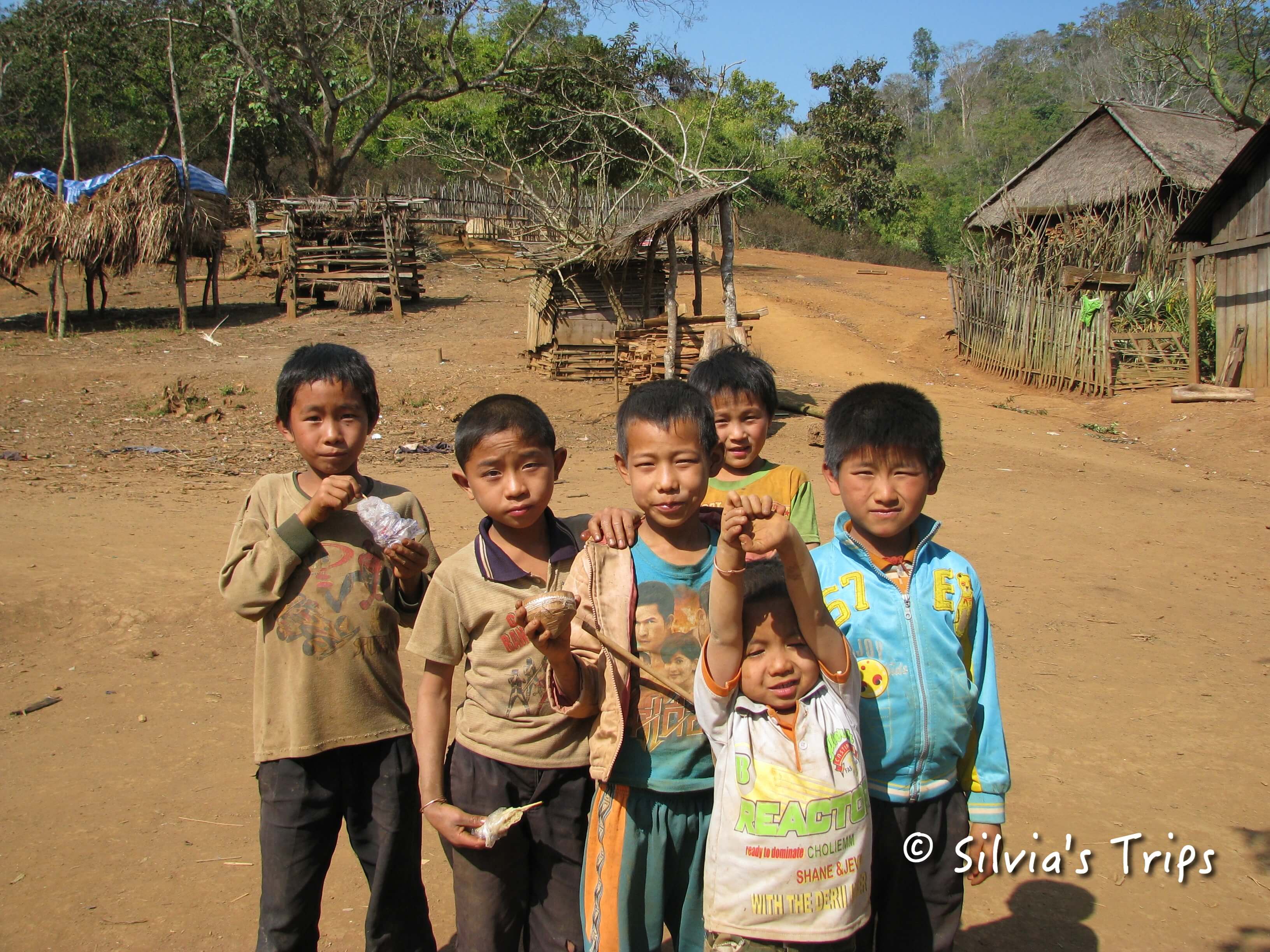
A trek through terrain and time
Our first stop was Ban Nalan Tai, a village of around fifty families, perhaps three hundred people, sitting at about 800 metres. Life here follows the rhythm of the land and the seasons, and the community is animist, as many Khmu villages are. It is a very different way of living from mine, and I tried to meet it with curiosity and respect rather than treating it as a museum. We asked before taking photographs, and mostly we just watched, and were watched back, with a good deal of mutual amusement.
From there we walked for around four hours, through rice paddies and banana groves, the guides pointing out plants, tracks and the small signs of forest life I would never have noticed on my own.
A night with rats and stories
That night we stayed in a bamboo hut in Ban Nam Goy, and I will be honest, because that is the whole point of writing this. The walls had gaping gaps, the roof was more suggestion than shelter, and I shared the space with a number of rats who were clearly the established tenants. Dinner was cooked over a clay stove, we washed in a nearby pond through gritted teeth, and we sat up talking by lamplight. It was not comfortable. It was also one of the best nights I can remember, precisely because it asked something of me and gave back more.
Wake-up calls
Morning in the village arrives with the animals: roosters, pigs, the general business of a farming day starting before dawn. Breakfast was a local omelette and a spiced rice flatbread, eaten in the cool early light while the village woke up around us.
A warm welcome and a Lao happy hour
The next village welcomed us like old friends. We swam in the Nam Tha River to wash off the walk, then sat cross-legged on mats for dinner. At some point the lao-lao appeared, the fierce homemade rice whisky that is poured to seal friendship here. It would have been rude to refuse the first couple of rounds, and I did not want to, so I joined in, and the evening dissolved into laughter, gestures and the golden light of a very happy hour. I would gently suggest knowing your own limits, but a shared drink offered in that spirit is hard to turn down, and I am glad I did not.

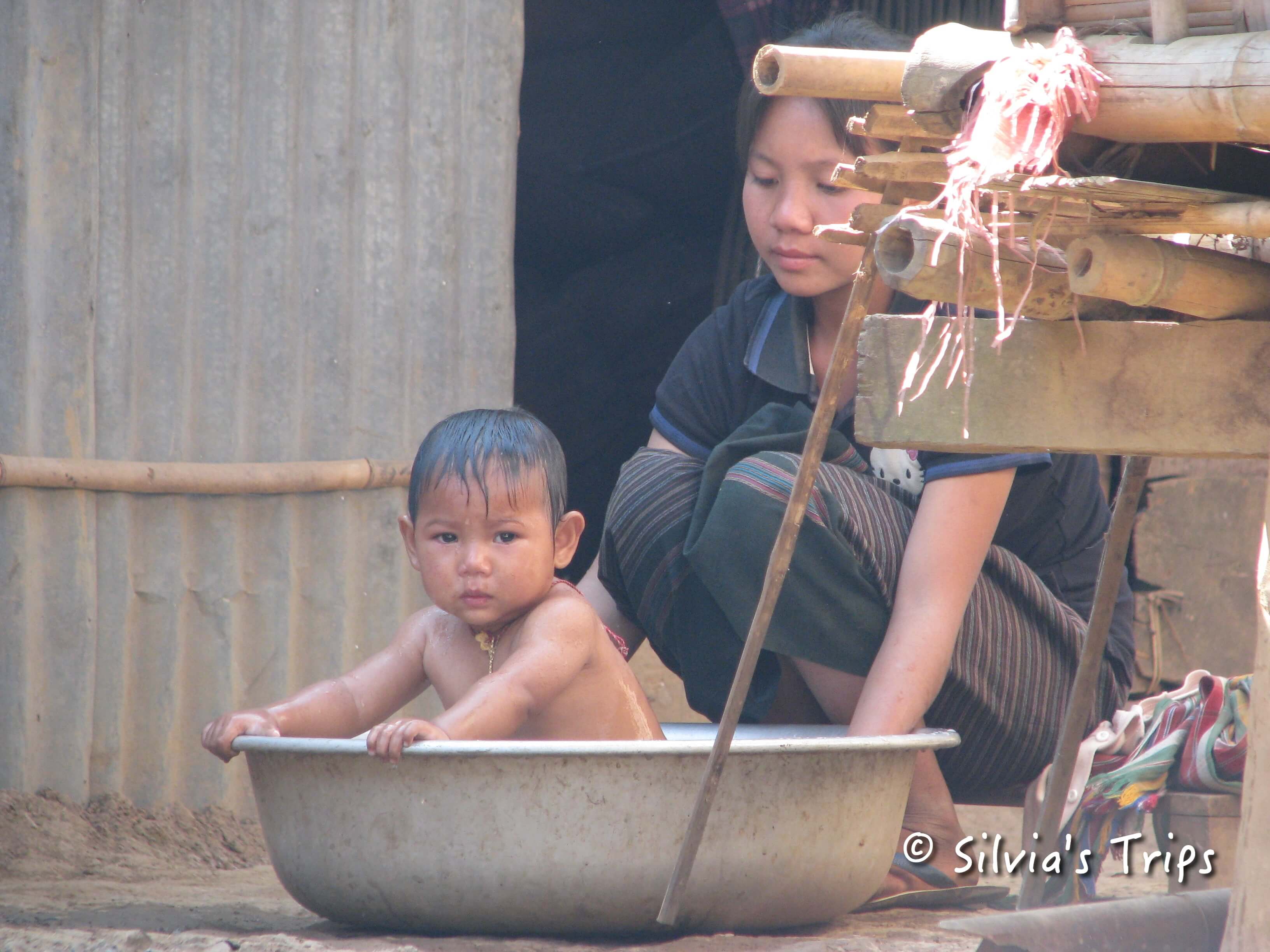
Final day: rafting and goodbyes
The last day we swapped our feet for the river and kayaked downstream. I capsized at the very first rapid, comprehensively, to the delight of everyone including me. We dried out, ate river fish for lunch, and made our way back to Luang Prabang for a farewell dinner with the guides who, over three days, had become friends.
A parting gift
Back at the Thongbay Guesthouse, the staff sent me off with silk scarves and baci bracelets, the white cotton threads tied around the wrist in the Lao blessing ceremony to wish a traveller well. I still have them, and I still think about the people who tied them.


Practical tips for a trek in northern Laos
The best season is the dry, cooler window from November to March. I booked through Green Discovery, a well-established and responsible operator in Luang Prabang; my three-day hiking-and-rafting trip cost around 135 US dollars per person at the time, so check current rates. Pack light and pack right: quick-dry clothes, a head torch, a dry bag for the rafting, insect repellent, a basic first-aid kit, and modest clothing out of respect for the villages you pass through. Bring small, useful gifts if you wish, but ask your guide what is genuinely welcome rather than handing out sweets to children. And go with an open, humble attitude. You are a guest in people’s homes, not a spectator at a show.


Frequently asked questions
It can be, if you do it thoughtfully. Go with a responsible operator that has a real, long-standing relationship with the communities and shares income with them, keep groups small, always ask before photographing people, dress modestly, and behave as a guest rather than a sightseer. Avoid anything that treats a living village as a staged attraction. Done well, community-based trekking brings useful income to remote villages on their own terms.
Moderate. My route involved around four hours of walking on the first day through paddies and forest, at altitudes around 800 metres, plus a day of kayaking. You need reasonable fitness and to be comfortable with heat, humidity and very basic overnight conditions, but it is not technical.
Very simple. You sleep in bamboo huts or village homestays with minimal facilities, wash in a river or pond, and eat food cooked over a wood or clay stove. Expect insects, and possibly the odd rat. That rusticity is part of the experience, but go in knowing it, and bring a head torch, a sleeping-bag liner and a sense of humour.
The dry season from November to March is the most comfortable, with cooler temperatures and less mud on the trails. The wet season makes paths slippery and rivers unpredictable.
Further reading
This trek began and ended in Luang Prabang, and my guide to Luang Prabang and Huay Xai covers the spiritual heart of Laos, including the dawn alms-giving ceremony. For the wider region, my overview of Southeast Asia helps you piece a longer trip together, and before you go, my tips on packing light are worth a read for a trip exactly like this one.





Wow. Nicely captured moments in Laos. Keep on writing because I really enjoy reading your blog especially on Laos which is very much in my bucketlist.
Thank-you so much Jipp!
Laos is a very special country. Hope you’ll get to visit it soon.