

Looking for Devon’s most beautiful village? Visit Clovelly. It is a true gem, and probably one of the most iconic villages in the whole United Kingdom.
You may already have gathered that I am in love with Great Britain and all its fairytale villages and countryside, but Clovelly really is something special.
“Suddenly a hot gleam of sunlight fell upon the white cottages, with their grey steaming roofs and little scraps of garden courtyard, and lighting up the wings of the gorgeous butterflies which fluttered from the woodland down to the garden.” Charles Kingsley
About Clovelly
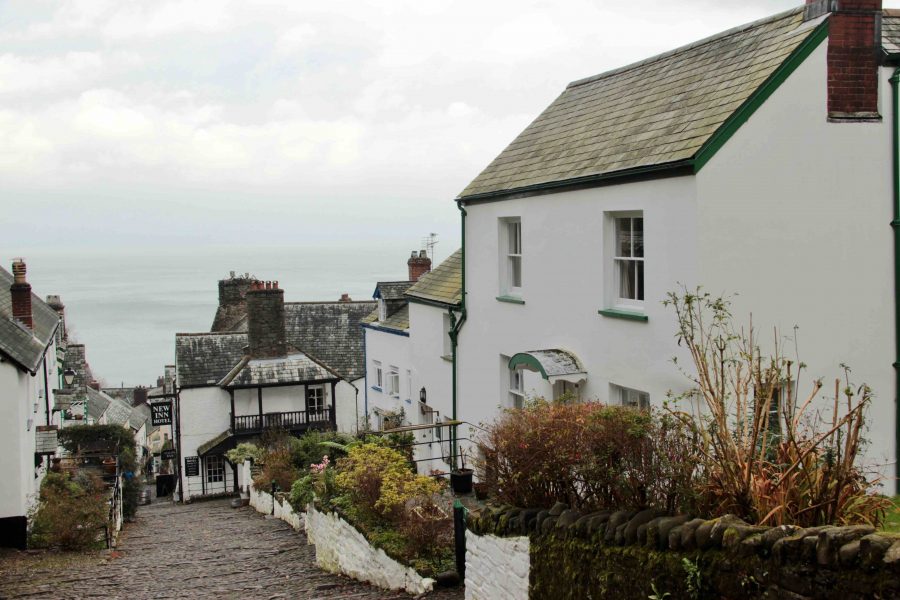
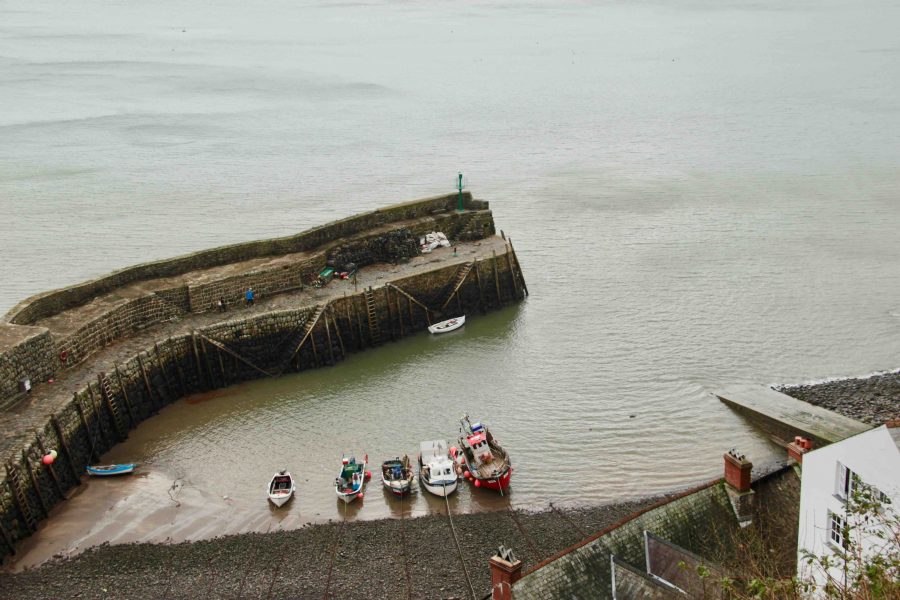
Clovelly is a fishing village that feels more like a film set than a real, inhabited place, and everything is kept so lovingly, down to the smallest detail. Much of its magic lies in the steep, narrow, winding cobbled street that tumbles to the lovely Clovelly Bay, and in the little sixteenth-century whitewashed cottages, their windowsills spilling geraniums and fuchsias.
The street is so steep that for centuries donkeys were the only transport. Today deliveries go by man-powered wooden sledges (and, I gather, the occasional Land Rover along a side track down to the harbour, where I saw a couple parked).
Clovelly is an estate, originally held by the Crown and, from the thirteenth century, by the Giffard family; it later passed through the Cary and Hamlyn families, and today belongs to the Rous family, whose care is exactly why the village survives so intact.


Visiting Clovelly
Wandering Clovelly is pure magic, and it is what I most recommend: take your time, pause, breathe, drink in the scenery. But do also step into the tiny museums and shops, and enjoy the donkeys.
The Clovelly donkeys
The first thing you notice on entering the village is the donkeys in their sweet stables. For centuries they carried goods to and from the harbour and helped villagers with daily life; today they no longer work as beasts of burden but are cherished as living heritage (and, yes, a lovely photo opportunity), while the man-powered sledges do the hauling. You can even adopt one for a year: do, and you get a certificate and your name on the door of your donkey’s stable. I did not, and I rather regret it.
The Fisherman’s Cottage
A few metres below the New Inn, this cottage is a must for understanding fishing life in the 1930s. Built, of course, of beach stone and cob, it keeps its original furnishings along with historical paintings and photographs. I loved it.
The Kingsley Museum
Next door, this tiny museum honours Charles Kingsley, author of Westward Ho!, the novel set in and around the village that first drew holidaymakers to North Devon.
Guided tours
As always, I recommend a guided tour to understand the local history fully. You can book a village tour at the Visitor Centre; ask about the current guides and options. Mine was wonderful.



Clovelly admission fee
Because Clovelly is privately owned, you pay to enter, and I think it a fine way to preserve its beauty and authenticity. You buy an admission ticket at the entrance (check the current price; it was £7.75 per adult some years ago and has risen since), valid from 9am to 6pm, and it lets you return once within a week. The ticket includes parking. You cannot visit on Christmas Day, and entry is free on Boxing Day.
The Visitor Centre, where you arrive and park, is large, over two floors, with a big gift shop, a small cinema showing Clovelly through the ages, a café and toilets. You enter at the upper level and walk down into the village from below.
If you want to make a full day of it, you can also book fishing or boat trips and various craft experiences; I did not, but there were brochures at the info point.

Where to sleep in Clovelly
There are no big hotels or holiday cottages, but there are a few characterful places to stay, along with bars and restaurants. I can recommend the central New Inn to feel almost like a local; I actually stayed just opposite, at Hamlyn’s, but had breakfast at the Inn, and their scones are wonderful. Another option is The Red Lion, with a stunning harbour view and, by all accounts, lovely individual rooms, though I did not stay there myself.
Enjoy Clovelly.
P.S. Clovelly was a location for the film of The Guernsey Literary and Potato Peel Pie Society. The film is touching, but do read the book (affiliate link; I may earn a small commission at no extra cost to you).
Frequently asked questions
Clovelly is a privately owned estate, so visitors buy an admission ticket at the Visitor Centre. The fee (which includes parking) funds the upkeep that keeps the village so beautifully preserved and free of traffic and modern clutter, which is much of its charm. It is valid for the day, with one return visit allowed within a week.
Check the current price, as it has risen over the years (it was £7.75 per adult some time ago). The village is generally open from 9am to 6pm; you cannot visit on Christmas Day, and entry is free on Boxing Day. Buy your ticket at the Visitor Centre, where you also park.
No. Clovelly’s donkeys no longer work as beasts of burden or carry people; they are kept as cherished living heritage and are lovely to see, while man-powered wooden sledges handle deliveries down the steep cobbled street. You can sponsor or “adopt” a donkey for a year in support of their care.
Very much so; it is one of Britain’s most beautiful and unusual villages. A half-day is enough to walk down the cobbled street to the harbour, visit the Fisherman’s Cottage and Kingsley Museum, and enjoy the views, but it pairs beautifully with the North Devon and Cornwall coast for a longer trip. Wear good shoes: the street is steep and cobbled.
Further reading
- Its West Country neighbour, and a perfect pairing: a holiday in Cornwall
- More of my England: where to stay in London
- For lovers of characterful stays: sleeping in unusual places




One Comment