



Visiting New York is never the same twice. It makes me feel alive and full of energy, and after something like forty stays I still have not had enough of it. Every single time, the thought of moving there grows a little stronger. This city never sleeps, and neither, quite, does my love for it.
I had never written about New York before, and there is a reason: nearly all of my many visits have been work trips, so I know the city less as a sightseer and more as someone who has had to move through it, efficiently and often, in every season. There are countless Big Apple guides already, so I am not going to tell you what to see, the choice is almost infinite, and half the joy is discovering it without a checklist. Instead, let me give you the practical knowledge I have built up over all those stays, the things that actually make a trip run smoothly.



Getting there
The main airport is JFK, in Queens, where most international flights land. Once through immigration (fingerprints, photo, passport stamp, baggage), follow signs for the AirTrain, which links the terminals to the subway: to Jamaica station for the E, J and Z lines, or to Howard Beach for the A line. The AirTrain now costs around $8.50 to $8.75, paid separately when you enter or exit at Jamaica or Howard Beach, on top of the subway fare, so check the current price before you travel. From Jamaica you can also take the LIRR (Long Island Rail Road) to Penn Station in about 20 minutes, faster but a little more expensive.
If you fly certain airlines you may land instead at Newark in New Jersey, from where the NJ Transit train reaches Penn Station in about half an hour, or the Newark Airport Express bus runs to Grand Central and Bryant Park. A taxi from the airports is always an option, but costs far more and is at the mercy of traffic.

What to sort before you fly
- Check your passport. It must be the electronic, machine-readable kind, and valid for the duration of your stay. Rules on validity vary, so confirm your own country’s requirements.
- Apply for ESTA. Visa Waiver Programme travellers (including the UK and EU) must apply online for ESTA travel authorisation well before departure, it is valid for two years or until your passport expires. Apply only through the official US government site, and check the current fee, which has risen over the years. If you plan to stay longer than 90 days, you will need a proper visa from a US consulate.
- Consider Global Entry if you visit the US often: the trusted-traveller programme speeds you through immigration via the kiosks.
- Get good travel insurance. US medical care is excellent but extremely expensive, so proper cover is essential, this is one place never to travel uninsured.
Getting around
My honest advice, as always, is to walk as much as you possibly can, for hours, soaking up how each neighbourhood differs. But New York is a megalopolis of five boroughs, Manhattan, Brooklyn, Queens, the Bronx and Staten Island, and even within Manhattan the distances mean you will use public transport at least once or twice a day.

A big change to know about: the MetroCard is gone. As of the end of 2025 the old MetroCard has been retired, and the whole system now runs on OMNY, the contactless tap-and-go system. You simply tap a contactless credit or debit card, your phone or a smartwatch at the reader, no ticket to buy. If you would rather not use a bank card, you can buy a physical OMNY card at stations. The base fare is currently $3 a ride (check the current figure, it creeps up), and, brilliantly for visitors, there is an automatic weekly fare cap: after a set number of rides in a week, the rest are free, so you never overpay. The subway is widespread, quick and runs 24/7; just watch the direction on the platform and whether a train is express (main stops only) or local (every stop). Buses cover everything too but are slower in traffic.
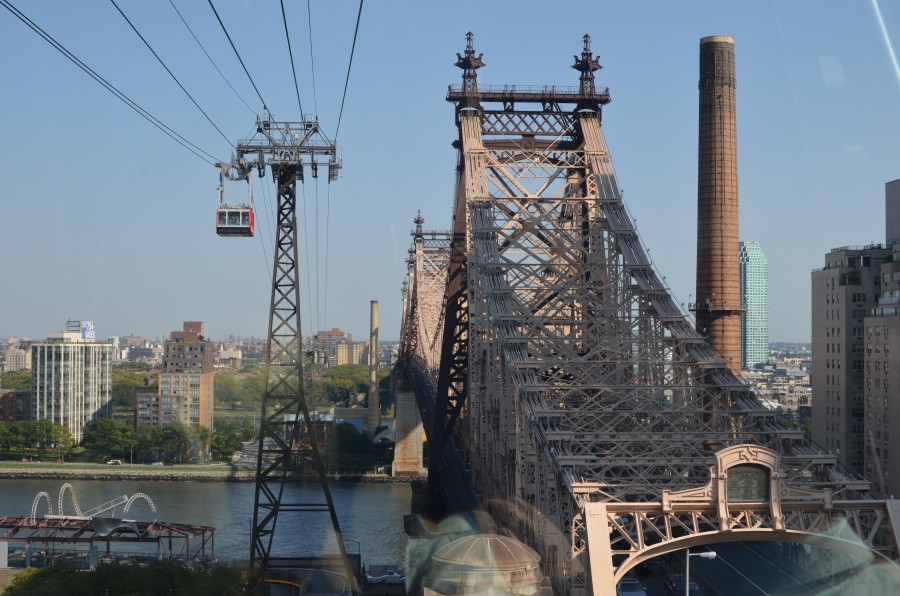
A lovely ride to seek out is the Roosevelt Island Tram, which sails across the East River from 59th Street.
Ferries. Water is part of New York’s soul, and getting on it is a joy. Whether you head for Staten Island (the free Staten Island Ferry passes the Statue of Liberty), Liberty and Ellis Islands, or along the Hudson, the view from the water is unbeatable. Check current operators and schedules for the route you want.

Taxis. Who hasn’t dreamed of hailing a yellow cab like Holly Golightly? Raise your hand for one with its roof number lit. Fares start from a set base and rise per minute, plus tolls and tip; all take cards, with a screen in the back to follow the route. Ride-hailing apps work throughout the city too.
Bikes. The Citi Bike bike-share is superbly organised, with docks every few blocks. You unlock bikes at a dock or, more easily, through the app; check the current day-pass and per-ride pricing, which has changed over the years. It is one of my favourite ways to cover ground on a fine day.
Seeing the city, and tipping
You cannot see all of New York in one trip, so pick your favourites. Multi-attraction tourist passes (the “build your own” kind) can save money if you plan to visit several paid sights, worth the maths if you do. And before you go, check a listings site like Time Out New York for shows and events; there is always something you won’t want to miss.
Finally, tipping. You tip in the US, and New York is no exception: hotels, restaurants, bars and taxis. The customary range has crept up over the years, so check what is expected at the time of your visit, and note that many places now add a suggested tip, or a service charge, directly to the bill, so glance at the total before adding more.
Whatever the season and whatever you choose to do, New York will seduce you, and you will leave already planning your next stay. It is like that. Magic.
Further reading
- Official MTA fares and OMNY information
- The Global Entry trusted-traveller programme
- More of my travels in the Americas

Frequently asked questions
The MetroCard has been retired (at the end of 2025) and replaced entirely by OMNY, a contactless tap-and-go system. You tap a contactless credit or debit card, a phone or a smartwatch at the reader, or buy a physical OMNY card. The base fare is around $3, and an automatic weekly fare cap means that after a set number of rides in a week the rest are free.
The cheapest way is the AirTrain (around $8.50 to $8.75) from your terminal to Jamaica or Howard Beach, then the subway (E, J, Z or A line) into Manhattan, all paid via OMNY. It takes roughly an hour. The LIRR from Jamaica to Penn Station is faster but costs a little more; a taxi is far more expensive and traffic-dependent.
Travellers from Visa Waiver Programme countries (including the UK and EU) need an approved ESTA, applied for online through the official US government site before departure and valid for two years. Stays over 90 days, or travellers from non-VWP countries, require a visa from a US consulate. Always check current requirements and fees, as they change.
Walk as much as you can, then use the subway, which is fast, extensive and runs 24/7, paid contactlessly via OMNY. Supplement it with buses, the scenic Roosevelt Island Tram, ferries for the waterfront views, Citi Bike for fine days, and taxis or ride-hailing apps when needed. Within a neighbourhood, your own two feet are almost always best.
There is no such thing as enough, but four to five days lets a first-time visitor take in the major neighbourhoods and a few icons without exhausting themselves. New York rewards return visits, so it is better to explore a few areas properly than to race around trying to see everything at once.