

I do not much like the word overtourism.
It gets used lazily, usually to describe a crowded street on a particular afternoon in August, as though the problem were a queue. It is not. The crowd is a symptom. What is actually breaking in the places I know best is the social fabric beneath, and once that begins to go, it feeds on itself until the enormous numbers stop being a burden and become a necessity.
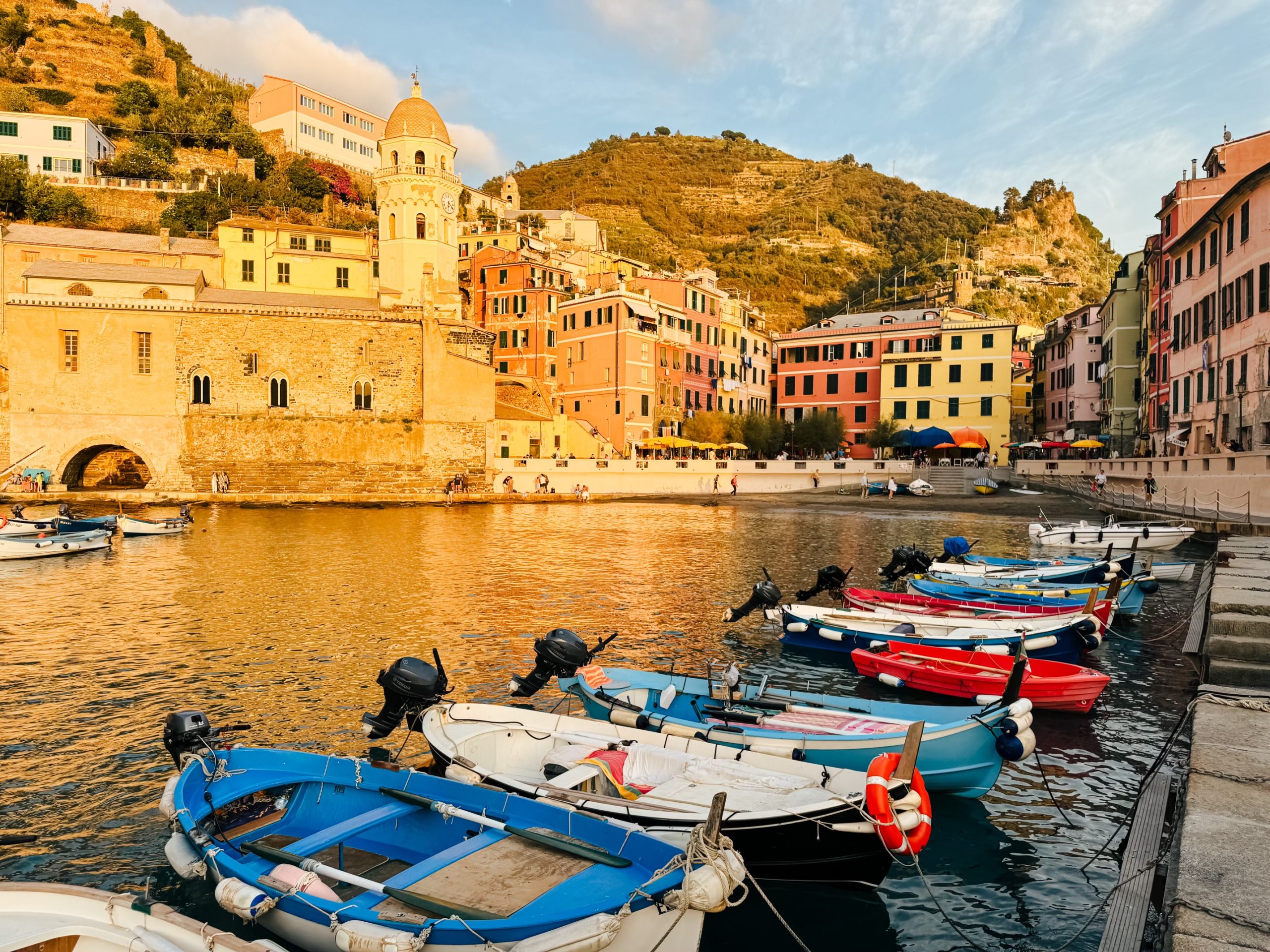
That is the argument I want to make, and I make it from a particular place. I grew up on this coast, and I live here. I run a small hotel in the Cinque Terre and work as a consultant and trainer for hotels and destinations. I make my living from visitors, and I am glad they come. Which is exactly why I am not willing to pretend the story is simpler than it is.
Growth is not the problem
Let me put it as plainly as I can. Growth is not the problem. The problem is what growth does to people, and how badly it is managed. The problem is fast tourism.
Travel should be an exchange: economic, cultural, social, and reciprocal. When the relationship between a visitor and a host community works, both sides gain, and the arrangement can last. When it stops being an exchange and becomes an extraction, it can keep making money for years while quietly dismantling the very thing that made that money possible.
You often hear people say, in exasperation, “This place is not Disneyland.” I understand the feeling, but I would turn it around, because the comparison is more useful than it looks. A Disney park is run by a team with a clear mandate, real authority, honest data and the power to act. Nobody expects a theme park to manage itself on goodwill and improvisation. And yet that is precisely what we ask of villages, of historic centres, of whole coastlines. Dubrovnik got a grip on its crowding not by moralising at tourists but by properly managing the place, with an empowered team making decisions. Management is not the enemy of authenticity. Its absence is.
What tourism does to a small place
Here is the part almost nobody writes about, because it is uncomfortable and it implicates everyone, myself included.
Where I come from, as in most places whose popularity exploded suddenly in a context of modest incomes, tourism arrived as easy money.
Simplify with me for a moment, though not by much. Over the past twenty years, young people have stopped studying or have quietly abandoned the careers they trained for because mass tourism offers work that is comparatively easy, demands no particular qualification, and comes with a long winter off. Set against years of investment in another profession, it is simply the rational choice. Their parents converted the shops and the workshops into tourist-facing businesses. Anyone who owned property turned it into accommodation.
And so, by degrees, everyone ends up working in tourism, or has a child, a partner or a grandchild who does. Nothing else is left.
I am going to reach for a hard comparison, because it is the true one. Sudden tourism at this intensity is like the heroin that went through my generation when I was young. It intoxicates, it creates dependency, and it kills. It brings prosperity and, in the same movement, dissolves identity, values and any capacity to imagine a different future. In small villages, the damage is immediately visible. In cities, it begins in the historic centre and spreads outward, one landmark at a time.
The trap
This is why the problem is so hard to escape, and why I lose patience with the easy answers.
Suppose we agree to reduce the flows and return to the slower, longer-staying visitors of decades past. Fewer tourists. But in a place where everyone now lives on tourism, and where the entire offer has been calibrated for enormous numbers, fewer tourists means less work. For everybody. At once.
And it exposes the second problem. The shops that sold bread and shoes are gone, replaced by whatever sells fastest to people passing through. You cannot simply turn the tap down because, beneath the tourism, there is no longer a functioning town to return to.
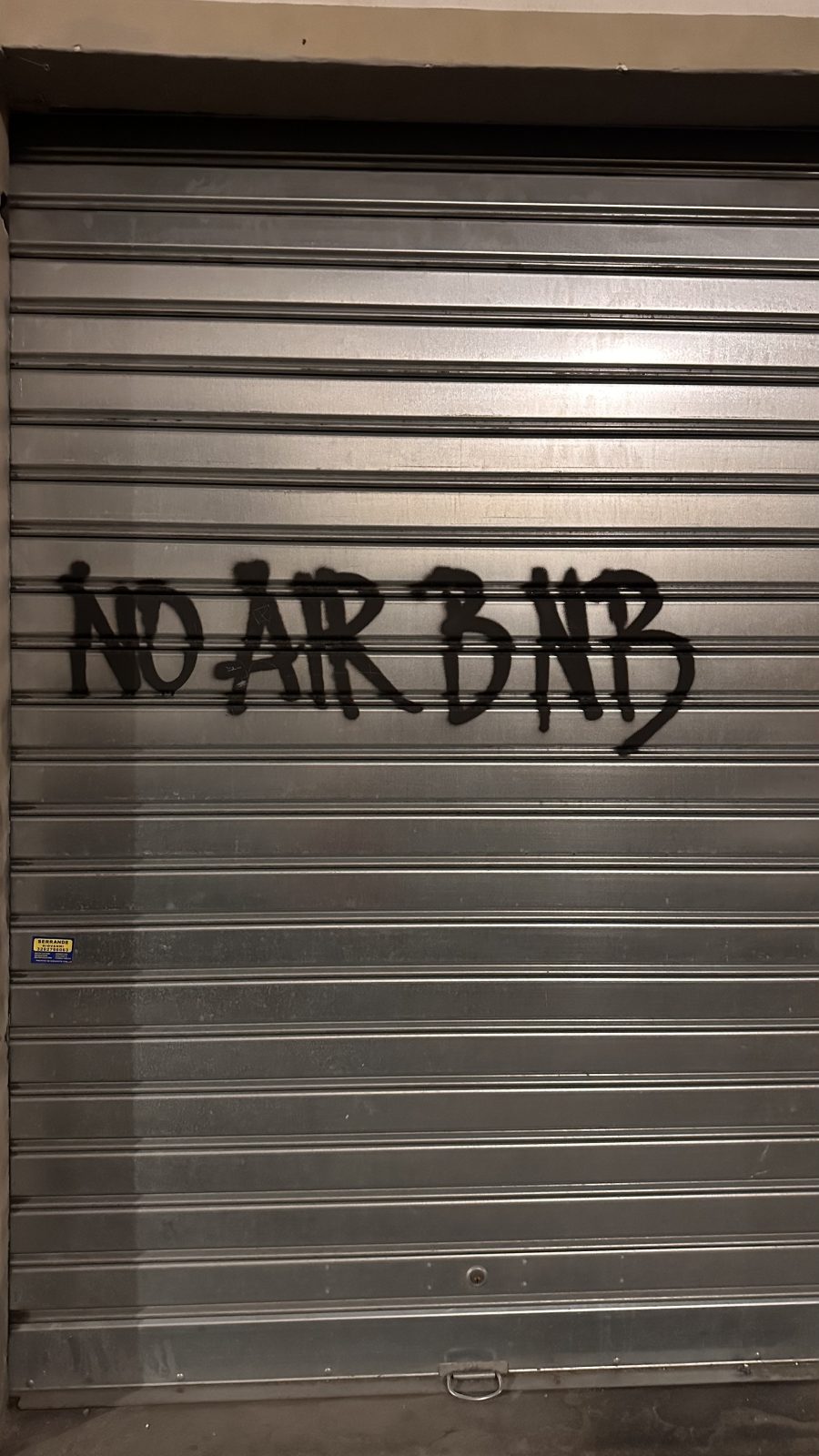
Meanwhile, finding somewhere to rent in any popular destination has become close to impossible. New York’s rules on short-term lets point in one direction, and Europe is beginning to follow. But even if that fight were won tomorrow, I would ask an honest question: would residents actually want to move back into places that are overrun, and where the services no longer exist for them?
And here is the detail I find most revealing of all. Those missing services, the greengrocer, the pharmacy, the hardware shop, the bar that opens in February, are exactly what visitors say they want too. Travellers and residents want fundamentally the same things. Giving visitors something else instead, because it is quicker and more profitable, is a decision that looks clever for a season and proves disastrous over a decade.
My grandfather would have called it a dog chasing its own tail.
The professionalisation problem
There is one more link in the chain, and as a consultant, it is the one that frustrates me most.
When the numbers are guaranteed, when Instagram delivers a flow you never had to earn, there is no pressure to become good at this. Owners and operators stay deliberately small, choosing simplified tax regimes over genuine entrepreneurship, and, in doing so, give up the capacity to invest, hire, train, and build anything that lasts.
That is how a destination ends up with enormous revenues and no industry. The money passes through and leaves nothing behind. And when the fashion moves on, as fashions do, there is nothing to fall back on.
What the data actually shows
I distrust arguments made purely from feeling, so I went to the numbers. For a talk at the World Travel Market in London, I pulled data from the D/AI Destinations platform, whose sustainability module scores destinations across four pillars and eighteen sub-indices, and I looked at my own coast.
Three indicators in the overtourism pillar are worth knowing about because they precisely measure the things this article is about.
The Tourism Pressure Index weighs visitor flows against the resident population: how heavily the visitors press on the daily life of the people who live there. The Tourism Supply Pressure Index compares short-term rental stock and accommodation capacity against population density; the lower the score, the more the supply is squeezing the community, which produces congestion and gentrification. And the OTA Intermediary Index measures how much of a destination’s business is booked through online travel agents, which is a good proxy for a destination’s distribution strategy and, read carefully, for how entrepreneurial it really is.
Notice what those three are measuring. Not crowds. Housing, dependency and professionalisation. The data agrees with the argument.
The wider picture, and what has changed
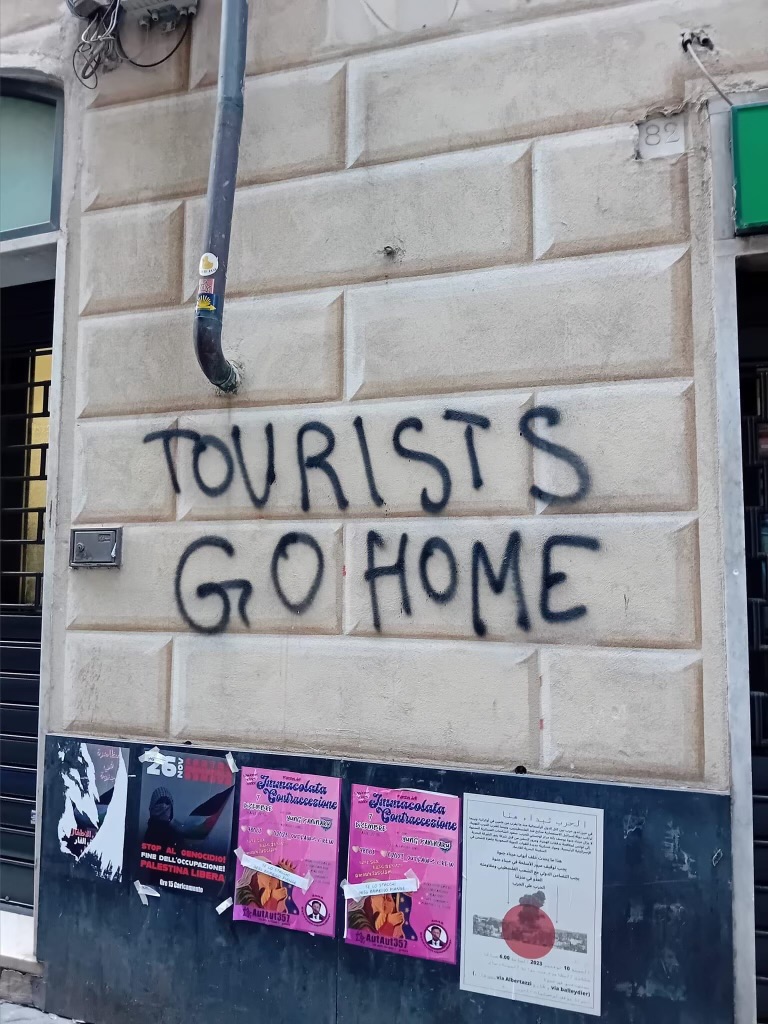
When I first wrote about this, the strongest evidence I could point to was graffiti. Tourists go home, sprayed on a wall.
That was the polite phase.
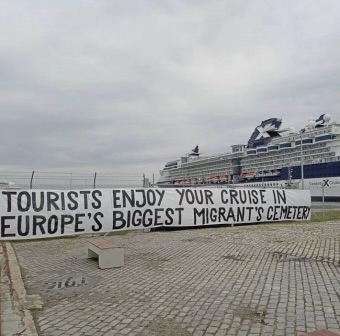
In April 2024, tens of thousands marched across the Canary Islands under the slogan Canarias se agota, the Canaries are exhausted, some of them on hunger strike. In June 2025, protesters in Barcelona and Palma fired water pistols at visitors and set off smoke flares, part of a coordinated day of action by an alliance calling itself Southern Europe Against Overtourism, with parallel marches in Portugal and Italy. In Venice, activists demanded a halt to the construction of new hotel beds.
The arithmetic explains the anger. Spain has some 48 million residents and received a record 94 million international visitors in 2024. A third of Canary Islanders were at risk of poverty in 2023, on islands hosting seven times their own population. Around a thousand people in Mallorca were living in their cars. Spain has ordered Airbnb to remove roughly 66,000 listings.
And listen to what the protesters keep repeating, which most of the coverage flattens: they are not against tourism. They are against a model.
That is the same argument I am making here, shouted from a street rather than written from a desk.
So what do we actually do
Don’t lecture the tourists.
There are badly behaved visitors, of course. There are also badly behaved residents, and the rude are rude at home too. Fixating on them is a way of avoiding the real work, and the real work belongs to administrators, to host communities, and to those of us who run businesses here.
It looks like this. Manage the place properly with an empowered team, honest data, and the authority to act, rather than improvising each August. Regulate short-term lets, because housing is where the social fabric either survives or dies. Rebuild the services residents need, which are the ones visitors want as well. Professionalise the industry so that money invested here stays and compounds. And be honest, that some of this means fewer visitors and a difficult transition, which is exactly why it needs planning rather than panic.
If you are the traveller reading this, the most useful thing you can do is almost embarrassingly simple. Come when nobody else does, and stay longer. Shoulder season, more nights, fewer places. That single change does more good than every reusable bottle ever manufactured, because it goes straight at the mechanism: it allows a destination to live on quality instead of volume, which is the only version of this that has a future.
Beyond that: stay somewhere that employs a neighbour. Eat what grows nearby. Learn five words of the language. Follow the rules that look inconvenient, because they were written after an accident, not to spite you. And remember that the place you are photographing is somebody’s home, and that they would very much like to go on being able to live in it.
That is the whole of it. Not renunciation. Attention.
If you want to see these principles in practice, here’s how I think about hiking responsibly in Cinque Terre, , a longer piece on what responsible travel means beyond the sustainability label, how I work with destinations as a consultant, and the values that guide my hotel.
I write about this in greater detail in Italian on Officina Turistica, the industry blog I edit. The original version of this argument appeared there as Overtourism: la crisi del tessuto sociale.
Further reading
- My piece on why responsible travel is really about respect, and what it looks like on a trail
- Sustainable Travel International, for a comprehensive responsible travel guide and a carbon calculator
- Fodor’s No List, the annual list of destinations asking for a pause
FAQ
Overtourism is usually described as too many visitors in one place, but the crowding is a symptom. The deeper problem is the erosion of a destination’s social fabric: housing lost to short-term lets, local services replaced by tourist-facing ones, and an entire community becoming economically dependent on visitor numbers, which then makes those numbers impossible to reduce.
Overtourism is caused less by visitor numbers themselves than by unmanaged, fast growth in places with modest incomes. Tourism arrives as easy money: shops convert, homes become rentals, young people abandon other careers, and eventually, there is no other economy left. The destination becomes dependent on the very pressure that is damaging it.
The 2024 and 2025 protests across Spain, Portugal and Italy are principally about housing and quality of life. In Mallorca, around a thousand people were living in their cars; a third of Canary Islanders were at risk of poverty. Protesters have been explicit that they are not against tourism itself, but against an unlimited-growth model that displaces residents.
Not on its own, and not painlessly. In destinations where almost everyone now works in tourism and the entire offering is built for high volume, cutting visitor numbers means cutting jobs immediately, with no underlying economy left. The fix requires professional destination management, regulation of short-term lets, rebuilding local services, and a planned transition rather than a sudden one.
Travel outside peak season and stay longer. Shoulder season, more nights, fewer places. It addresses the mechanism directly, allowing a destination to live on quality rather than volume, and it does more good than any individual environmental gesture.




7 Comments