
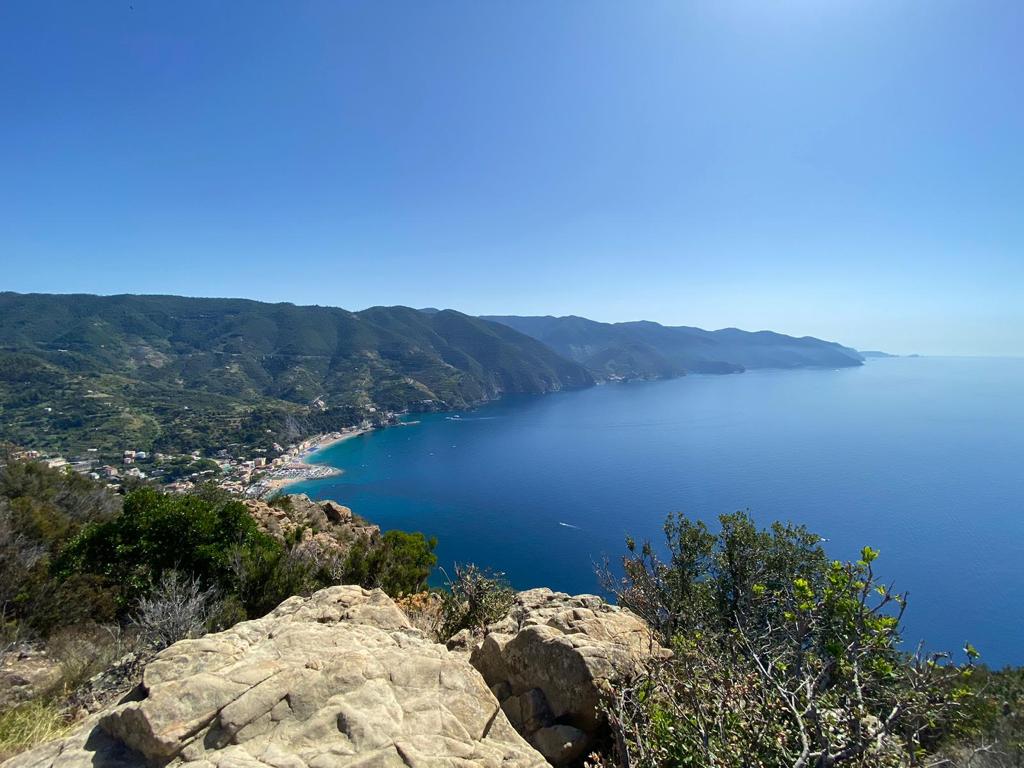

I have a few passions: horse riding, reading, live music, sailing and hiking. Hiking in the Cinque Terre is a particular one, partly because it is the only passion I get to share with my dogs, and partly because, having been born and raised here, I know it is the single best way to understand this place and the people who live in it.
Walking these steep paths is what makes everything click. You suddenly see why the villages are shaped the way they are, why we call it heroic agriculture, why our wine is worth far more than what is in the glass, and why this is not a region built for mass tourism.
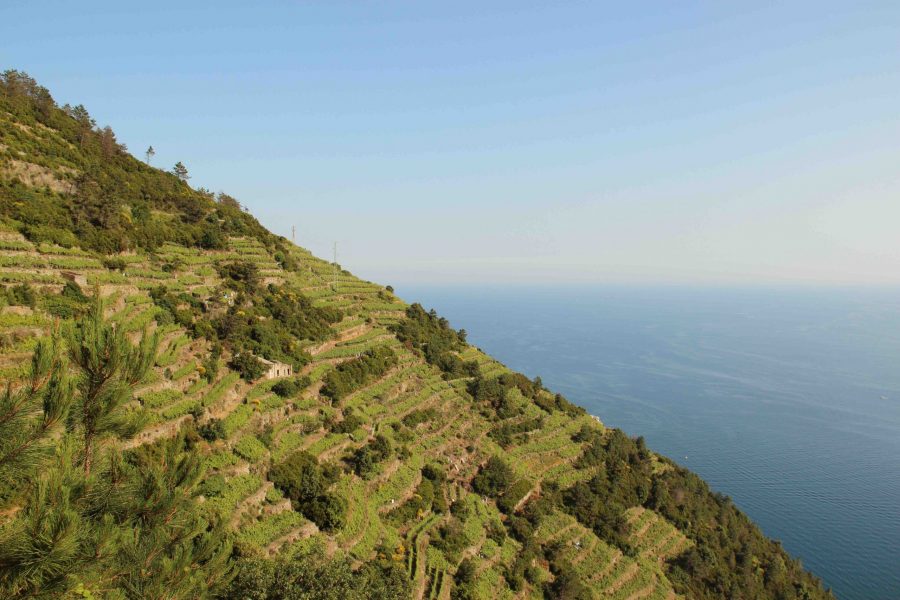
This is not a natural park. It is a very human one. Every terrace you pass was built by hand, and someone is still repairing it.
The trails here exist in a fragile, over-loved landscape, so it is worth reading how to visit without adding to the damage before you set off.
Before you set out
Note the word: hiking, not walking. People arrive expecting a seaside destination, and the Cinque Terre is not a flat stroll along a promenade, with the honourable exception of the old railway path between Levanto and Framura. Going from one village to the next is mountain hiking with a sea view.
If you are not used to it, start with something shorter and less demanding, and build up over the days.
Check the trails before you go, twice
This is the most important line in this article. Trail closures here change constantly due to weather, landslides, and restoration work.
In heavy rain, the National Park suspends the sale of the Cinque Terre Card and closes the coastal Sentiero Azzurro. Other trails stay open, but walking in bad weather here is a poor idea: visibility drops, the rocks get slippery, and if something goes wrong, rescue teams struggle to reach you, too.
Check the day before, and again in the morning. Then go.
Shoes are not a detail
No flip-flops, no sandals, no ballet flats, no smooth soles. You need proper hiking shoes with a good sole and ankle support.
This is not just my opinion: unsuitable footwear is banned on the National Park trails and carries a fine of around 50 euros. Rangers check at the trailheads and can turn you back. The rule exists because people kept getting hurt, and because when one person falls, everyone stops and someone else gets hurt trying to help. I have written about why this matters at more length.
If you buy boots specially for the trip, wear them in for a few days first. Blisters on day one will ruin the rest.
When to walk
Set off early, ideally just after half past seven. It is cooler, and until about ten, the villages are calm and the paths are almost empty. It is a completely different experience, and it is free.
In May and June, you can also walk late, setting out around five in the afternoon, when the light gets long and gold.
What to wear and carry
Layers, light and comfortable, because you will go from full sun to cool shade and back, and the early mornings and evenings can be windy.
And bring a swimming costume. Every trail begins and ends on the waterfront. It is too tempting not to.
In a light backpack:
- a thermal water bottle, which in summer is safety equipment, not a comfort
- a snack, and a bag to carry your rubbish out
- sun cream and sunglasses
- a dry bag if you plan to swim, and a microfibre towel
- blister plasters, especially with new boots
- a power bank if you take a lot of photographs
- insect repellent and something for the bites, in high summer

What is actually open in 2026
This changes, so treat what follows as a snapshot and verify before you travel.
The Via dell’Amore reopened. After 12 years and a 22-million-euro restoration, the path between Riomaggiore and Manarola reopened on 9 August 2024. It now works on a strictly managed system: one direction only, Riomaggiore to Manarola, with timed entry and a capped number of walkers per slot, booked in advance through the National Park portal. Since March 2026, access is included in the Cinque Terre Card, so you no longer have to buy a separate supplement, but you still have to book your slot. It is flat, paved, about a kilometre, and takes twenty minutes.
And I am going to be honest with you: to my mind, with this last rebuilding, it has lost its charm and its authenticity.
Here is what I mean, and it is not nostalgia for its own sake. The Via dell’Amore was a path you lived. You walked it slowly after dinner and sat down on a bench for a while. You went out early with a book and stayed for a couple of hours. It belonged to the evening and to the first light, and above all, it belonged to the people who used it.
None of that is possible any more. Not because anyone is being unreasonable, but because a booked slot, a fixed direction and an opening schedule are simply incompatible with lingering. You cannot sit on a bench with a book inside a timed entry. What was a path has become a visit. I’ve written more about this in my piece on tourism sustainability, if you want to understand why Cinque Terre was never built for mass tourism.
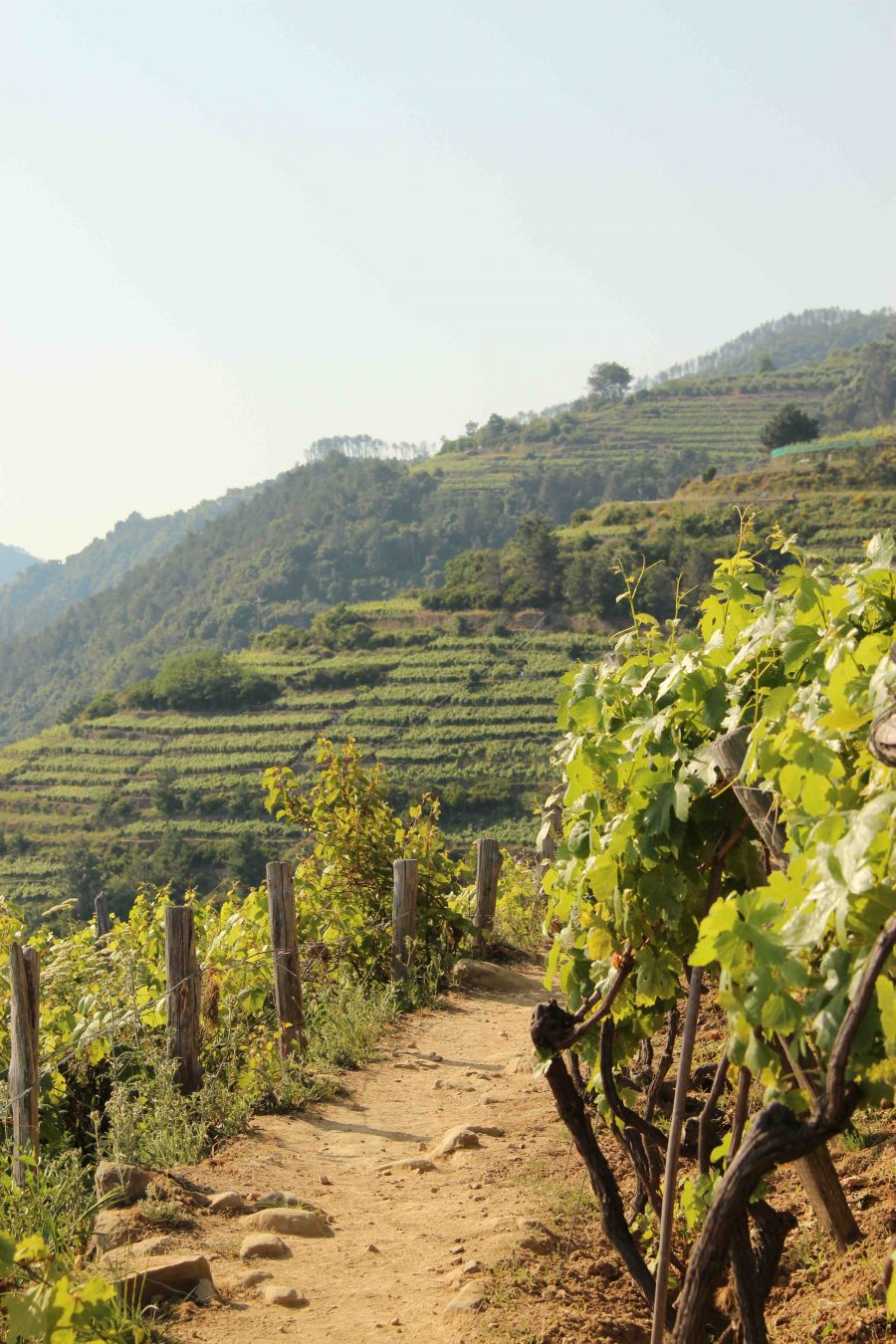
So, unless you have real difficulty walking, my advice is to take the Via Beccara instead. It is the old way, the one people actually used before 1930. It is free, it is a proper climb through the vineyards, it has the same sea underneath it, and nobody will tell you when to arrive or which way to face.
The coastal path between Manarola and Corniglia is still closed and is expected to remain so for years to come. The alternative is the high route via Volastra, which I describe below and which, in my view, is the better walk anyway.
Corniglia to Vernazza and Vernazza to Monterosso are open and are the classic coastal sections.
The Cinque Terre Card. The Trekking Card, which covers the coastal trail, costs around 7.50 euros per day. The Train Card, which adds unlimited train rides between Levanto and La Spezia, is priced by demand band and ranges from roughly 19.50 to 32.50 euros per day, so it pays to check your dates. And note that during the winter months, when the card system is suspended, open trails are free.
The trails that are free, and emptier
Here is the insider bit, and it is the advice I most want you to take.
The Cinque Terre has over a hundred kilometres of trails. The Sentiero Azzurro, the coastal one, is a tiny fraction of them, and it is where everybody goes. The others are free, quieter, higher, and frequently more beautiful.
- The Alta Via delle Cinque Terre, the high ridge route above the villages, with vineyard and sea views, the coastal path cannot touch
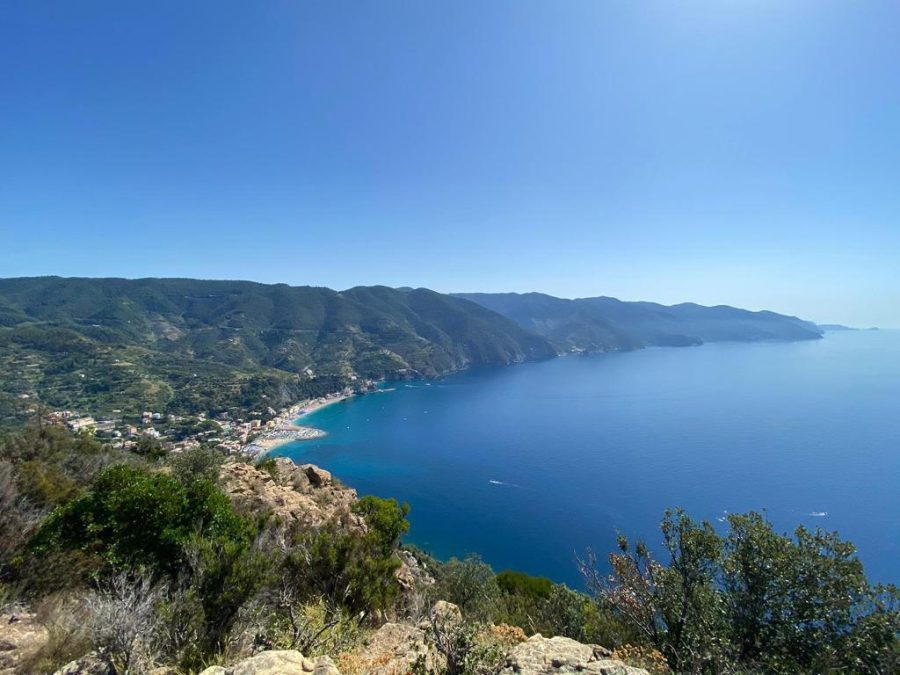
- Levanto to Monterosso via Punta Mesco, one of the finest walks on this coast, and hardly busy
- Manarola to Corniglia via Volastra, the high route through the vineyards
None of these needs a card. All of them are better on a busy day.
Three days of walking
I am based in Levanto, so this is how I would plan it.
Day one: Corniglia to Monterosso
Start with the classic. Take the train to Corniglia and walk north along the coastal Sentiero Azzurro.
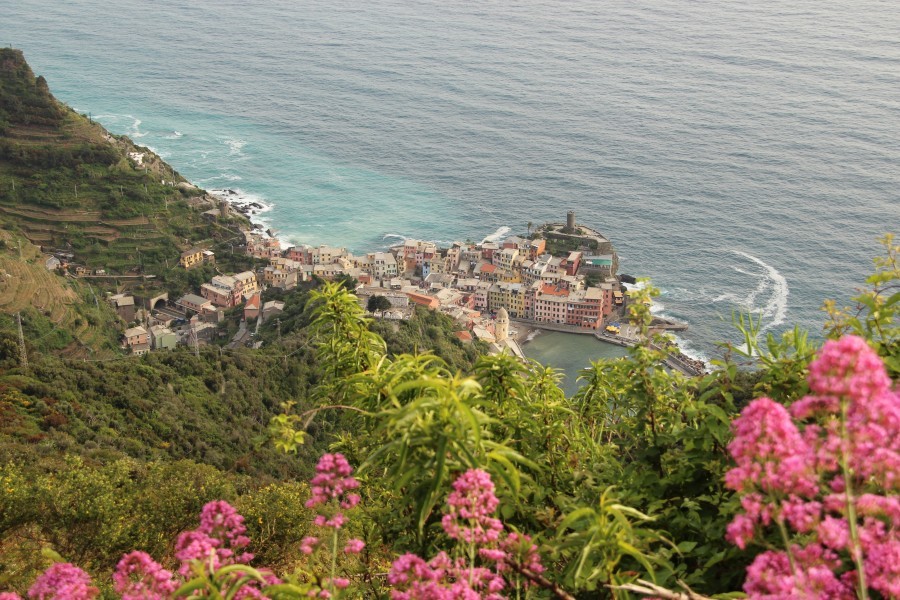
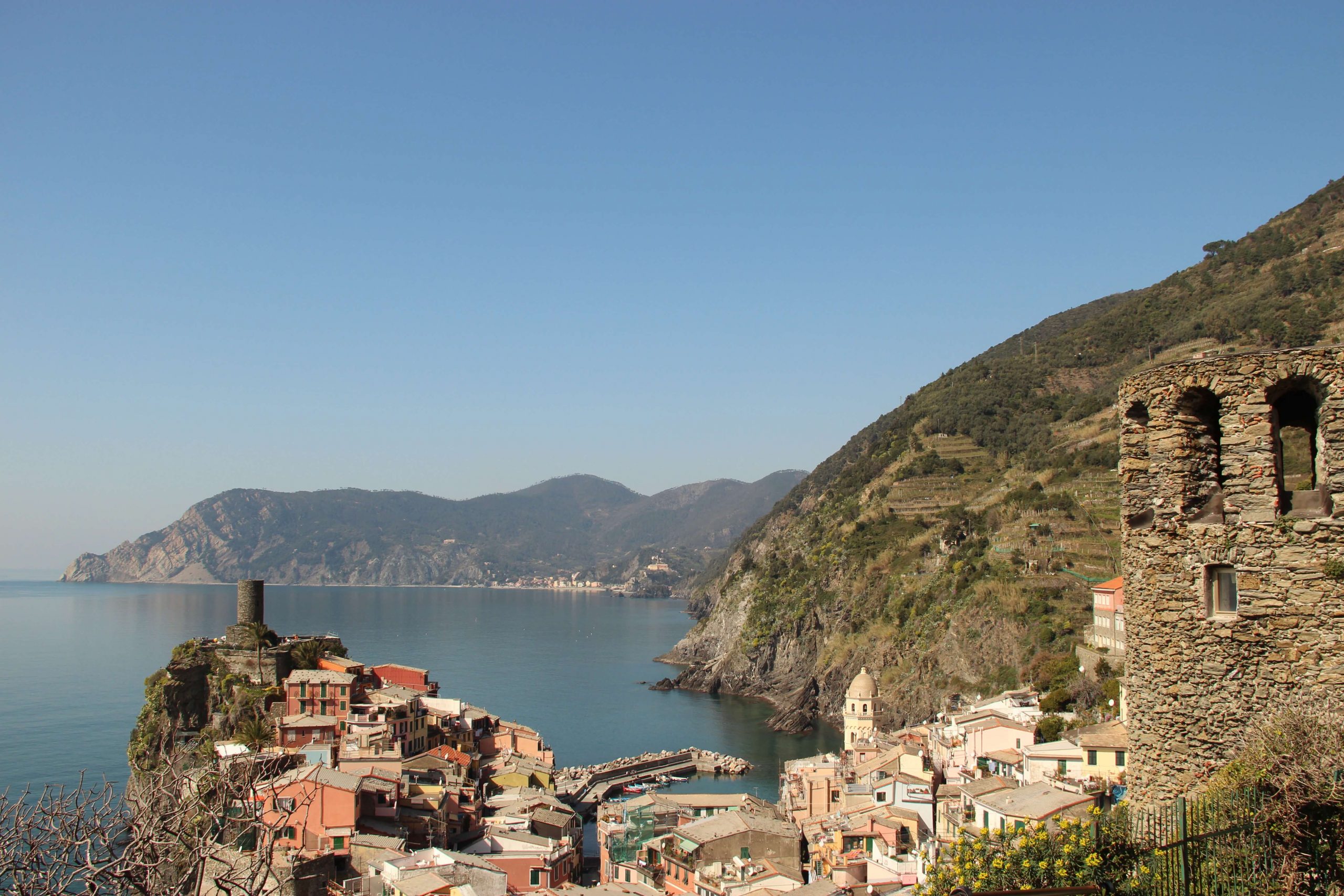
The first stretch, to Vernazza, takes about ninety minutes at a civilised pace, with the view rearranging itself at every turn. Arriving, take time in the village, have a light lunch on the square, sit on the rocks for a while.
The second stretch, on to Monterosso, is harder but just as spectacular: about two hours, with a climb to 217 metres. Monterosso has the beach, so reward yourself, then take the train back in time for an aperitivo and a proper seafood dinner.
One tip: if your first day falls on a Saturday or Sunday, flip the itinerary and save this section for a weekday. It is the busiest walk in the Cinque Terre.
Day two: Riomaggiore to Corniglia, the high way
More demanding and more interesting.
Begin with path 531, the Via Beccara: a vertical path through the vineyards which, until the Via dell’Amore was cut in the 1930s, was the only land connection between Riomaggiore and Manarola. It is a 1.5-kilometre (1,500-metre) climb to just over 200 metres and takes about an hour. As I said above, given the choice, this is the one I would walk.
This is the walk I recommend over the Via dell’Amore below it, and I say so as someone from here. It costs nothing, requires no booking, and is the route the villagers actually took.
You pick it up above Riomaggiore station: walk up Via Signorini to the junction with Via Tracastello, on your left. It starts at the bridge over the Rio Maior, the stream that gave the village its name, and climbs immediately up a stone staircase through the vineyards. It is a proper climb that will test your lungs, but the view is extraordinary.
After Manarola, carry on and up to Volastra, another vertical haul through the vines, and a well-earned lunch when you arrive among its narrow alleys and its terraces hanging over the sea.
From Volastra, the path to Corniglia departs from the square of the church of the Madonna della Salute, one of the Cinque Terre’s shrines. A little over an hour through vineyards and pine woods, ending with a wonderful view down onto Corniglia, where you can take all the time you like.
Back in the afternoon, treat yourself to a swim, or to a guided walk through the medieval quarter and a vineyard, ending with a tasting.
Day three: Levanto to Monterosso via Soviore
The one I recommend most warmly, and the one that ends the three days properly: Levanto to Monterosso via the Soviore sanctuary, which was my refuge for the first five years of my life.
Back in Levanto afterwards, there is still time to cycle along the old railway tunnels to Bonassola for an aperitivo overlooking the sea.
If you want one more
A less-walked trail, and a magnificent one: Riomaggiore to Portovenere, about four and a half hours, past the Montenero sanctuary and the mythical Monesteroli, with its vertiginous, endless stone staircase.
It brings you down into Portovenere, a small pearl at the edge of the Gulf of Poets, where you can spend a few hours and eat seafood on the waterfront. Come back by ferry. Trust me on that.
Why walk here at all
I could tell you it is good for your heart and lungs, and that it burns a startling number of calories, which it does.
But the real answer is the one at the top of this article. Walk these paths, and you stop seeing a postcard and start seeing the work. The terraces, the dry-stone walls, the vines clinging to a cliff at an angle no machine could manage. Somebody’s great-grandfather built the step you are standing on, and somebody’s grandson is still repairing it.
That is what the Cinque Terre actually is, and you cannot see it from the train.
And if you are a cat person, the paths are theirs. You have merely been granted access.
Have a wonderful walk. If you want more trails, and there are many, get in touch and ask.
Further reading
- Cinque Terre National Park, for live trail status and card bookings
- The ultimate guide to the Cinque Terre Card
- My piece on Vernazza, mapped by its smells
- Why responsible travel is really about respect
FAQ
Yes. The Via dell’Amore reopened on 9 August 2024 after twelve years of closure. It is walked in one direction only, from Riomaggiore to Manarola, with timed entry, a capped number of visitors per slot, and compulsory advance booking through the Cinque Terre National Park portal. Since March 2026, access is included in the Cinque Terre Card. It is now a managed twenty-minute walk rather than a place to linger, so many locals prefer the old Via Beccara, the free path over the hill between the same two villages.
Unless you have difficulty walking, the Via Beccara is the better choice. It is the original path between Riomaggiore and Manarola, used before the Via dell’Amore was cut in the 1930s, and it is free, unticketed and unhurried: a 1.5-kilometre climb through the vineyards taking about an hour. The Via dell’Amore is easier and flat, but its timed slots and one-way rule mean you can no longer sit on a bench or walk it in the evening.
The coastal sections between Corniglia and Vernazza and between Vernazza and Monterosso are open, as is the Via dell’Amore between Riomaggiore and Manarola, on a booked timed-entry basis. The coastal path between Manarola and Corniglia remains closed and is expected to stay closed for years, with the high route via Volastra as the alternative. Always check the park’s site before setting out.
Only for the Sentiero Azzurro, the coastal trail, and the Via dell’Amore. The Trekking Card costs around 7.50 euros for a day. Over a hundred kilometres of other trails, including the Alta Via delle Cinque Terre and the Levanto-to-Monterosso path via Punta Mesco, are entirely free and considerably quieter.
Proper hiking shoes with a good sole and ankle support. Flip-flops, sandals and smooth-soled shoes are banned on the National Park trails and carry a fine starting at around 50 euros, and rangers check at trailheads. Going from village to village here is mountain hiking with a sea view, not a seafront stroll.
Harder than most visitors expect. The paths are steep, rocky and exposed, climbing to over 200 metres between villages, and a single coastal section can take one to two hours. If you are not used to walking, begin with a shorter section and build up. Start early, before half past seven, for cooler air and empty trails.