

When you are wondering how to spend an extra day out of London, Brighton is very often my answer. It is barely an hour south by train, and it is the seaside escape I keep going back to every few years.
Brighton is sometimes called “London-on-Sea”, more for its property prices than its character, because its character is entirely its own: grungy, creative, bohemian, proudly one of the UK’s great LGBTQIA+ cities, and full of independent shops and cafés. It blends the buzz of a city with the daftness and salt air of a classic British seaside resort, and there is always something new to find.
This article is also available as a mobile app, via GPSmyCity, for GPS-guided directions to the places below.
The Lanes and North Laine
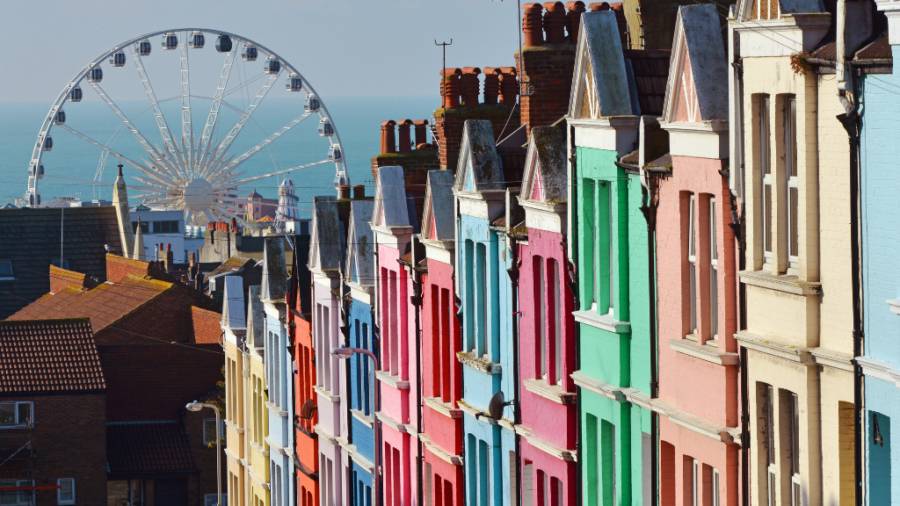
I always start in the North Laine, a lively tangle of streets full of pubs, cafés, little theatres and record shops, then drift south into The Lanes, the twisting, pedestrianised alleys of the old town, packed with quirky boutiques, antique shops, jewellers and cafés. You will find a few high-street names among them, but the joy is the independents. I am not much of a shopper, but I love the mood of this quarter more than almost anywhere.
The Royal Pavilion
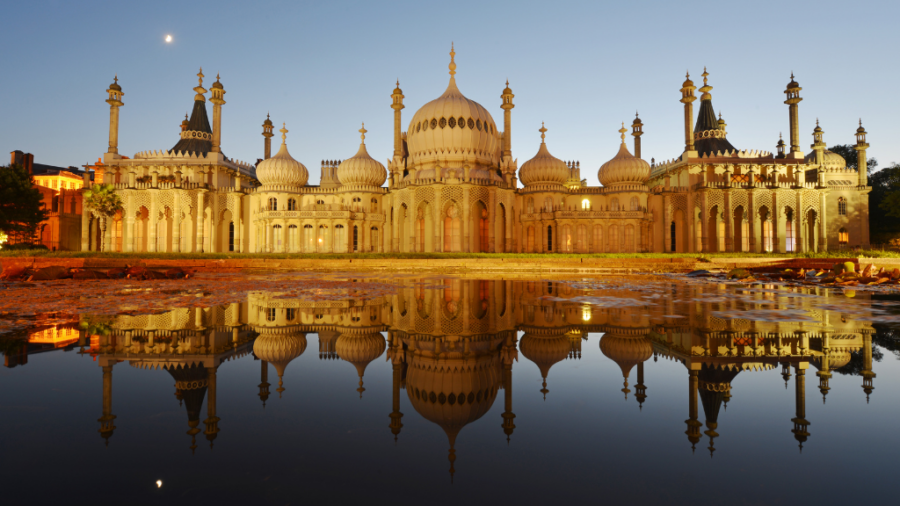
Brighton’s showpiece is the Royal Pavilion, the wildly exotic seaside pleasure-palace built for the Prince Regent, later King George IV, in an Indo-Saracenic fantasy of domes and minarets. Inside, each room outdoes the last, from the banqueting hall with its vast chandelier hanging from the claws of a silver dragon to gloriously over-the-top salons. It is easy to picture the “party prince” and his soirées here. The gardens, full of hollyhocks and foxgloves, are lovely too, and the neighbouring Brighton Museum & Art Gallery is worth your time.
The seafront: the pier and the ruined pier
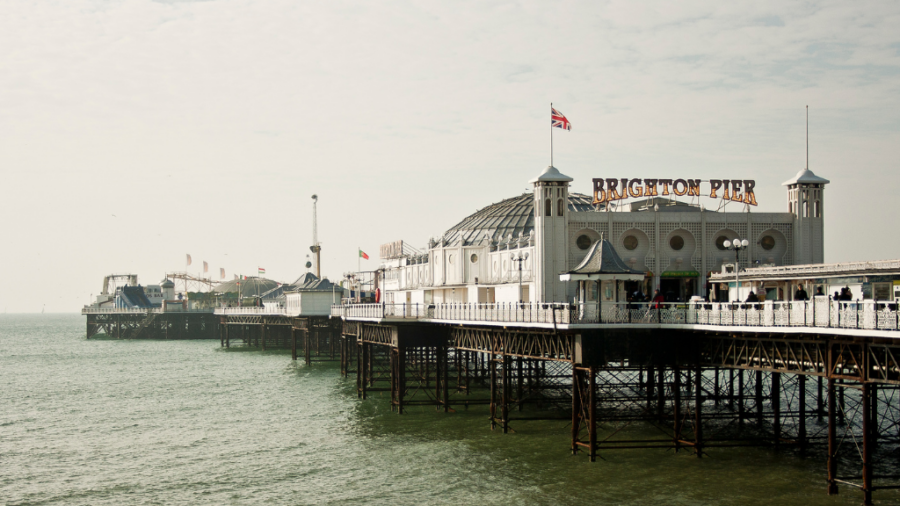
Then, of course, the sea. Brighton Palace Pier stretches out over the waves with its penny arcades, halls of mirrors and fairground rides, packed with families in summer, the very picture of old-fashioned British seaside fun. I love to sit at the end of it, pretending to read while I actually just watch the sea and lose all track of time.
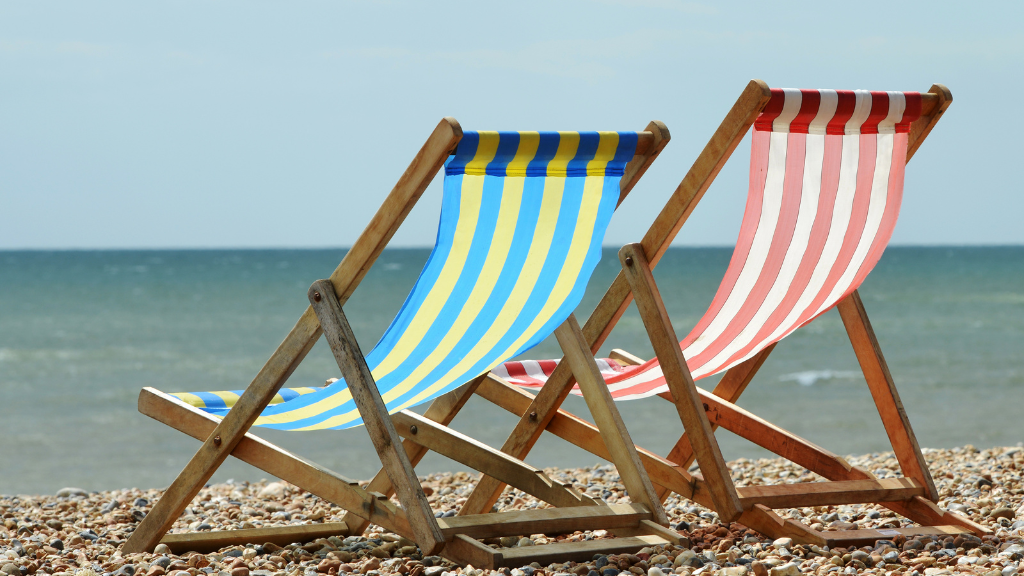
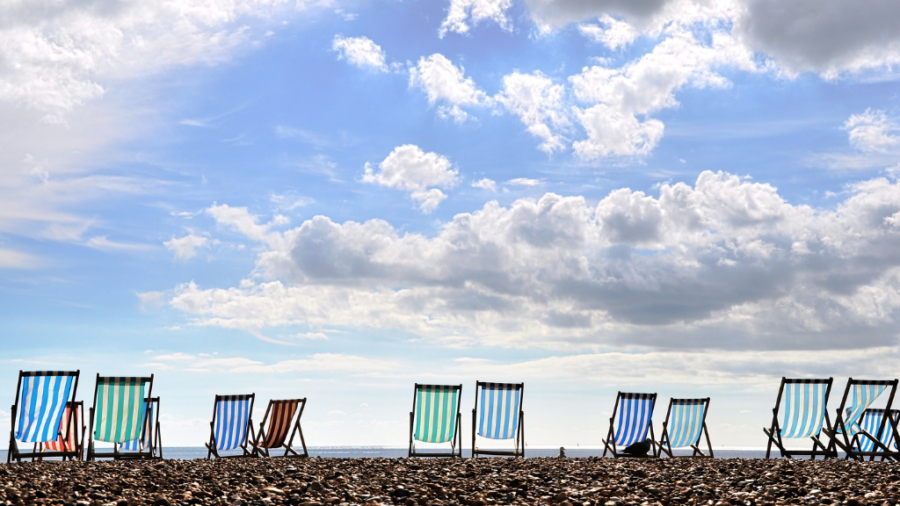
Look west along the shore and you will see the haunting skeleton of the West Pier, a Victorian pier left to collapse and burn, now a ghostly iron ruin standing in the water, and one of the most photographed sights in Brighton, especially at sunset with the starling murmurations wheeling above it. And the beach itself is pure Brighton: not sand but endless pale pebbles, which I could crunch along for hours.
Where to stay and eat
Brighton makes an easy day trip, but it tempts you to stay, and there are plenty of lovely boutique inns. The one time I stayed over, a couple of years ago, I treated myself to a night and a very good breakfast at the gorgeous Hotel Du Vin. For food, being vegetarian I loved lunch at Food for Friends, long famous for its meat-free cooking, and the Walrus is a good pub for a pint. Do check current opening before you set your heart on any one place.
Getting to Brighton
Frequent direct trains run from London Victoria and London Bridge, taking about an hour. I often go straight from Gatwick on landing, then take the train back to London in the evening; last time I even left it as my final stop, dropping my luggage at the airport and taking the train down for one last walk on that beautiful, never-ending pebble beach. You can drive (around two hours), but parking is hard, the train is easier, and, I confess, driving on the left still frightens me.
Did I mention I love this city?
Frequently asked questions
Absolutely. Brighton is about an hour south of London by direct train, which makes it one of the easiest and most rewarding day trips: the Royal Pavilion, The Lanes and North Laine for browsing, the Palace Pier and the pebble beach, and the ruined West Pier. It is lively enough to fill a day easily, and tempting enough that many people end up staying a night.
The Royal Pavilion (George IV’s exotic seaside palace), The Lanes and North Laine for independent shops and cafés, Brighton Palace Pier and the pebble seafront, the haunting ruined West Pier, and the Brighton Museum & Art Gallery. Add good food and a strong café and pub culture, and you have a full, characterful day.
Frequent direct trains run from London Victoria and London Bridge in about an hour, and Brighton is also easy to reach from Gatwick Airport. Driving takes around two hours but parking is difficult and expensive, so the train is almost always the better choice.
Yes. Brighton is famously welcoming, creative and open, and is celebrated as one of the UK’s leading LGBTQIA+ destinations. Its walkable centre, lively café and pub scene and easy train links also make it a comfortable, enjoyable place to visit alone.
Further reading
- Where to base yourself first: where to stay in London
- More English day trips: Oxford, Canterbury and Bath
- For book-lovers in the capital: Literary London