

For a lover of English literature, few day trips out of London are as resonant as Canterbury. This small, walled cathedral city in Kent, less than an hour and a half from the capital, is where Geoffrey Chaucer sent his pilgrims six hundred years ago, and walking its cobbled streets and timber-framed lanes, I could not stop hearing the Canterbury Tales in my head.
Steeped in medieval history, Canterbury is famous above all for its cathedral, a UNESCO World Heritage Site and the seat of the Archbishop of Canterbury, the Church of England’s spiritual heart. But the whole city is a tapestry of Roman, Anglo-Saxon and medieval England, and, despite the destruction of the 1942 Baedeker air raid, an astonishing amount survives.
This article is also available as a mobile app, via GPSmyCity, for GPS-guided directions to the places below.
Why the pilgrims came: Becket and Chaucer
The story that made Canterbury is a dark and dramatic one. In 1170, Archbishop Thomas Becket was murdered in his own cathedral by knights of Henry II, and within a few years his shrine had become the greatest pilgrimage site in England. It was those pilgrims, riding down from London, that Geoffrey Chaucer immortalised in The Canterbury Tales, one of the founding works of English literature, and it is that same road you are, in a sense, completing when you arrive. (For the drama of Becket’s death, T.S. Eliot’s play Murder in the Cathedral is the great modern retelling.)
Canterbury is a literary city in another way too: it was the birthplace of the playwright Christopher Marlowe, Shakespeare’s brilliant contemporary, remembered today in the city’s Marlowe Theatre.
Canterbury Cathedral and the UNESCO trio
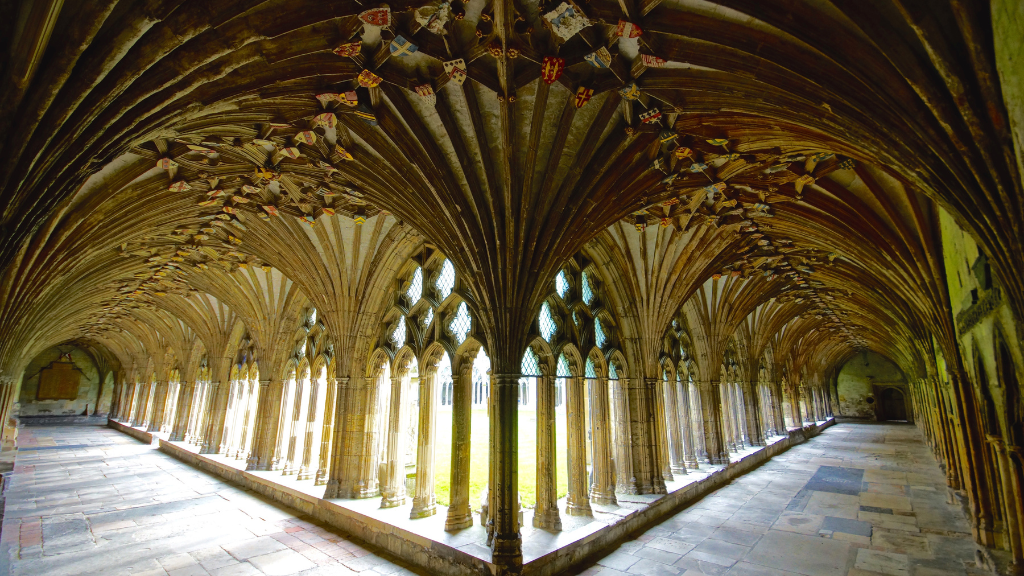
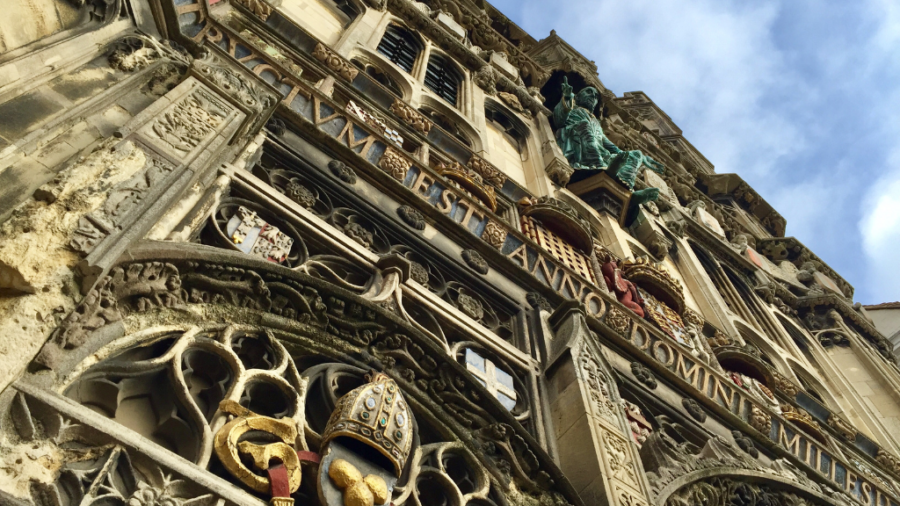
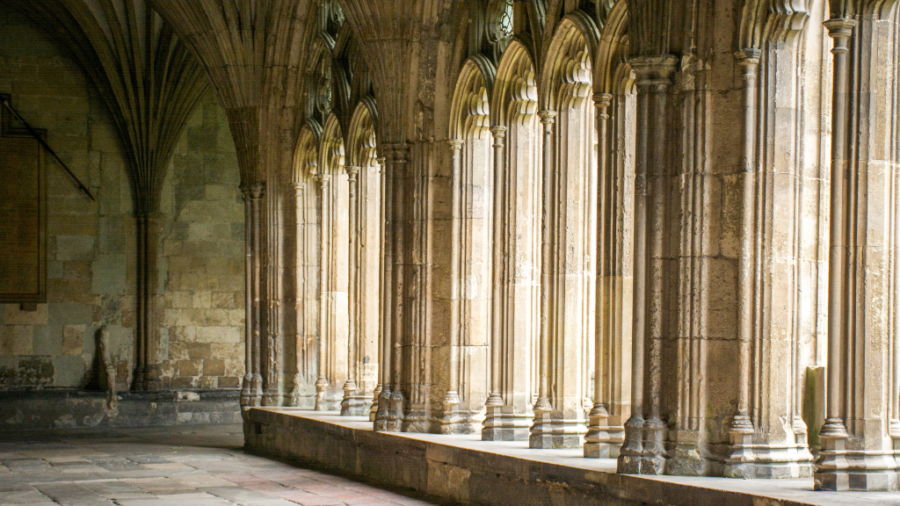
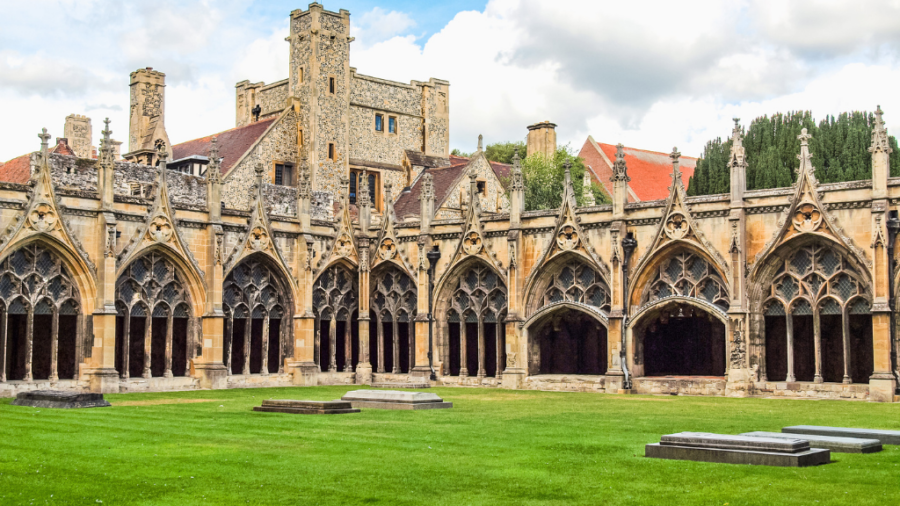
Canterbury Cathedral is one of the finest ecclesiastical buildings in Europe and an absolute must, its soaring nave, its tower, and the spot marking Becket’s martyrdom all deeply moving; over a million visitors come each year. Check current opening times and admission before you go.
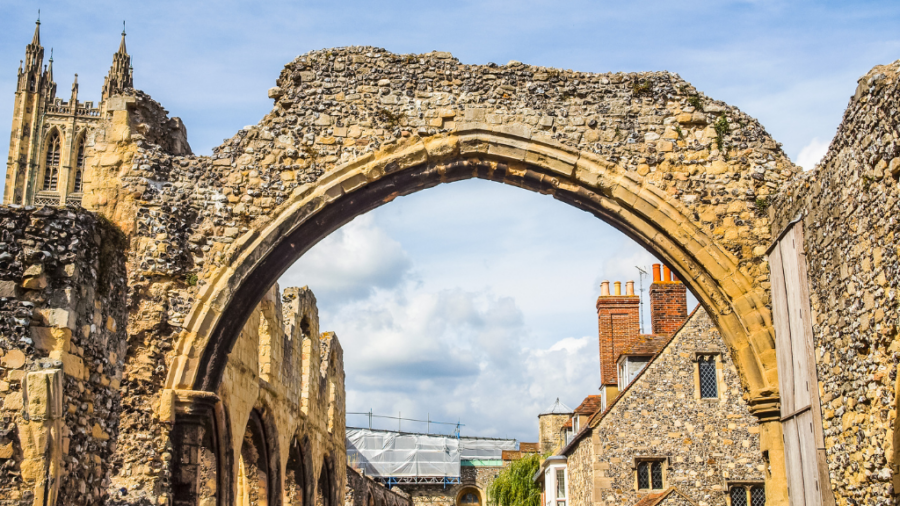
The UNESCO listing actually covers three sites together. Beyond the cathedral, walk to the ruins of St Augustine’s Abbey, founded after St Augustine arrived to bring Christianity to the Anglo-Saxons in 597, and to little St Martin’s Church, the oldest parish church in the English-speaking world still in continuous use. Together they tell the story of English Christianity from its very beginning.

Along the Stour, and the Roman city
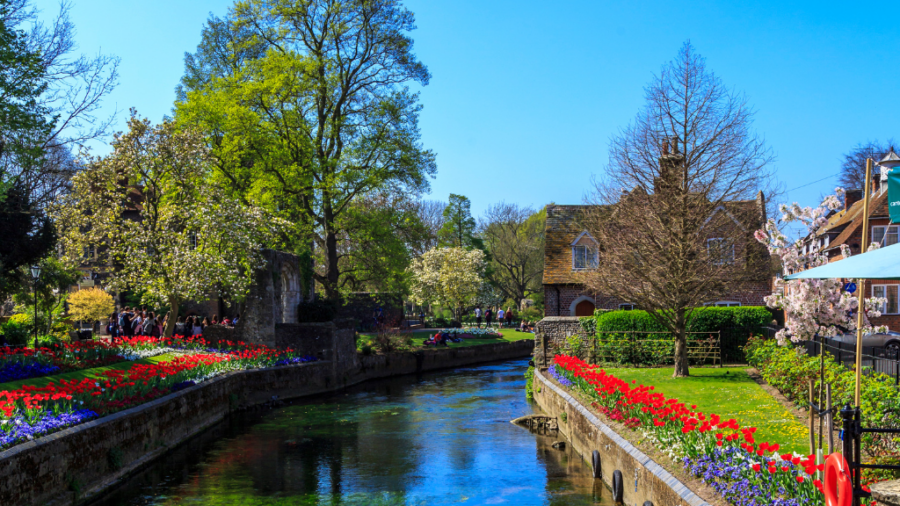
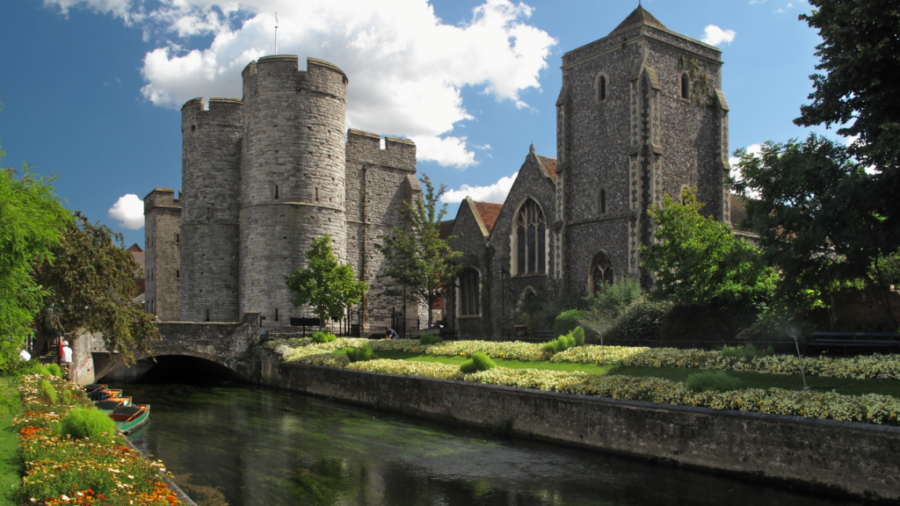
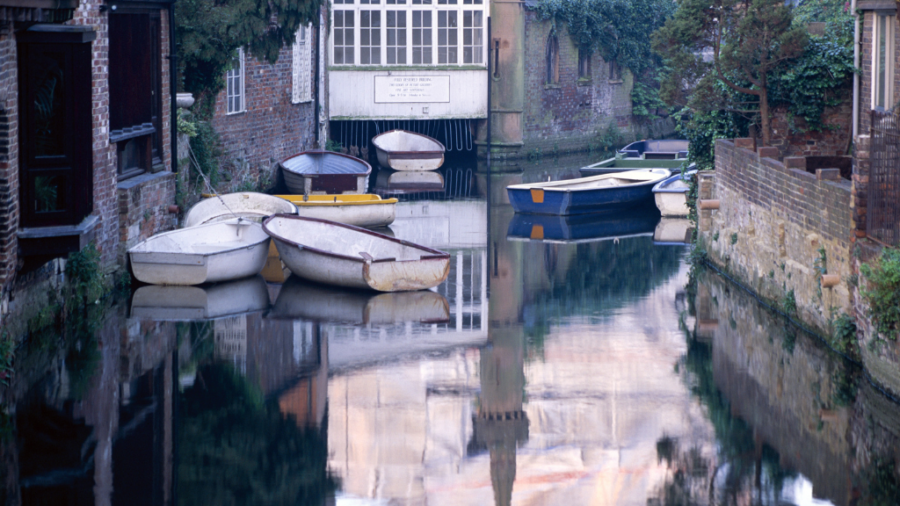
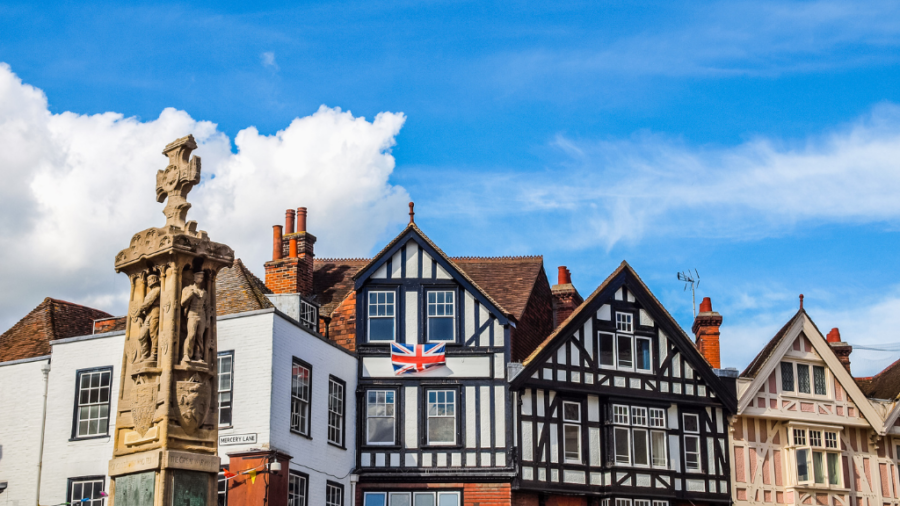
Canterbury is small and made for wandering, its medieval street plan intact and the gentle River Stour slipping past Tudor facades. A river tour is a lovely way to see it: short guided trips in flat-bottomed boats, with a guide’s tales along the way, passing the Greyfriars Chapel, perched on a tiny island in the river and the oldest Franciscan building in England. Check current timetables when you arrive.
For the deeper past, the Canterbury Roman Museum, built around the mosaic floors of an actual Roman townhouse, brings Roman Canterbury vividly to life with its glassware, jewellery and clever reconstructions.
Where to eat
Canterbury eats well. The Goods Shed, a converted Victorian railway freight store, is a superb farmers’ market and restaurant built around the freshest local produce. And for a proper English tearoom, Tiny Tim’s Tearoom is a delight, though be ready to queue. As ever, check current opening before relying on any one place.
Getting to Canterbury
The fast train from London St Pancras reaches Canterbury in about an hour; slower services from Victoria and Charing Cross take around ninety minutes. Driving is roughly ninety minutes too. Whether you come for the cathedral, for Chaucer and Marlowe, or simply for the medieval beauty of the place, Canterbury stays with you.
Frequently asked questions
Canterbury is the cradle of English Christianity, where St Augustine began his mission in 597, and the seat of the Archbishop of Canterbury, head of the Church of England. The murder of Archbishop Thomas Becket in the cathedral in 1170 made it the greatest pilgrimage site in medieval England, immortalised in Chaucer’s Canterbury Tales. Its cathedral, St Augustine’s Abbey and St Martin’s Church together form a UNESCO World Heritage Site.
Geoffrey Chaucer’s The Canterbury Tales (late 14th century), a cornerstone of English literature, is framed as stories told by pilgrims travelling from London to the shrine of Thomas Becket in Canterbury Cathedral. Visiting the city, you are in effect arriving at the pilgrims’ destination, which is part of what makes it so evocative for readers.
Canterbury Cathedral first of all, then the two other parts of the UNESCO site, St Augustine’s Abbey and St Martin’s Church. Add the Roman Museum (built around a real Roman house), a boat tour on the River Stour past Greyfriars Chapel, the medieval streets and city walls, and the Marlowe connection. It makes a very full day.
The high-speed train from London St Pancras takes about an hour to Canterbury West; slower trains from Victoria and Charing Cross take around ninety minutes. Driving is roughly ninety minutes. It is an easy and rewarding day trip, and the city is compact and walkable once you arrive.
A full day is enough to see the cathedral, wander the medieval centre, take a river tour and visit the Roman Museum or St Augustine’s Abbey. If you want to add St Martin’s Church, the Marlowe Theatre or a leisurely lunch, or use Canterbury as a base for the Kent coast, an overnight stay is worthwhile.
Further reading
- For fellow readers: Literary London and the best bookshops in Paris
- More English day trips: Oxford, Brighton and Bath