

Some places show you a different Sardinia from the one on the postcards, and none more so than Mamoiada, a small town in the heart of Barbagia, when its ancient carnival takes over the streets.
I studied archaeology at university, and it is rare that a living tradition sends me as far back in time as this one does. The carnival of Mamoiada is a real carnival, with dancing and food and wine, and yet there is something sacred and pre-Christian in it, something that predates the costume by a couple of thousand years. It overwhelms the town and unsettles its visitors, and I mean that as the highest compliment.
When it happens
The carnival does not begin in February, as you might expect, but on the night of the 16th and 17th of January, for the feast of Sant’Antonio Abate, Saint Anthony the Abbot. This is sa primma issida, the first outing of the year. Thirty or forty bonfires are lit around the village, Sant’Antoni de su ohu, and around them people share new wine and sweets while the masks appear and dance late into the night. The masks then return in February, on Carnival Sunday and Shrove Tuesday, when the celebrations reach their peak.
So if you want the most atmospheric moment, the raw and ritual one, come for the fires of the 17th of January. If you want the fuller carnival spectacle, come in February. Either way, check the exact dates for the year, since the February ones move with the calendar.
The two masks
There are two masks at Mamoiada, the Mamuthones and the Issohadores, and understanding them is the whole point.
The Mamuthones
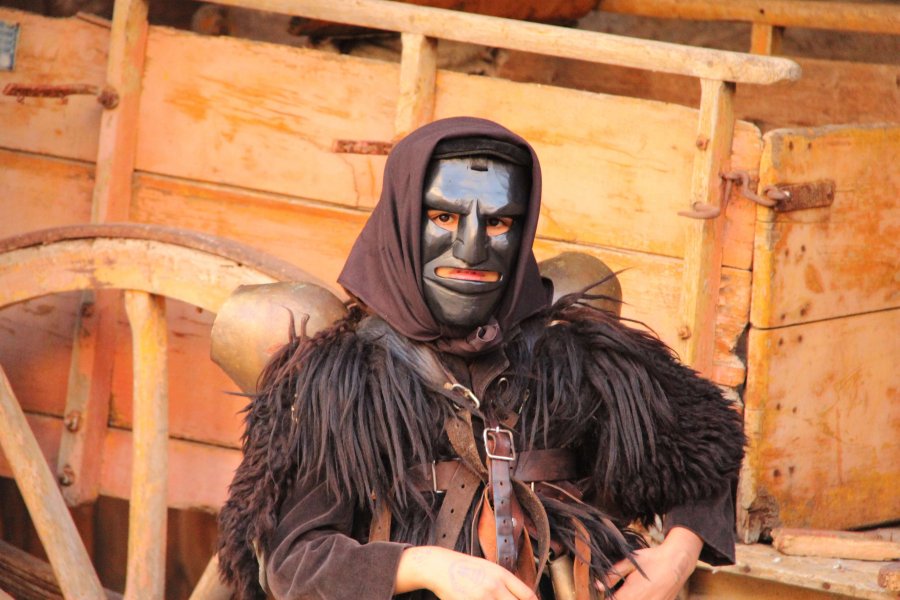
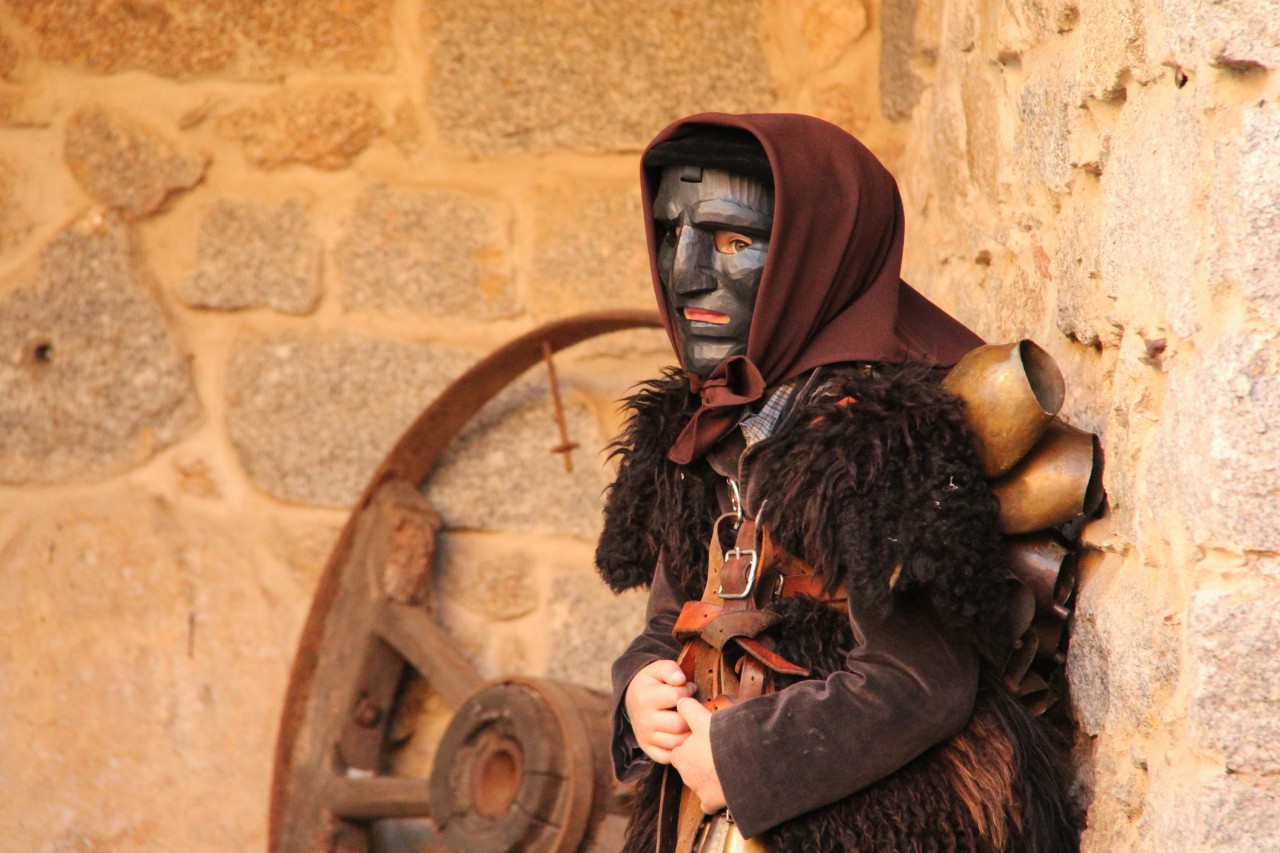
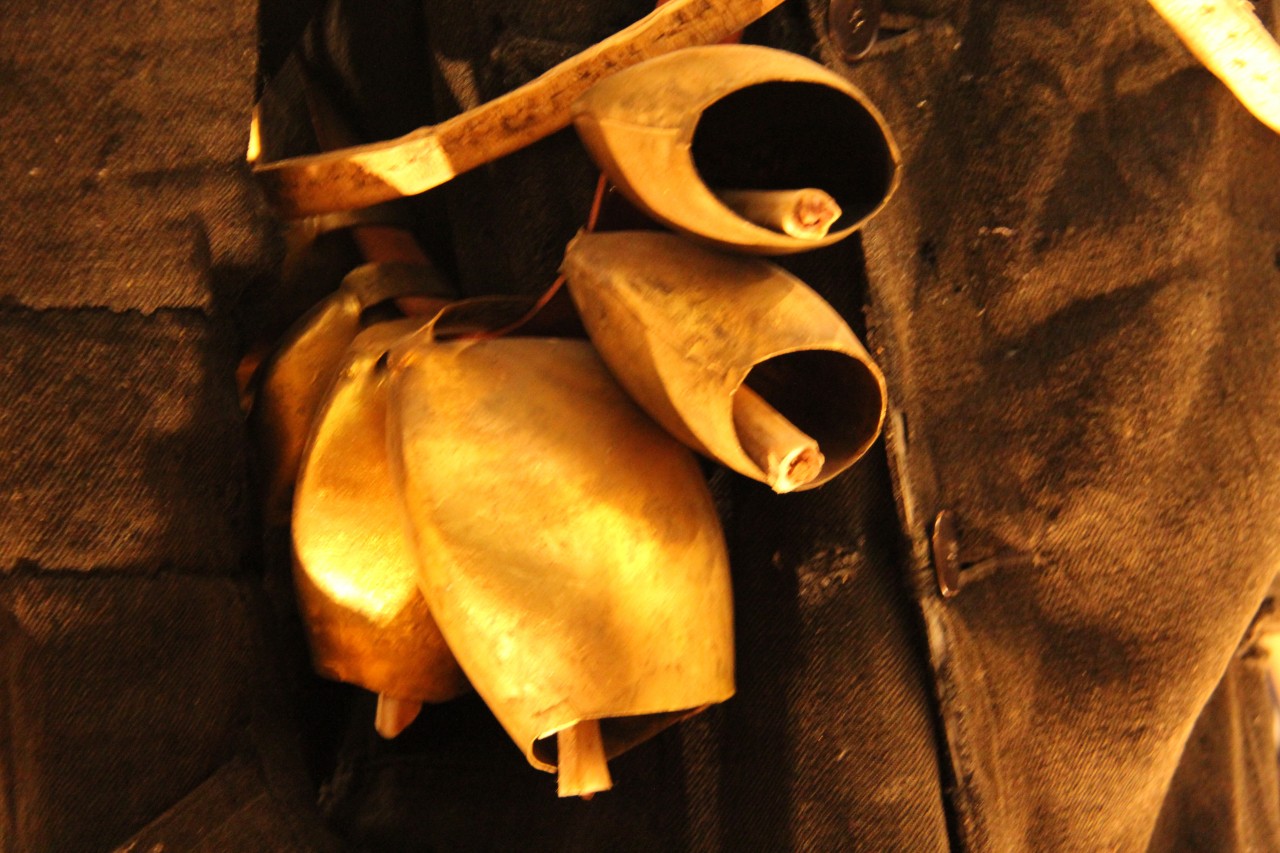
The Mamuthones are the ones that will stay with you. Dark, covered in black sheepskin, their faces hidden behind a fearsome carved wooden mask, they move in synchrony, hopping in a slow, heavy, hypnotic dance that shakes the whole neighbourhood to the rhythm of the bells strapped to their backs. They usually parade twelve at a time, a number said to stand for the twelve months of the year.
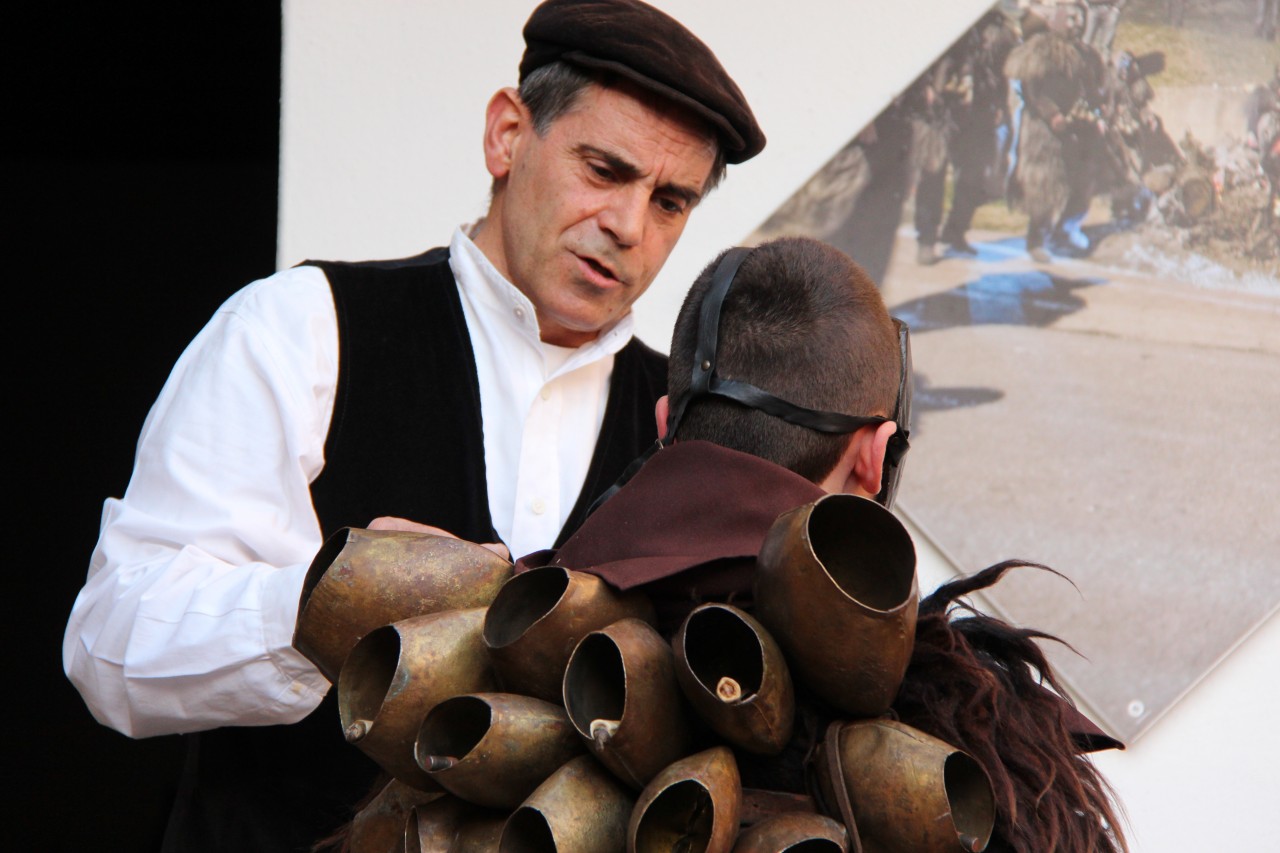
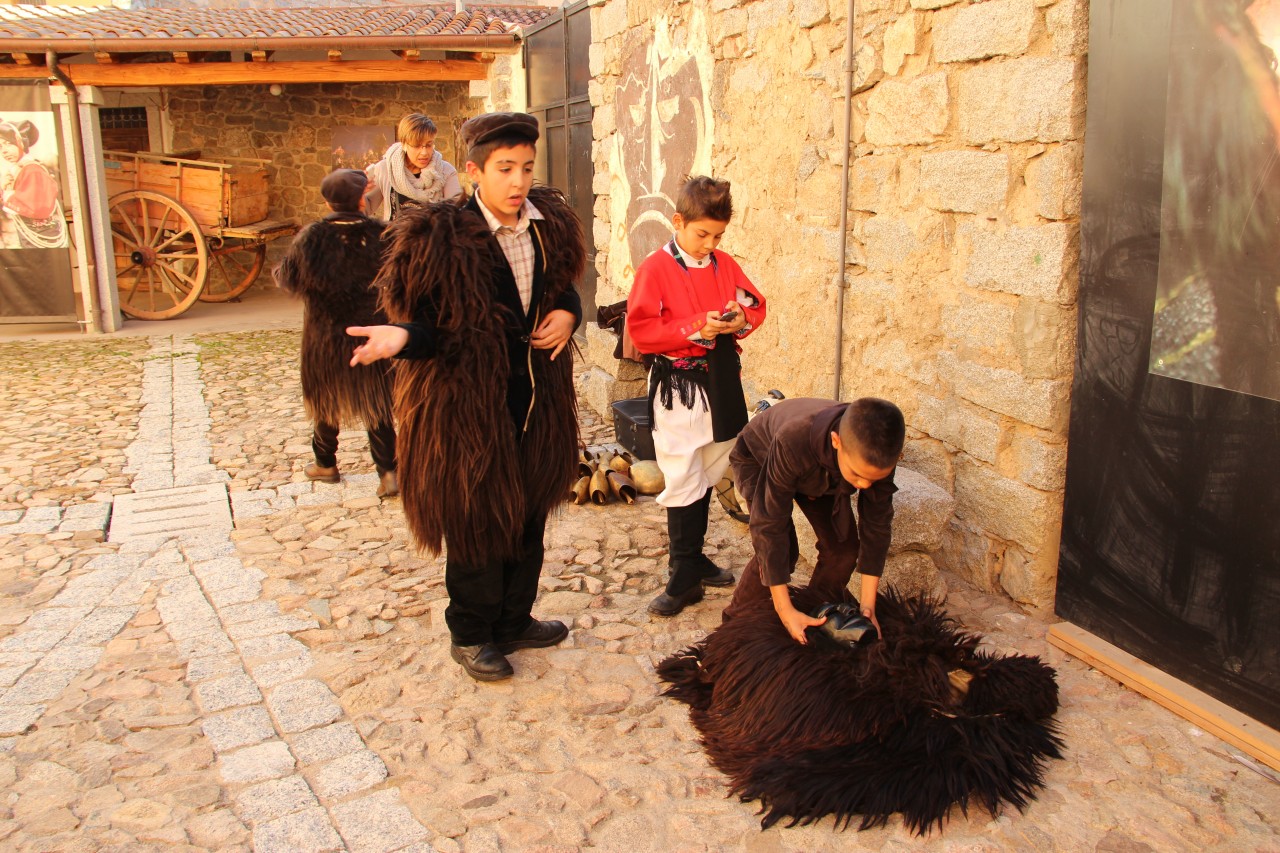
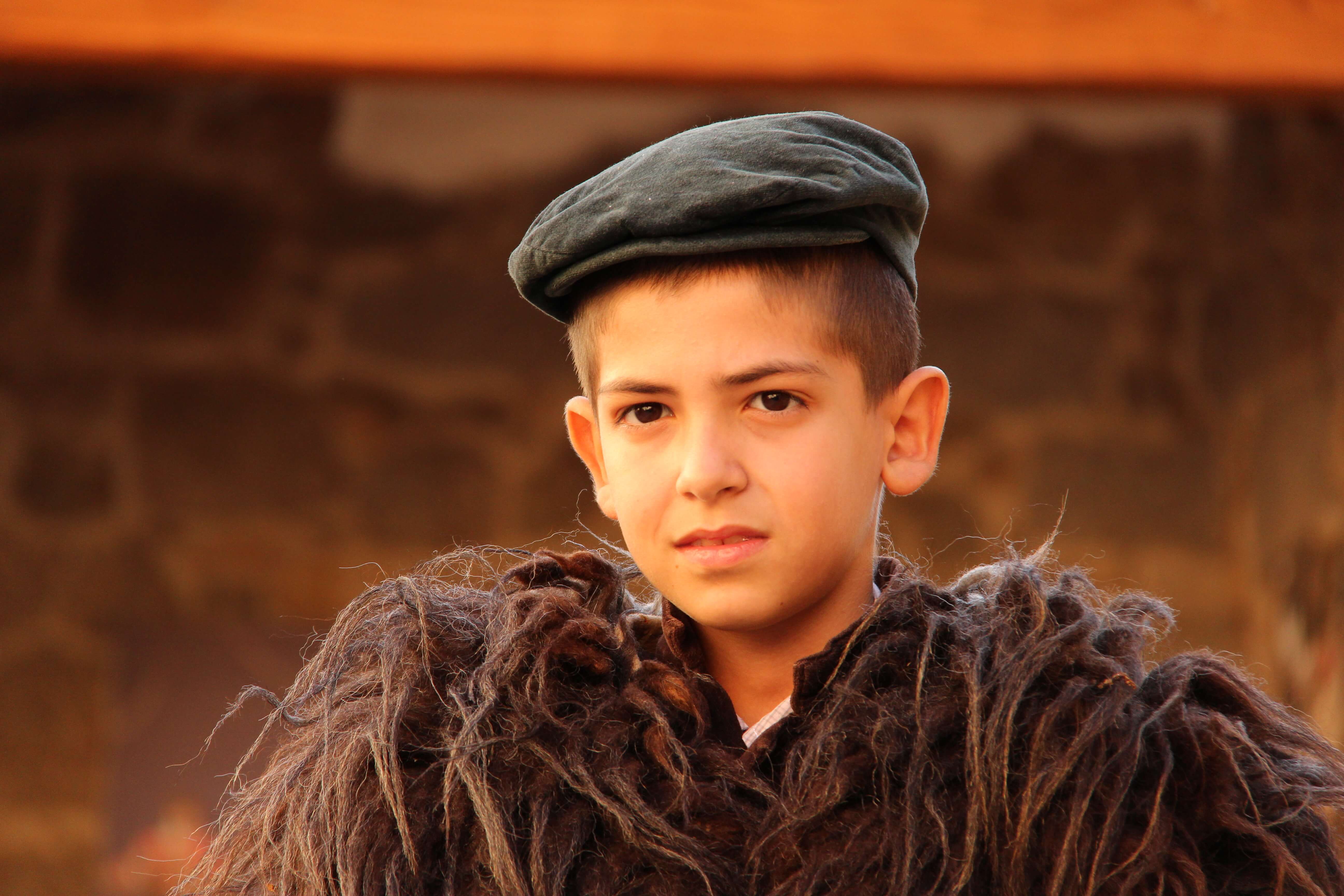
The dressing itself is a rite, and I was lucky enough to watch it in the courtyard of a village house. It takes experienced hands and two people to do it: the sheepskin, the mastruca, is fixed to the body, then the carriga, rows of heavy bells, are bound on with leather straps so precisely that they will not shift during a procession that lasts for hours. The final touch is the dark wooden mask, the visera. Even watching it done to young boys, knowing exactly what it was, I found it faintly frightening. That is the point.
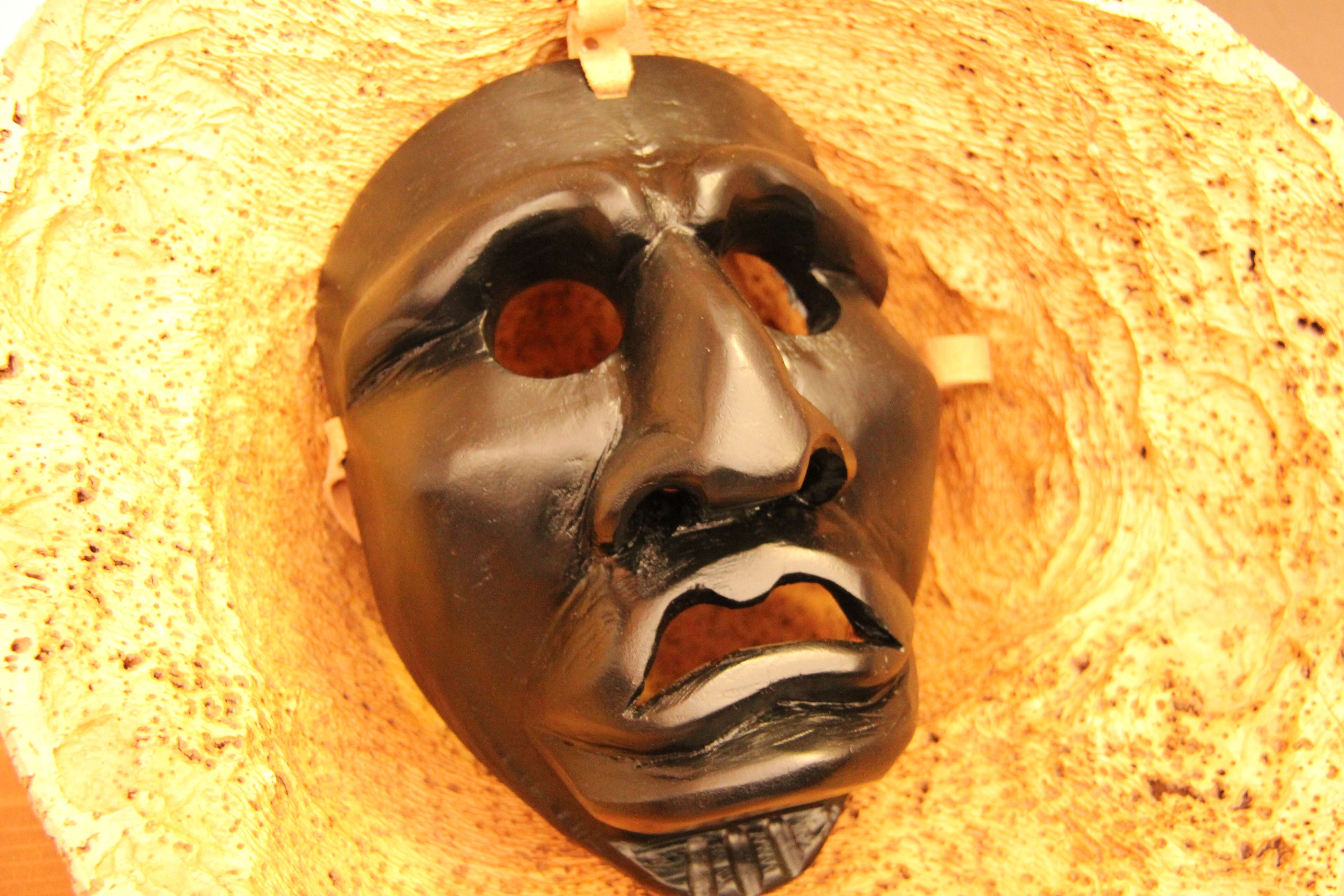
These masks are genuine works of art, carved from different woods, and if you want to understand the craft I recommend visiting one of the village mask-makers’ workshops, where you can often see a personal collection alongside the pieces for sale. It gave me a real appreciation of the skill behind that fearsome face.
The Issohadores
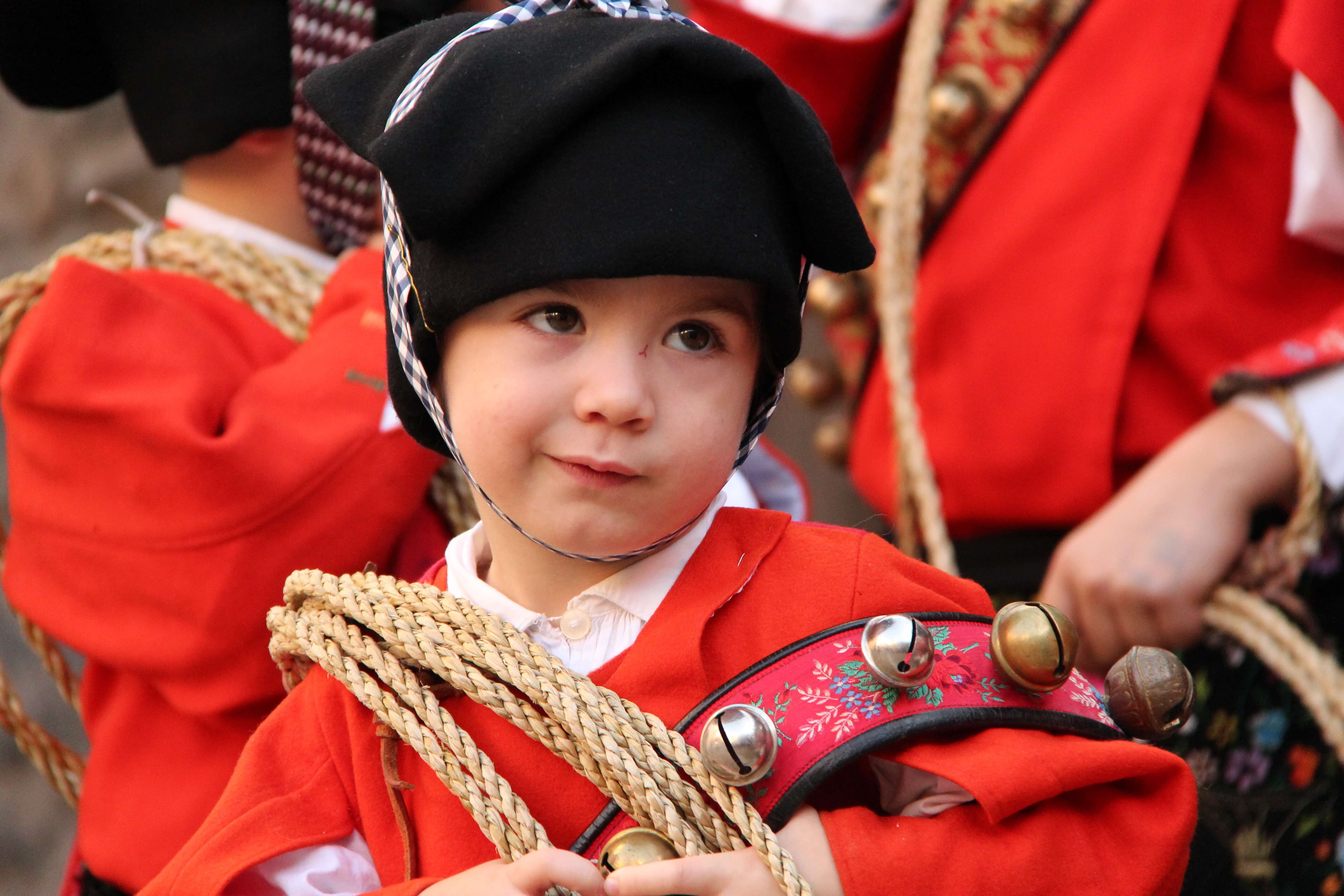
The Issohadores put me more at ease. They are the elegant, colourful counterpart: white trousers, a shirt under a vivid red bodice called a curittu, a beautiful shawl at the waist, fine boots. Instead of the great cowbells they wear a row of bronze bells, the sonajolos, over one shoulder, and their mask is white and calm-faced. Another story entirely.
Their move in the procession is light: they carry a rope of woven rattan, the soha, which they cast over a chosen girl in the crowd as a gesture of good luck. Let me reassure you, it does not hurt, it is a surprise if you are not paying attention, but not painful at all.
What the ritual means
This is where my old archaeology books stir. The masks almost certainly reach back to the Nuragic age and beyond, part of a Mediterranean family of ritual masks whose relatives turn up from the Aegean to the Iberian peninsula. The most common reading is a pagan ritual: the veneration of animals, the warding-off of evil spirits, the propitiation of a good harvest, the eternal winter-into-spring drama that underlies so many European carnivals.
There are other interpretations. The Nuoro historian and anthropologist Raffaello Marchi, writing in 1951, suggested the dance might re-enact a victory of the Barbagian shepherds, the Issohadores, over the Moors, the Mamuthones. Scholars still debate it, and the people of Mamoiada, tellingly, do not much join in: the Mamuthones have simply always been theirs.
To go deeper, the village has an integrated museum system, the MaMu. The Museo delle Maschere Mediterranee (Museum of Mediterranean Masks), founded in 2001, sets the local masks against their Mediterranean cousins and makes the deep-time connections vivid; there is also the Museo della Cultura e del Lavoro. Small, but for anyone curious about where these figures come from, well worth the modest entry.
Mamoiada beyond the carnival
Mamoiada is quiet the rest of the year, and so is the countryside around it, scattered with the special stones of prehistoric Sardinia: dolmens, menhirs, and of course the nuraghi I wrote about from nearby Bitti. The most famous of them is Sa Perda Pintà, the “painted stone”, also known as the Stele di Boeli, a slab carved with concentric circles and cup-marks that is far older than the carnival and just as mysterious.
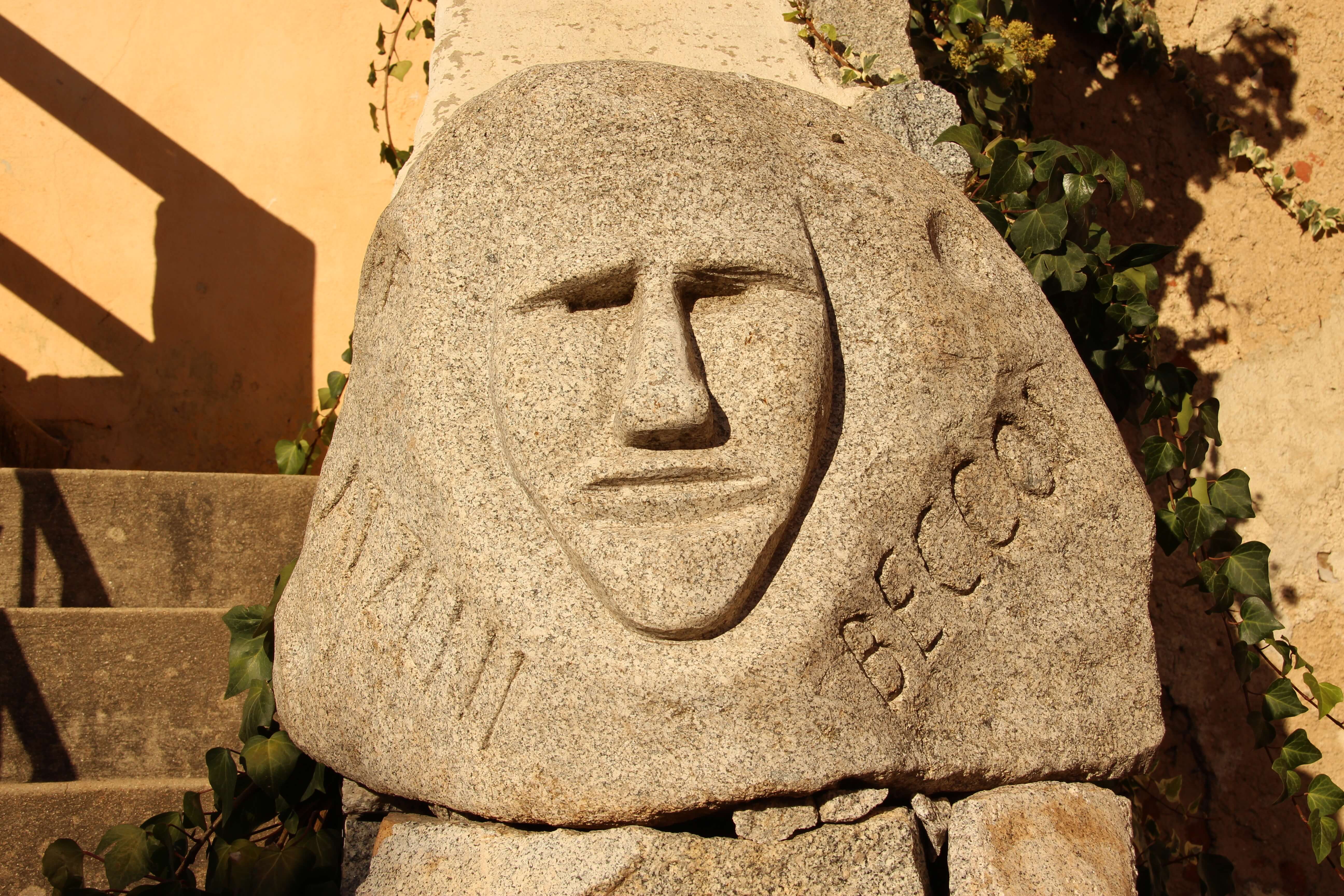
There are churches worth a look too, the Shrine of Saints Cosma and Damiano, home to a heartfelt traditional pilgrimage, and the church of Loreto.
Food, or rather, wine
I should be honest: my culinary memory of Mamoiada is really a wine memory. This is Cannonau country, Sardinia’s great red, and I fell happily into a tasting at the Cantina Sedilesu that lasted hours and ended, of course, with the purchase of several bottles, all as gifts for other people, naturally. The tasting came with cured meats, cheeses and plenty of pane carasau, the crisp Sardinian flatbread, served in a fine room looking out over the countryside. Below, they have dug a tunnel to keep the barrels and bottles at a steady temperature, and whether or not that is the secret, the wines are superb.
If you come during the carnival you will also find dozens of stalls with every kind of Sardinian dish and, above all, the biscuits and sweets. Do not resist them.

Getting there
I reached Sardinia the slow way, by overnight Tirrenia ferry from Genoa to Porto Torres, and it was a happy surprise: I still had in mind the grim old boats of years past, and instead found something closer to a small, elegant cruise. From Porto Torres you can bring your own car across or hire one on arrival, and it is roughly two hours’ drive to Mamoiada, deep in the island’s mountainous heart.
A si biri! Till very soon, as they say in Sardinian.
FAQ
It is one of the oldest and most striking carnivals in Italy, held in the village of Mamoiada in the Barbagia region of Sardinia. Rather than floats and glamour, it centres on two ancient masked figures, the Mamuthones and Issohadores, performing a solemn, hypnotic dance of pre-Christian, probably Nuragic, origin, linked to animal veneration, warding off evil and ensuring a good harvest.
The Mamuthones wear black sheepskins, a fearsome dark wooden mask and rows of heavy bells (the carriga) on their backs, and move in a slow synchronised dance, usually twelve at a time for the twelve months. The Issohadores are their elegant counterpart, in white trousers, a red bodice (curittu) and bronze bells, who cast a woven rattan rope (the soha) over people in the crowd for good luck.
The masks first appear on the night of 16-17 January, for the feast of Sant’Antonio Abate, around dozens of bonfires lit through the village (sa primma issida). They return in February on Carnival Sunday and Shrove Tuesday, when the celebrations peak. The January date is fixed; the February dates move each year with the carnival calendar, so check before you travel.
Their origins are debated but very ancient, most likely reaching back to the Nuragic age, part of a wider Mediterranean tradition of ritual masks. The common interpretation is a pagan rite of animal veneration and seasonal renewal. One well-known hypothesis, proposed by Raffaello Marchi in 1951, reads the dance as a re-enactment of the Barbagian shepherds’ victory over the Moors.
Beyond the carnival, Mamoiada has the MaMu museum system, including the Museo delle Maschere Mediterranee, which sets the masks in their Mediterranean context. The countryside holds prehistoric stones including the carved Sa Perda Pintà (Stele di Boeli), and the area is the heart of Cannonau wine country, with cellars such as Sedilesu open for tastings.