
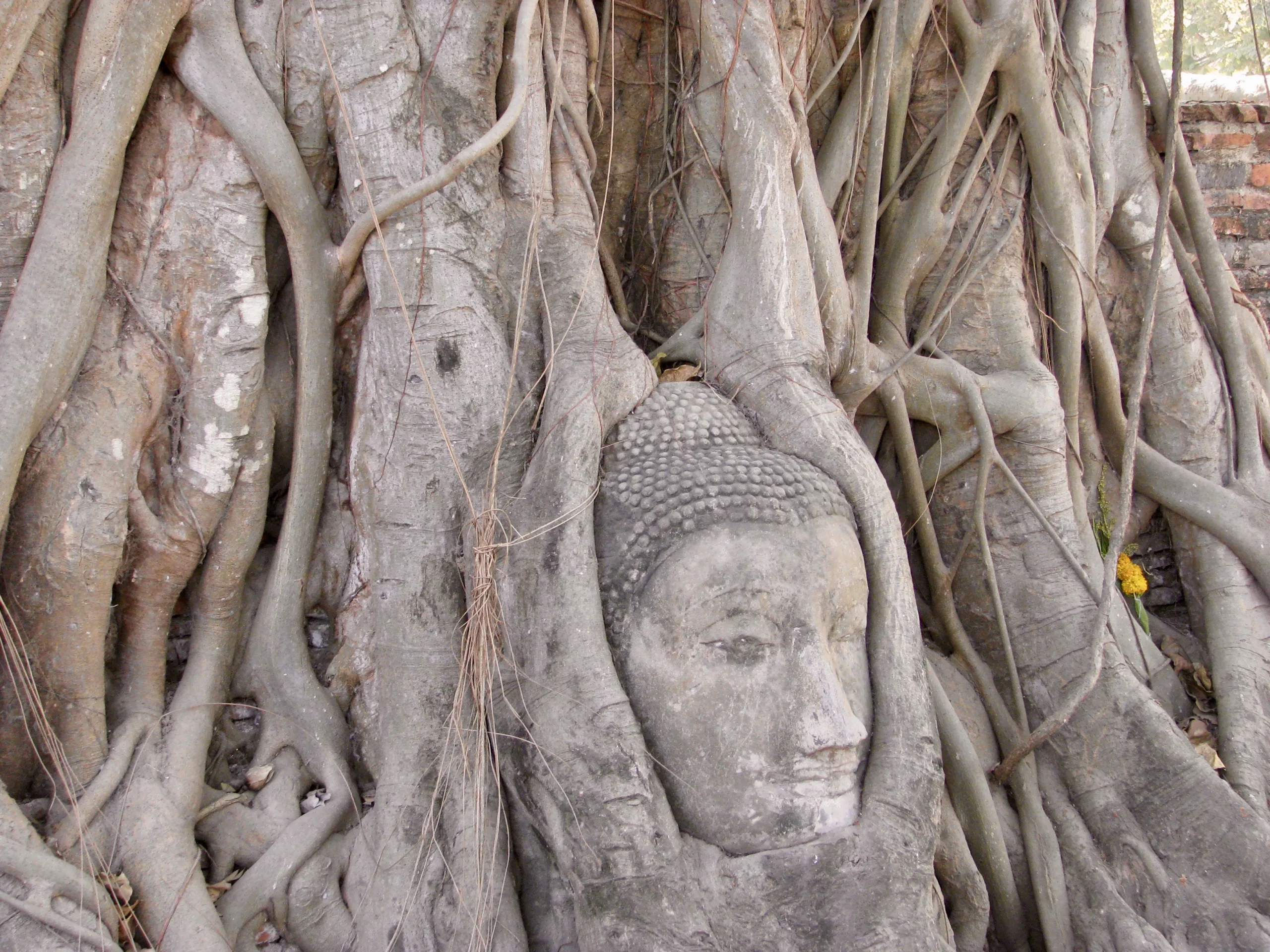

In short: Ayutthaya is the ruined former capital of Siam, a UNESCO World Heritage Site about 1 to 2 hours north of Bangkok by train. Take an early train from Bangkok, rent a bike at the station (or hire a tuk-tuk), and spend the day cycling between the great temple ruins: Wat Mahathat with its Buddha head in the tree roots, Wat Ratchaburana, Wat Phra Si Sanphet, and Wat Chaiwatthanaram for the late-afternoon light. Bring water, sun protection and modest dress, and start before the midday heat.
I first went to Ayutthaya in 2010, with my brother, on heavy iron bikes that wobbled like reluctant dinosaurs, and I have been back since. It remains my favourite day trip from Bangkok: a whole city of ruined temples spread across an island between rivers, quiet and dignified, reached by a train journey that is half the pleasure. Here is how to do it independently, and well.
Why Ayutthaya is worth it
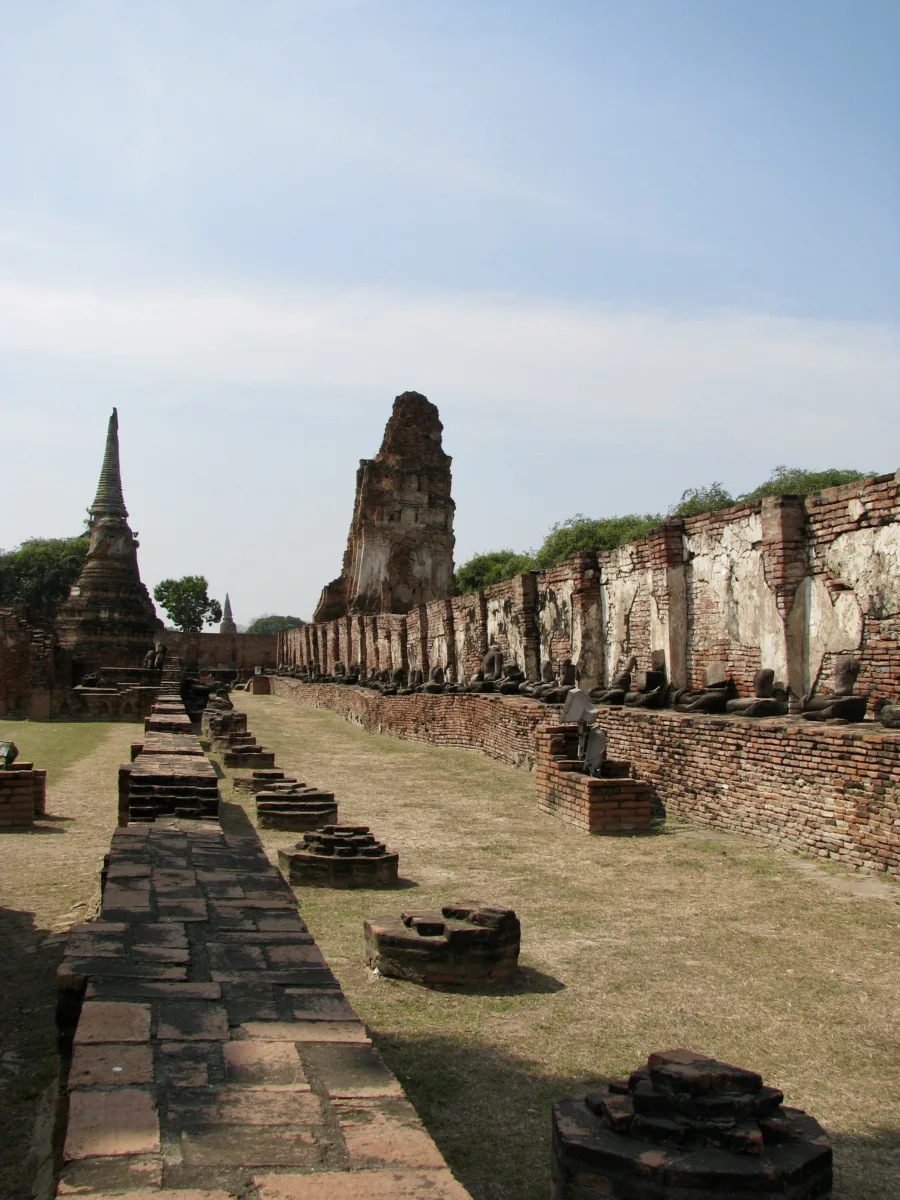
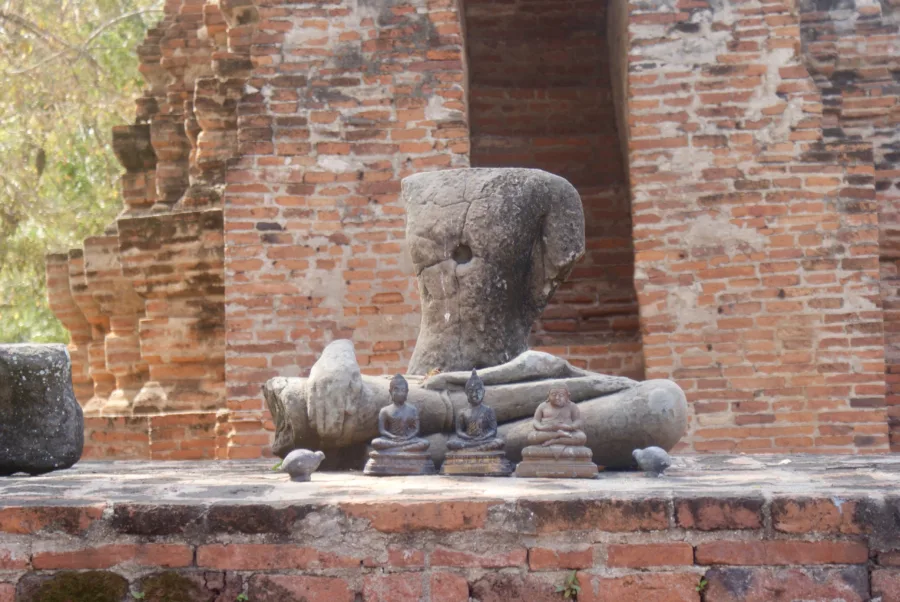
Ayutthaya was the capital of the Kingdom of Siam from the 14th to the 18th centuries, one of the great cities of its age, cosmopolitan and immensely wealthy, before it was destroyed by a Burmese army in 1767. What survives is a vast archaeological park of brick prang towers, headless Buddhas and crumbling temple halls, now a UNESCO World Heritage Site. It is moving in a way that polished monuments rarely are, and cycling between the ruins, with the heat shimmering off the brick, is an experience I have never forgotten.
How to get there by train
The train is the right way to come: cheap, easy and part of the day. Services run from Bangkok up to Ayutthaya and take roughly one to two hours depending on the type of train and which station you leave from. Many long-distance services now use the big Krung Thep Aphiwat Central Terminal, though some routes still use older stations, so check which applies to your train when you book.
You can buy tickets at the station on the day, but for weekends and peak season it is worth booking ahead. The State Railway of Thailand (SRT) has been modernising its network and ticketing, so timetables and stations can change; confirm current times on the official channels close to your trip rather than relying on older advice.
From the station to the temples: the bike plan
The historic park sits across the river from the station. Hop on the small ferry, and right by the landing you will find shops renting bicycles for very little. The bikes are usually basic and heavy (my beloved iron dinosaurs), but the park is flat and a bike is by far the best way to cover the distances between temples at your own pace. If cycling in the heat is not for you, tuk-tuks will take you round on a half or full-day tour for a negotiated price.
Either way, bring and wear the essentials: lots of water, a hat, sunscreen, and clothing that covers shoulders and knees, since these are active religious sites.
A self-guided cycling route
You cannot see everything, and you should not try. These are the ones I would not miss, in a loop that works well over a day.
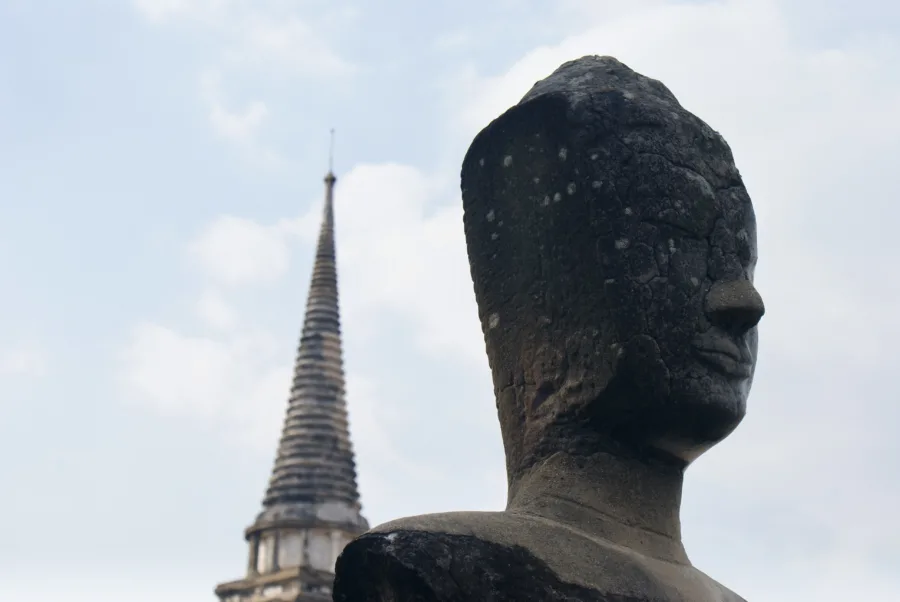
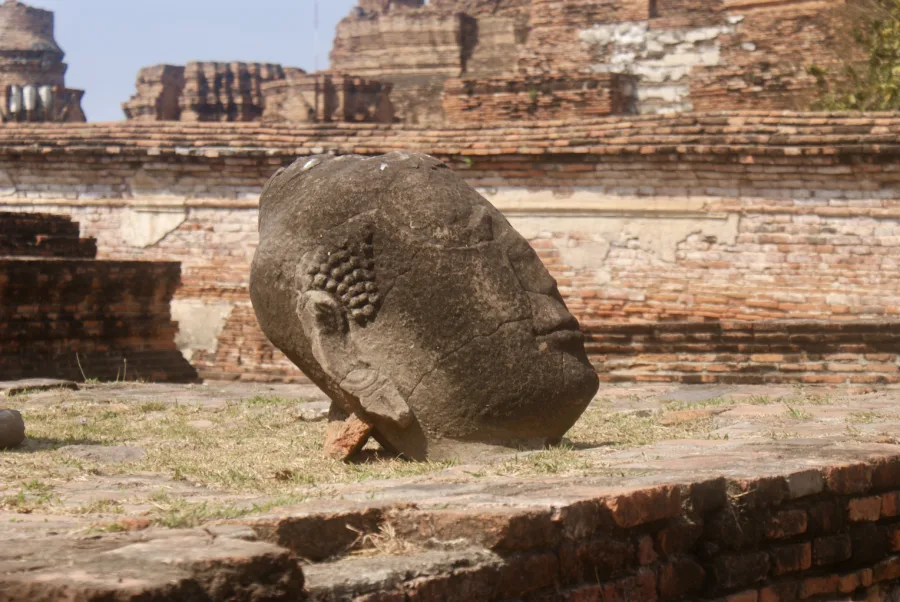
Wat Mahathat. Start here for the single most famous image in Ayutthaya: a stone Buddha head cradled in the roots of a banyan tree, slowly embraced by the wood over centuries. The rest of the complex, with its rows of headless Buddhas, is just as haunting.
Wat Ratchaburana. Close by, with one of the best-preserved prang towers, which you can climb into for a glimpse of the old crypt.
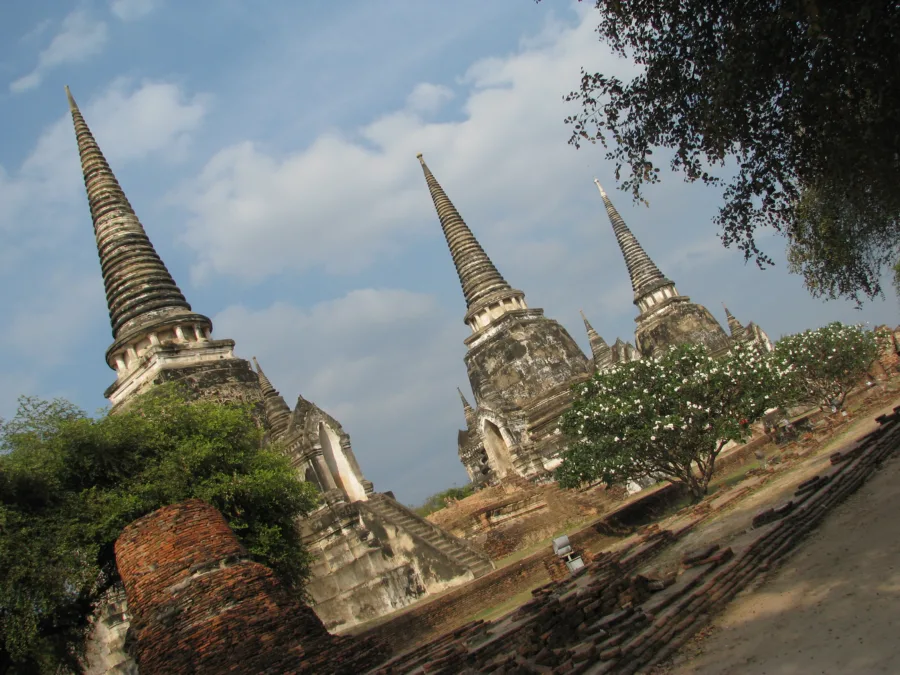
Wat Phra Si Sanphet and the old Royal Palace area. The grandest of them all, with three restored bell-shaped chedi in a row, once the royal temple of the Siamese court.
A lunch and shade break. By now it will be hot. Stop, eat, drink, and sit in the shade through the worst of the midday sun; there are simple places to eat around the park.
Wat Chaiwatthanaram. Save this riverside temple, the most photogenic of all, for the late afternoon, when the light turns gold and the crowds thin. If you can time your day to end here, do.
What to expect emotionally
Ayutthaya is not a theme park of ruins. It is a place where a great city died, and there is a stillness to it, especially away from the busiest temples, that asks for a slower, quieter kind of attention. Give it that, and it gives a great deal back.
Extra ideas
If a day is not enough, stay overnight to see the temples floodlit and catch an early, empty morning. A river dinner cruise is a gentle way to end the day, and the markets and backstreets near the station reward a wander once the temples close.
More of Thailand on the blog: Kanchanaburi, Chiang Rai, Koh Samui and Koh Lanta.
Frequently asked questions
Trains run from Bangkok to Ayutthaya in roughly one to two hours, depending on the service and departure station. Many long-distance trains now use Krung Thep Aphiwat Central Terminal. You can buy tickets at the station, but book ahead for weekends and peak season, and check current times with the State Railway of Thailand.
Very much so. It is the ruined former capital of Siam and a UNESCO World Heritage Site, a whole park of atmospheric temple ruins you can explore by bike in a day. For many travellers, including me, it is the highlight of a Bangkok trip.
By bicycle, rented cheaply near the station ferry landing, which is ideal on the flat site. If you prefer not to cycle in the heat, tuk-tuks offer half or full-day tours for a negotiated fare.
Light clothing that still covers shoulders and knees for the temples, a hat, sunscreen and plenty of water. Start early to cycle before the midday heat, and save the riverside Wat Chaiwatthanaram for the cooler late afternoon.
Further reading
Pair this with the city itself in my Bangkok guide, and plan the rest of the country with my ultimate Thailand travel guide. Further afield, there is Chiang Mai. Official information on the historic park is on UNESCO.
The eSIM I use: get 5% off eSIMs and 10% off Holafly Plans for the first 12 months with the code SILVIAMOGGIA on Holafly. The travel insurance I use: SafetyWing Nomad Insurance, which you can buy while already travelling. Both contain affiliate links: they cost you nothing extra and help keep this blog running. #HolaflyTraveller