
My best travel experiences tend to come from coincidences, encounters and conversations with other travellers, and Brescia is no exception.
One early November, at the WTM travel fair in London, I met Armando, who told me about his city with such love and passion that I could not help adding it to my list. A month later I stepped off the train at Brescia station. Before Armando, I knew almost nothing about the place, beyond its strong local accent (which I helplessly, and embarrassingly, start to imitate within hours) and a vague picture of an industrial city in a foggy plain. The reality could hardly have been more different, and the city struck me so much that I did not want to leave. Brescia is, without doubt, a town to visit in Italy.
About Brescia
There is a well-known Italian song with the line “we are our history”, and it is true enough that we would do well to learn it. Brescia offers a window onto an enormous stretch of that history.
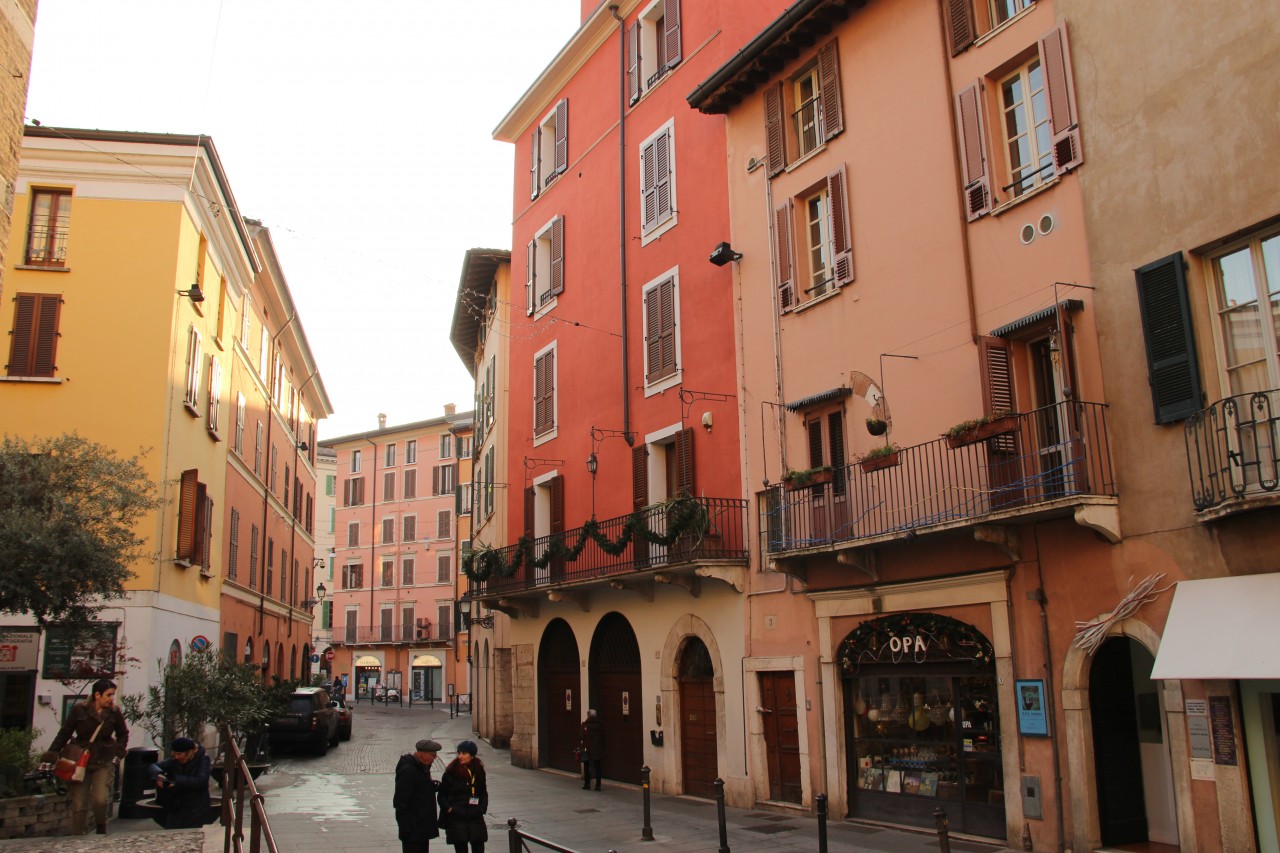
The Ligurians lived here, followed by the Gauls, the Romans, various so-called barbarian peoples, then the Lombards and the Venetian doges, right down to the recent, dark chapter of the Republic of Salò. Every one of those settlements, colonies, duchies and republics left its mark, so that in Brescia you can stroll a medieval lane, look up into a Renaissance square dominated by a Baroque church, and find, a few steps away, an aesthetically striking piece of Fascist-era architecture, and think nothing of it. People here once walked a few dozen metres from a great Roman temple to a Lombard monastery raised in a wealthy district of ancient Rome, all beneath the Visconti castle. Perhaps that is why several of Brescia’s monuments, its Lombard-era complex among them, form part of a UNESCO World Heritage Site.
As someone who trained as an archaeologist, I found this layering intoxicating. Brescia lets you read a whole European history in a single afternoon’s walk.






Top things to do in Brescia
There is more here than one visit can hold, and I still have a list for my return: the Visconti Castle, with its military and Risorgimento museums and its hilltop park over the city; the Pallata tower; the underground tours run by the Brescia Underground volunteers; the Mille Miglia Museum, dedicated to the legendary vintage car race and housed, wonderfully, in a former Benedictine monastery; and the monumental Vantiniano cemetery.
Of what I did see, in the order I saw it:
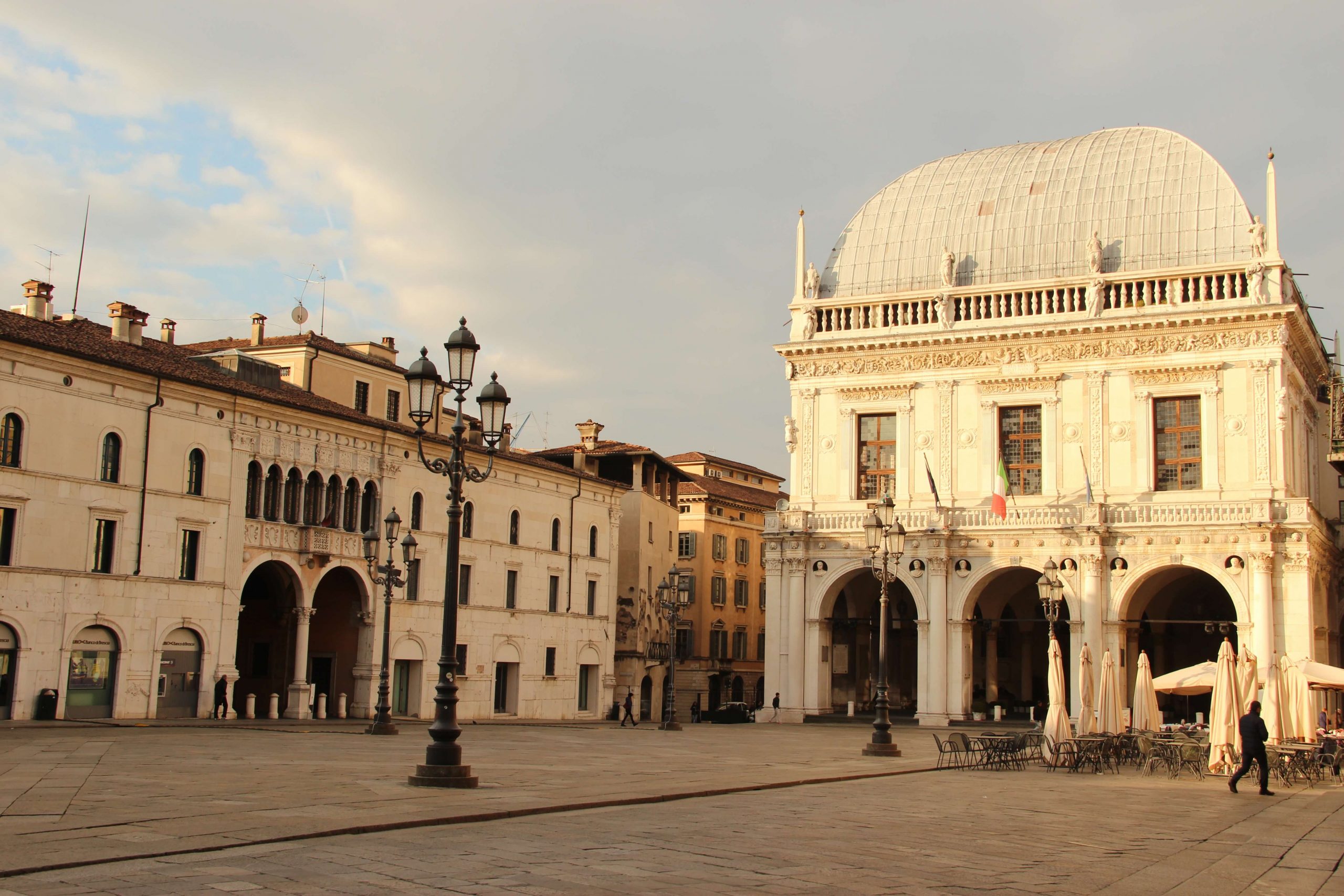
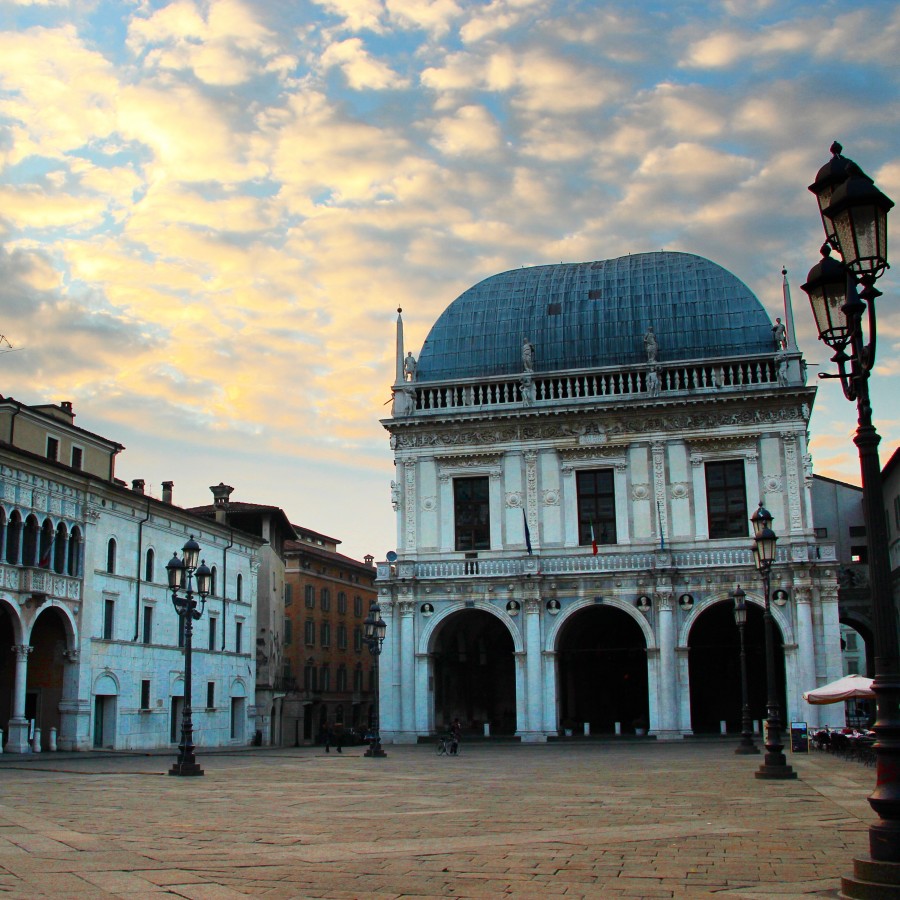
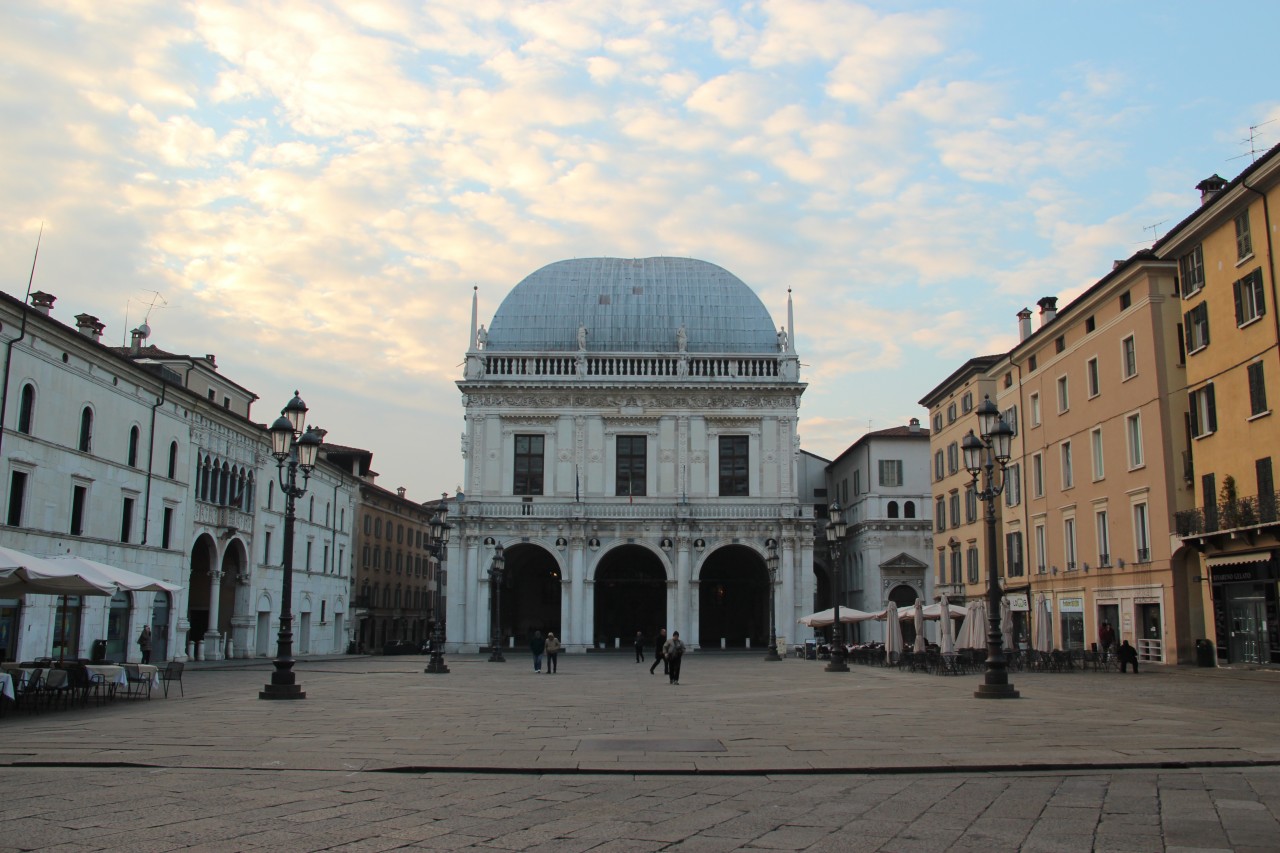
Piazza della Loggia is a large and beautiful square in Venetian style. I came into it from a dark, narrow alley, under the arch of the clock tower, and could not help smiling at so much elegance and purity of line. Besides the Palazzo della Loggia, now the city council, the square holds the two old pawn-broking buildings, their facades set with Roman-era marble inscriptions, and the clock with its automaton figures. During my visit the arches were lit for Christmas, and at sunset an electric blue added its own magic.
The Church of Saints Faustino and Jovita has fine Baroque frescoes, including Tiepolo, and a beautiful Serliana.
The Old Cathedral, known as the Rotonda, is a splendid Romanesque rotunda. Step inside and you read the building’s historical layers down to the early-Christian paving; the crypt is fascinating too. Beside it, the imposing seventeenth-century New Cathedral rises with a soaring dome that recalls St Peter’s. Its main door is one of Brescia’s Holy Doors, opened for the Catholic Jubilee, so during a Holy Year you may find pilgrims pausing to pray before crossing the threshold, as I discovered when I impatiently wondered why the people ahead of me were moving so slowly.


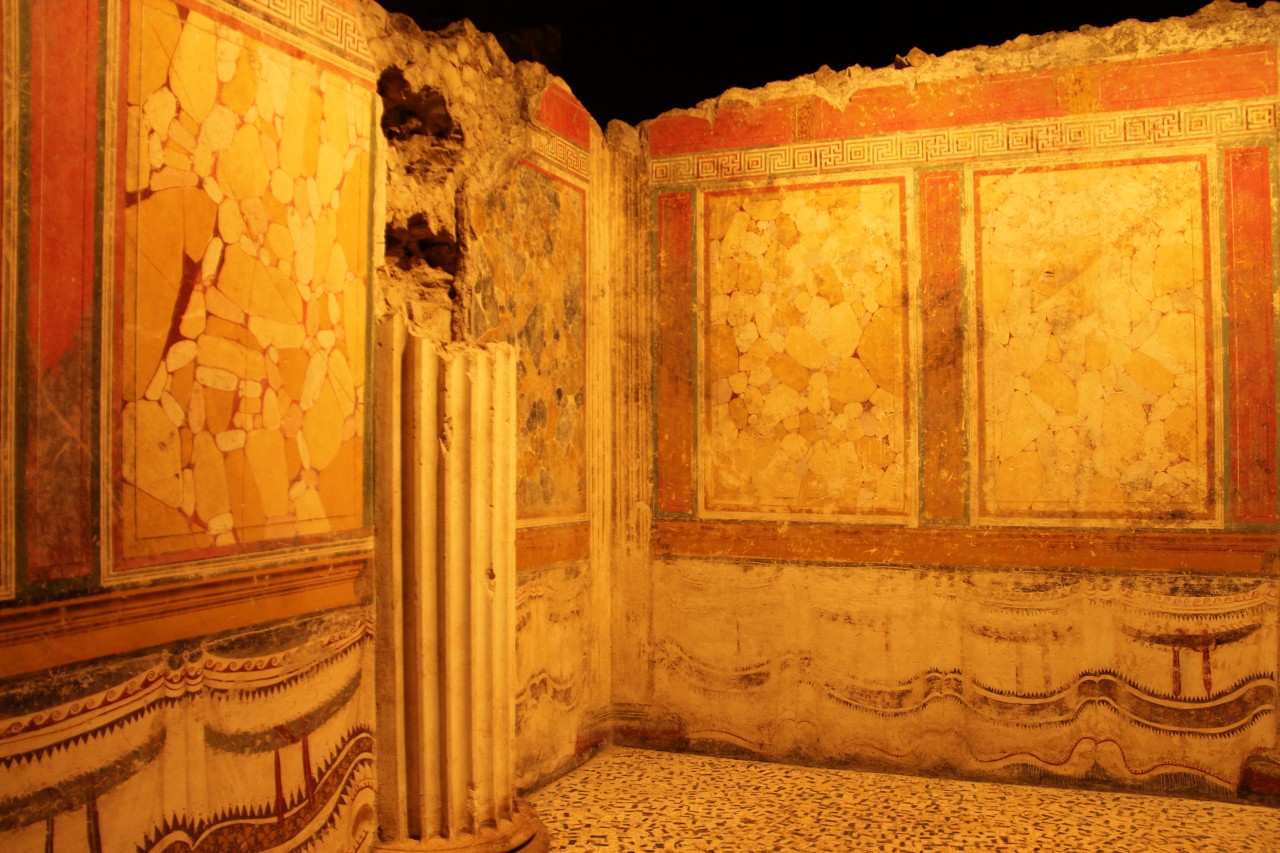


But the piece that left me speechless was the Roman archaeological park of Brixia, a concentration of the Roman Empire outside Rome itself. The majestic Capitolium, the Capitoline temple built by Vespasian, was destroyed in the late fourth century and rediscovered only in 1823; you can now enter and see original decoration, furnishings and coloured-marble floors. A few steps away lies the great Roman theatre, which once held some 15,000 spectators. Most striking of all, for me, was the late-Republican sanctuary, with its frescoed walls, mosaic floors and all the atmosphere of a vanished way of life. It is a UNESCO-listed marvel, and I would go back for it alone.
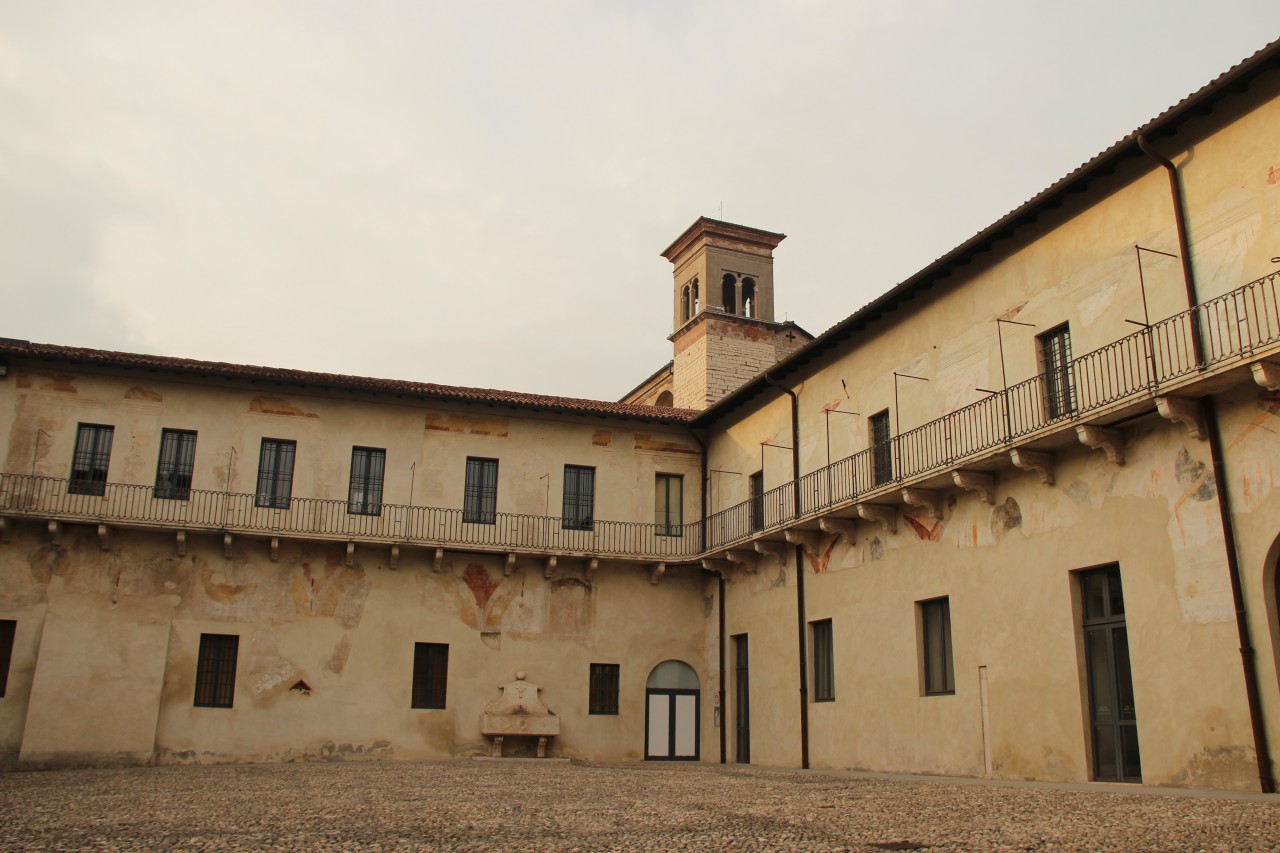
Finally, the Santa Giulia City Museum, set in the Benedictine monastery of San Salvatore and Santa Giulia, traces Brescia from Roman Brixia to the nineteenth century. I especially loved the Roman Domus dell’Ortaglia, the oratory of Santa Maria in Solario, the basilica crypt, the Renaissance cloister and the nuns’ choir. Brescia’s Grand Theatre also deserves a visit, and, given my background, perhaps its own post one day.


Where to stay and eat
I stayed at a small hotel a minute from Piazza della Loggia, in a romantic attic room; as ever with a place I visited years ago, check current options and reviews before booking. Brescia is no place for a diet, and I ate very well: a memorable burger, excellent polenta and delicious fried sage leaves at one osteria near the city museum; a fine dinner of superb wines, cheeses, cured meats and risotto at a family trattoria; and wonderful sandwiches at a tiny, charming wine bar facing the New Cathedral. A decade on, treat these as pointers and ask locally for today’s best tables, but the Brescian table itself never disappoints.
Getting there and a guide
I went by train, as I love to travel slowly and watch the world go by. Check the official Brescia tourism website for current routes and times. Given the city’s richness and historical weight, I genuinely recommend a good local guide to bring it all to life.
Further reading
- The Santa Giulia Museum and Brixia official visitor information
- More of my Italy: Lucca and the Teatro Verdi in Trieste
- This article is also available as a mobile app, via GPSmyCity, for GPS-guided directions
Frequently asked questions
Very much so. Brescia is one of Italy’s most underrated cities, layering Roman, Lombard, medieval, Renaissance, Venetian and twentieth-century history within a compact, walkable centre. Highlights include the UNESCO-listed Roman park of Brixia with its Capitolium and theatre, the Santa Giulia museum, the elegant Piazza della Loggia, and two cathedrals side by side. It sees far fewer tourists than nearby Verona or Milan.
The essentials are the Roman archaeological park of Brixia (the Capitolium, the Roman theatre and the frescoed Republican sanctuary), the Santa Giulia City Museum in its Lombard-era monastery, Piazza della Loggia, and the Old and New Cathedrals. With more time, add the Visconti Castle, the Mille Miglia Museum and the Brescia Underground tours.
Brescia’s monastic complex of San Salvatore-Santa Giulia and its Roman monumental area form part of the UNESCO World Heritage Site “Longobards in Italy: Places of Power (568-774 AD)”, inscribed in 2011, which groups the most important surviving Lombard-era sites across the country. Brescia’s layering of Roman and Lombard remains makes it one of the richest.
Brescia is easy to reach by train, on the main line between Milan and Verona/Venice, so it makes a simple day trip or stopover from either. It also has its own metro line linking the station to the centre. Check the official Brescia tourism website for current connections and timings.
A full day lets you see the historic centre, the Roman park and the Santa Giulia museum, but two days allow a more relaxed visit taking in the castle, the Mille Miglia Museum and the underground tours, and time simply to enjoy the squares and the excellent food.