

Tomorrow is the fifth anniversary of the Cinque Terre Flood. Five years have already passed since the flood that on 25 October 2011 devastated my village.
An event that changed me deeply, in the sense that everything now matters in a relative way. Because the flood brought destruction and death, and I will never forget, and I hope no one else ever will.
On a personal level, though, if I stop for a second and look back, it also brought awareness, constructive anger, determination, friendship, affection, smiles, laughter, and love. Love for a village I came to understand I love as if it were a person. Love for my family, and for old friends and new ones with whom I have been lucky enough to share moments I will not find again.
So, heartfelt thanks to all the people who are, and have been, close to me, and to us.


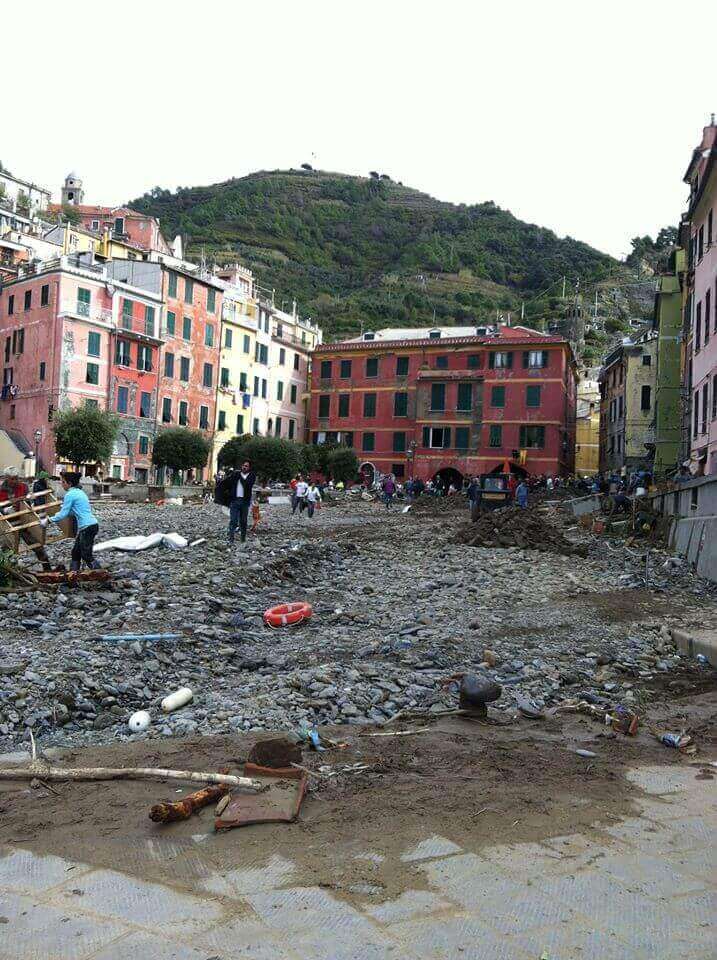
Cinque Terre Flood, Vernazza on 2 November 2011
My thoughts, the week after the Cinque Terre flood.
One week. It has already been one week, and despite the daily horror, a part of me still does not believe it. My village, Vernazza, no longer exists. On 25 October, in a few hours, it was washed away by torrential rain and an avalanche of mud, dirt and debris.
A hundred landslides opened up within minutes and converged along the main road and the stream that runs down from the upper road into the village, dragging into the centre and then into the sea: cars, minivans, asphalt, pipework, the huge gas tank, gardens, dry-stone walls, houses. A few hellish hours in which the lives of the people of this small village were torn apart, and three of them were taken from us.
After an afternoon and a night of terror, during which the village was cut in two by a cascade of mud, we woke to sunshine. A warm, gentle sun, which let us look around and understand: that the debris had reached five to ten metres above the level of the street and the stream, that every ground floor was completely buried, and the railway with them, that there was no electricity, no water, no gas, no phone signal, and that the village was ringed by dozens of landslides still moving. The evacuation of the children and the elderly began by sea. Everyone else began trying to organise what could be organised and recover what could be recovered.
The week flew by, and at the same time felt endless and exhausting, and we all knew this was only the beginning, and that the road ahead would not be a downhill one. Yesterday, a new weather warning and the first structural surveys forced the evacuation of everyone who remained, except for about fifty men who stayed behind to keep watch over Vernazza.
I have not seen the other villages that were hit. But I know they are devastated too, and that, like Vernazza, thanks to a strong population, with the help of volunteers, and with the support of the institutions, they will come back as they were. According to the engineers, it will be very complicated and take a long time for Vernazza. But the village will rise again. Not from the ashes, but from the water and the rock that once saw it come to life and flourish in the first place.
In the coming weeks, we will need willing hands.
If all goes well and the weather allows it, the diggers should clear the main street fairly quickly, and in about ten days, we should begin opening up the ground floors. At that point, volunteers, armed with boots, gloves and a shovel, will be more than welcome.

Solidarity has marked every hour up to now. Help of every kind, and volunteers from everywhere. Hundreds of people have offered homes, food, clothing, materials, equipment, and labour. Thousands of messages of support and encouragement.
For now, “thank you” is the only possible answer.
Thank you so much.


“Up to Vernazza”, the documentary
A few weeks afterwards, Giovanni, a close friend and a colleague from the opera house, came to me from Valencia and offered to film a documentary during the week between Christmas and New Year, when the big emergency marquee was our main square and being together was our strength. A big thank you to him and to Lisa for their work and for the good humour they brought into the village during the filming.
“Up to Vernazza” runs for 54 minutes and tells of horror, of survival, and of the struggle to get up and start again, through the words of some of my fellow villagers who wanted to share their stories.
Vernazza today
Today Vernazza has risen out of the mud, but there is still a great deal to do. Walk a few hundred metres behind the railway station, outside the village, and you will see the marks of the devastation still: on the walls, along the stream, on what is left of some of the houses and the old mills, in the landslides, and in the road that is still not safe.
For anyone who would like to follow the progress and the projects still underway, I recommend the official website of Save Vernazza, the non-profit organisation founded by three extraordinary American women whom I am lucky enough to count among my friends.
If you want to come and discover my village, I would suggest doing it out of season, or enjoying it in the morning before ten, or after six in the evening, when the flow of mass tourism is not there.


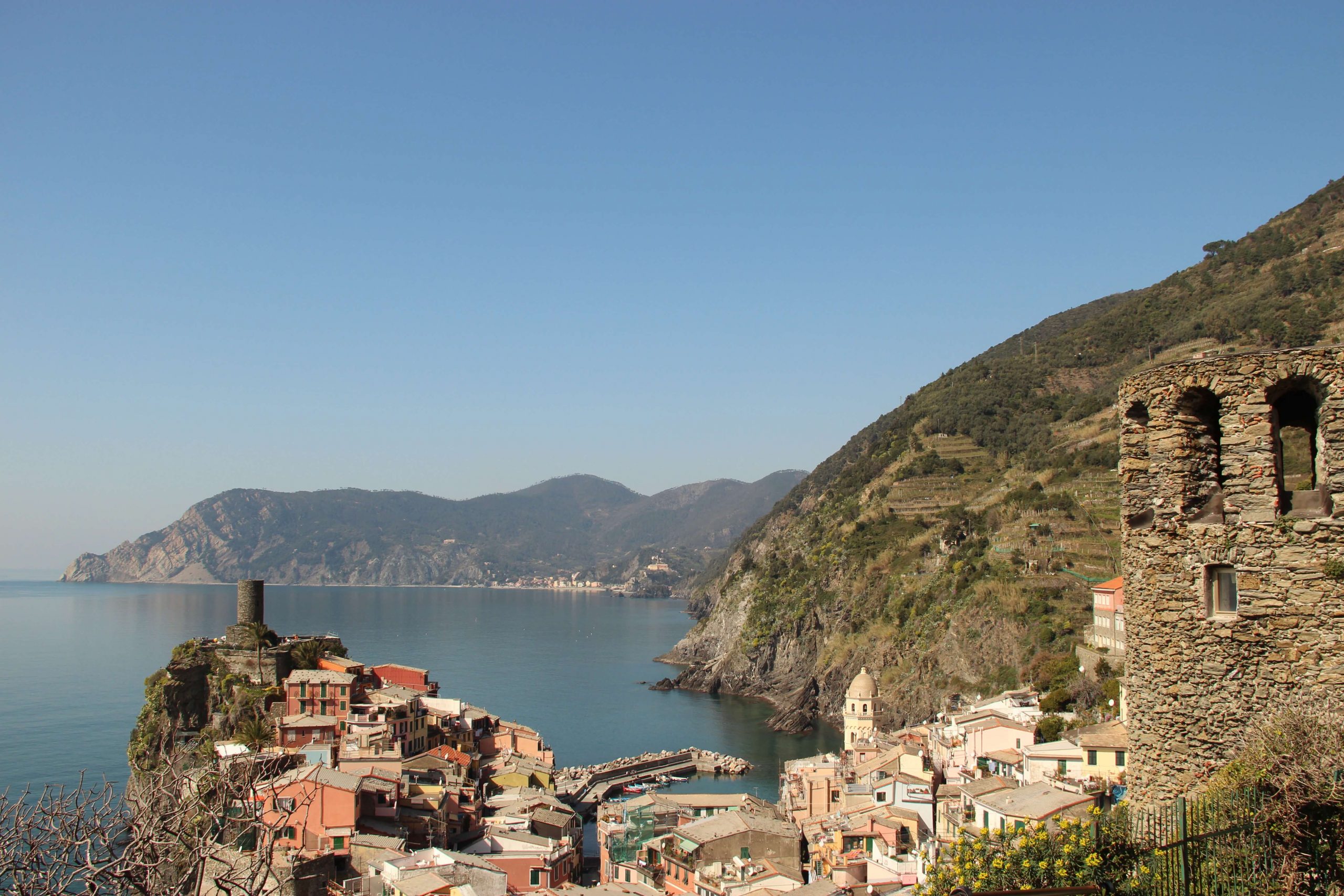
Some time ago I even wrote a different sort of itinerary around Vernazza, following my own memories and the scents of the village. A very personal route, and one that has never yet disappointed a friend.
If you do come to Vernazza, let me know.