

I had heard about Saturnia for years: friends in love with the place, others longing to go, the Italian television presenter Alberto Angela waxing lyrical, even a passage in a Niccolò Ammaniti novel. As usual, though, I was keener on far-flung destinations than on the ones close to home, and I kept putting it off.
Then I discovered the Maremma, the wild, beautiful south of Tuscany, and fell for it completely. In autumn and winter especially it is deeply moving, all silence, warm colours and history, and I decided to give it a proper week, basing myself at Borgo Magliano to explore the Argentario, the historic villages, and at last the thermal baths of Saturnia, in the comune of Manciano.
A little myth
Reading up on Saturnia, I learned that the Etruscans and Romans already knew and prized its hot springs, and that centuries of legend had grown up around them, exactly the kind of detail I love. The Romans told it that Jupiter, hurling a thunderbolt at Saturn, missed and struck the earth, and from that spot a miraculous hot spring burst forth. In the Middle Ages, of course, such wonders were read the other way, and the steaming waters were tied to the Devil, witchcraft and satanic rites.
Two ways to take the waters
At Saturnia you have two ways to be soothed by the sulphurous water, which flows at a constant 37.5 degrees: the free natural waterfalls, or the smart spa resort a little upstream.
The free natural falls
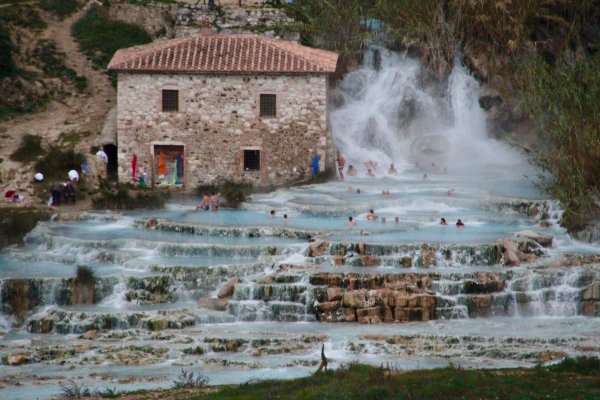
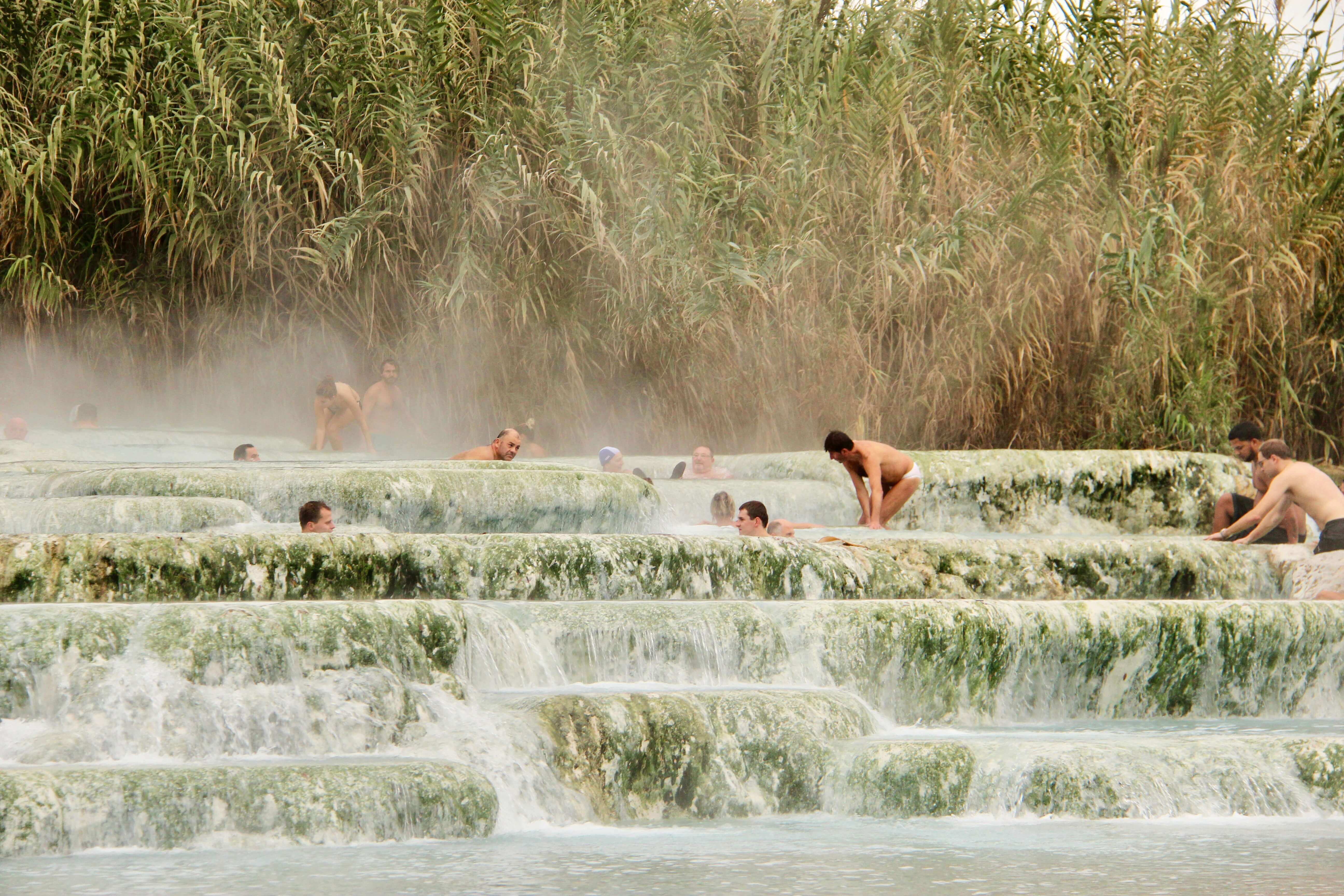
The Cascate del Mulino, the mill falls, are the famous ones: a cascade of little travertine pools carved by the water itself over millennia, next to an old mill. They are extraordinary, the kind of place that looks built for postcards, and you glimpse them already from the road coming down from Manciano.
The pools are open all day and free, and even on a rainy winter’s day you will find someone blissfully soaking, because floating in warm water with the steam blurring the landscape really is a joy. A few practical notes: there is a car park a few hundred metres away, so wear flip-flops and a bathrobe over your swimsuit before you leave the car, and carry a plastic bag for the wet, sulphur-smelling things afterwards. For a night soak, bring a torch, the path is very dark. Because the falls are free and famous, they can get crowded, and access has at times been regulated to protect the site, so check the current situation locally before you go, and treat this fragile natural place gently.
The Terme di Saturnia Spa & Golf Resort
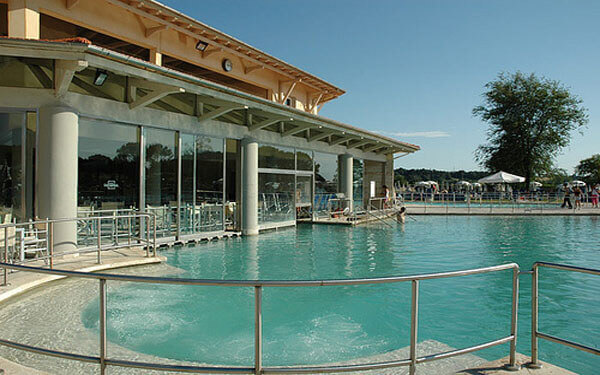
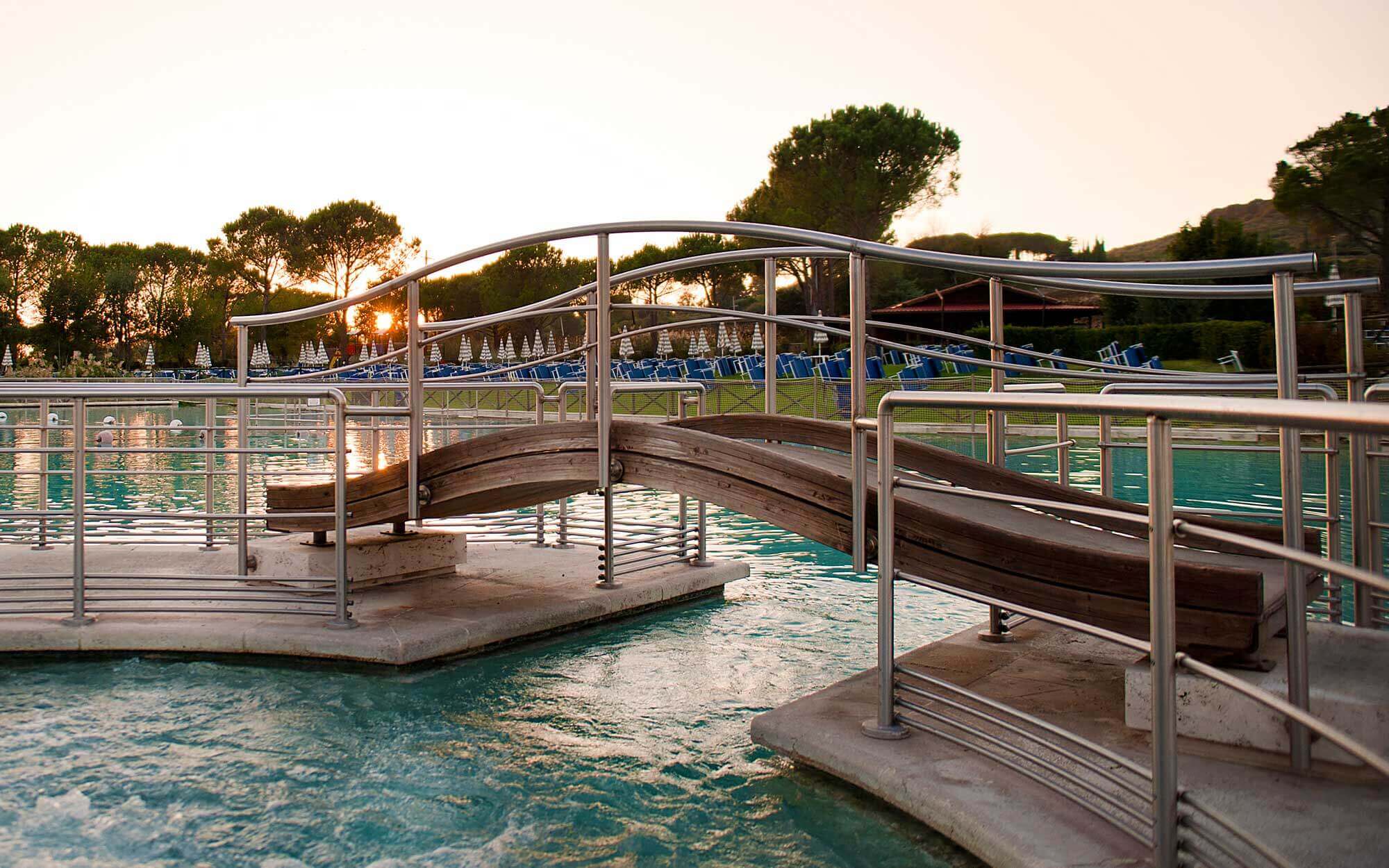
A few hundred metres upstream, right on the volcanic crater the water rises from, sits the Terme di Saturnia Spa & Golf Resort, a luxury hotel, spa and golf course in a beautiful park below the village. It is convenient and well run, if a little sterile for my taste, with large pools, indoor areas, relaxation zones and, crucially, changing rooms, lockers and showers, which you will want, because the sulphur is wonderful but the smell gets into everything. Prices and opening hours change with the season, so check the current rates and times before you visit; there is usually a full-day and a cheaper afternoon ticket, and the historic pool is reserved for hotel guests or an extra fee.
The sulphurous waters have long been used for skin and respiratory conditions, and specific spa treatments (mud and bath therapies, inhalations) are offered under medical supervision; for Italian residents some are covered once a year by the national health service, and others are chargeable, so ask at the spa’s medical desk if you are interested. I looked into it for my own skin, but as with anything health-related, take the spa’s or your doctor’s advice rather than mine.
A few practical reminders for either option: pack a swimsuit, flip-flops, a towel, and your own shampoo and shower gel, and leave metal jewellery at home, because the sulphur tarnishes it in no time.


The village and around
The village of Saturnia itself, of Roman origin, is worth a wander: I liked the Rocca Aldobrandesca along the old walls, the archaeological museum, and the church of Santa Maria Maddalena. For a meal, I loved a small, cosy trattoria on Via Mazzini where the owner cooks generous Maremma dishes with a fine wine list.
As a base, Borgo Magliano served me beautifully, central, airy, with a restaurant whose dinners were a pleasure evening after evening. The Maremma rewards slow, off-season travel more than almost anywhere in Tuscany, and Saturnia is the perfect excuse to discover it.


Frequently asked questions
Yes, the natural Cascate del Mulino (mill falls) are free and open all day, a cascade of warm travertine pools next to an old mill. There is also the paid Terme di Saturnia Spa & Golf Resort a little upstream, which offers pools, treatments and facilities. Many visitors do both. Because the free falls are popular and fragile, access is sometimes regulated, so check locally before you go.
The sulphurous spring water flows at a constant 37.5 degrees Celsius year-round, which is why people bathe even in winter, when the steam rising into the cold air is at its most atmospheric. The warmth and the mineral content are what have drawn people here since Etruscan and Roman times.
Saturnia is lovely year-round thanks to the constant water temperature, but autumn and winter are especially magical and atmospheric, with fewer crowds and steam rising in the cold air. Summer is busiest. Early morning or a weekday, out of peak season, gives you the free falls at their calmest.
Bring a swimsuit, flip-flops, a towel and a bathrobe (change before leaving the car park), your own shampoo and shower gel, and a plastic bag for wet, sulphur-smelling clothes. Leave metal jewellery at home, as sulphur tarnishes it quickly, and bring a torch if you plan a night soak, as the path is dark.
The Maremma of southern Tuscany rewards a few days’ slow exploration. Basing yourself in one of its villages or resorts, as I did at Borgo Magliano, lets you combine the Saturnia baths with the Argentario coast, the historic hill villages and the excellent local food and wine, ideally out of the busy summer season.
Further reading
- More of the Maremma: the wines of southern Tuscany
- Elsewhere in Tuscany: visiting Lucca and the archaeology of Baratti and Populonia
- The book that first sent me looking: Niccolò Ammaniti’s Steal You Away (affiliate link; I may earn a small commission at no extra cost to you)