

Rome is not just a city. It is a giant open book, written in stone, dust, marble, memory, and myth. Every street seems to whisper, every ruin seems to breathe, and every monument feels like a page from a story that refuses to end. When we talk about seeing Rome through the eyes of historians and explorers, we are not simply talking about sightseeing. We are talking about entering a conversation that has lasted for more than two thousand years.
Think about it. How many cities can make you feel like you are walking beside emperors, poets, soldiers, pilgrims, archaeologists, and dreamers all at once? Rome does exactly that. One moment, you stand near the Colosseum and imagine the roar of ancient crowds. Next, you turn a corner and find a quiet church, a Renaissance fountain, or a narrow lane that looks almost untouched by time. Rome does not reveal itself all at once. It opens slowly, like an old map under careful hands.
Historians help us understand what Rome meant. Explorers help us feel the wonder of finding it again. Together, they give us a richer, deeper way to experience the Eternal City.
Ancient Historians and the Rome They Remembered
To see Rome through historians’ eyes, we need to understand that ancient historians were not neutral cameras. They were storytellers, moral teachers, political thinkers, and sometimes sharp critics. They did not only ask, “What happened?” They also asked, “What does this mean for us?”
Roman historians often wrote with a sense of drama. They saw history as a stage where courage, greed, loyalty, betrayal, and destiny performed their roles. That is one reason their works still feel alive today.
The Historian’s Rome: Between Fact and Legend
But here is the tricky part: Rome’s history often straddles the line between fact and legend. The famous story of Romulus and Remus being raised by a she-wolf is not history in the modern scientific sense. Yet it mattered deeply to Romans because it explained who they believed themselves to be: strong, chosen, fierce, and born of struggle.
So, should we ignore legends? Not at all. Legends are like stained-glass windows. They may not show the world exactly as it was, but they reveal how people understood their world. The story of Rome’s founding tells us about Roman values: courage, competition, divine favour, and the painful price of power.
Researchers of American history study the past with the same careful attention to detail. They compare government records, letters, newspapers, speeches, maps, photographs, oral histories, and archaeological evidence to understand how events really happened. To make these discoveries easier to remember, educators often turn research findings into US history-based trivia questions that help learners connect important facts with larger historical themes. Was it a document shaped by political pressure? Did one group’s story receive more attention than another’s? These questions matter because American history is not one simple story; it is a complex journey of freedom, conflict, innovation, inequality, reform, and national identity. In the same way, Rome’s history must also be studied from many angles, because the Eternal City was not only an empire of marble and power, but also a place of myths, politics, battles, laws, faith, and everyday human life.
When we walk through Rome with historians in mind, we learn to look twice. A triumphal arch is not only a pretty monument. It is also a political message carved in stone. A temple is not only a religious building. It is a sign of wealth, identity, and public power. Even a broken wall can speak, if we know how to listen.
Livy, Tacitus, and the Drama of Roman Power
Livy, one of Rome’s great historians, looked back at the city’s early centuries with admiration and concern. In his massive history of Rome, he told stories of brave citizens, wise leaders, dangerous pride, and public virtue. For Livy, Rome’s greatness came from discipline, duty, and sacrifice. But he also worried that luxury and moral weakness could damage the city from within (Livy, Ab Urbe Condita, Preface).
Then there is Tacitus, whose view of imperial Rome feels darker and sharper. Tacitus wrote about emperors, senators, fear, and the cost of power. In works such as the Annals and the Histories, he portrayed Rome as a place where public glory often concealed private terror. His Rome was not only marble and triumph. It was also silence, suspicion, and political danger.
When we read Tacitus, we start to see the imperial city differently. The grand palace is no longer just beautiful. It becomes a symbol of control. The Senate is no longer just a respected institution. It becomes a room where men may speak carefully because one wrong word could destroy them. Through Tacitus, Rome becomes a mirror of power itself.
Other writers add more colours to the picture. Suetonius, in The Twelve Caesars, gives us vivid portraits of Roman rulers, from Julius Caesar to Domitian. He includes public achievements, private habits, rumours, scandals, and strange details. Plutarch, writing in Greek, compares Roman and Greek leaders to explore character and morality. Together, these historians turn Rome into a human drama, not just a political machine.
Rome as a Living Archive of Human Ambition
Rome has always been more than buildings and ruins. It is a living archive of human ambition. It shows what people can build when they dream big, fight hard, organise well, and sometimes reach too far. From its traditional founding date in 753 BCE, linked to the legend of Romulus and Remus, Rome grew from a small settlement on the Tiber River into the heart of a huge empire (Livy, Ab Urbe Condita, Book 1).
That story alone feels almost impossible, doesn’t it? A city begins with shepherds, kings, and myths, then becomes a republic, an empire, a spiritual centre, and finally a modern capital. Rome changes masks across the centuries, but the face underneath remains powerful.
For historians, Rome is a treasure chest. It offers political lessons, military strategies, social conflicts, engineering wonders, and moral warnings. The Roman Republic showed how citizens, laws, and institutions could shape public life. Yet it also showed how corruption, inequality, and ambition could weaken that same system. The Roman Empire, meanwhile, displayed extraordinary power, but it also proved that even the strongest structures can crack from the inside.
For explorers, Rome has often felt like a city half-buried and half-awake. Imagine arriving in Rome centuries ago and seeing broken columns rising from the ground like the bones of giants. Imagine weeds growing over temples, cattle wandering through the Roman Forum, and artists sketching ruins under the Italian sun. To an explorer, Rome was not dead. It was sleeping.
And maybe that is why Rome still pulls us in. It is not frozen in the past. It is layered. Ancient temples became churches. Pagan spaces became Christian landmarks. Imperial roads became tourist paths. Rome does not erase history; it stacks it like a tower of stories.
Explorers, Travellers, and the Wonder of Rediscovery
Explorers came to Rome in many forms. Some were pilgrims searching for sacred places. Some were artists chasing beauty. Some were scholars hunting inscriptions and manuscripts. Others were wealthy travellers on the Grand Tour, a journey through Europe that became popular among young aristocrats from the 17th to the 19th centuries.
For these travellers, Rome was both a destination and a dream. They came with books in their bags and expectations in their minds. Many had read ancient authors before seeing the city. So when they finally stood in the Forum or before the Pantheon, they were not just looking at stone. They were meeting an old idea face-to-face.
The Pantheon is a perfect example. Built in its current form under Emperor Hadrian in the 2nd century CE, it amazed visitors with its huge dome and open oculus. Even today, standing inside feels almost unreal. The circle of light moves across the interior like a slow, silent clock. For explorers and architects, the Pantheon was proof that ancient Rome had mastered not only engineering but also atmosphere.
Then there is the Colosseum, completed under Emperor Titus in 80 CE, according to ancient sources such as Suetonius (Life of Titus). To modern visitors, it is one of Rome’s most famous landmarks. To earlier travellers, it was a mighty ruin, damaged but still proud. Its broken arches seemed to say, “Look how high humans can rise, and look how much time can take away.”
During the Renaissance, Rome became a workshop of rediscovery. Artists and architects studied ancient ruins to learn proportion, balance, and beauty. The city inspired figures such as Michelangelo, Raphael, and, later, countless painters, writers, and archaeologists. Rome became a bridge between the ancient and the modern world.
Explorers also changed how Europe imagined the past. When they drew ruins, collected objects, copied inscriptions, and wrote travel accounts, they helped turn Rome into a global symbol of history. Of course, their views were not always perfect. Some romanticised the city. Some misunderstood what they saw. Some removed artefacts in ways we would question today. Still, their curiosity helped preserve attention on Rome’s ancient heritage.
In a way, explorers gave Rome a second life. Historians remembered it through words. Explorers rediscovered it through footsteps.
Walking Rome Today with Old Voices in Your Ear
What does all of this mean for us today? It means that visiting Rome can become much more than checking famous places off a travel list. You can walk through Rome as a modern explorer, guided by ancient voices.
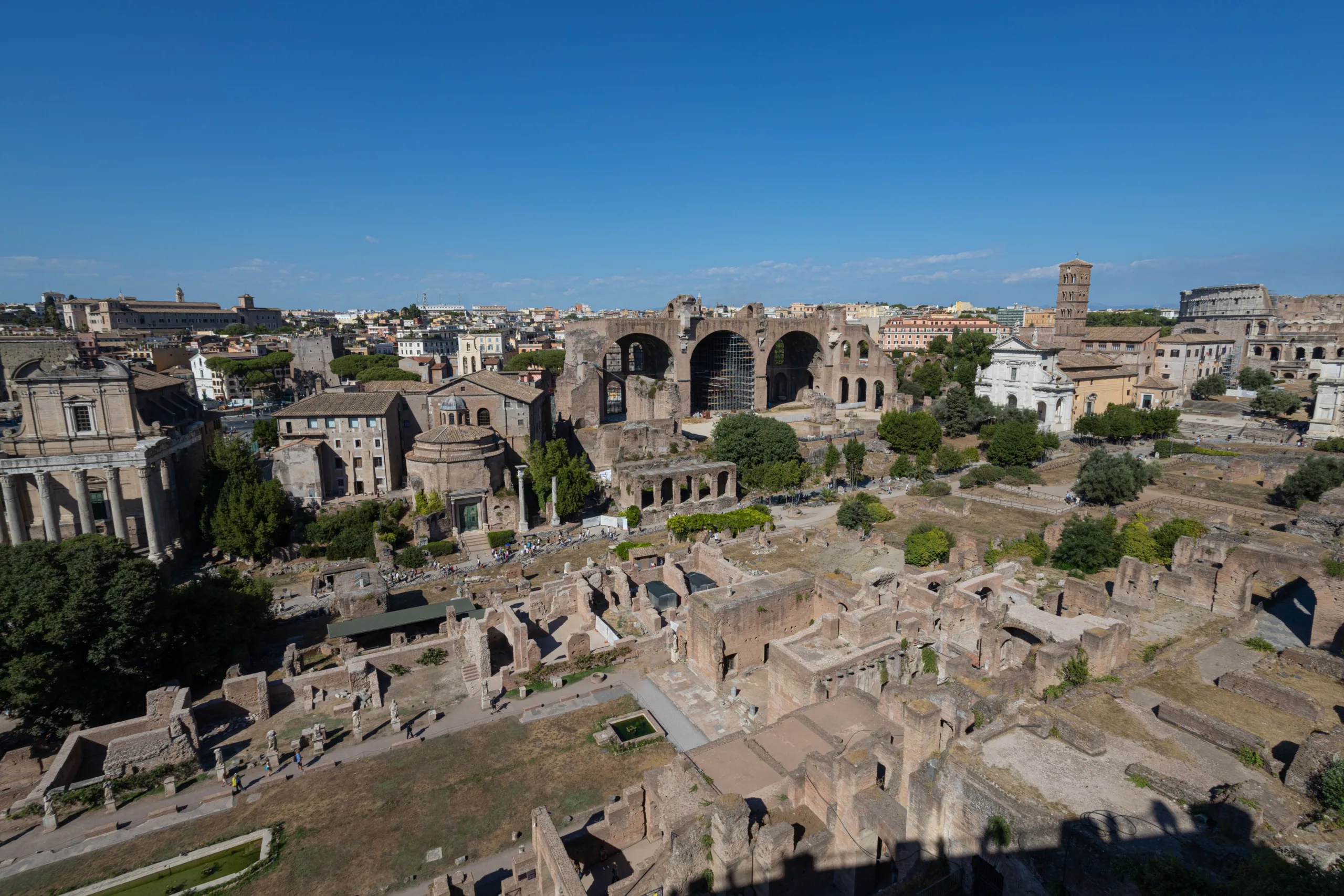
Start with the Roman Forum. At first glance, it may look like a confusing field of stones, columns, and fragments. But with a historian’s imagination, it becomes the heart of public life. This was where speeches were made, trials were held, victories were celebrated, and political careers rose or fell. The Forum was not quiet in ancient times. It was loud, crowded, dusty, and alive.
Then visit the Palatine Hill. According to tradition, this is where Romulus founded the city. Later, it became the home of emperors. The word “palace” even comes from “Palatine.” Isn’t that amazing? One hill gave its name to royal homes across the world. Standing there, you can feel how myth and power share the same ground.
The Capitoline Hill offers another layer. In ancient Rome, it was a religious and political centre. Today, it holds museums filled with ancient art and artefacts. The famous bronze statue of Marcus Aurelius, preserved because people once believed it represented a Christian emperor, shows how history can survive by accident as much as by planning.
Even Rome’s streets teach lessons. Walk along the Via Appia, one of the great Roman roads, and you begin to understand how Rome connected its world. Roads were not just paths. They were arteries of empire. Soldiers, merchants, officials, and messages moved along them. The Roman world stayed together because movement was possible.
And then there are the catacombs, churches, fountains, piazzas, and bridges. Each one adds another voice. Christian pilgrims saw Rome as a sacred city. Renaissance artists saw it as a school of beauty. Archaeologists saw it as a puzzle. Modern travellers see it as a place where the past feels strangely close.
That is the magic of Rome: it lets many versions of itself exist at once. You can admire it as a tourist, study it as a historian, question it as a citizen, and feel it as a human being.
Why Seeing Rome Through Historians and Explorers Still Matters
Seeing Rome through the eyes of historians and explorers matters because it teaches us how to look deeply. In a fast world, we often glance and move on. Rome asks us to slow down. It says, “Look again. This stone has a story. This ruin has a memory. This street has carried centuries.”
Historians remind us that Rome was built by real people, not legends alone. It was shaped by workers, enslaved people, soldiers, women, children, politicians, poets, builders, and migrants. Explorers remind us that wonder is also a form of knowledge. Sometimes curiosity opens doors that facts alone cannot.
Rome also warns us. It tells us that power can create beauty, but it can also create suffering. It shows us that republics need care, laws need trust, and greatness without wisdom can become dangerous. At the same time, Rome inspires us. It proves that ideas, art, language, law, and architecture can travel far beyond their own age.
So, the next time you imagine Rome, do not picture only a postcard. Picture Livy searching for moral lessons in the city’s past. Picture Tacitus watching power with suspicious eyes. Picture a Renaissance artist measuring an ancient column. Picture a traveller standing before the Colosseum at sunset, speechless. Picture yourself there too, not as a passive visitor, but as part of a long human chain of looking, asking, and wondering.
In the end, Rome is not just seen with the eyes. It is seen with memory, imagination, and curiosity. Historians give us the map, explorers give us the excitement, and the city gives us the journey. To see Rome through their eyes is to understand that history is not dead ground behind us. It is a road under our feet, still leading forward.