


Among the greatest travel emotions I have known, I have to count Sigiriya, the extraordinary site that drew me into the very heart of Sri Lanka.
If the tea plantations were what made me choose ancient Ceylon as a destination, it was this towering volcanic rock that pulled me inland, to the island’s centre. I did not love everything I found there, and there are monasteries and sites I would not visit twice. But if you travel to the “teardrop of India”, I really do recommend building in a stage at Sigiriya to discover the central region. Let me take you through it, with an archaeologist’s eye, since that is what I trained as, and a traveller’s honesty.
Sigiriya
Sigiriya is best known as Lion Rock, a spectacular magmatic column rising more than 350 metres. In the late fifth century AD, King Kasyapa built his palace here, on the ruins of an earlier Buddhist monastery. For the Sinhalese it is the eighth wonder of the world, and I have to admit it is an exceptional place.
Given the total lack of shade and the fierce heat, plan your visit for early morning or late afternoon, and start at the museum by the entrance to grasp the value and history of a site that, after centuries of neglect, was rediscovered in 1907 by the Briton John Still. To get the most from it, I also relied on the illustrated booklet Story of Sigiriya by the archaeologist Paranavitana, which unlocks the rock’s mysteries and let me daydream, as I love to do in a place like this.

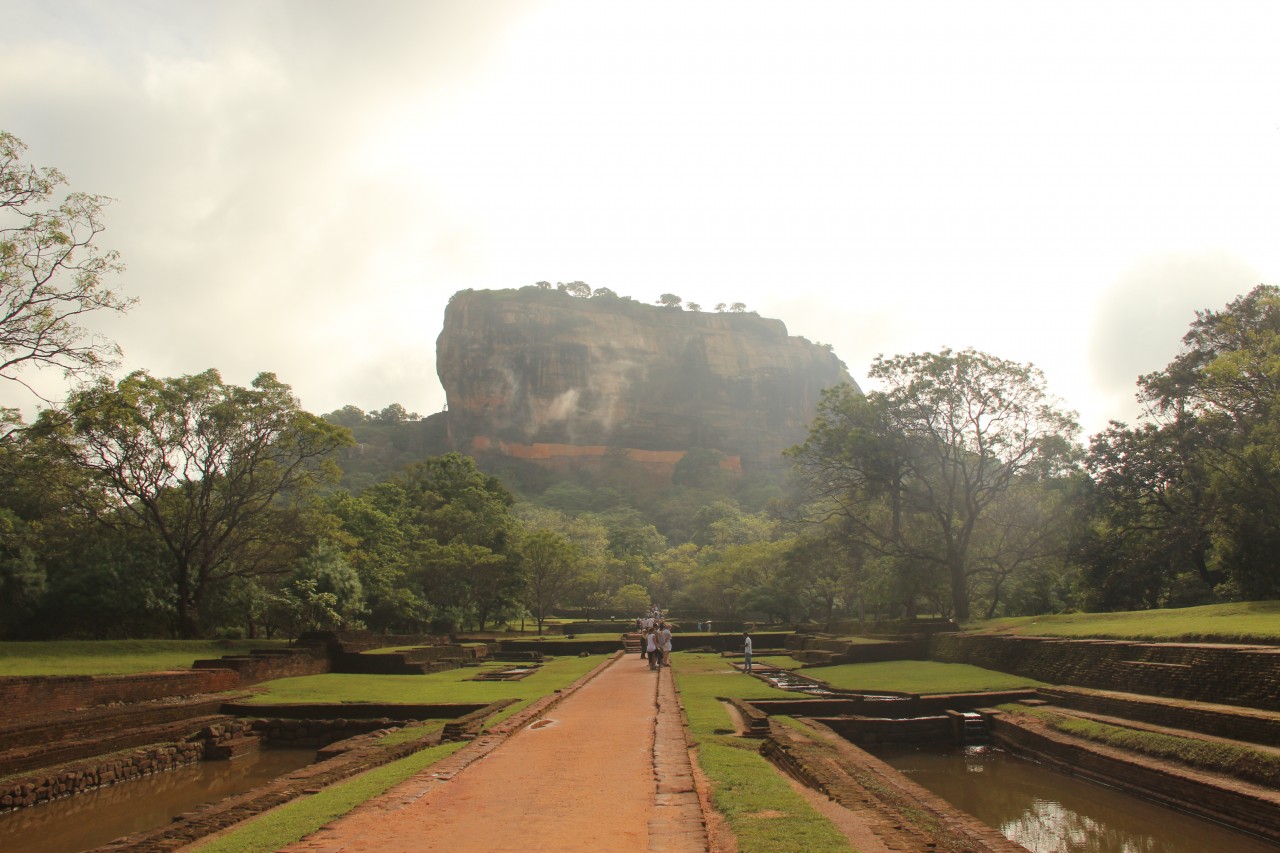


According to the story, King Kasyapa murdered his father to take the throne, and, fearing his brother’s revenge, built his palace on this rock, fortified it and ringed it with a moat said to hold crocodiles. To glorify his new capital he adorned it with roof gardens, water features and hundreds of frescoes, some still visible, though sadly damaged by careless visitors over the years.
From the museum drawings and the books, Sigiriya echoes the architectural logic of the Forbidden City, its buildings once topped with pagoda-like roofs and protected by outworks, while the gardens, crossed by canals and fountains, made me think of a small, ancient Versailles. Beautiful.
The climb to the summit is not difficult, and it reveals the spirit of the monastic site the rock became for centuries after Kasyapa was deposed by the brother he had wronged. Halfway up you reach a panoramic terrace where the building’s grand entrance once stood: the great lion’s head that gives the site its name. Today only the paws remain, but they let you imagine the majesty of that original fifteen-metre-high gateway. Climbing the modern metal stairs that have replaced the old brick ones, you reach the terrace that once held the royal palace. The view up there is spectacular, as are the ancient pools. I felt as though I stood on the roof of the world.
A note on conduct, and I say this thinking about the kind of traveller I want to be. All along the route you will see signs asking for silence, officially to avoid disturbing swarms of wasps. Whether or not that is the real reason, treating a site like this quietly, and treading lightly, is simply how it deserves to be met, and how it stays worth visiting for those who come after us.
Useful information:
- Foreigners pay a considerably higher entry fee than Sri Lankan nationals, with reduced rates for children. Prices rise regularly, so check the current fee before you go.
- The site is not a religious one, so you need not go barefoot or cover your shoulders and legs.
- Bring plenty of water for the climb.
Pidurangala Rock
From the summit of Sigiriya I could see its younger sister, Pidurangala Rock, home to an ancient, vanished Buddhist monastery. The climb takes only a couple of hours, and the view of Lion Rock from that angle is striking, though honestly it is worth it only if you have time to spare. Many travellers now climb Pidurangala precisely for the classic view of Sigiriya itself.
Polonnaruwa
Polonnaruwa is a two-hour drive from Sigiriya, I did it by tuk-tuk, a modern town famous for its archaeological park, once a powerful royal capital. A UNESCO World Heritage Site since 1982, it is vast and undoubtedly one of the best-preserved I saw anywhere in Sri Lanka.


The ruins lie within concentric walls, scattered through gardens and woodland. At the centre stood the royal palace of Parakramabahu I, and, further north, the so-called Quadrangle, home to the country’s most important religious buildings. The Gal Vihara especially struck me: four colossal Buddhas in different postures, carved directly from the living rock. To the west spreads the Parakrama Samudra, the “Sea of Parakramabahu”, a vast artificial lake that has watered and protected the city for centuries.
Useful information:
- Foreigners pay an entry fee; check the current rate.
- This is a religious site, so cover your arms and legs and remove your shoes. I recommend socks to soften the walk on the gravel around the monuments.
Ritigala
The ruins of Ritigala are a must when you are near Sigiriya. For a few hours they made me feel like Indiana Jones.
At the entrance, which is also a station of Sri Lanka’s Department of Archaeology, you leave only a small donation to enter, one of very few visitors venturing into this ancient monastery swallowed by the forest.


Everything here is striking: the stone bridges, the unevenly rising stairways, the path snaking through the trees, boulders scattered in emerald green, the calls of monkeys, the sound of the river. The mountain is woven through with folktales, too. It is said the Sansevieria growing here can cure every human ill and lengthen life. I looked, but could not find it.
Dambulla
Dambulla is a busy, chaotic town, home to what I couldn’t help calling “the praise of kitsch”: the glittering Golden Temple museum that also forms the entrance to the most famous cave monastery in Sri Lanka.


I will be honest, the museum itself is a sad, poorly displayed collection of icons and vestments, and the gaudy entrance made it genuinely hard for me to feel the spirituality of the place. The monastery higher up the hill is another matter, imposing with its white colonnades and decorated gables. It consists of five cave shrines with painted ceilings, still busy with local worshippers. The exterior impressed me greatly; the caves themselves, I confess, left me a little cold. Not everything moves everyone, and I would rather tell you so.
Useful information:
- Foreigners pay an entry fee; check the current rate.
- This is a religious site, and entry is more strictly controlled than elsewhere.
- Bring water for the uphill walk, and note you can leave luggage at the temple entrance for the duration of the visit.
A traditional village
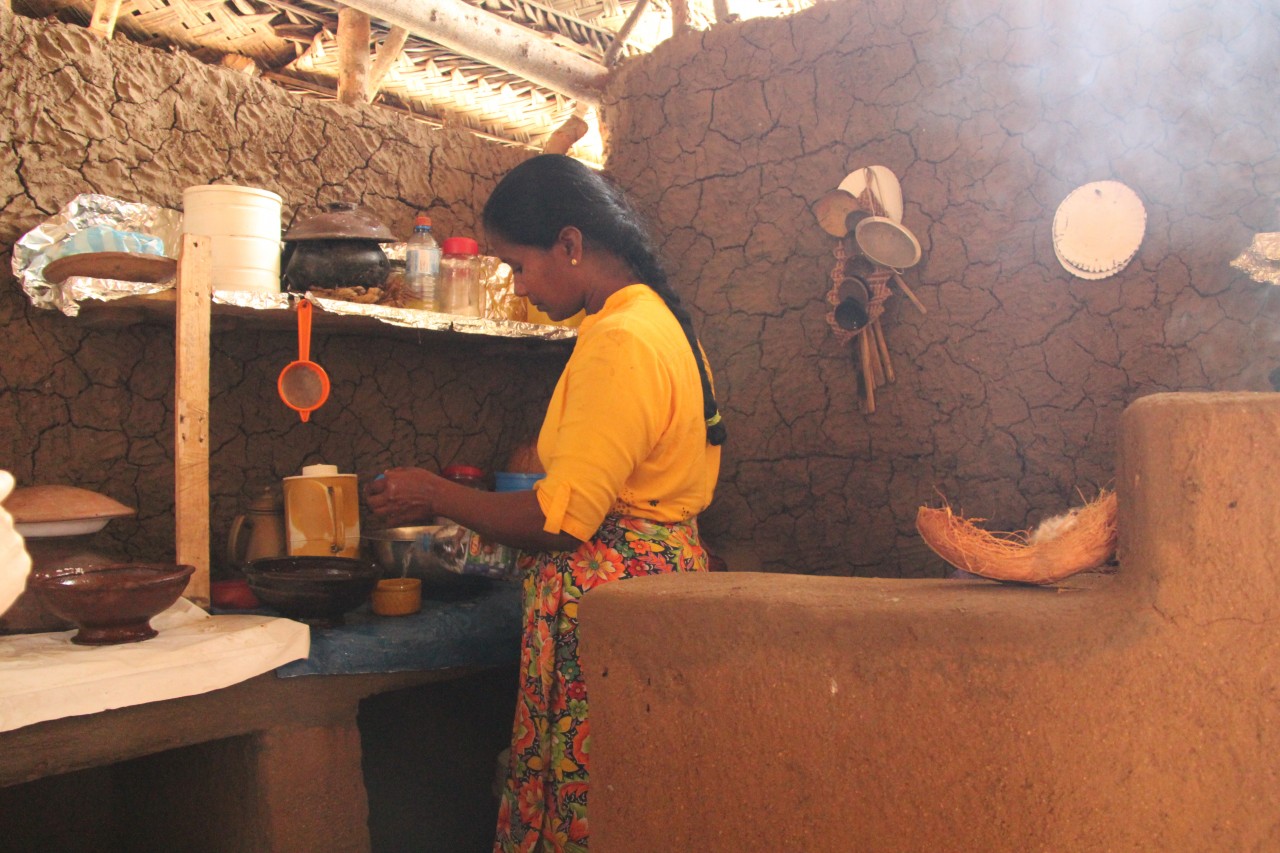
Along the road between Dambulla and Sigiriya there is a traditional village visit. It is plainly an attraction laid on for Westerners, and some travellers will dislike the idea on principle, but I was glad to see how people still live in rural Sri Lanka, what they eat and how they get around. Between the ox-cart ride, the canoe crossing of the river and a snack in a hut, allow a couple of hours. (If you are not vaccinated against hepatitis A, I would give the food itself a miss.)




Further reading
- My complete guide to independent travel in Sri Lanka
- The hill country and Ceylon tea
- Safari at Yala National Park
- Ratnapura and the gemstone mines
Frequently asked questions
Sigiriya, or Lion Rock, is a UNESCO-listed archaeological site in central Sri Lanka: a massive volcanic rock over 350 metres high, on top of which King Kasyapa built a royal palace in the late fifth century AD. It is famous for its ancient frescoes, its mirror wall, the giant lion’s paws that guard the final ascent, and the water gardens at its base, and it is often called the eighth wonder of the world by Sri Lankans.
Both have their case. Sigiriya itself gives you the archaeology, the frescoes, the lion’s paws and the palace ruins on top, and is the main event. Neighbouring Pidurangala is a rougher, cheaper climb that rewards you with the best view OF Sigiriya rising from the jungle. If you have time, do both; if you must choose, Sigiriya for the history, Pidurangala for the photograph.
The area is rich in sites: Polonnaruwa, a vast and well-preserved ancient royal capital and UNESCO site with the beautiful Gal Vihara Buddhas; the atmospheric forest monastery of Ritigala; and the Dambulla cave temples, five painted cave shrines. Together they make the “Cultural Triangle” of central Sri Lanka, easily explored over a few days from a base near Sigiriya.
The drier months from roughly December to April are the most comfortable for central Sri Lanka. Whatever the season, visit Sigiriya early in the morning or late in the afternoon to avoid the worst heat and the midday crowds, as there is almost no shade on the rock.