


Why a guide to Italian street food? Because, travelling my own country solo, I kept rediscovering that some of the best food in Italy is not in smart restaurants at all, it is out on the street, just as it is in my own Liguria. From market stalls to tiny kiosks, Italian street food is a delicious, affordable way to taste the real character of each region: crisp arancini in Sicily, a slice of pizza al taglio in Rome, a warm piadina in Romagna, every bite a piece of local history.
So let us travel from north to south, tasting the specialities that grew, mostly, out of cucina povera, Italy’s ingenious peasant cooking.
Friuli Venezia Giulia
Putizza, a festive sweet of Trieste, makes a lovely snack on the go: a richly flavoured rolled cake from the Karst, filled with dried fruit and nuts, close cousin to its Slovenian counterpart.
Trentino-Alto Adige
The Brezel (pretzel) is the classic South Tyrolean bread, shared with Austria and Germany: crunchy outside, soft inside, scattered with coarse salt. And a panino con würstel is a must in Bolzano, served neatly on wax paper with the bread alongside, from Meraner (beef and pork, spiced) to white, unsmoked Weisswurst, perfect with a pretzel.
Aosta Valley
Tegole are delicious round, flat, crumbly biscuits of almond, hazelnut, butter, egg white and flour, “roof tiles” named for their shape, wonderful at breakfast or with an afternoon coffee.
Lombardy
Sciatt are Valtellina’s glorious bites of Casera cheese in a thin buckwheat batter, fried and served hot, often in a paper cone with chicory and bresaola. And caldarroste, roasted chestnuts, are everywhere in autumn, but Milan’s street kiosks make an institution of them.
Piedmont
Miassa is an ancient Canavese speciality from around Ivrea, a cornflour flatbread cooked on a fire-heated iron and filled with salignun, a fresh ricotta cream flavoured with alpine herbs and chilli. As a child I could hardly wait to visit my great-grandmother in Ivrea to eat it.
Veneto
Cicchetti, the little bites of Venetian tradition, are made for pairing with an ombra of wine or a spritz: creamed cod, egg and anchovy, meatballs, baby octopus with polenta, fried vegetables. The scartosso de pesse is the Venetian paper cone of fried lagoon fish, a riot of squid, sardines, prawns, mullet and more. And Paduan folpetti, tiny octopus boiled and dressed in green sauce, are a real delight.
Emilia-Romagna
Piadina is Italy’s most famous flatbread, now served all over the country: thinner around Rimini on the coast, thicker inland, classically filled with soft Squacquerone di Romagna DOP, rocket and ham. The erbazzone of Reggio Emilia is a savoury pie of chard, spinach, garlic, egg and onion. Crescentina (or tigella), named for the terracotta disc it was once cooked on, is a small round bread split and stuffed with cunza (a lard, rosemary and garlic paste) or with cold cuts and cheese. And torta fritta (Parma) or gnocco fritto (Modena and Reggio) is that irresistible puff of fried dough, cut into squares and served with the local salumi.
Liguria
Welcome home. You cannot leave my region without tasting:
- Frisceu, rounded fritters of mixed seafood or salt cod with herbs in the batter, often served with panisse, fried chickpea-flour polenta cut into half-moons.
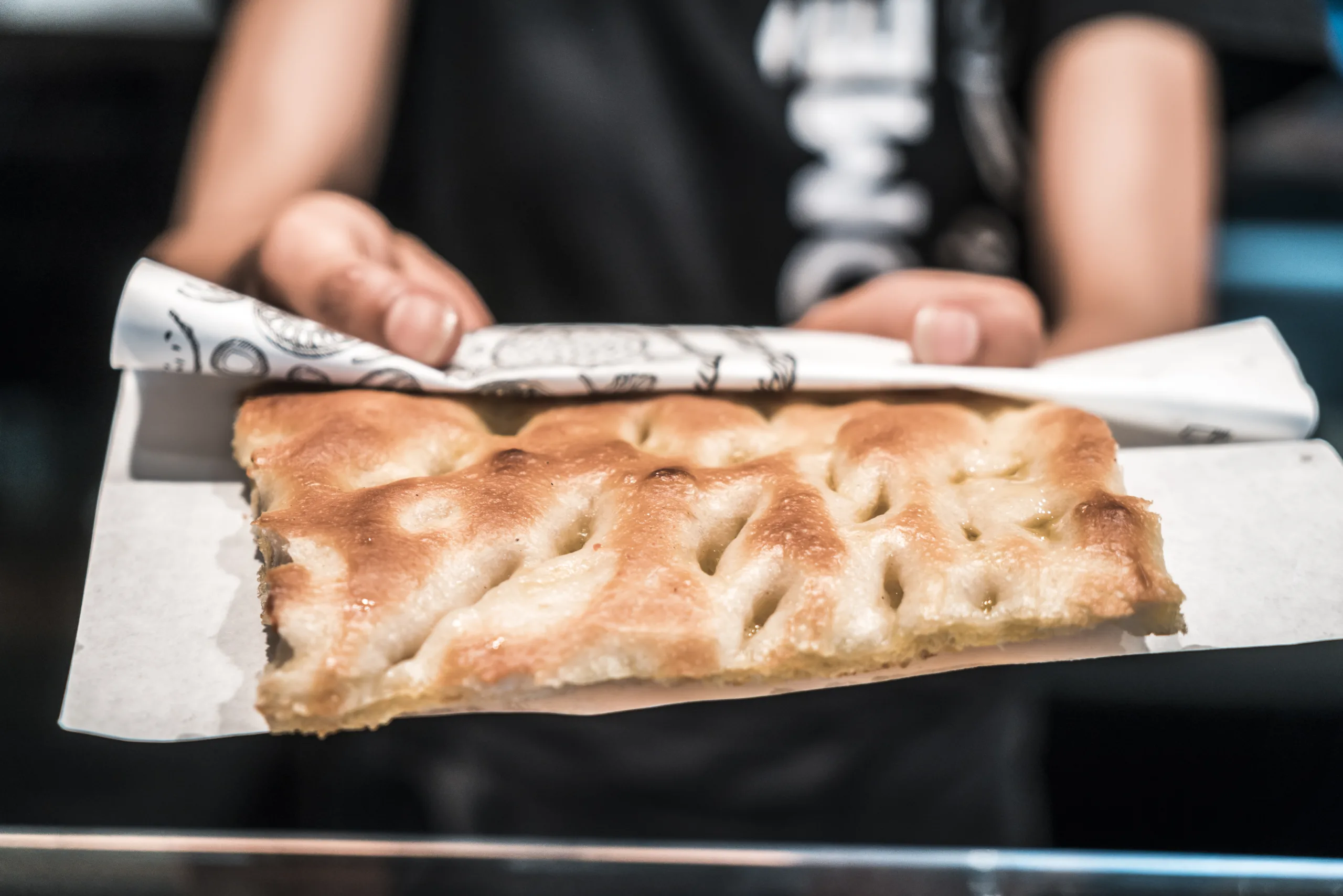
- Focaccia Genovese, the cult of all cults: thin, crisp-edged, soft within, glossy with olive oil. We locals eat it in the street, and dunk it in our morning cappuccino, do try it, and in endless versions (onion, tomato, oregano, pesto).
- Focaccia di Recco, one of my favourite things on earth: an IGP speciality made only in Recco, Sori, Camogli and Avegno, two paper-thin sheets of dough enclosing molten fresh stracchino.
- Torte di verdure, everyday vegetable pies, the classic being the torta verde, thin pastry filled with rice, courgette and chard.
- Farinata, a must on the eastern Riviera: a thin sheet of chickpea flour and water baked hot in the oven, and in La Spezia even tucked inside a slice of pizza.
Tuscany
The lampredotto sandwich is Florence’s great street classic: the cow’s fourth stomach, slow-cooked in broth, piled into a bread roll dipped in its juices, with green sauce or a spicy red one. Covaccino is the Florentine flatbread, split and filled to taste (stracchino and sausage, for me). And cinque e cinque, on the Livorno coast, is bread stuffed with cecina (the Tuscan farinata), its name from the old price: five coins of bread, five of chickpea cake.
Marche
Olive all’ascolana from Ascoli Piceno are the queens of fried food: the big Ascoli DOP olives stuffed with a minced-meat, lemon, egg, Parmesan and nutmeg filling, breaded and fried, and utterly impossible to stop eating. Around Ancona, look for the panino con le spuntature, filled with grilled, spiced lamb or veal offal.
Umbria
Crescia di Gubbio (or torta al testo) is a round dough of flour, water and raising agent cooked on the panaro, an iron disc over the embers, then split and filled with excellent local cured meats, costarelle (pork ribs) and vegetables.
Lazio
Maritozzo is the glorious, unrepentant Roman breakfast pastry: a soft, pine-nut-and-raisin bun split and overflowing with whipped cream, dusted with icing sugar. Supplì are Rome’s answer to the arancino, an oval of tomato-and-rice croquette with a molten mozzarella heart, fried crisp. In Ariccia, do not miss the porchetta, boned, herbed, slow-roasted pork with crackling, best from its home town. And pizza al taglio, sold everywhere but perfected in Rome: white, potato, tomato, porchetta and chicory, mortadella, by the slice.
Abruzzo
Arrosticini, the irresistible skewers of mutton grilled over a long brazier, are pure Apennine shepherd tradition.
Sardinia
Fave del Sinis, broad beans, are the backbone of the island’s peasant kitchen: soaked, boiled, dressed with garlic, parsley, oil and chilli, and eaten one by one like peanuts. And muggine arrosto, roasted mullet from the lagoons around Cabras, is perfect to eat on the go.
Campania
The Neapolitan cuoppo is the takeaway cone of the gods, filled to order with fried courgette flowers, mozzarella in carrozza, croquettes or little fish. Braver eaters should try ‘o per’ e ‘o muss, boiled, cooled, lemon-dressed offal (foot and muzzle), soft and surprisingly good. And pizza a portafoglio, “wallet pizza”, a small pizza with tomato and fiordilatte, folded in four to eat as you walk the alleys of Naples.
Puglia
Panzerotti, usually fried (sometimes baked), are warm half-moons of dough oozing tomato and mozzarella. Focaccia barese is tall, soft, made with boiled potato in the dough and studded with fresh tomato. Piadina salentina brings a Lecce twist, with fillings from turnip tops to avocado. And in Bari Vecchia, follow your nose to the sgagliozze sellers, thin slices of polenta fried and salted, served scalding.
Basilicata
Sfogliata is a Lucanian speciality: a bread dough of flour, oil, yeast, raisins, sugar and cinnamon, with salt, anchovies and pepper, rolled out, filled, and coiled into a ring. Sweet, savoury and utterly distinctive.
Calabria
Morzello is Catanzaro’s mighty answer to tripe: calf offal first fried, then long-stewed with tomato, chilli, bay and oregano, and traditionally eaten in a pitta bread.
Sicily
And so to Sicily, which alone could fill this whole guide.
Arancine are among my favourite foods anywhere, and the source of an eternal, half-serious Sicilian war: in Palermo they are feminine (arancine), in Catania, where I lived for a few years, masculine (arancini). Whatever their gender, they are a golden fried cone of rice; the white version, with mozzarella, ham and béchamel, was my daily treat leaving the Bellini theatre where I worked.
Pani ca meusa, the spleen sandwich of Palermo’s markets, is of Jewish, not Arab, origin, more than a thousand years old: offal cooked in lard and served in a sesame guastedda. Order it schietta (plain, with lemon) or maritata (“married”, with caciocavallo or salted ricotta). Cassateddi, once an Easter treat around Trapani and now year-round, are little fried pastry ravioli of ricotta, chocolate and cinnamon under a snow of sugar. Sfincione is Palermo’s thick, spongy pizza with tomato, onion, anchovy, oregano and cheese. Stigghiole are grilled skewers of seasoned rolled offal from the open-air markets. And pane, panelle e crocché are the great fried snack, chickpea fritters and a potato croquette tucked into a sesame roll with salt and lemon.
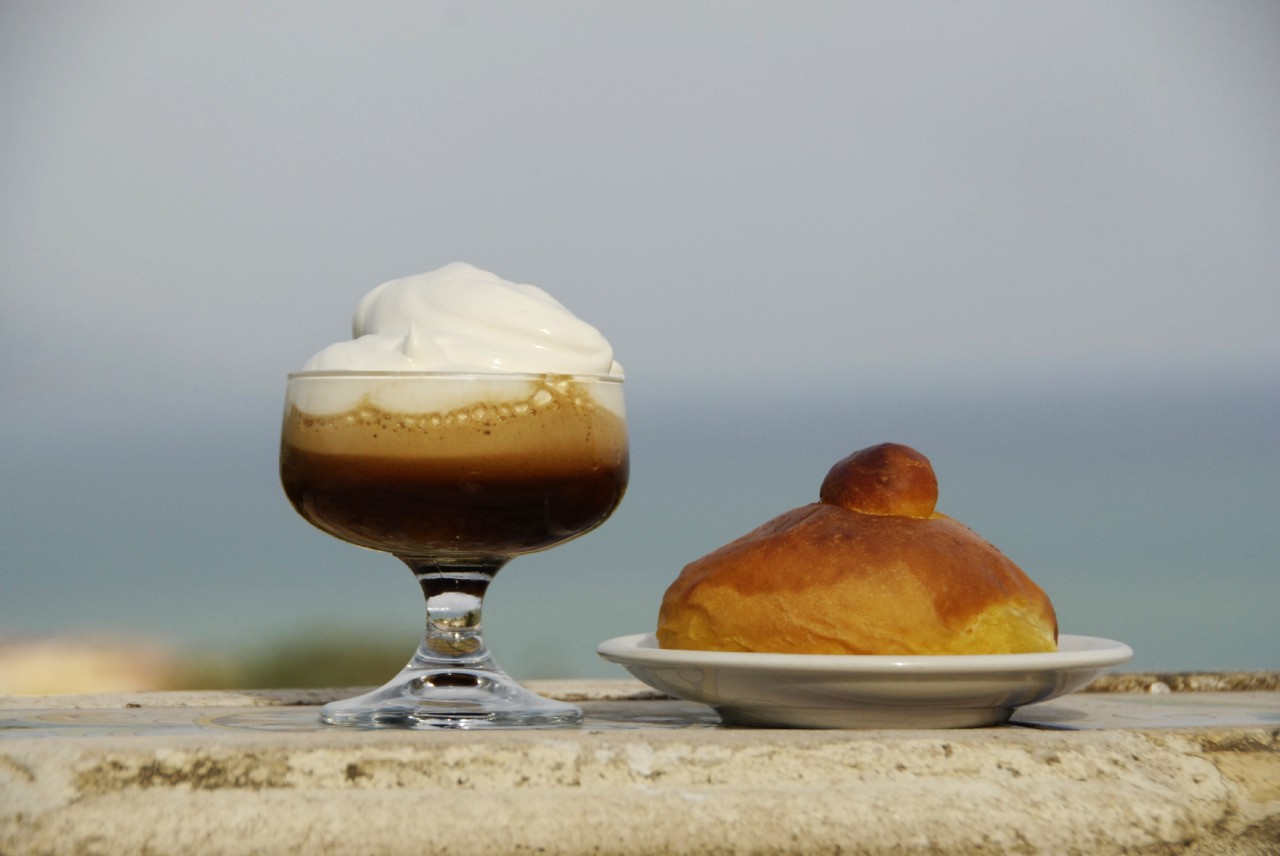
Last and far from least, granita, born in Messina and spread across the island: the perfect summer breakfast, in every flavour from almond to mulberry to coffee. The classic mezza con panna comes half coffee granita, half cream, scooped up with a soft brioche col tuppo.
The whole point
Travel Italy from the snowy north to the sun-baked south and one thing becomes clear: street food is far more than a quick bite. It is the country’s history, geography and local pride made edible, region by region, dish by dish. So next time you are crossing a piazza or a market, follow the smell of frying and the queue of locals, and let each bite pull you deeper into Italy. Buon viaggio, and buon appetito.
Frequently asked questions
It varies by region, but the icons include Sicilian arancini, Roman supplì and pizza al taglio, Emilia-Romagna’s piadina, Naples’ fried cuoppo and folded pizza a portafoglio, Florence’s lampredotto, and, in my own Liguria, focaccia and farinata. Each region has its own proud speciality, which is exactly what makes an Italian street-food tour so rewarding.
Yes. Street food in Italy is generally excellent, freshly made and inexpensive, and following the local crowds to a busy stall is both the tastiest and the safest strategy. It is one of the best-value, most authentic ways to eat your way around the country.
My region’s essentials are focaccia genovese (eaten in the street, even dunked in a morning cappuccino), the molten-cheese focaccia di Recco, farinata (baked chickpea flour), frisceu and panisse (fried chickpea specialities), and the everyday vegetable pies (torte di verdure). They are the heart of Ligurian everyday eating.
Follow the locals and the queues, eat standing or walking as intended, order the regional speciality rather than something generic, and do not be squeamish, some of the best dishes (lampredotto, pani ca meusa) are humble offal classics. Above all, treat each region as its own food country, because it is.
Further reading
- The recipe for our great Ligurian cult: Genoese focaccia
- The region’s liquid gold: Ligurian olive oil
- More of my home region’s food and character: the Cinque Terre and Liguria





One Comment