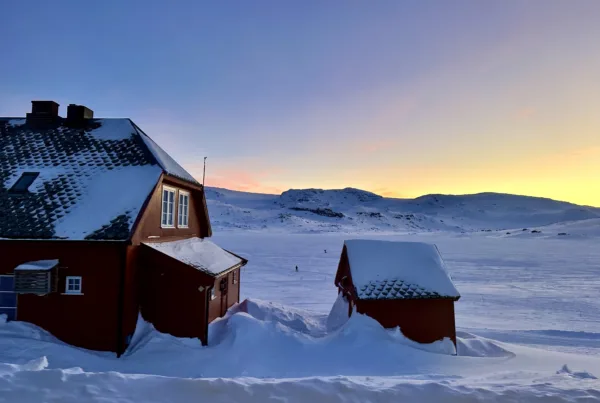



In the winter of 2023 I travelled the length of Norway alone, from the Arctic city of Tromsø to Oslo, over 47 days, almost entirely by public ferry, bus and train, with one unforgettable week under sail through the Lofoten islands.
It is the longest independent journey I have taken in Europe, and one of the best of my life. This is the overview and the itinerary, with a dedicated article for each stage. If you are wondering whether you can cross an Arctic country in deep winter on your own, using nothing but scheduled transport and your own plan, the answer is yes, and here is how.
Here is a detailed map of the whole 47-day journey through the land of the Vikings.
The Arctic wonderland: Tromsø to Narvik
Days 1 to 3: Tromsø
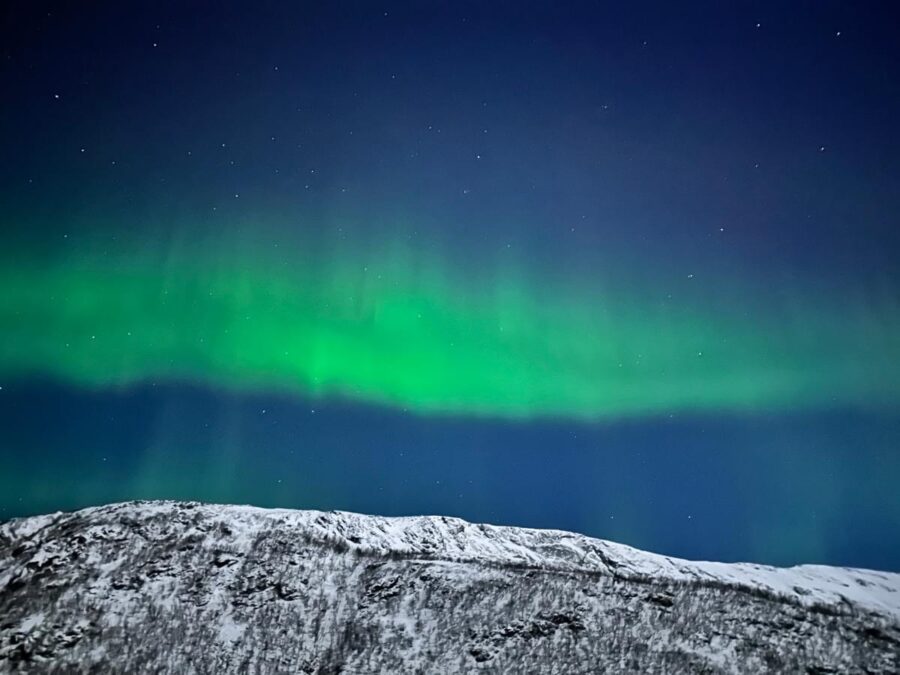
I began in Tromsø, the gateway to the Arctic, famous for its Northern Lights and its blend of wild scenery and real culture.
Must-see: the Arctic Cathedral, the Polaria aquarium, and the Fjellheisen cable car for the panorama. Activities: hunting the Northern Lights, which I did from the cosy and affordable Ami Hotel where I stayed, dog sledding, hiking, and skiing with a view of the sea.
Days 4 to 7: Senja, Dyrøy and Narvik
I reached Senja, Norway’s second-largest island, by a local bus-and-ferry combination: rugged mountains, picture-book fishing villages, reindeer and sea eagles, and the trails of Senja National Park. The same combination took me on to Dyrøy, a quiet fjord-fishing paradise I added for its scenery.
The scenic bus to Narvik followed. Narvik is known for its fierce Second World War history, and today for its winter sports and its Northern Lights. It was a highlight of my first week, and I will admit I added it because I had watched the Netflix film days before leaving. Cinema shaped this trip more than once, as you will see.
The best of Lofoten, in the wildest season, by sailing boat
Days 8 to 16: Svolvær to Bodø under sail
I wanted to experience Lofoten in deep winter the rawest way possible, so I did it on a sailing boat.
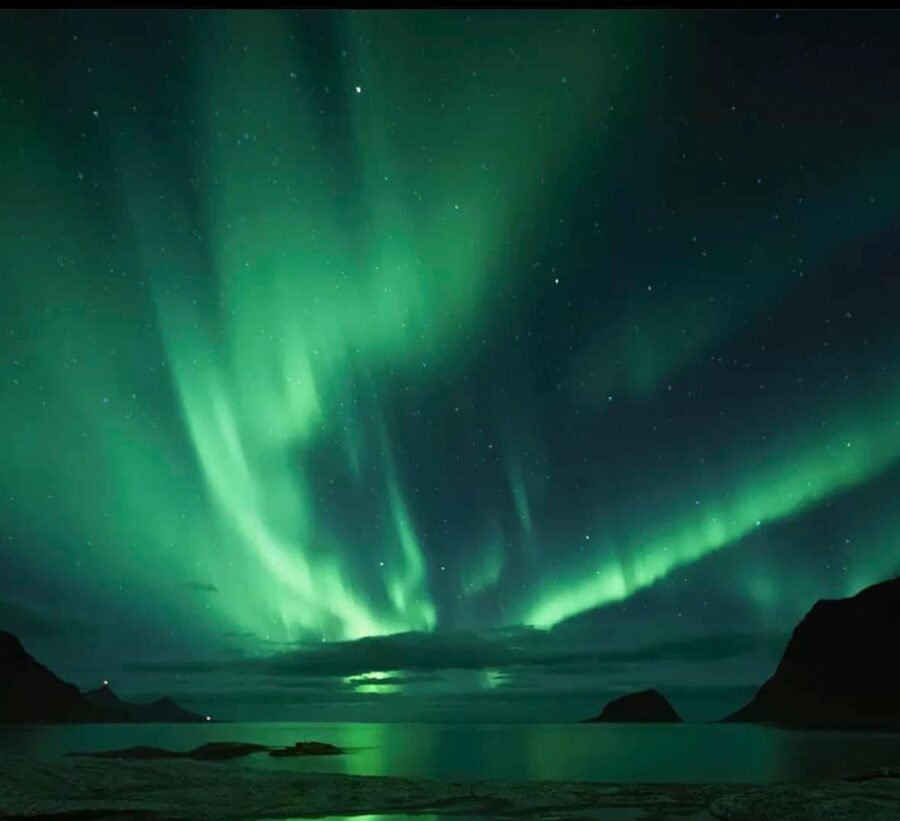
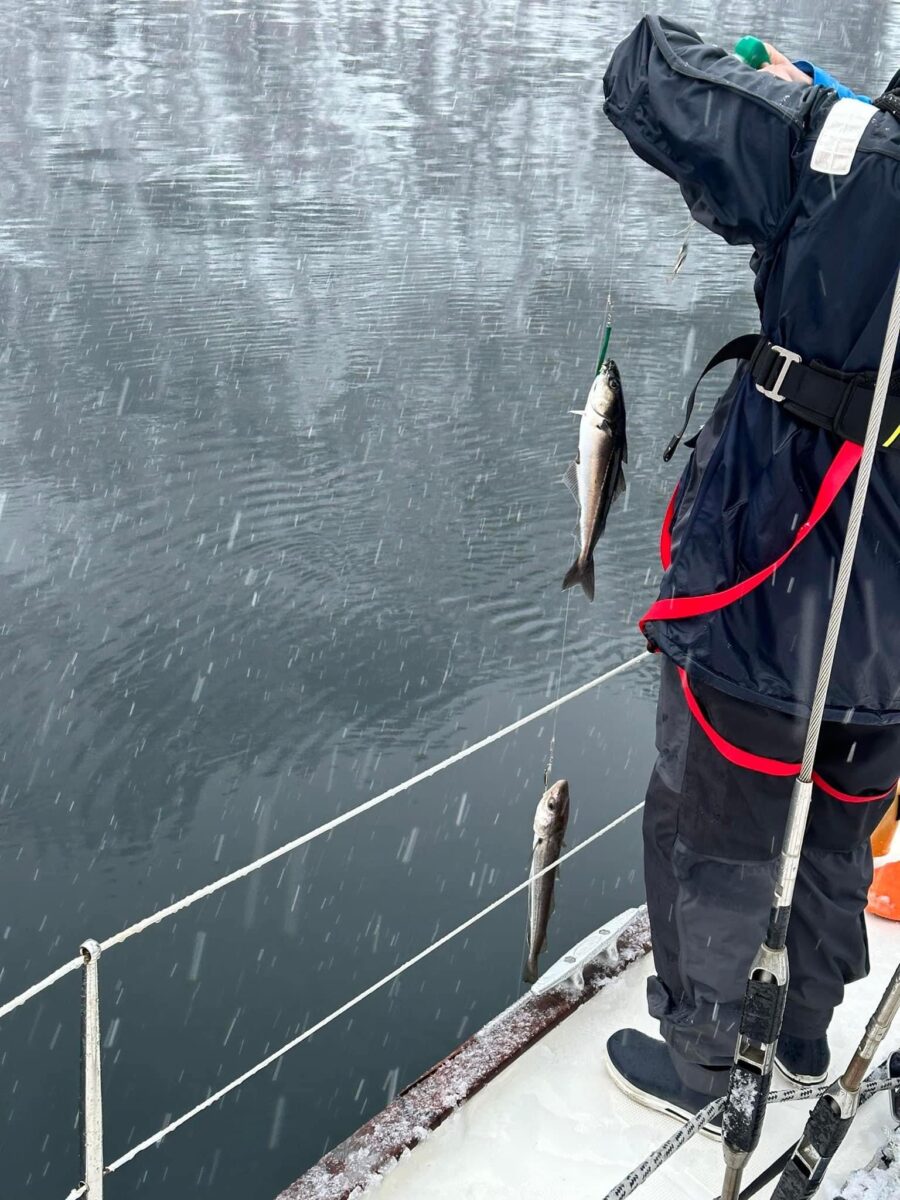
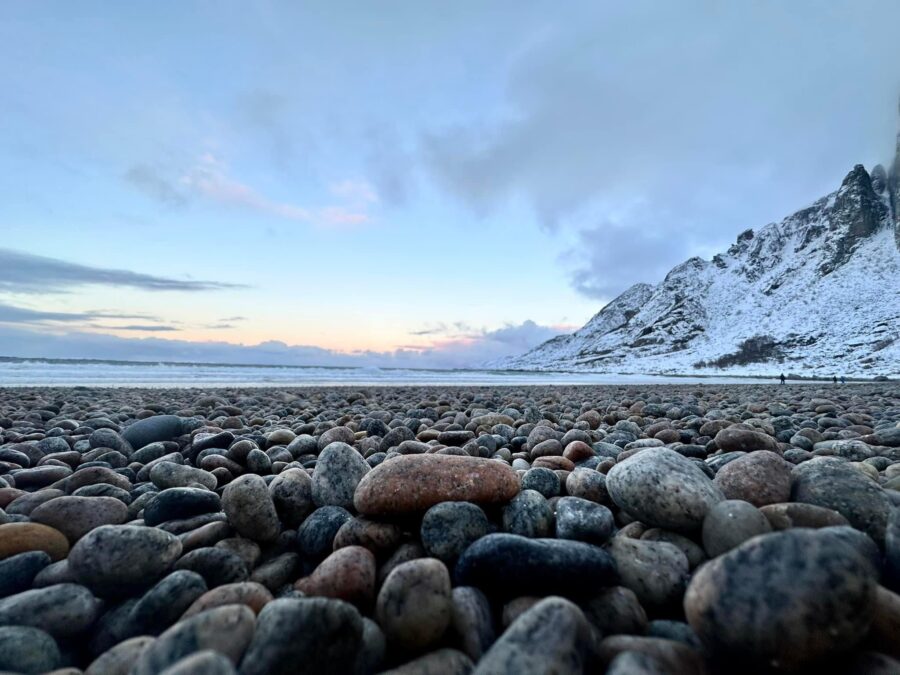
I joined six others in Svolvær, we loaded the boat with provisions, and we sailed south to Bodø over a week, exploring Steigen and the Lofoten islands along the way. We hiked, kayaked, fished, laughed, froze, shovelled snow off the deck more than once, soaked in waterfront saunas at night, and I even broke two fingers. With no engine noise, no street lights and no light pollution, I saw every shade the winter sky can produce. Pure magic.
A challenging, unforgettable week, booked with SeilNorge. I hold a skipper’s licence and still learned a great deal about winter sailing from it.
Fjords and mountains: Lofoten to Trondheim and Kristiansund
Days 17 to 20: Bodø, Trondheim and Røros
I saw Bodø, gateway to some of Norway’s finest fjords and to Saltstraumen, the world’s strongest tidal current, then flew on a tiny Widerøe night plane to Trondheim, Norway’s third city, home to Nidaros Cathedral, the largest medieval building in Scandinavia, and the colourful old quarter of Bakklandet.
From Trondheim I took the train to Røros, a UNESCO World Heritage site since 1981: a perfectly preserved wooden mining town founded in 1644, and the set of the Netflix series “Home for Christmas”, which is how I found it. I want to go back over Christmas itself.
Days 21 to 22: Kristiansund
Motivated by cinema again, I ferried to Kristiansund, which stood in for a location in the Bond film “Skyfall”. From here you can drive the extraordinary Atlantic Road, the island-hopping highway that featured in “No Time to Die”, which is exactly what drew me to it.
The heart of Norway: Kristiansund to Geirangerfjord
Days 23 to 26: Ålesund
Another ferry took me to Ålesund, the Art Nouveau town rebuilt in a single style after the 1904 fire. Climb Aksla for the view, wander the Jugendstil streets, and hike the surrounding fjords, which I loved.
Days 27 to 29: Geirangerfjord
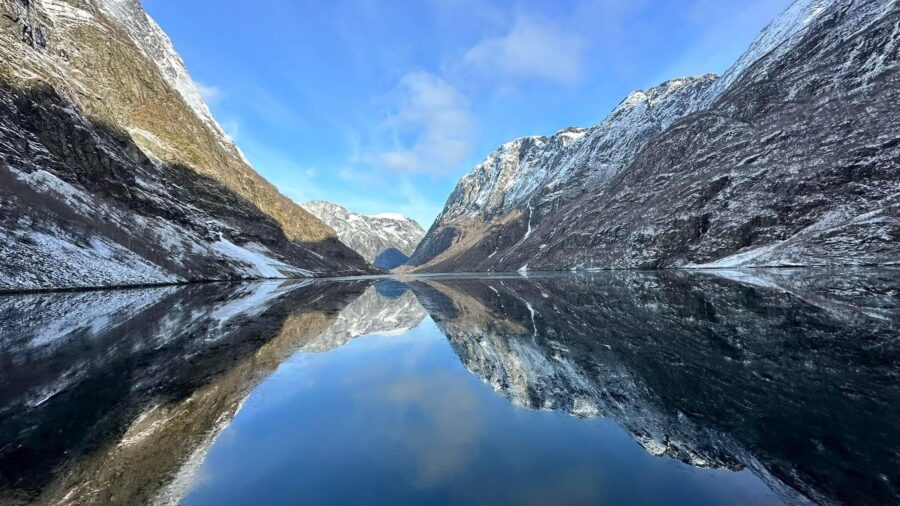
From Ålesund to Geirangerfjord, one of Norway’s most famous fjords and a UNESCO site, for the Seven Sisters and Suitor waterfalls, the Dalsnibba viewpoint, and the village of Geiranger.



Fjord paradise: Bergen to Stavanger
Days 29 to 34: Bergen
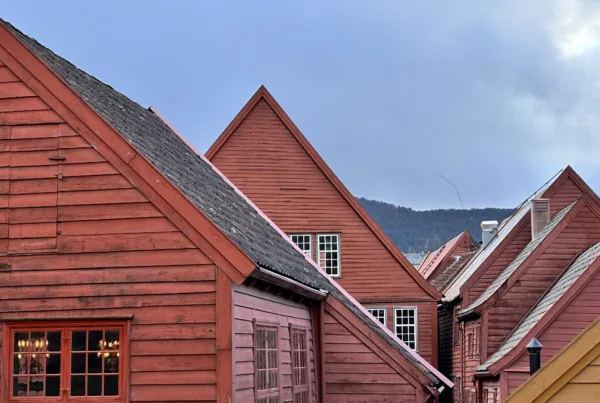
A spectacular fjord ferry brought me to Bergen, the beautiful Hanseatic city: the UNESCO-listed Bryggen wharf, the fish market, and the Fløibanen funicular up Fløyen for the best forest hikes in the region.
Days 34 to 37: Stavanger
A bus ride south to Stavanger, with its medieval cathedral, wooden old town and harbour. From here I hiked to Preikestolen, Pulpit Rock, the cliff plateau 604 metres above the Lysefjord that has been my phone wallpaper ever since.
From the fjords to the capital: Stavanger to Oslo
Days 38 to 43: Norway in a nutshell, my way
For the final stretch I followed the classic Norway in a Nutshell route but booked every leg myself and took my time: two more days on the slopes at Voss, the Viking village of Gudvangen, a slow spell in Flåm, and the Flåm Railway and the Bergen Line, one of the most beautiful train journeys on earth. Booking it independently rather than as a package cost a little more effort and gave me total freedom, which is the whole trade of independent travel.
Days 44 to 47: Oslo
I ended in Oslo, where I had spent my very first night before flying north, treating myself to a night at the opera. The Viking Ship Museum, the Vigeland sculptures, the Opera House roof you can walk up, and the Barcode district close the circle.
Practical tips for an independent Norwegian winter
Getting around
I chose not to rent a car, because I wanted to relax and watch the landscape rather than the road, and Norway’s public transport makes that entirely possible. The one thing to know: the bus operator changes on almost every stretch, and each wants you to use its own app, so plan on the Entur journey planner, which covers the whole network. Trains are simpler, booked on Vy. For the fjord legs I travelled by ferry wherever I could, some booked through Hurtigruten, including two overnight sailings timed for sunset and sunrise between the fjords.
Where to stay
From cabins and boutique hotels to hostels and guesthouses, there is something for every budget. Beyond the week in a shared cabin on the sailing boat, I saved money for most of the trip by staying in pensjonat, the Norwegian guesthouse, and by taking those two-night ferries as both transport and a bed.
Food
Honestly, eating and drinking out is eye-wateringly expensive, and I live in an overpriced Italian tourist town, so I know expensive. I ate mostly vegetable soups from grocery shops and saved restaurants for a treat.
Insurance
I used SafetyWing’s Nomad Insurance and was happy with it. (This is an affiliate arrangement: it costs you nothing extra and I only recommend what I actually use.)
Packing for the Arctic in winter
The one real challenge is the cold. I have a full polar winter packing list in my Hokkaido post, and it applies directly here.
Forty-seven winter days, alone, the length of a country, mostly by scheduled ferry, bus and train. If you have ever doubted that you could do a trip like this independently, I promise you can.

Further reading
- My short guide to planning independent travel, the method behind trips like this
- Bergen in winter: a five-day solo itinerary
- My polar winter packing list from Hokkaido
- Sailing tips
FAQ
Yes. Norway has an extensive network of trains, buses and ferries that runs through winter, and you can cross the whole country without a car. Plan bus journeys on the Entur app, which covers all operators, book trains on Vy, and use the ferries, including overnight sailings, for the fjord legs. It takes patience and layering of operators, but it is entirely doable and deeply scenic.
There is no upper limit, but even a week gives you a strong taste via the classic Norway in a Nutshell route between Bergen and Oslo. To travel the length of the country, from Arctic Tromso to Oslo with the Lofoten islands and the western fjords, allow four to six weeks if you can, travelling slowly by public transport.
Yes. It is safe, well organised and welcoming, the transport is reliable, and the winter landscapes, Northern Lights and quiet season make it magical for a solo traveller. The main challenges are the cost and the cold, both manageable with guesthouses, self-catering and proper Arctic clothing.
The Northern Lights are visible in the Arctic north, around Tromso and Lofoten, on clear dark nights roughly from late September to early April, with winter offering the longest darkness. Sightings are never guaranteed, so allow several nights and get away from town lights to improve your chances.